
 3 hours ago
9
3 hours ago
9

Published Apr 24, 2026, 8:44 AM EDT
Butler disavowed the book and kept it from being reprinted — but here's why it's worth reading anyway
 Image: Popular Library
Groundbreaking, bestselling science fiction and fantasy author Octavia Butler died 20 years ago, but her work lives on — all except one novel, which she disavowed and kept out of print for more than 40 years. That novel, 1978's Survivor, will be republished in September, according to the L.A. Times.
Bringing the book back to shelves is bound to be controversial: Butler adamantly refused to reprint Survivor during her lifetime, and Hachette Book Group and Butler's estate are going against her wishes. Butler dismissively called it her "Star Trek novel," referencing what she saw as a regressive, Star Trek-like plot where humans are the dominant culture in a galaxy, and the aliens are conniving "sneaky native" types. Survivor has been out of print since 1981.
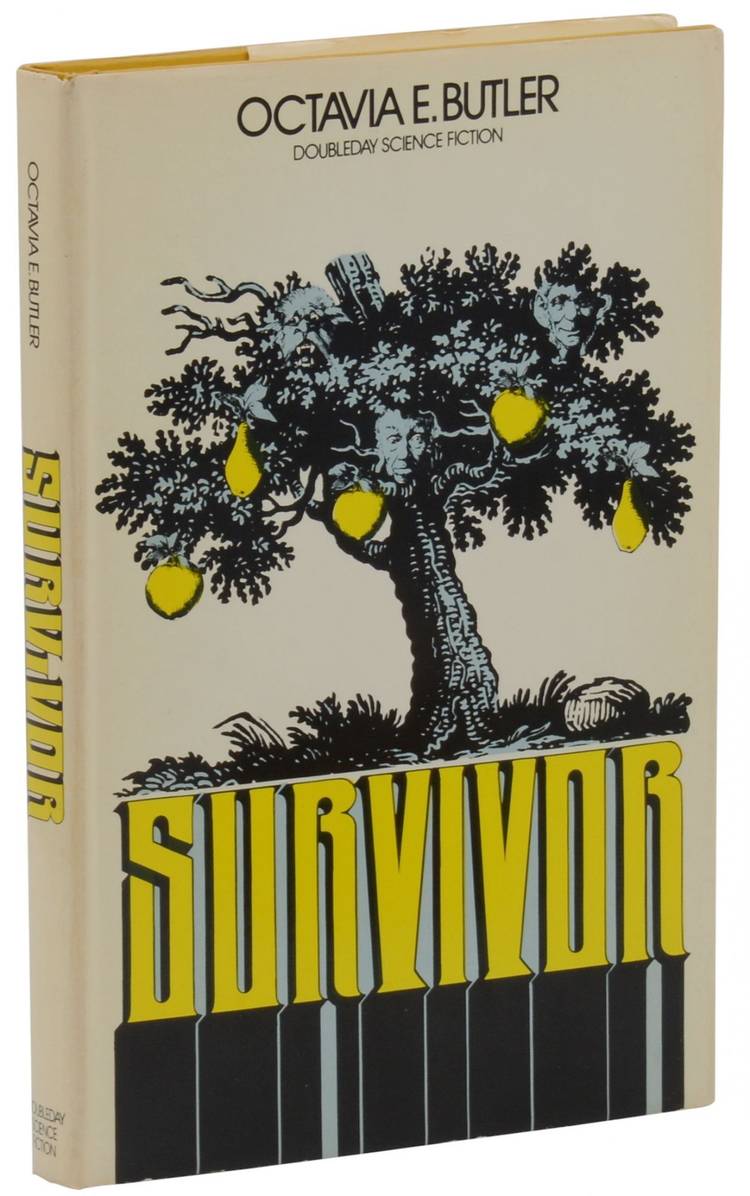 Image: Sidg. & J
Now here's the thing: I've read Survivor. I was delighted to find a used copy for a ridiculous $3 in a used-book store decades ago; now, copies are listed online for hundreds or thousands of dollars. I've always felt Butler underrated the book, and that it's both an entertaining read and an important piece of her history. And I wonder if she dismissed it in part for reasons she wasn't fully willing to admit.
Butler, best known as the author of the stunning time-travel novel Kindred, won nearly every major award science fiction has to offer, including the Hugo, Nebula, and Tiptree awards. She was inducted into the Science Fiction Hall of Fame, and won the inaugural Infinity Award. Her life's work was exploring slavery, the African-American experience, and the Black experience through science-fiction windows. Her characters suffer unwanted, inescapable bonds, forced codependency, and brutally unequal power dynamics similar to the patterns of slavery. But in her worlds, those connections come through alien symbiosis, vampirism, psionic control, cross-time connections, and other metaphorical methods.
Survivor is no different in that regard. It's part of Butler's loosely connected five-book Patternist series, all standalones in a setting where psionic humans form a living chain of control reaching back to an origin point called the Patternmaster. In Survivor, a "wild human" named Alanna lives with a group of missionary refugees on a planet where the local humanoids, the furry, color-shifting Kohn, are divided into two factions. Navigating the Kohns' internal politics is physically and emotionally complicated both for Alanna and the missionaries: There are coercive sexual elements involved, as well as a forced addiction to a drug-like local fruit. Alanna's link to the Kohns comes with burdens she doesn't want, and has to accept to survive.
Butler reportedly felt the book was rushed to publication, and that the writing wasn't sophisticated enough. But I've always wondered whether she was somewhat ashamed of the book's sexual content. In particular, Alanna's forced relationship with a furry alien would have looked different in 1978 than it does today, when this particular flavor of dubious consent is a familiar pattern in fan fiction, in mega-popular fan-fiction-derived fantasy like, say, SenLinYu's Alchemised, and in openly erotic fantasy series like the Court of Thorns and Roses books. If Butler were alive today, she might have realized Survivor now reads as a comfortable companion for some of today's more lurid fantasy bestsellers.
Butler fans who pick up Survivor when it returns to print in September aren't going to find it a revelation that redefines her writing. It isn't her best work. But to an objective outsider eye, it isn't her worst, either. Mostly, it's an entertaining, grimly thoughtful novel in a familiar Butlerian mode, about various kinds of unwanted and inescapable ties, and what they do to a protagonist's mental state. There's plenty to discuss and consider in Survivor, beyond the question of whether it should have been reprinted. I'm looking forward to the conversation.
If you buy something from a Polygon link, Valnet Inc. may earn a commission. See our ethics statement .



 English (US) ·