Nvidia develops software-based tracking for AI GPUs to quash smuggling concerns — solution devised to prevent shipments to nations with export controls in place
2 hours ago
9
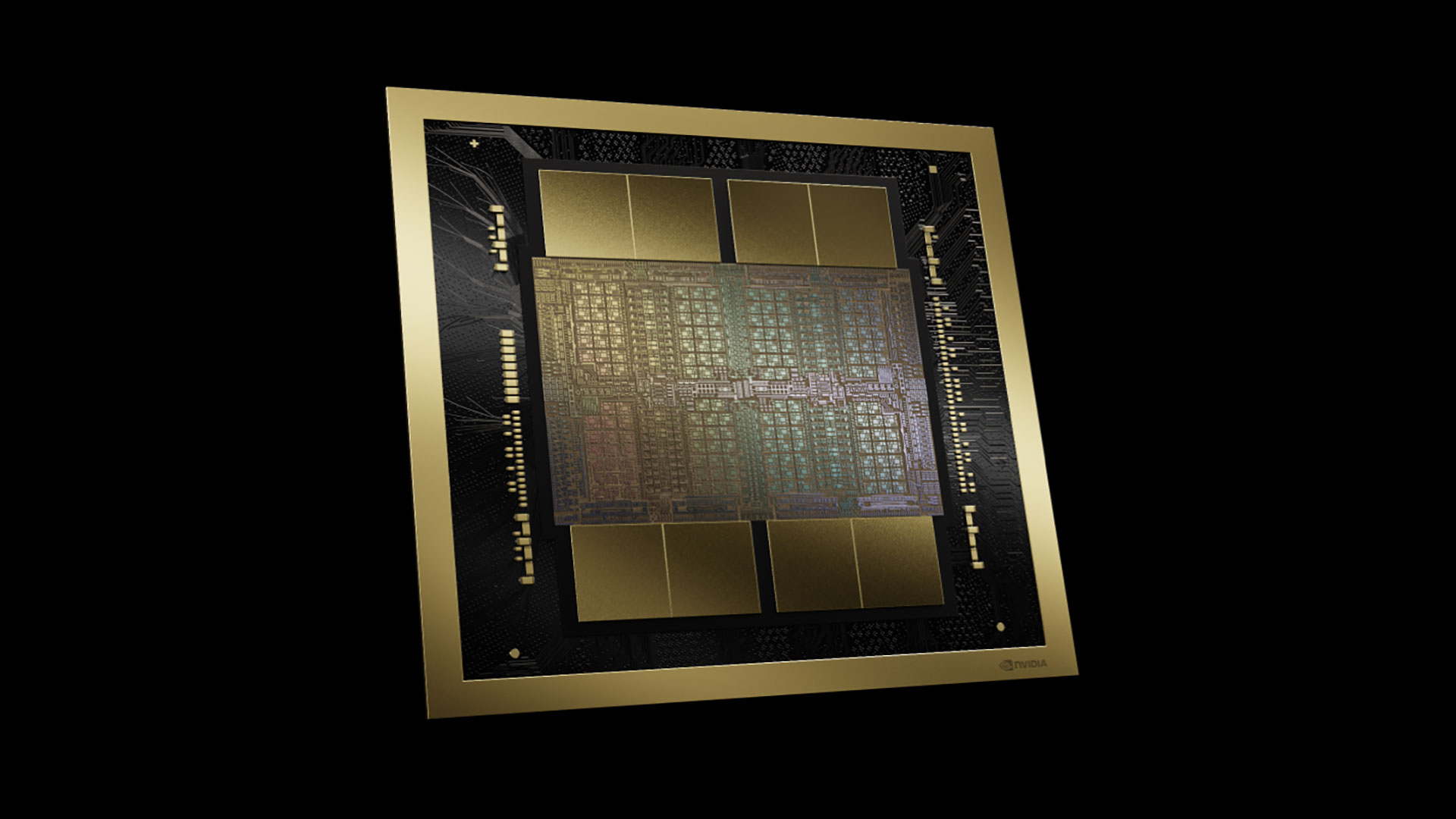
(Image credit: Nvidia)
Despite the best efforts of the U.S. government to prevent Chinese entities from obtaining the latest AI and HPC processors developed in America, Chinese companies still manage to get them by either smuggling them to the People's Republic or by installing them in a nearby country to use them remotely. To put an end to this, U.S. legislators proposed to install tracking devices on AI processors, such as Nvidia's Blackwell, to disable them remotely if they are used illegally by an adversary nation. While Nvidia opposed the measure to install a hardware tracking device, it has developed a software solution that does the same, reports Reuters.
Nvidia officially positions its tracking technology, which can approximate the physical location of its AI processors, as a way for infrastructure operators to oversee their GPU fleets as well as monitor their health. As an added bonus, the feature also addresses political demands in the United States to curb illegal diversion of advanced AI GPUs to restricted markets such as China, North Korea, or Russia, according to Reuters. The capability has only been demonstrated confidentially as the company has not yet deployed it publicly, though it does not deny its existence. Yet, it has not formally confirmed that the software can determine the physical location of Nvidia's hardware.
"We are in the process of implementing a new software service that empowers data center operators to monitor the health and inventory of their entire AI GPU fleet," an Nvidia spokesperson told Tom's Hardware. "This customer-installed software agent leverages GPU telemetry to monitor fleet health, integrity, and inventory."
Reuters reports that the mechanism behind the tracking software can not only read GPU telemetry, but also incorporates timing measurements taken from communication between customer systems and Nvidia servers. By analyzing this latency, the software can estimate the location of the GPU with roughly the same precision offered by standard Internet-based geolocation services, according to Reuters. There are two things to note, though. Actual location-based services use IP address and Wi-Fi positioning, but while the former makes sense for data center hardware, Wi-Fi positioning may not work well in remote rural areas, where many of China's AI data centers are located. The company stresses that this is a customer-installed software agent rather than a hidden function, and that it relies on legitimate GPU telemetry rather than any concealed access pathway.
The feature is slated to appear first on the latest Blackwell-generation components, which include strengthened capabilities for 'attestation,' a process that verifies that the hardware and software stack have not been altered. According to Reuters, citing a company representative, these AI accelerators contain more advanced verification logic than the preceding Hopper and Ampere families; however, it is unclear whether Nvidia can remotely disable hardware if it is used in a prohibited region.
Meanwhile, China’s main cybersecurity regulator has summoned Nvidia for questioning over concerns that verification functions could act as backdoors accessible to the U.S. government. Nvidia has firmly rejected the notion that its hardware contains any backdoors, and reading hardware telemetry does not undermine cryptographic protections and other security features.
Get Tom's Hardware's best news and in-depth reviews, straight to your inbox.
Anton Shilov is a contributing writer at Tom’s Hardware. Over the past couple of decades, he has covered everything from CPUs and GPUs to supercomputers and from modern process technologies and latest fab tools to high-tech industry trends.
Nvidia develops software-based tracking for AI GPUs to quash smuggling concerns — solution devised to prevent shipments to nations with export controls in place

 2 hours ago
9
2 hours ago
9





 English (US) ·