
 Image Via Universal

Published Apr 29, 2026, 8:31 PM EDT
Hannah has been writing about horror, sci-fi, and all things nerdy since 2021. At Collider, she covers news and conducts interviews, along with contributing features that dive deep into genre storytelling and why it works. If there’s something lurking in the shadows, she’s probably already writing about it if she's not too busy watching a tape from her VHS collection.
You were never supposed to feel safe in the water again after Jaws, and that reaction didn’t happen by accident. It came from a level of control most creature features never reach, which is why the trilogy's impending departure from Netflix on May 1 feels like more than routine turnover. Because Jaws is not just one of the most influential horror thrillers ever made: it is one of the clearest examples of how restraint actually works on screen.
'Jaws' Still Sets The Standard for Creature Features
The easiest way to misunderstand Jaws is to focus on the shark. The shark matters, but it is not what makes the film effective. Steven Spielberg builds the movie around what the audience does not see, carefully controlling when information is revealed and how long the viewer is left to sit with uncertainty. The opening attack establishes the threat without fully showing it, and the film continues to escalate by suggesting danger rather than constantly confirming it. By the time the shark is finally visible, the tension has already done the work. Most creature features treat the reveal as the payoff. Jaws treats the delay as the structure that makes the payoff possible.
That distinction is why it still works. Not as a piece of film history to admire from a distance, but as a thriller that feels more deliberate than most modern entries in the genre. It understands that tension does not come from scale or volume alone, but from how carefully a film manages the audience’s expectations. That control extends beyond the mechanics of the shark itself. The film’s use of space plays just as important a role. The ocean is an environment without boundaries, where safety disappears the moment the characters leave land behind. The third act strips everything down to its essentials, focusing on three men and a single escalating threat, with no excess to dilute the tension. Every scene builds toward the same outcome without distraction, and the characters give that structure weight. Chief Brody (Roy Scheider) is not positioned as someone fully capable of handling the situation, which makes each decision feel reactive rather than assured. Quint’s (Robert Shaw) obsession adds a sense of inevitability, while Hooper’s (Richard Dreyfuss) expertise never quite translates into control. Each perspective reinforces the same underlying tension, which is that no one involved is fully equipped to deal with what they are facing.
 Related
We've Been Getting This One Thing About 'Jaws' Wrong for the Last 50 Years
How well do you remember this detail from Steven Spielberg's masterpiece?
'Jaws' Sequels Show How Hard That Balance Is to Maintain
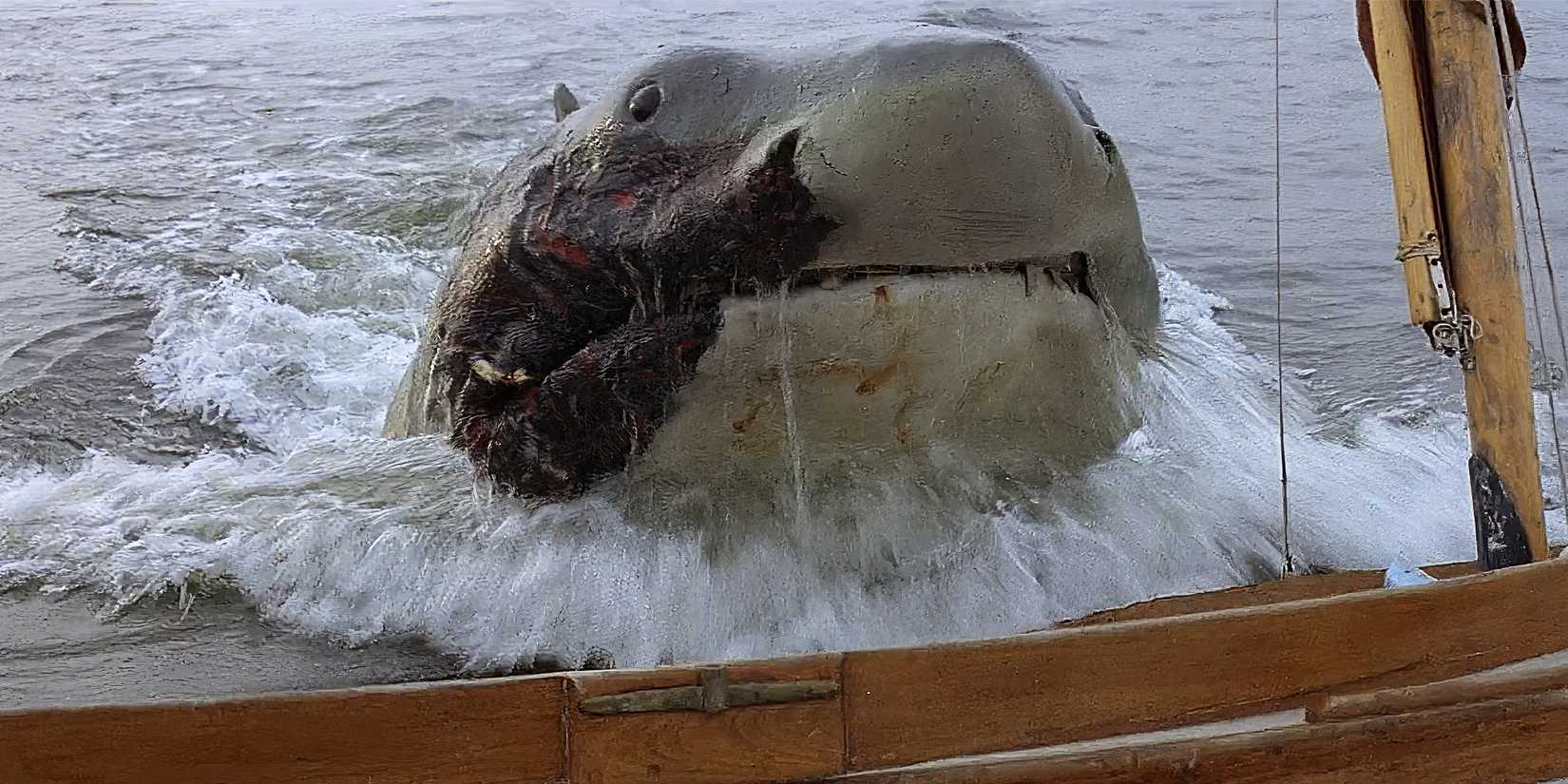 Image via Universal
Once Jaws became a success, the next step was predictable: make more of it. Jaws 2 retains elements of the original’s structure, returning to Amity and revisiting the idea of a recurring threat. There are sequences that effectively build tension, but the film moves more quickly to show the shark, and that shift changes how the suspense functions. It feels less controlled and more immediate, which makes it engaging in moments but less cohesive overall. By the time Jaws 3-D arrives, the focus has shifted toward spectacle. The shark is no longer something to build toward, but something to present as often as possible, especially within the constraints of its 3D gimmick. Once the creature becomes the centerpiece rather than the payoff, the tension that defined the original has little room to develop.
That trajectory reflects a broader pattern within the genre. Many creature features escalate by showing more, increasing scale, or leaning into visual effects, but they rarely replicate the balance that made Jaws effective in the first place. The original succeeds because it understands exactly how that restraint shapes the audience’s experience.
Netflix Is Losing a Blueprint, Not Just a Franchise
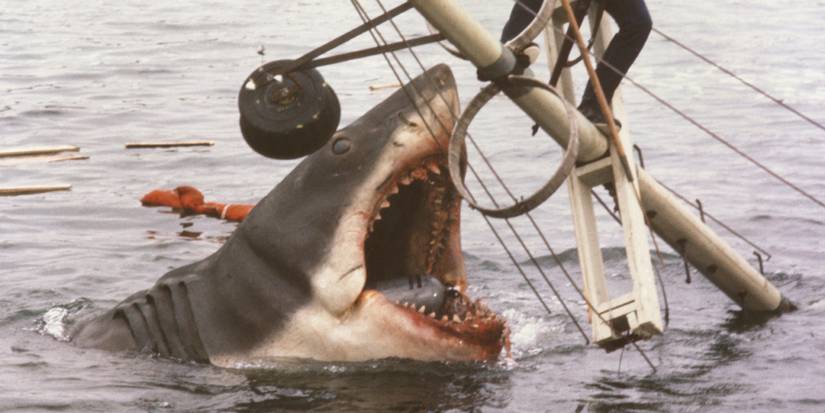 Image via Universal Pictures
Losing Jaws from Netflix is not the same as losing a random catalog title. This is one of the clearest demonstrations of how effective a blockbuster can be when it is built on restraint rather than excess. It is also a reminder of how rare that approach has become. Advances in technology have made it easier than ever to show everything, but that has not translated into stronger tension. If anything, it has made it more difficult for films to resist the urge to reveal too much too quickly. Jaws still stands out because it maintains that discipline from beginning to end. It understands how much to show, when to show it, and how long to hold back. That level of control is what allows the film to remain effective long after its release, even as the genre around it has shifted.
And that is why its exit matters. Because when Jaws leaves Netflix, it is not just taking one of the most influential creature features ever made with it. It is taking one of the clearest examples of how suspense is supposed to work. Which makes the timing simple: if you are going to revisit Jaws, there's limited time to do so. Because once it is gone, Netflix is the one that might need a bigger boat.
Release Date June 20, 1975
Runtime 124 minutes
Writers Peter Benchley, Carl Gottlieb
Producers David Brown






 English (US) ·