
 3 hours ago
5
3 hours ago
5
MSI is no stranger to PC peripherals and components, but the power supply market is one where reputation is built slowly and lost quickly. The MAG A1200PLS PCIE5 sits at the higher end of MSI's current consumer PSU lineup, rated at 1200 watts and carrying an 80Plus Platinum badge on the box. It is a bold entry into a segment where established names compete fiercely, and where buyers expect both electrical precision and long-term reliability at the price point MSI has chosen.
The platform comes from Channel-Well Technology, a Taiwanese OEM with a long and largely positive history in mid-to-top-tier PSU manufacturing. Channel-Well has supplied the internals for well-regarded units across multiple brands over the past two decades, so the foundation here is not a concern in principle. What matters is how MSI has specified and tuned the design, and whether the result justifies a $250 retail price. And if so, how does it rank among the best power supplies on the market today?
Specifications and Design
Swipe to scroll horizontally
RAIL | +3.3V | +5V | +12V | +5Vsb | -12V |
MAX OUTPUT | 20A | 20A | 100A | 3A | 0A |
| Row 2 - Cell 0 | 100W | 100W | 1200W | 15W | 0W |
TOTAL | 1200W | Row 3 - Cell 2 | Row 3 - Cell 3 | Row 3 - Cell 4 | Row 3 - Cell 5 |
AC INPUT | 100 - 240 VAC, 50 - 60 Hz | Row 4 - Cell 2 | Row 4 - Cell 3 | Row 4 - Cell 4 | Row 4 - Cell 5 |
MSRP | $240 | Row 5 - Cell 2 | Row 5 - Cell 3 | Row 5 - Cell 4 | Row 5 - Cell 5 |
In the Box
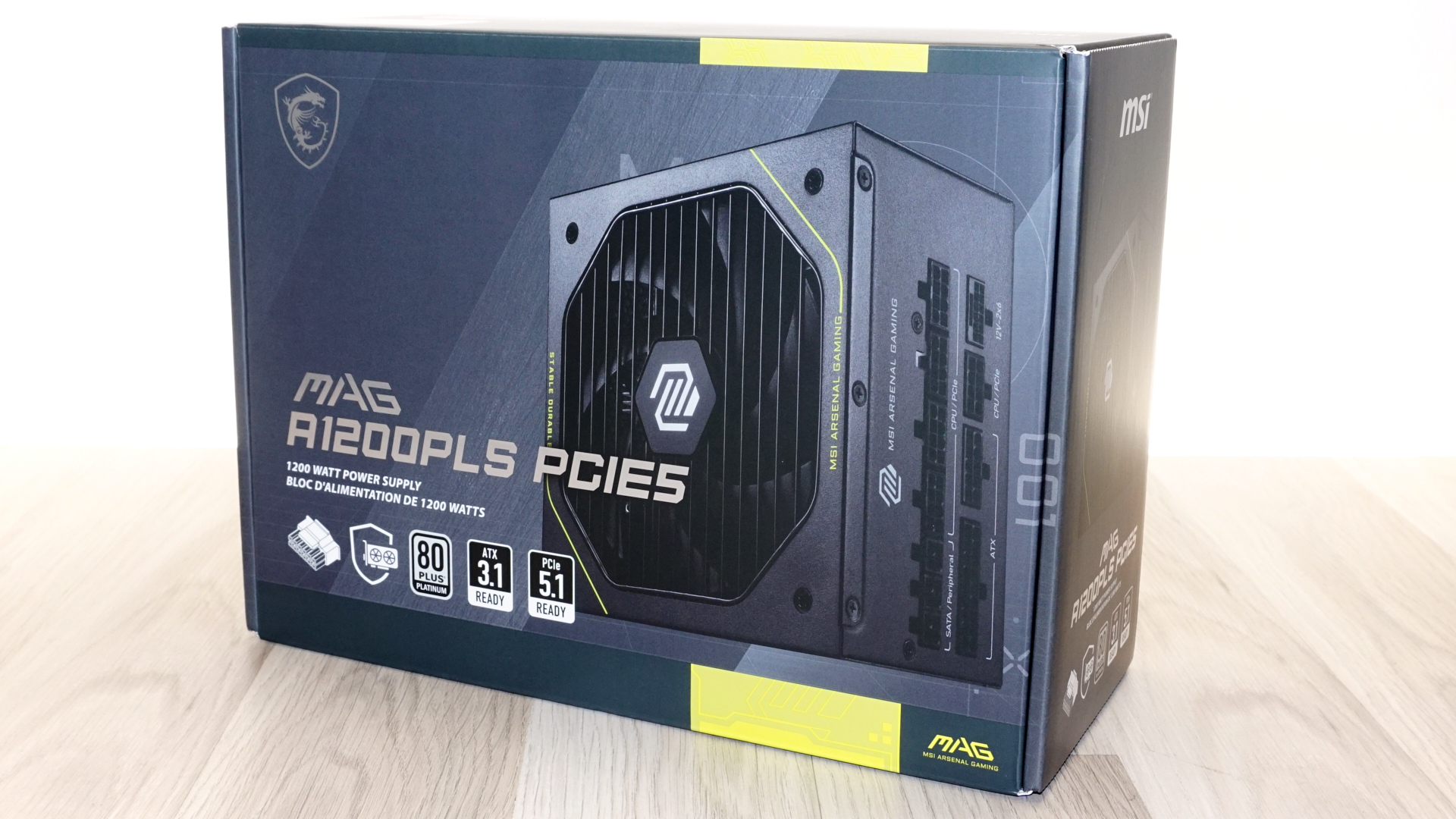
The packaging is hard to ignore - the outer box is large, sturdy cardboard with a militaristic design language: brushed metal backgrounds, angular fonts, yellow accents, and a clear image of the unit itself. We feel that it communicates aggression and premium positioning. Inside, the unit is protected by a fabric pouch and foam inserts on both ends.
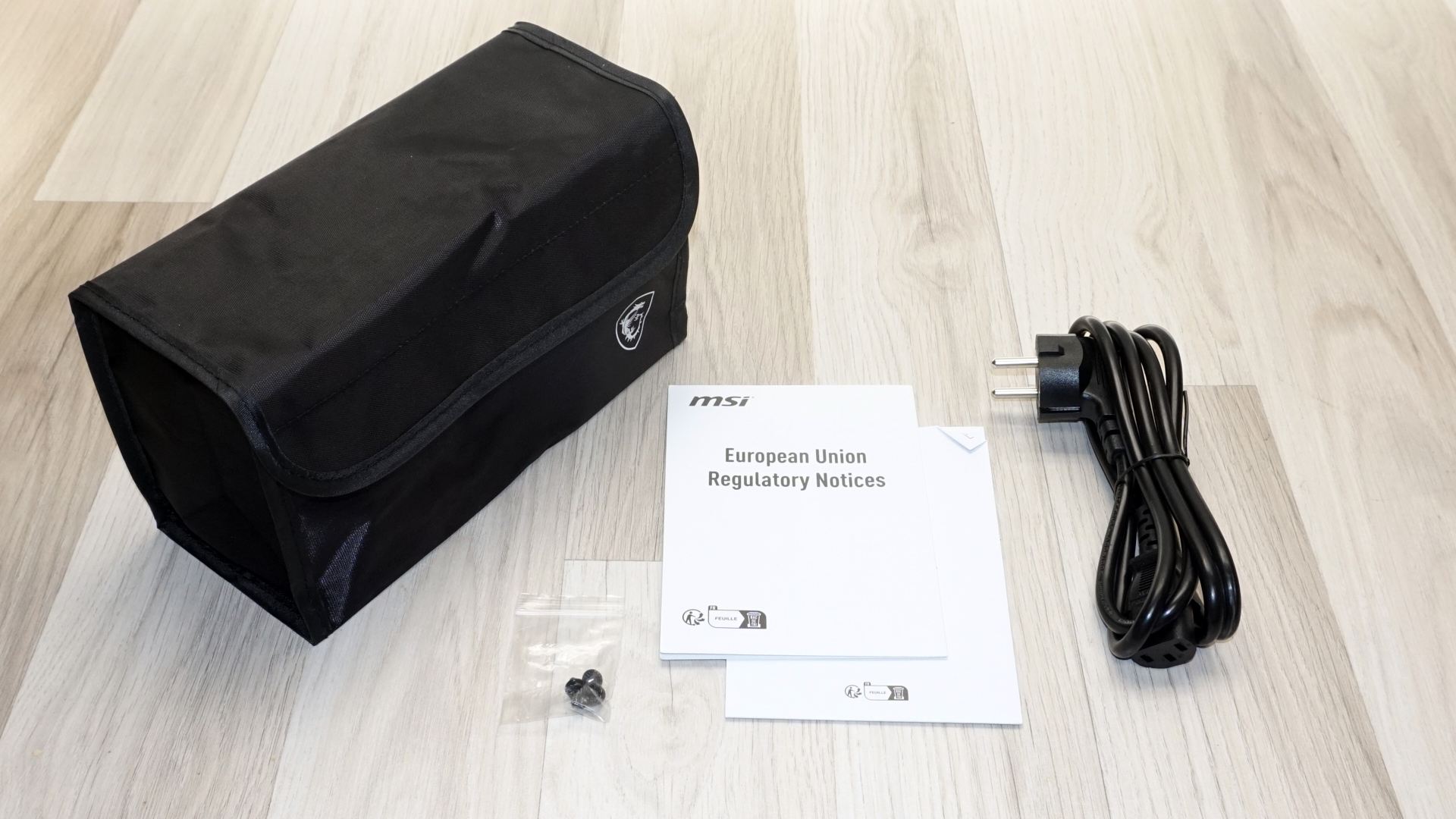
The bundle itself is rudimentary. You get the mounting screws, an AC power cable, a few basic cable ties, and a printed manual. Nothing else. Given the price, some buyers would reasonably expect a little more.
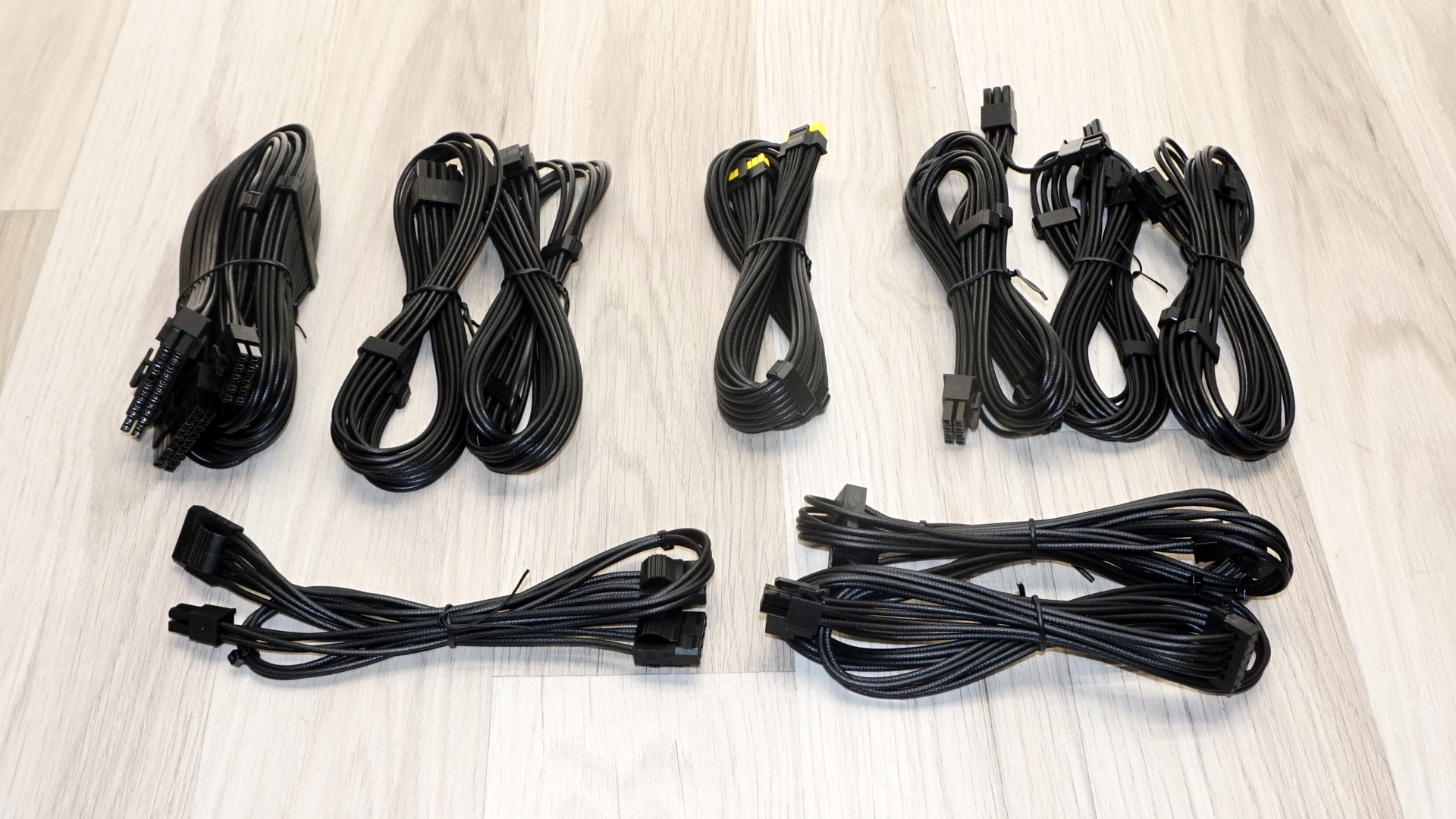
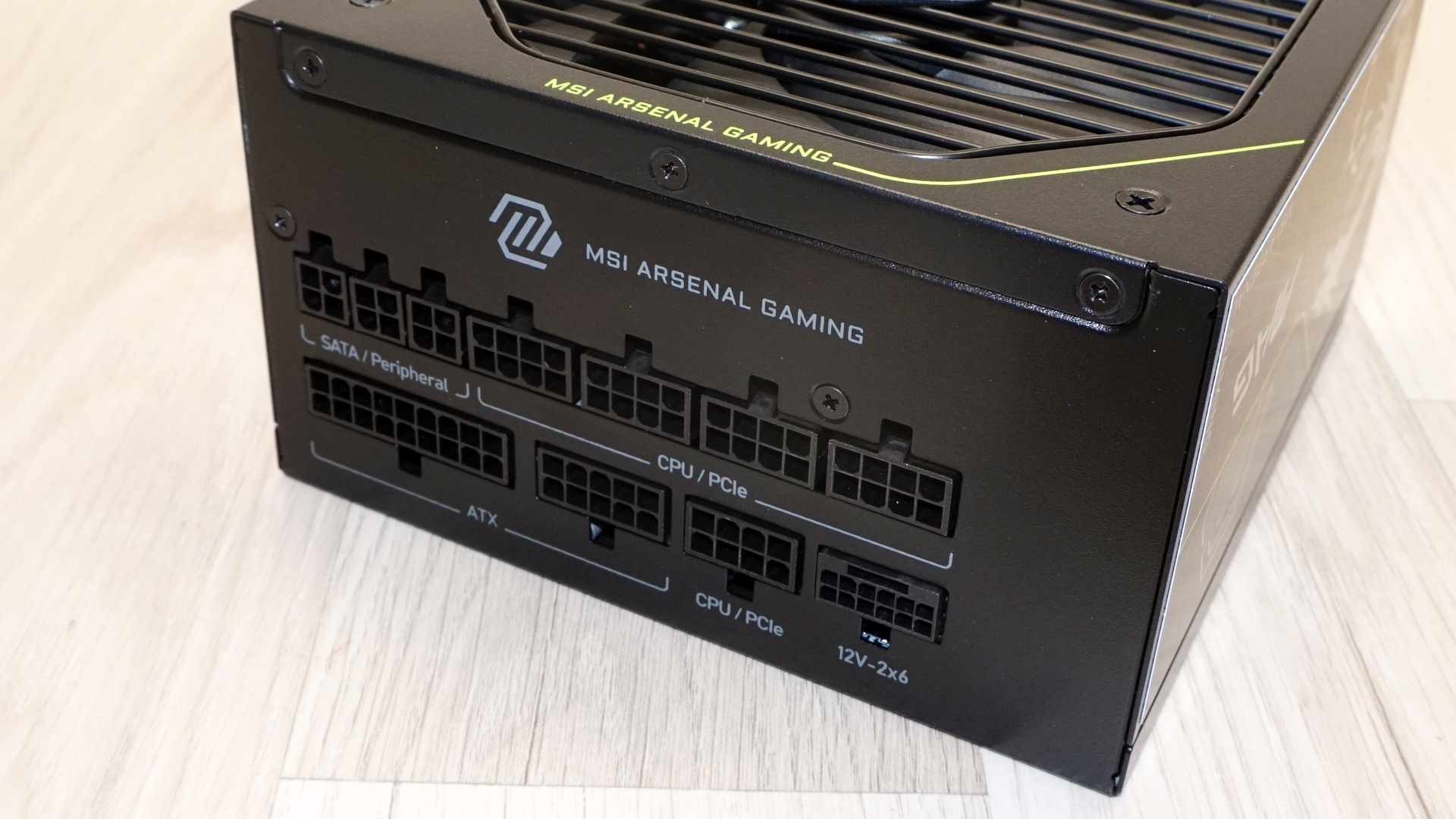
Cable consistency and quality are good. All cables are fully modular, all-black from connector to tip, and use what MSI markets as embossed jacket wires, which produce a scaled, textured look. Cable combs come preinstalled on all cables except the SATA and PATA ones. The connector complement includes one 12V-2x6 cable and four 6+2 pin PCI Express connectors. Two of the PCIe connectors arrive on individual cables, while the third cable carries two 6+2 connectors in a piggyback arrangement. For a 1200W unit, having only one 12V-2x6 connector is kind of a limitation. The 12V-2x6 connector features a dual-color design with a yellow lower section that disappears entirely once the plug is fully seated, giving the user a clear visual confirmation that insertion is complete.
Swipe to scroll horizontally
ATX 24 Pin | - | 1 |
EPS 4+4 Pin | - | - |
EPS 8 Pin | - | 2 |
PCI-E 5.0 | - | 1 |
PCI-E 8 Pin | - | 4 |
SATA | - | 6 |
Molex | - | 3 |
Floppy | - | - |
External Appearance
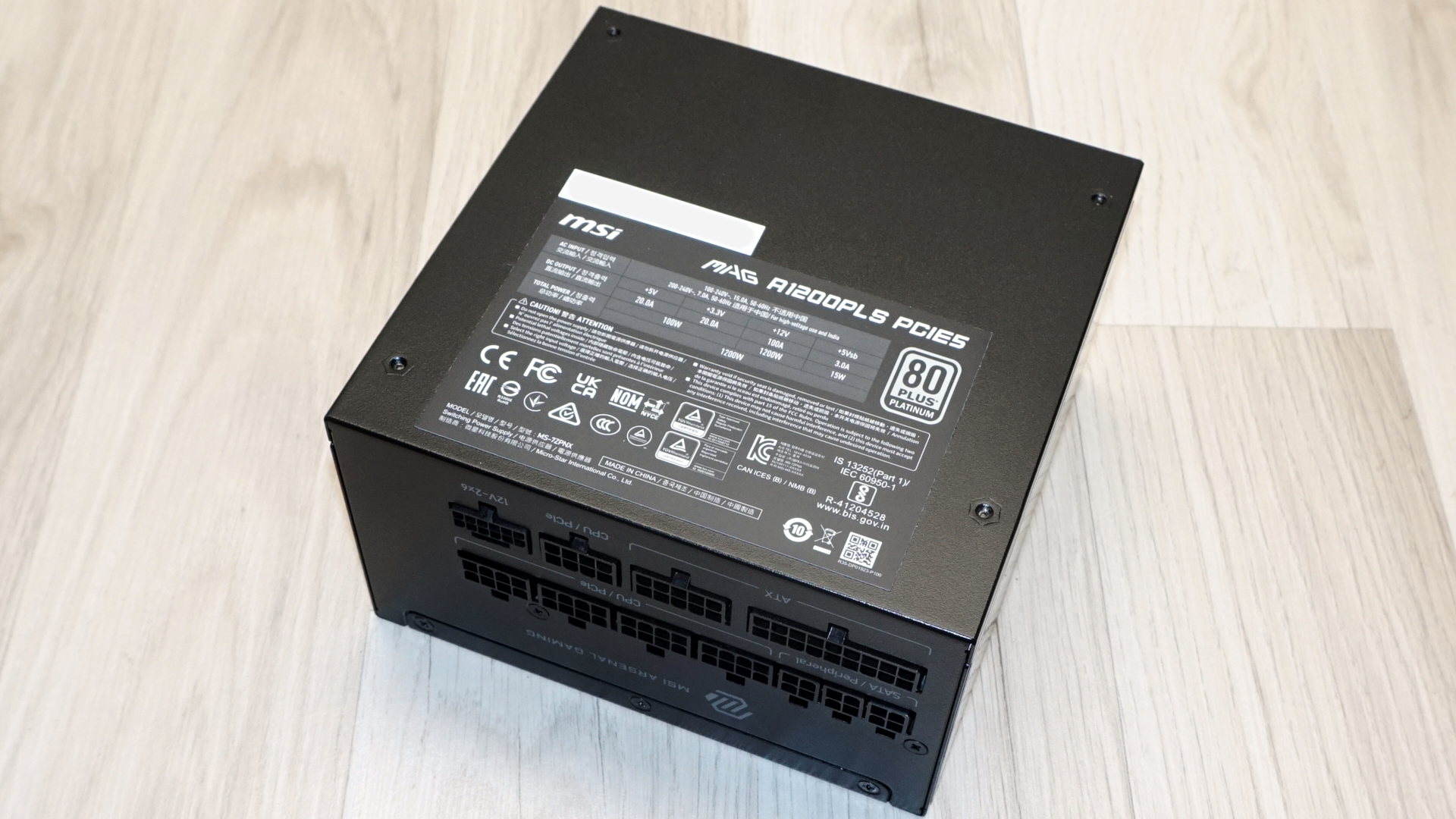
At 150mm in length, the MAG A1200PLS PCIE5 is only marginally longer than what the ATX design guide recommends, and it will fit without difficulty in any modern case with a respectable PSU chamber. Power density is solid for a unit of this output. The chassis finish is matte black with a light texture, applied evenly across all surfaces with no visible imperfections.
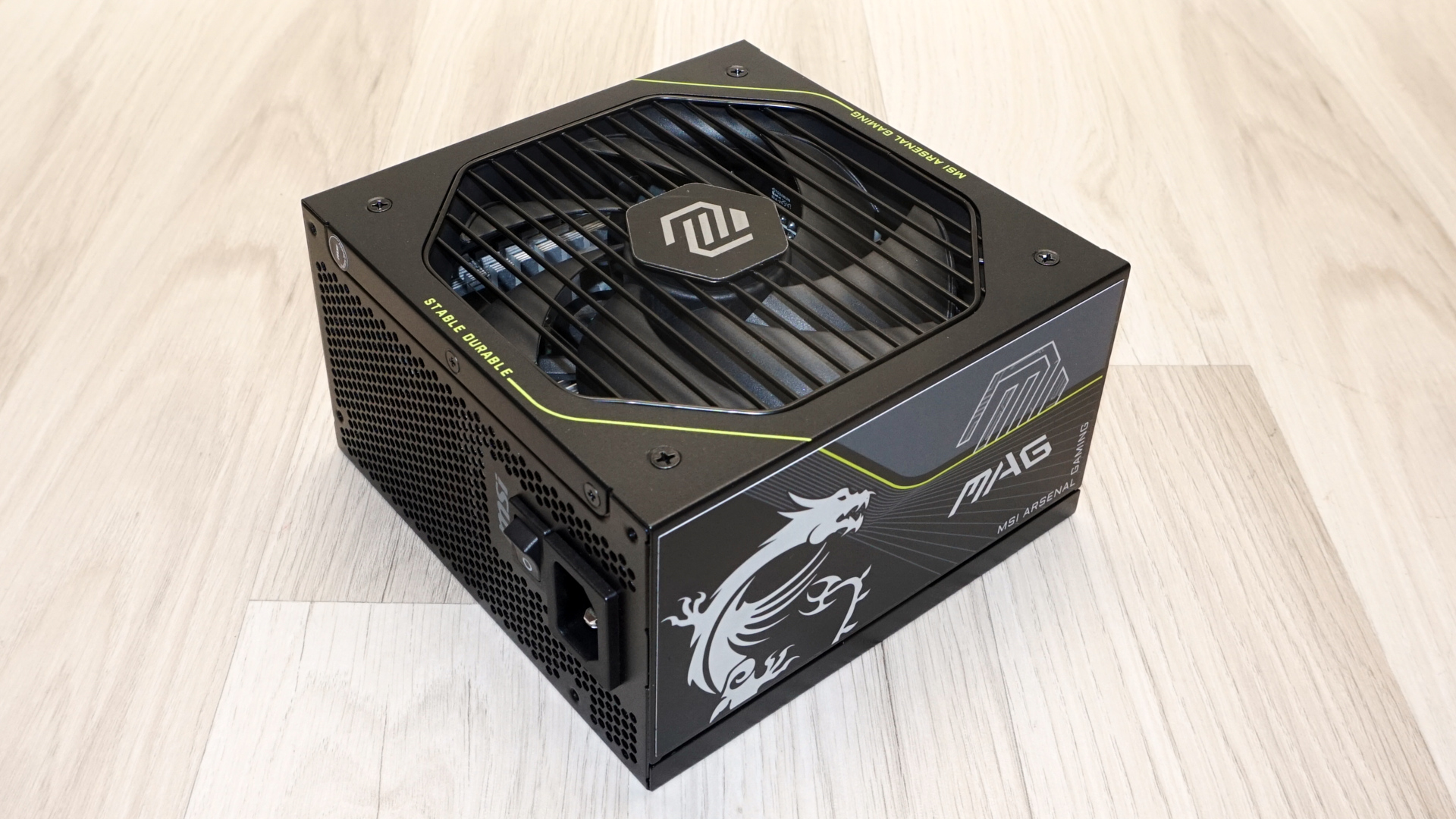
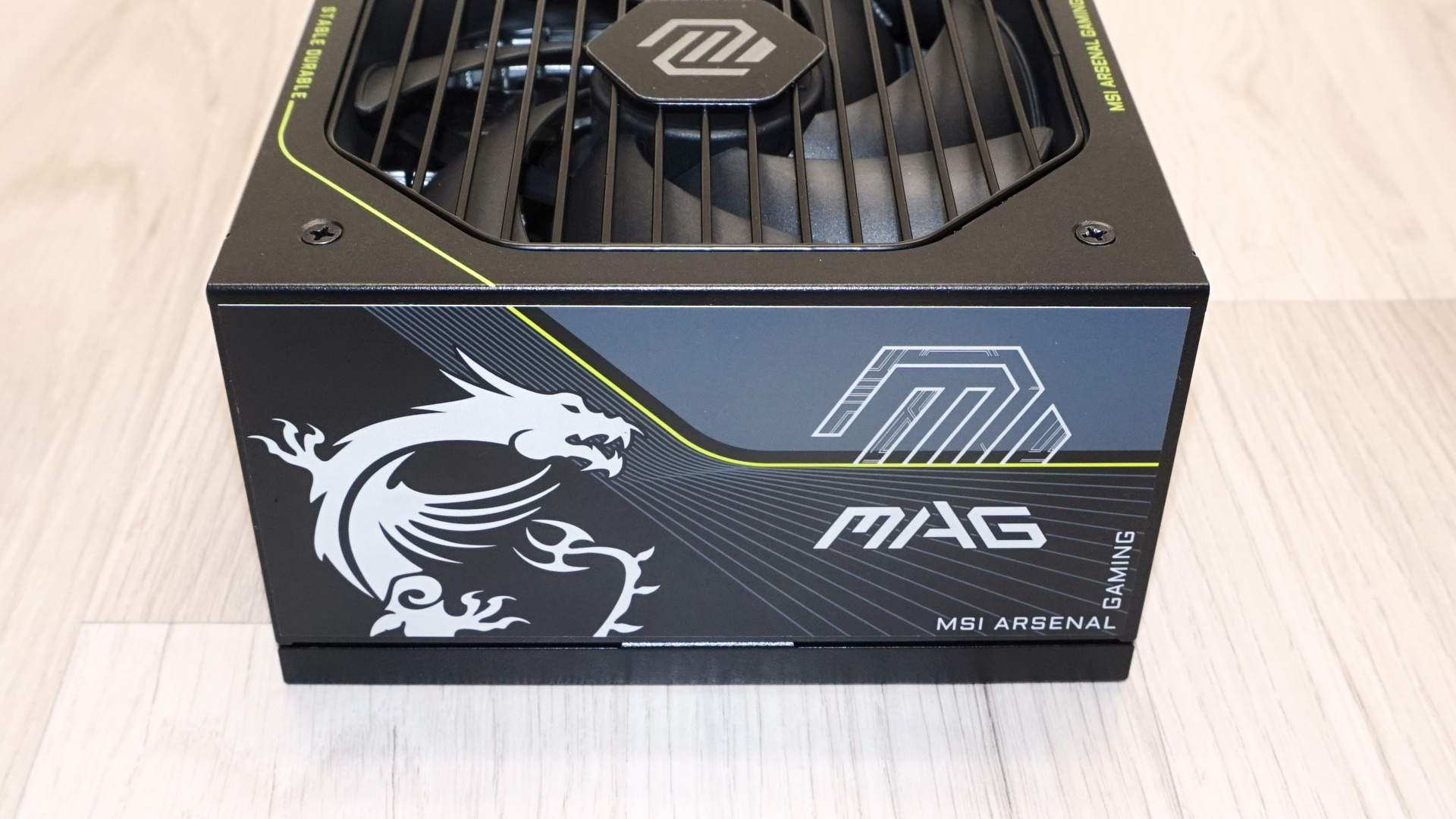
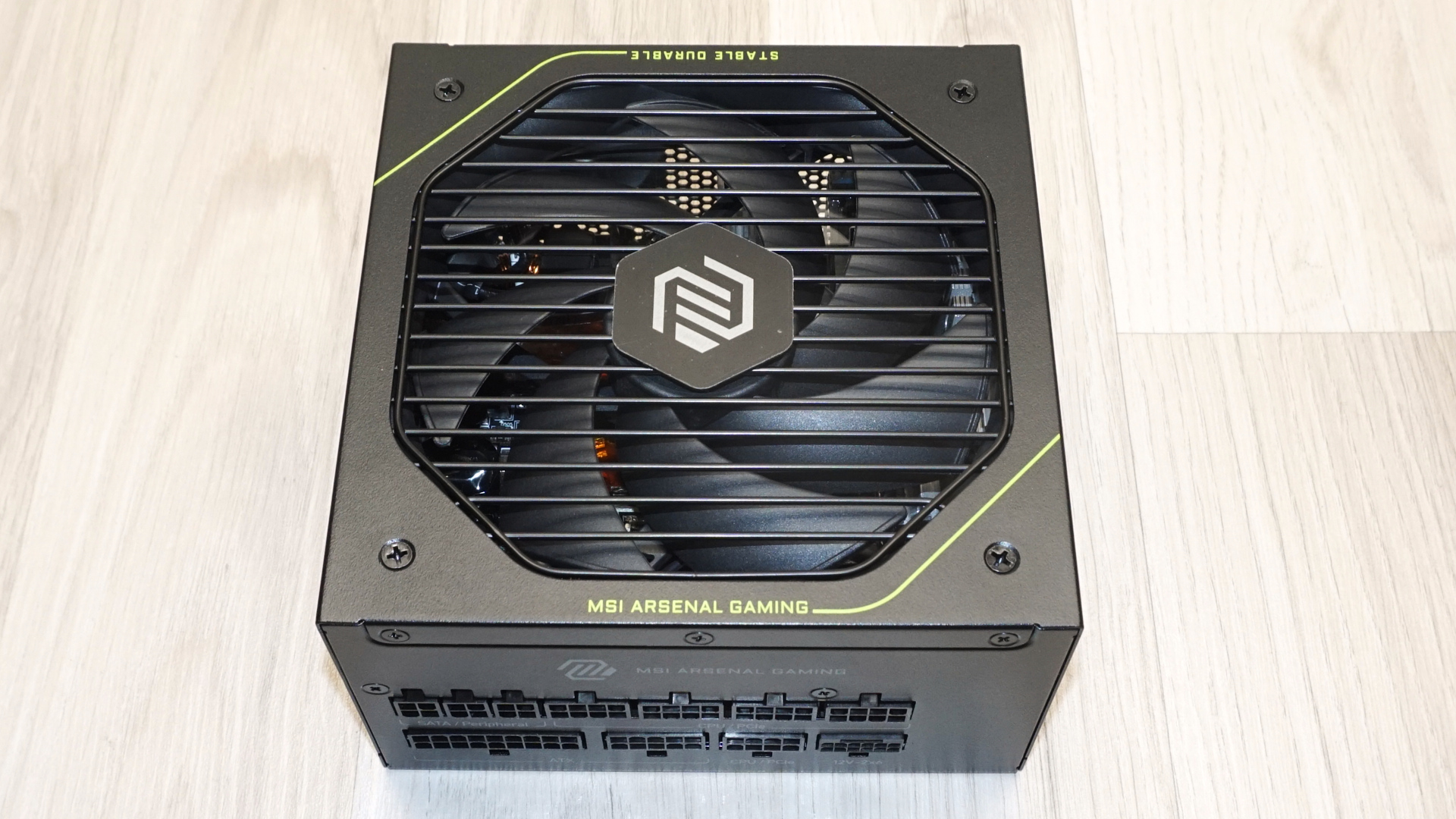
The overall aesthetic is complex. Yellow accent lines run across multiple sides, decorative stickers cover the left and right panels, and the top surface carries the sticker with the electrical specifications and certifications. The fan guard is hexagonal rather than the more common circular wire shield, and the MSI logo sits centrally above the fan motor. These aggressive intentional styling choices are meant to set the unit apart visually, though opinions on how far to take decorative elements on a PSU will vary.
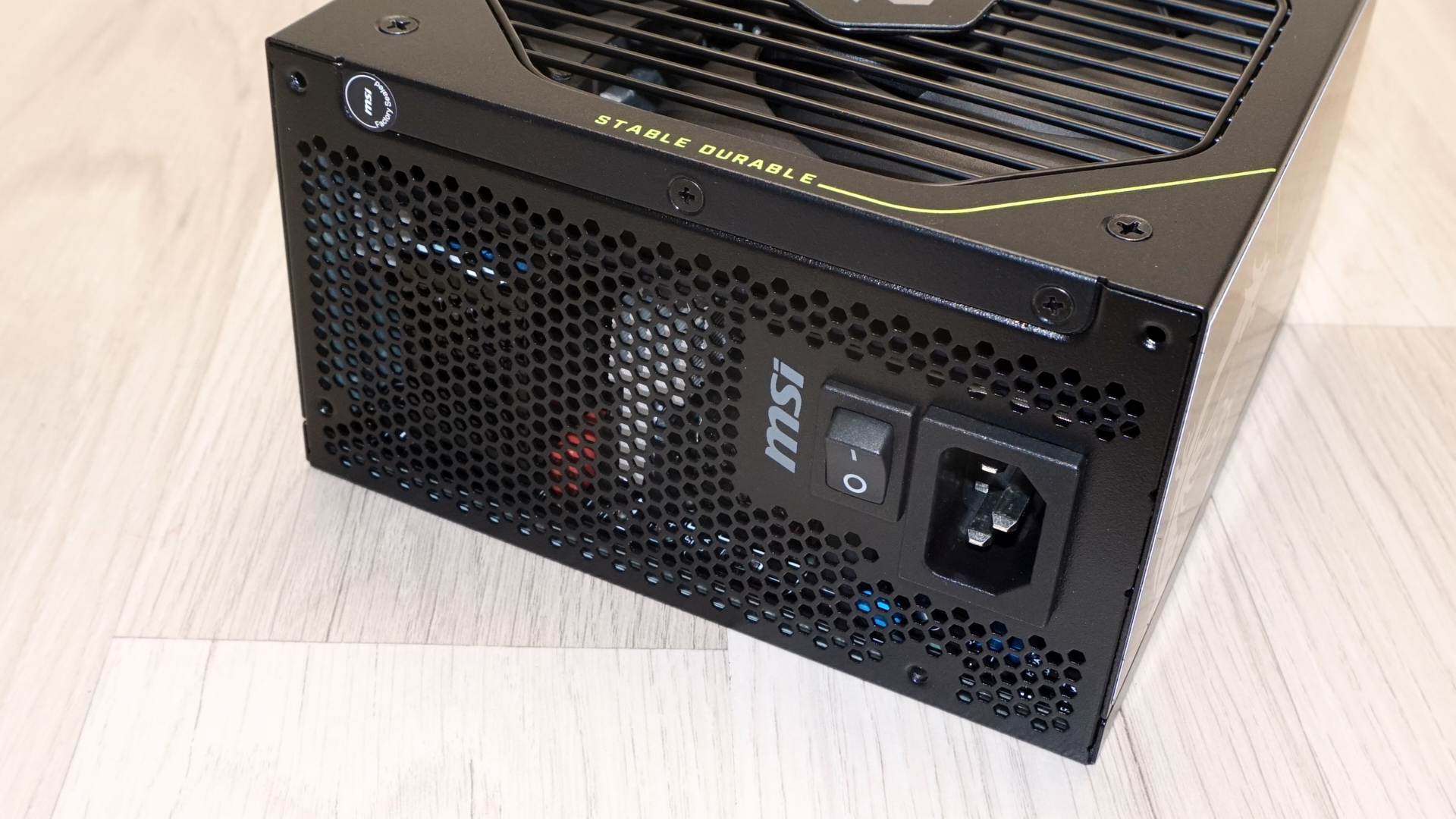
The front panel holds only the standard rocker switch and the AC receptacle. The rear carries the modular connectors array with a basic legend alongside each socket group.
Internal Design
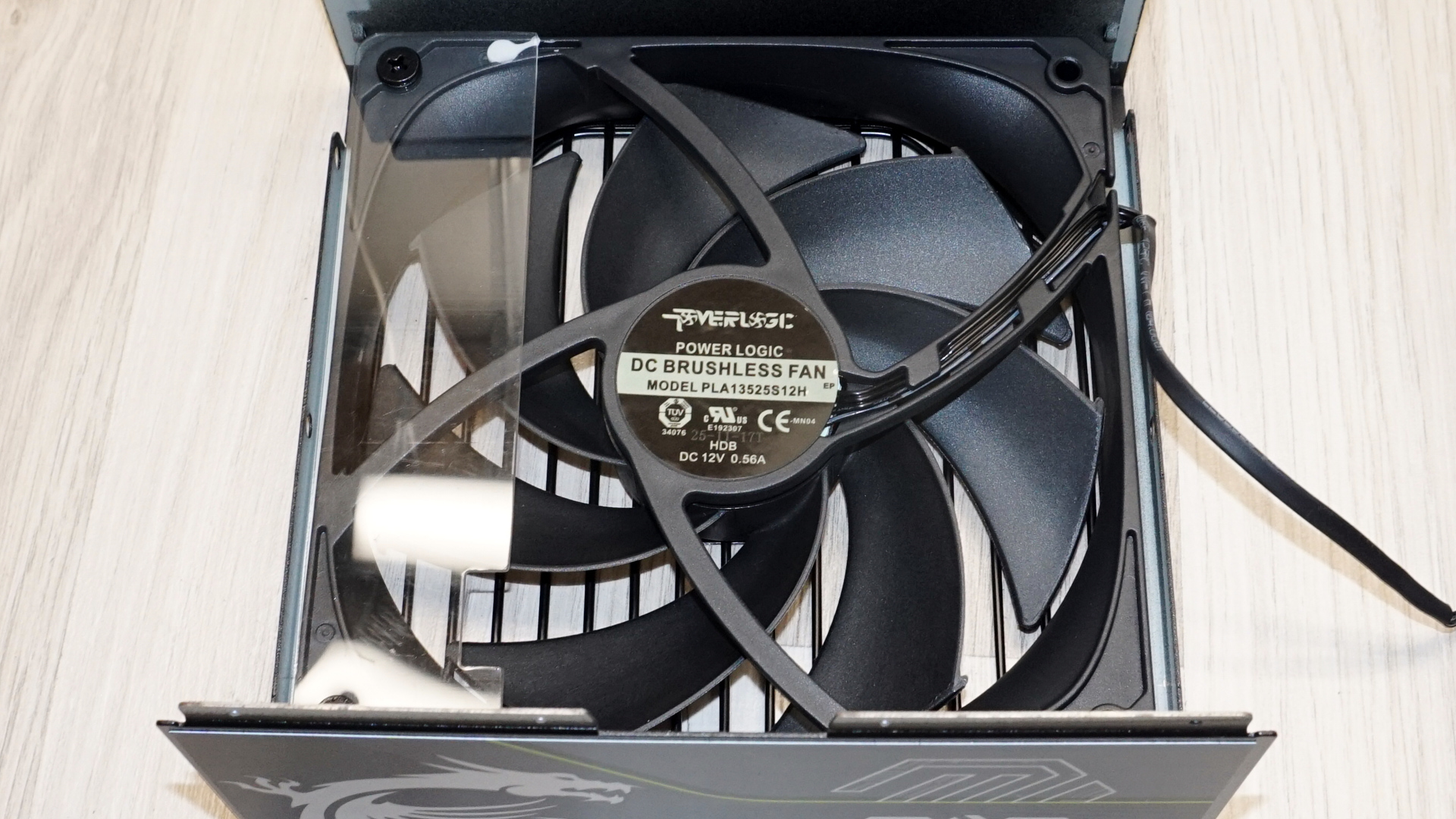
Cooling is handled by a Power Logic PLA13525S12H 135mm fan using a fluid dynamic bearing (FDB) engine. FDB remains the preferred bearing type for balancing acoustic performance and service longevity, sitting comfortably between the quietness of sleeve bearings and the durability of dual ball bearings. The rated maximum speed is 2300 RPM, which is high for this fan diameter but not unreasonable given that 1200 watts generates meaningful heat even in an efficient design. MSI has integrated a rotation sensor with an audible alarm that activates if the fan stops spinning, an appreciated safety feature that gives the user immediate audible feedback in the event of a fan failure.
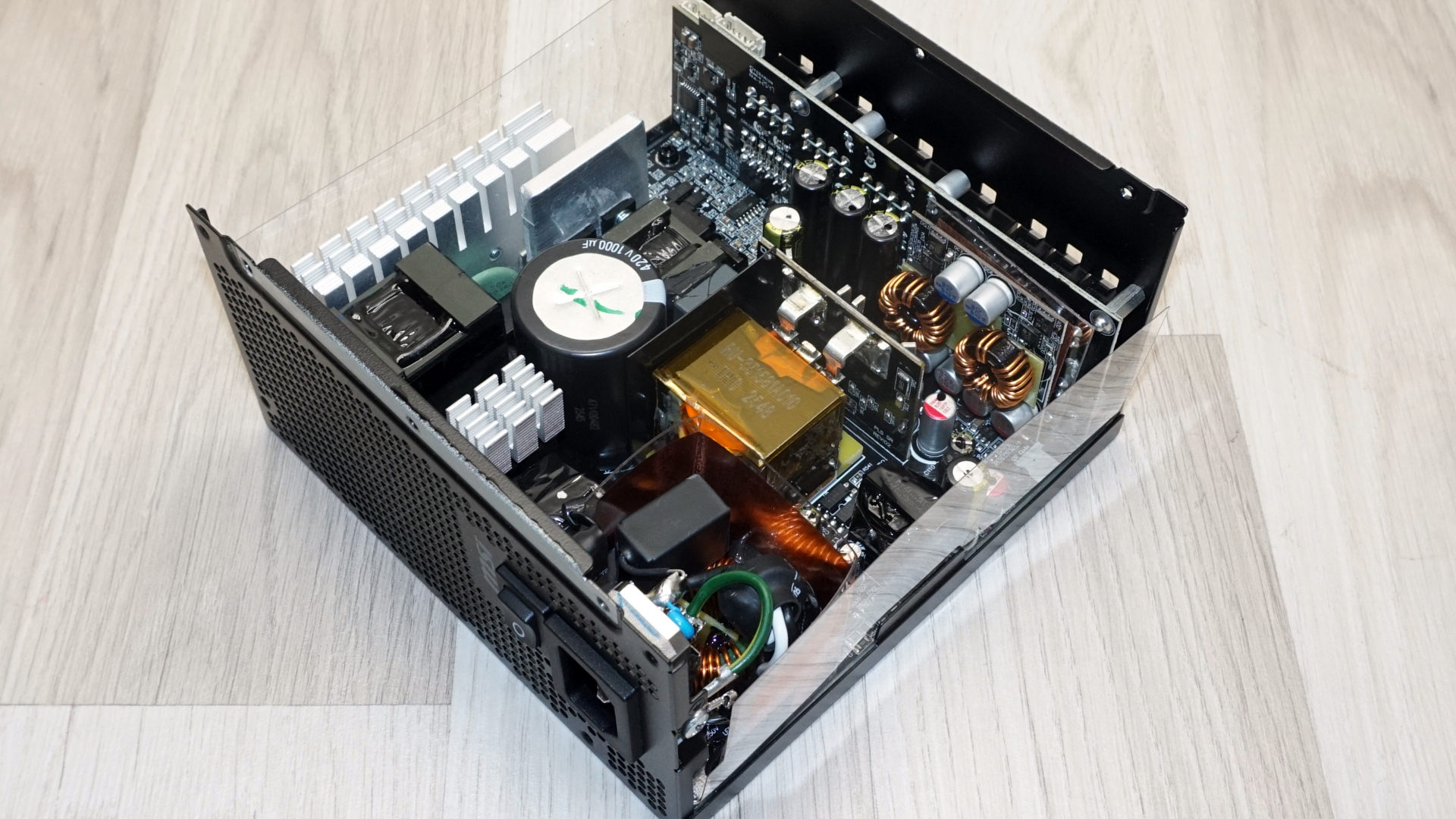
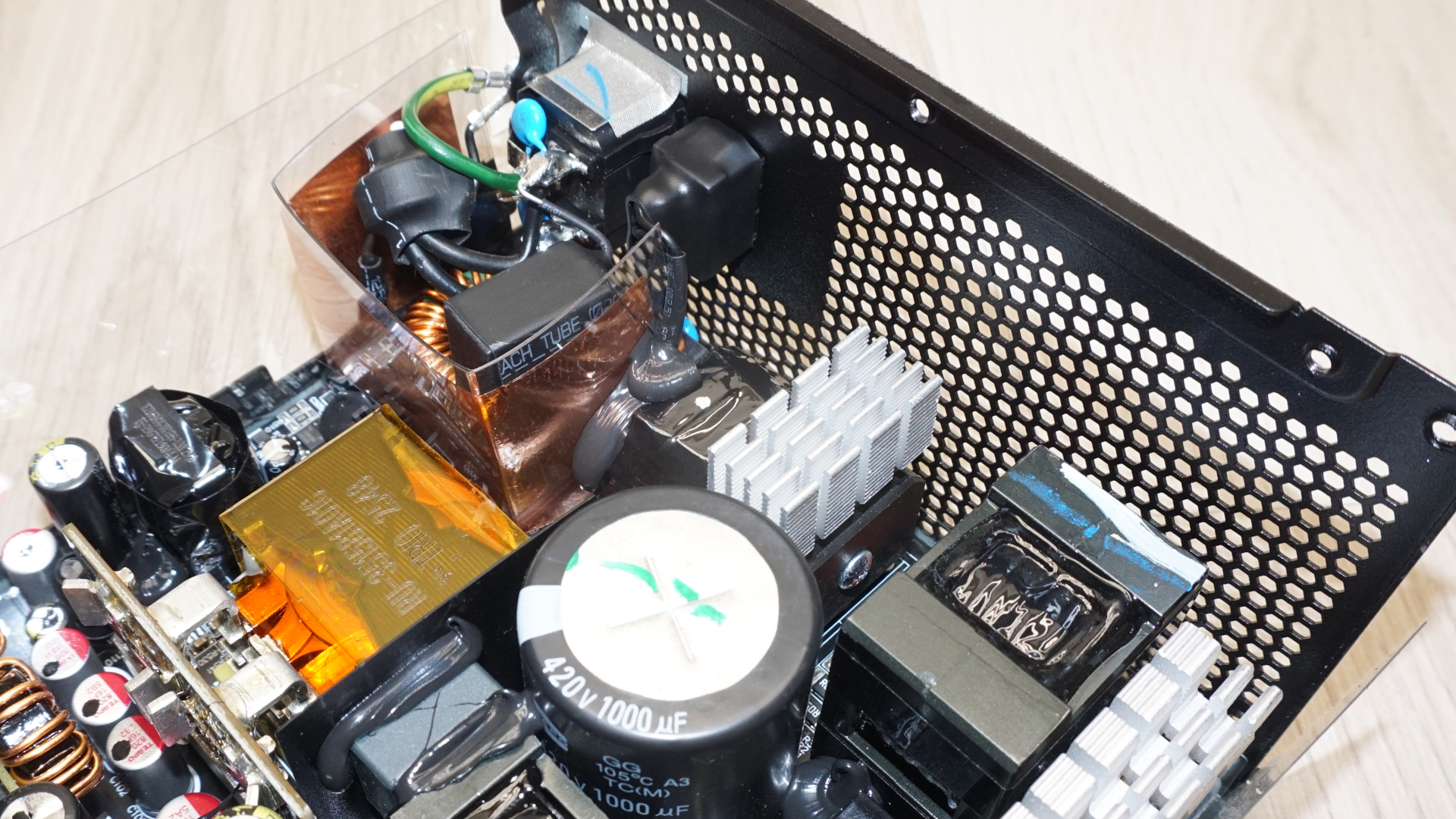
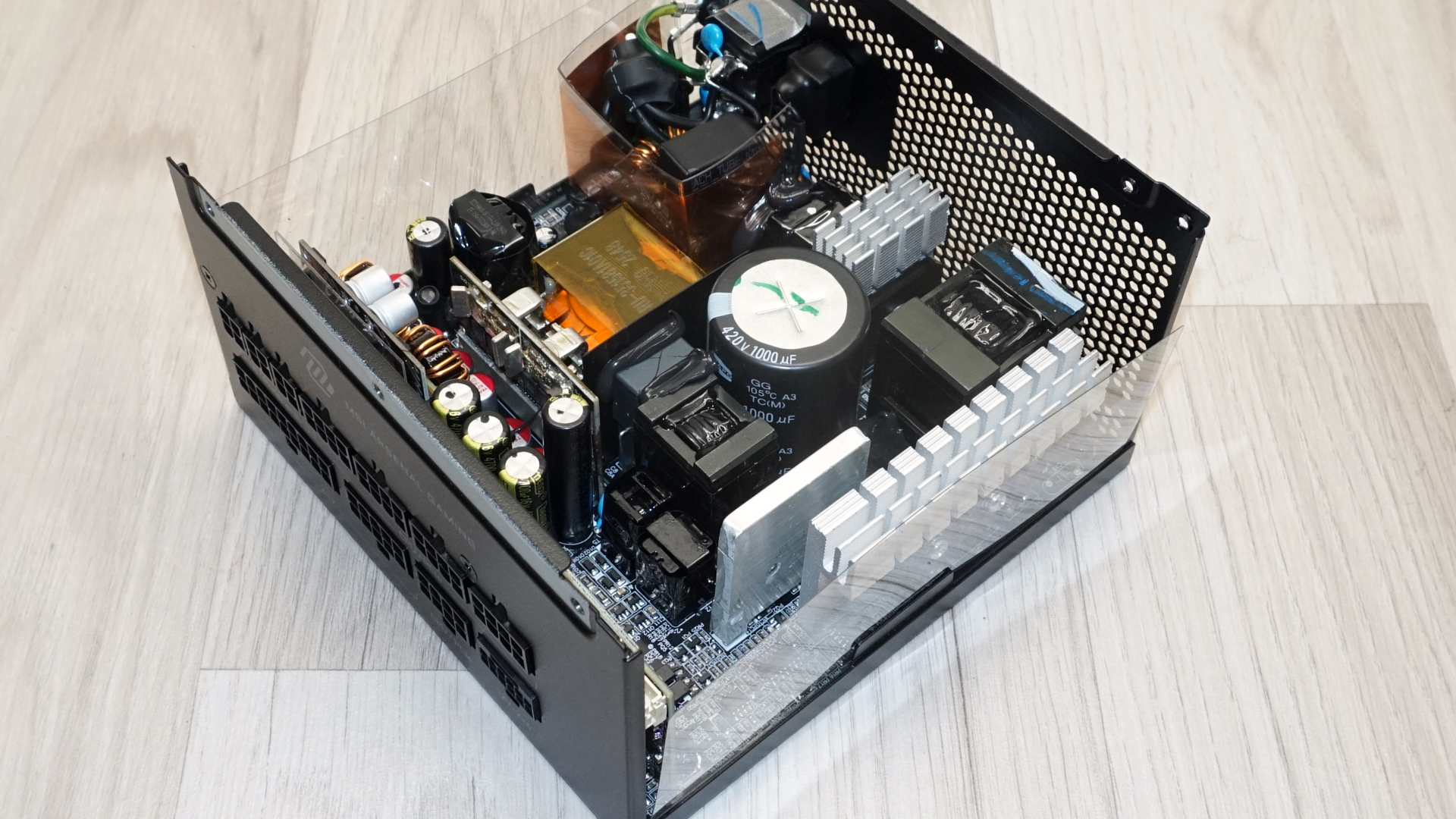
The OEM, Channel-Well Technology, brings a platform built around established topologies. Input filtering is adequate, with six Y capacitors, two X capacitors, and two common-mode inductors. Two rectifying bridges share a generously sized heatsink immediately after the filtration stage.
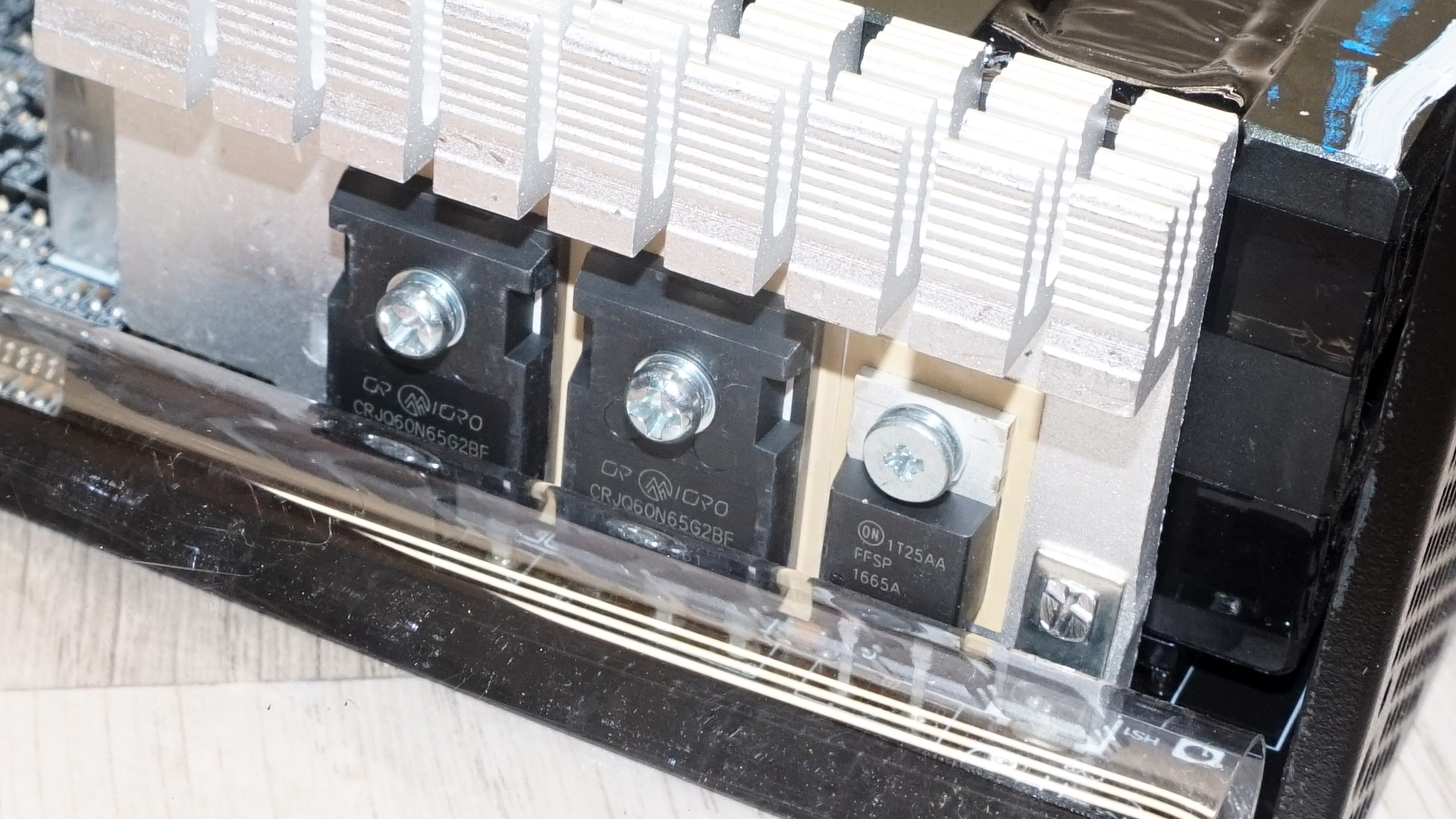
The APFC circuit uses two CRmicro CRJQ60N65G2BF MOSFETs and a diode, mounted on the largest heatsink in the unit. A large encased inductor and a Teapo 1000μF bulk capacitor complete the APFC stage. The primary inversion stage is a half-bridge topology using two familiar STMicroelectronics STW43N60DM2 MOSFETs. STMicroelectronics needs no introduction in power electronics, and the choice of their silicon here is a positive. These MOSFETs share a basic aluminum slab heatsink that seems borderline functional and hints of the high efficiency these MOSFETs have.
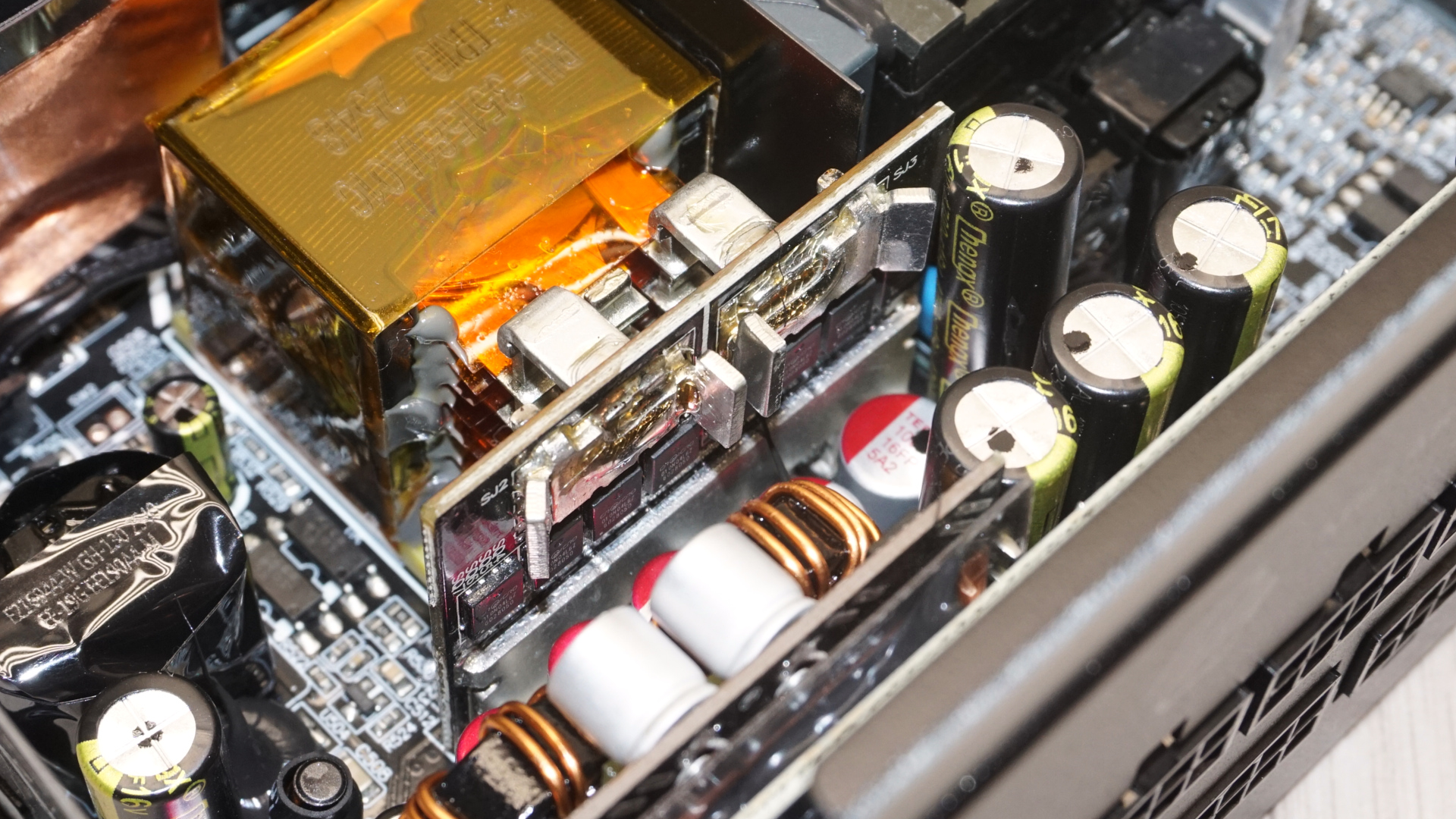
The secondary side generates the 12V rail using eight ChongQing PingWei Enterprise C009N04ES MOSFETs in a synchronous rectification topology, mounted on a vertical PCB. The 3.3V and 5V lines are produced by DC-to-DC converters on a separate daughterboard, which is the correct modern approach for minor rail quality and stability.
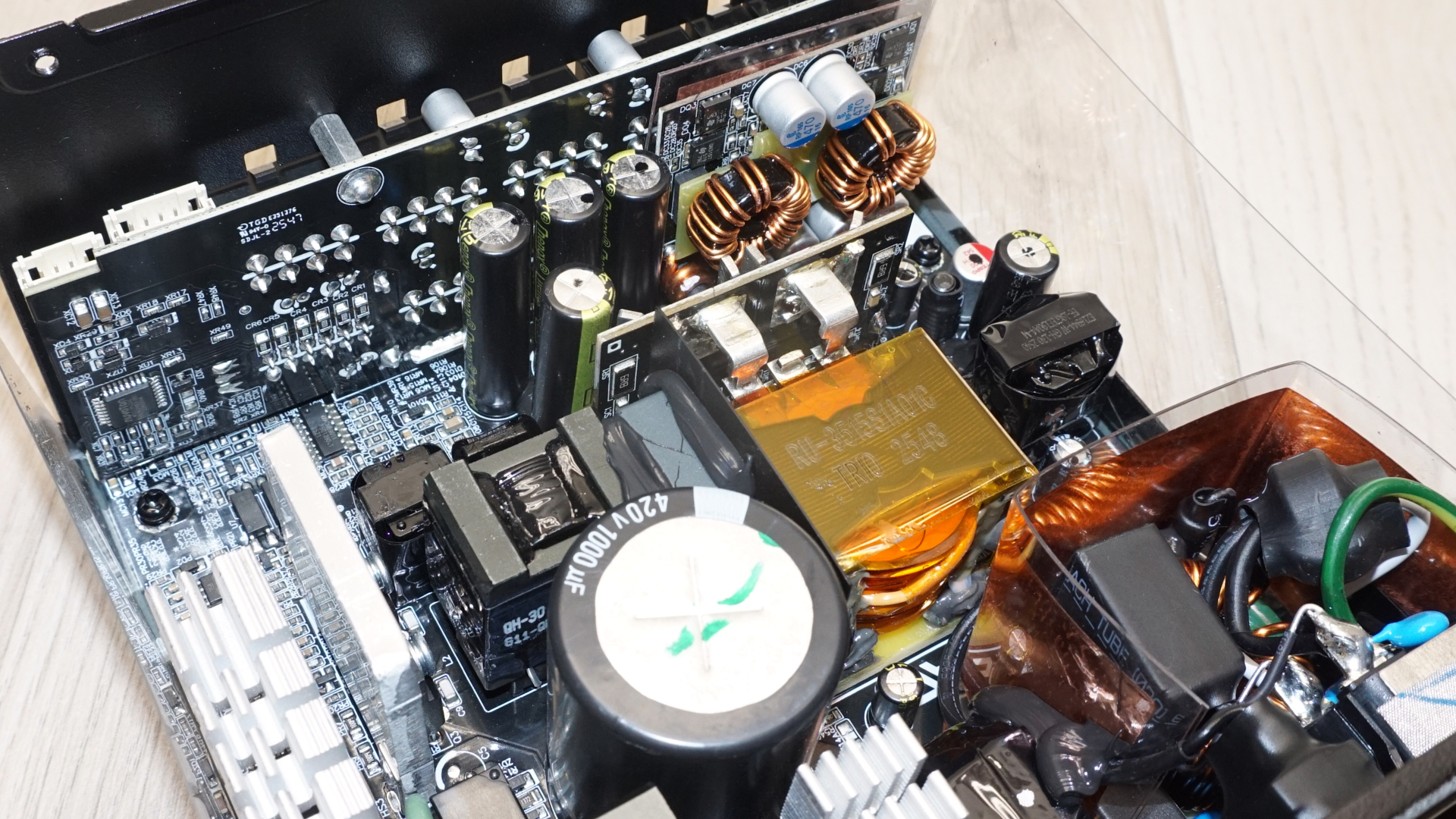
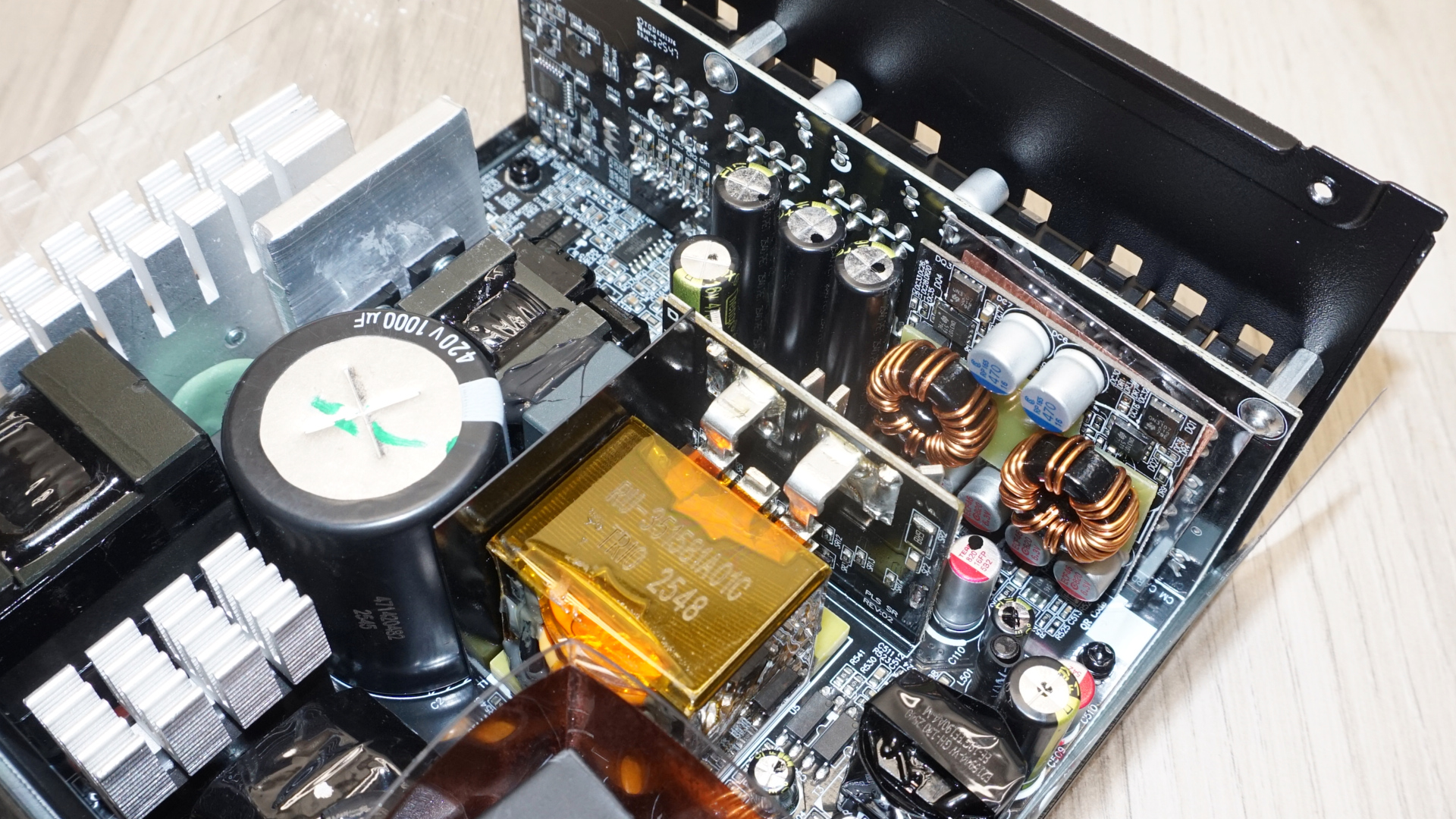
Secondary electrolytic capacitors come from Teapo and ChengX. Solid-state capacitors are sourced entirely from Teapo. Neither brand is disreputable, but Teapo is typically found in mid-tier designs and ChengX in low-to-mid-tier designs. Seeing ChengX capacitors in a unit priced at $250 is notable and not in a positive way. Buyers at this price range are entitled to expect Japanese-origin components from manufacturers like Rubycon or Nippon Chemi-Con.
Cold Test Results
Cold Test Results (25°C Ambient)
For the testing of PSUs, we are using high precision electronic loads with a maximum power draw of 2700 Watts, a Rigol DS5042M 40 MHz oscilloscope, an Extech 380803 power analyzer, two high precision UNI-T UT-325 digital thermometers, an Extech HD600 SPL meter, a self-designed hotbox and various other bits and parts.
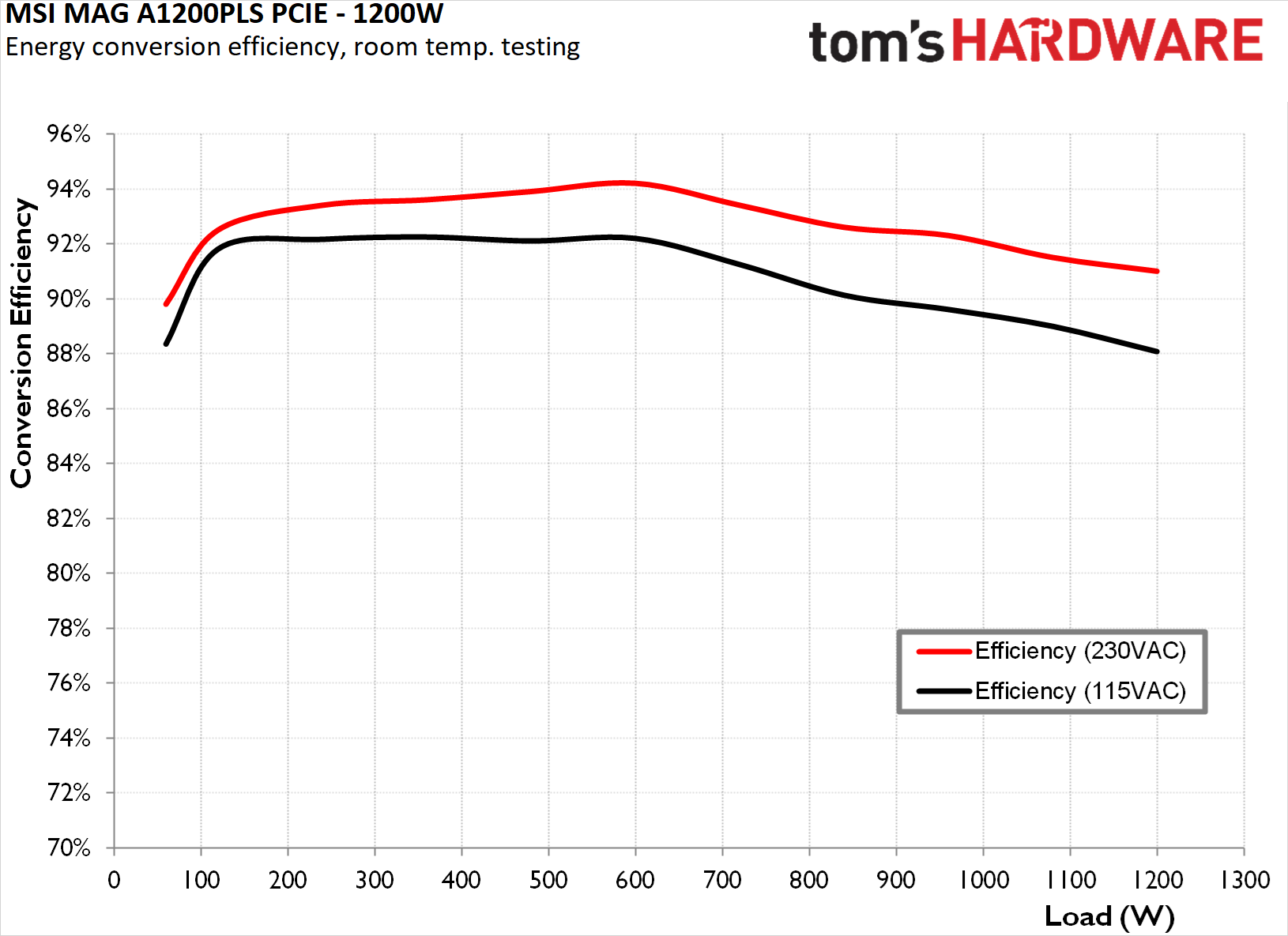
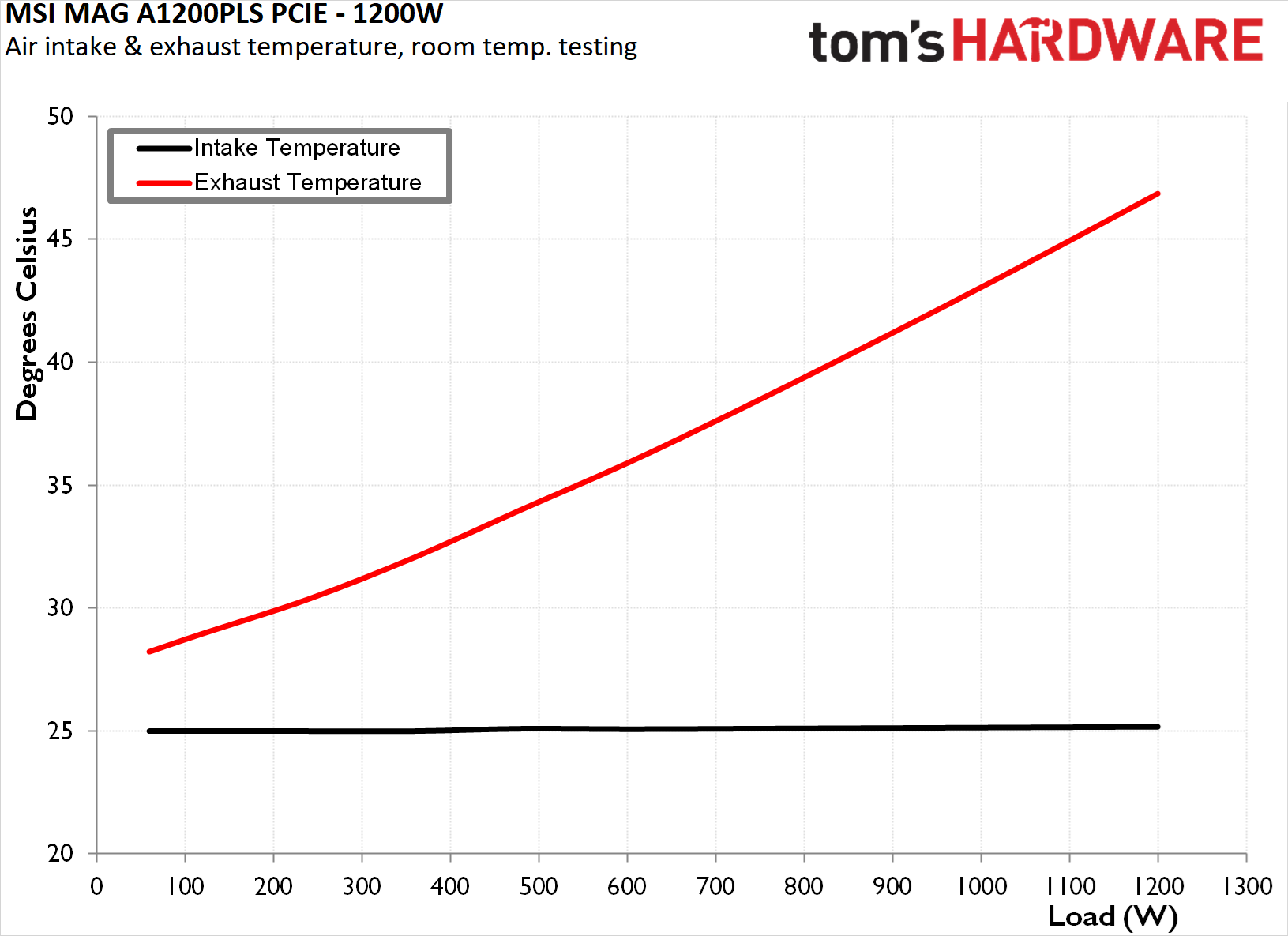
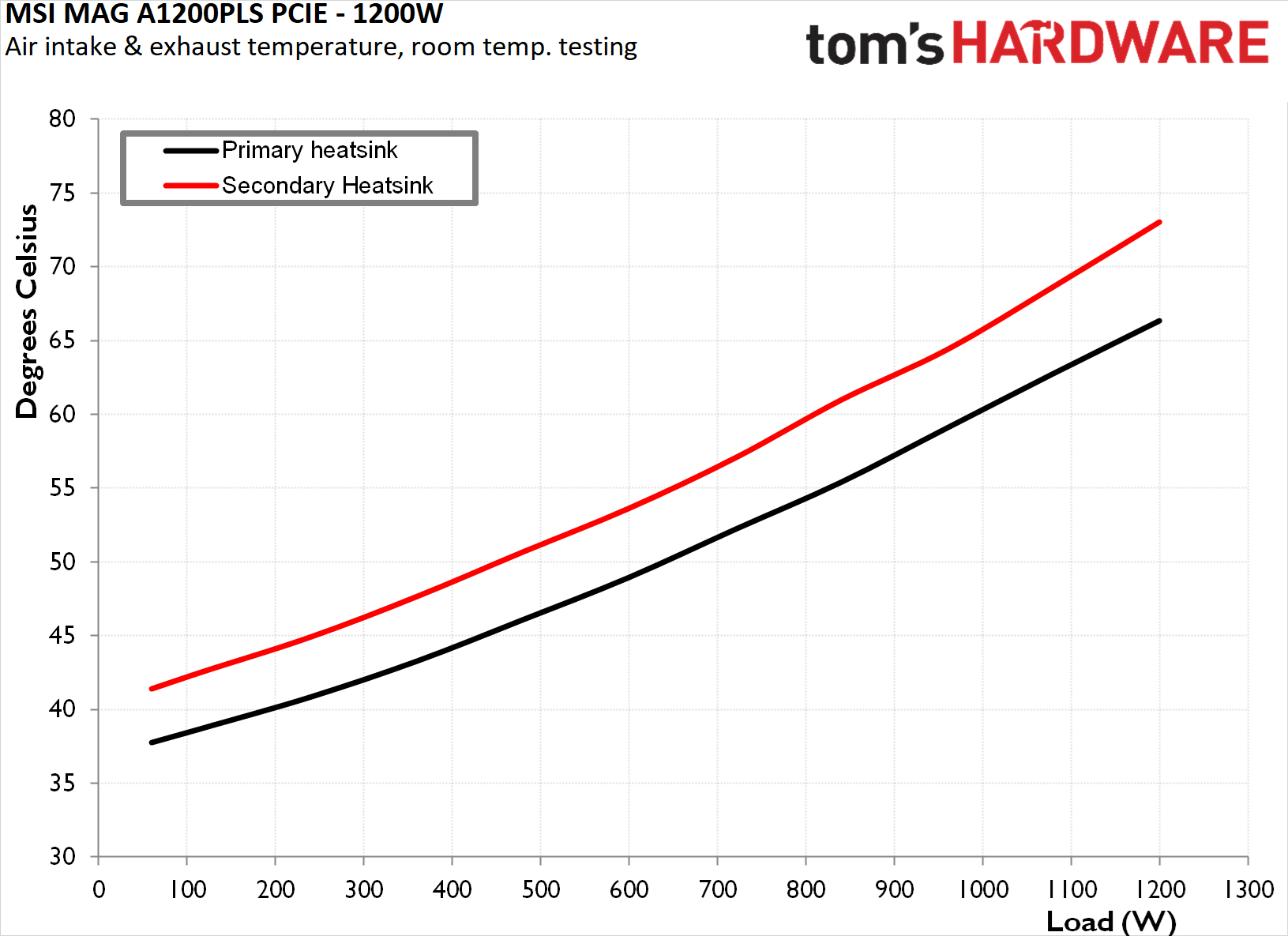
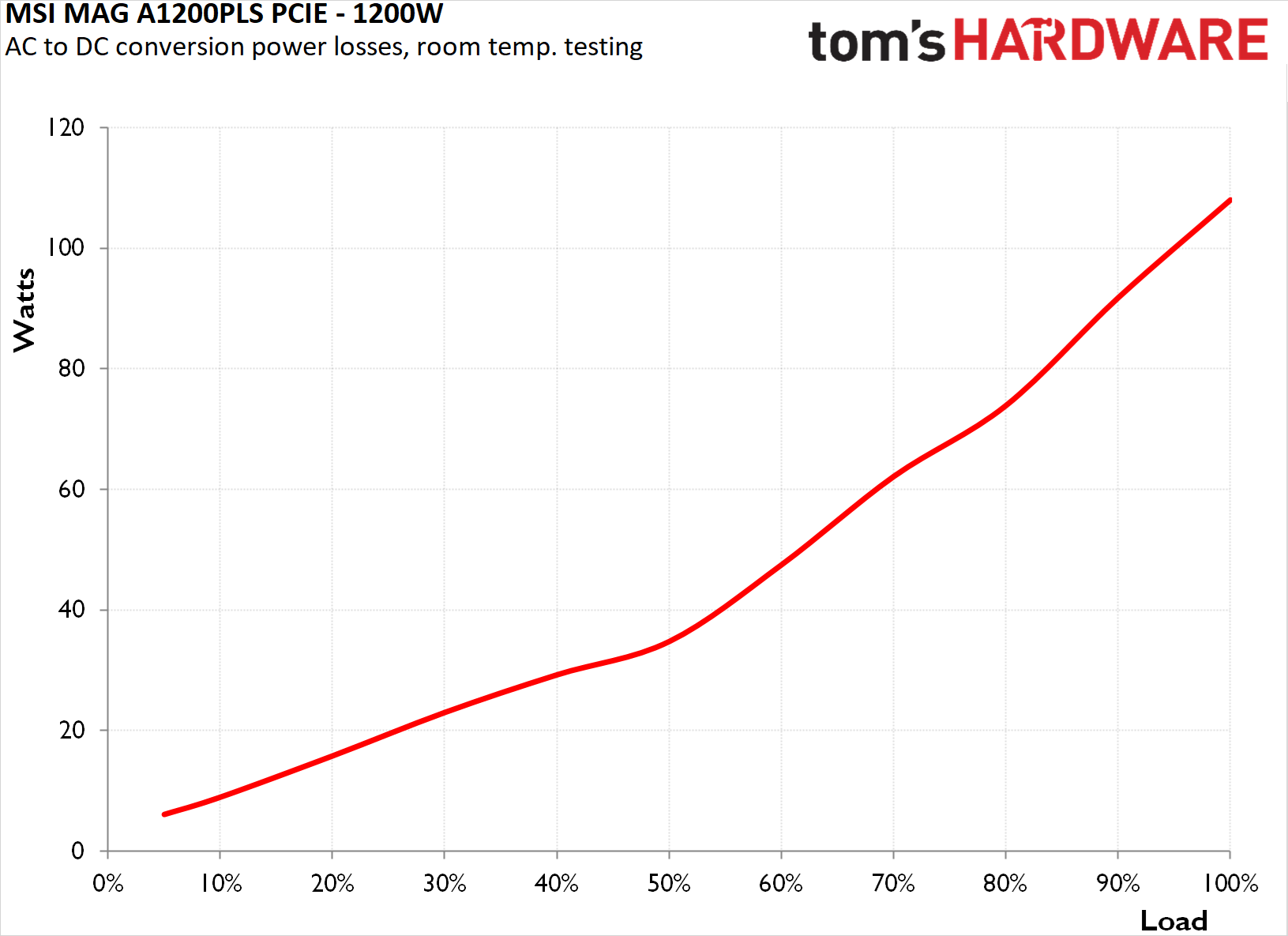
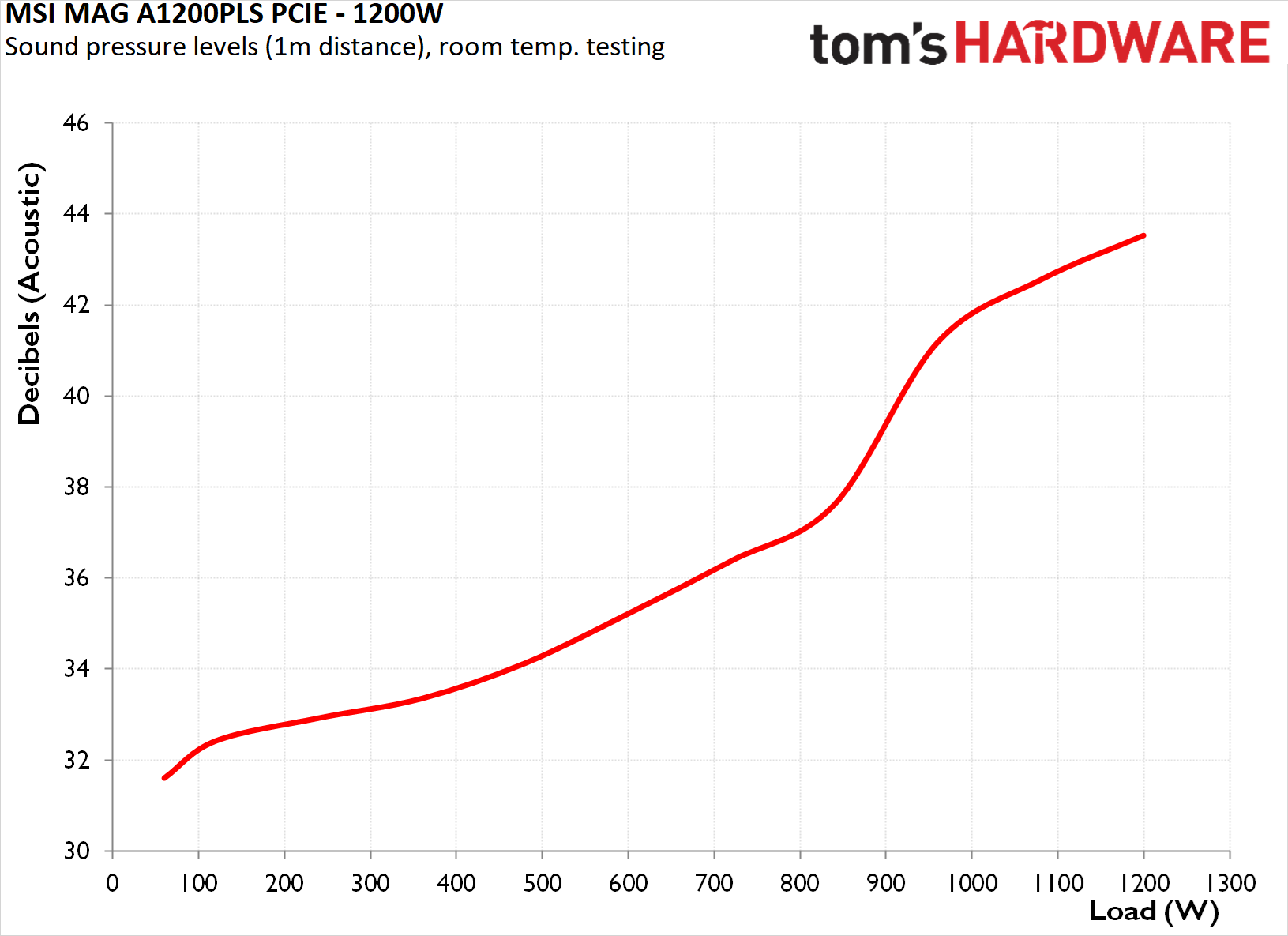
At 115 VAC, average nominal load efficiency is 90.9%. At 230 VAC, it reaches 92.8%. Both results satisfy the Cybenetics and PPLP.Info Platinum certification thresholds, which are averaged across the load range rather than requiring every individual test point to clear. The unit did not, however, verify its 80Plus Platinum performance at maximum load during our testing, where efficiency drops enough to fail the standard’s requirements. Checking CLEAResult’s report, we can see that the test unit only barely met the criteria during laboratory testing – something we could not reproduce, even if the difference is very small.
Efficiency peaks at approximately 30-40% load, which is lower than where PSUs typically are the most efficient. It remains relatively stable and well-behaved through most of the operating range before declining noticeably above 60 to 70% load. The fan operates continuously from startup, though it is effectively silent at low loads. Speed picks up sharply beyond 800 watts but the unit does not become intrusive under cold ambient conditions. Thermal performance under these conditions is adequate.
Hot Test Results
Hot Test Results (~45°C Ambient)
Elevated ambient temperature reveals meaningful weaknesses. At 115 VAC, average nominal efficiency drops to 88.9%. At 230 VAC, it falls to 90.9%. The two-percentage-point degradation is notable, though not catastrophic, but does reveal thermal stress as the degradation is more severe across the higher load part of the spectrum.
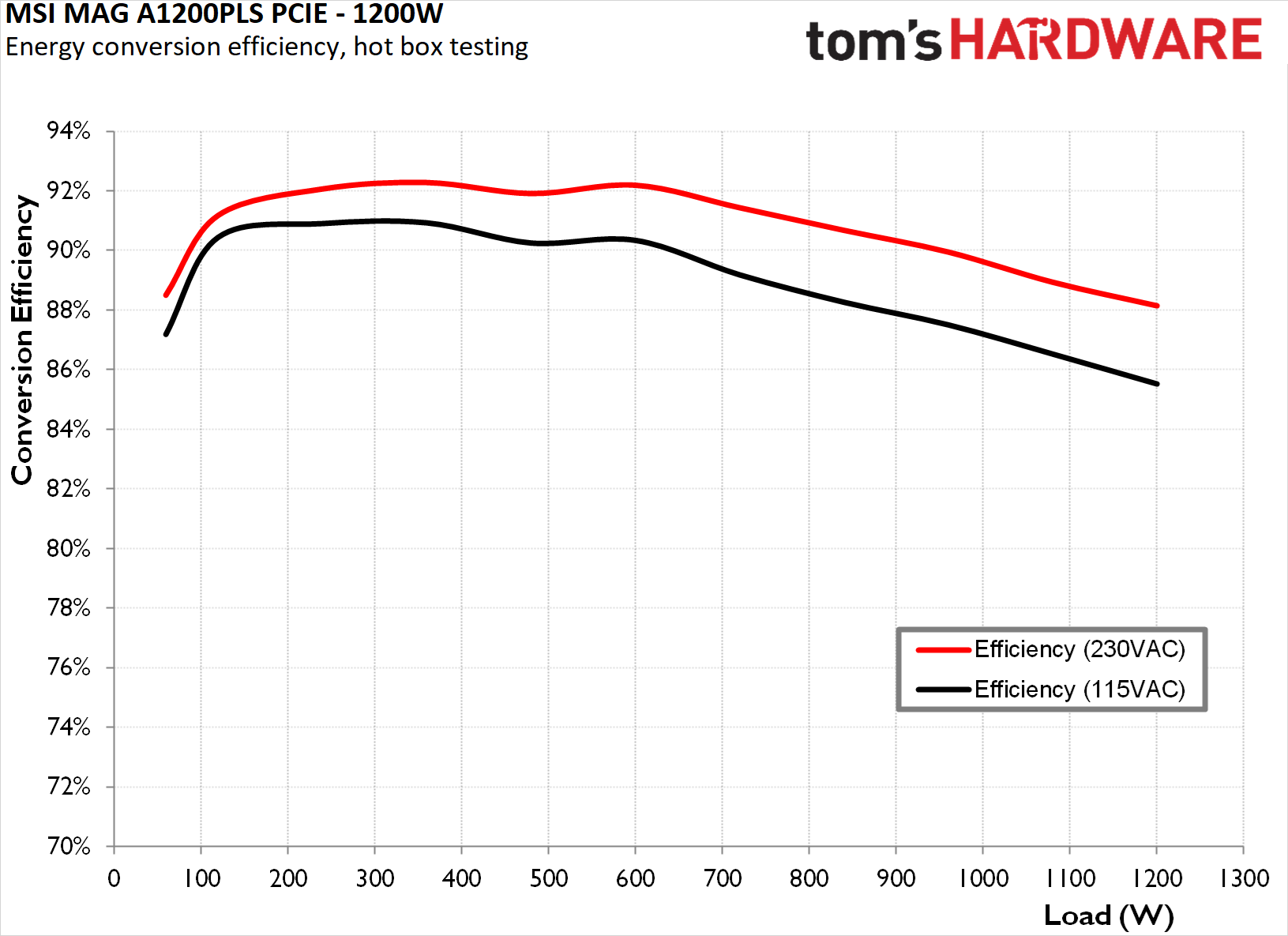
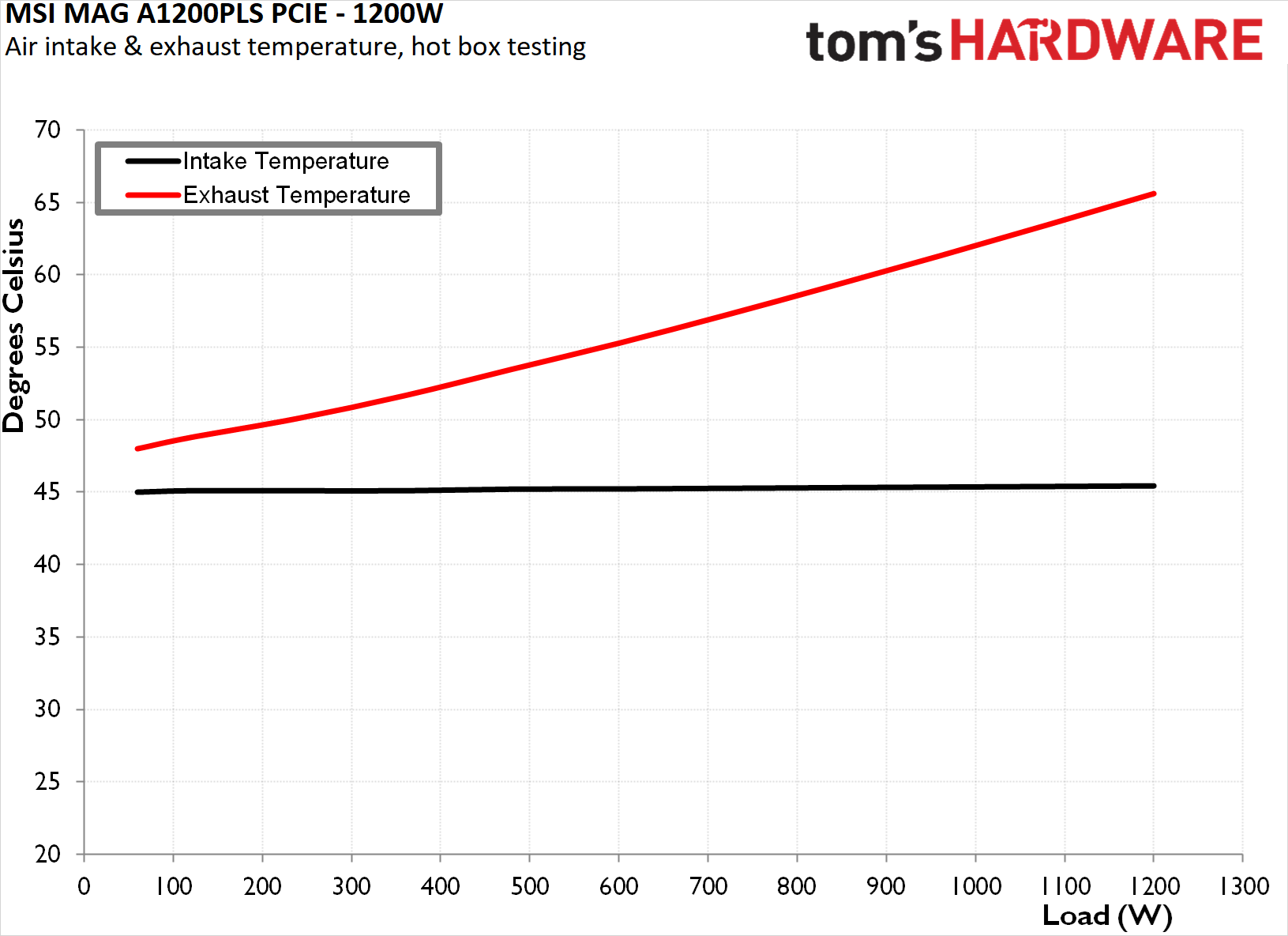
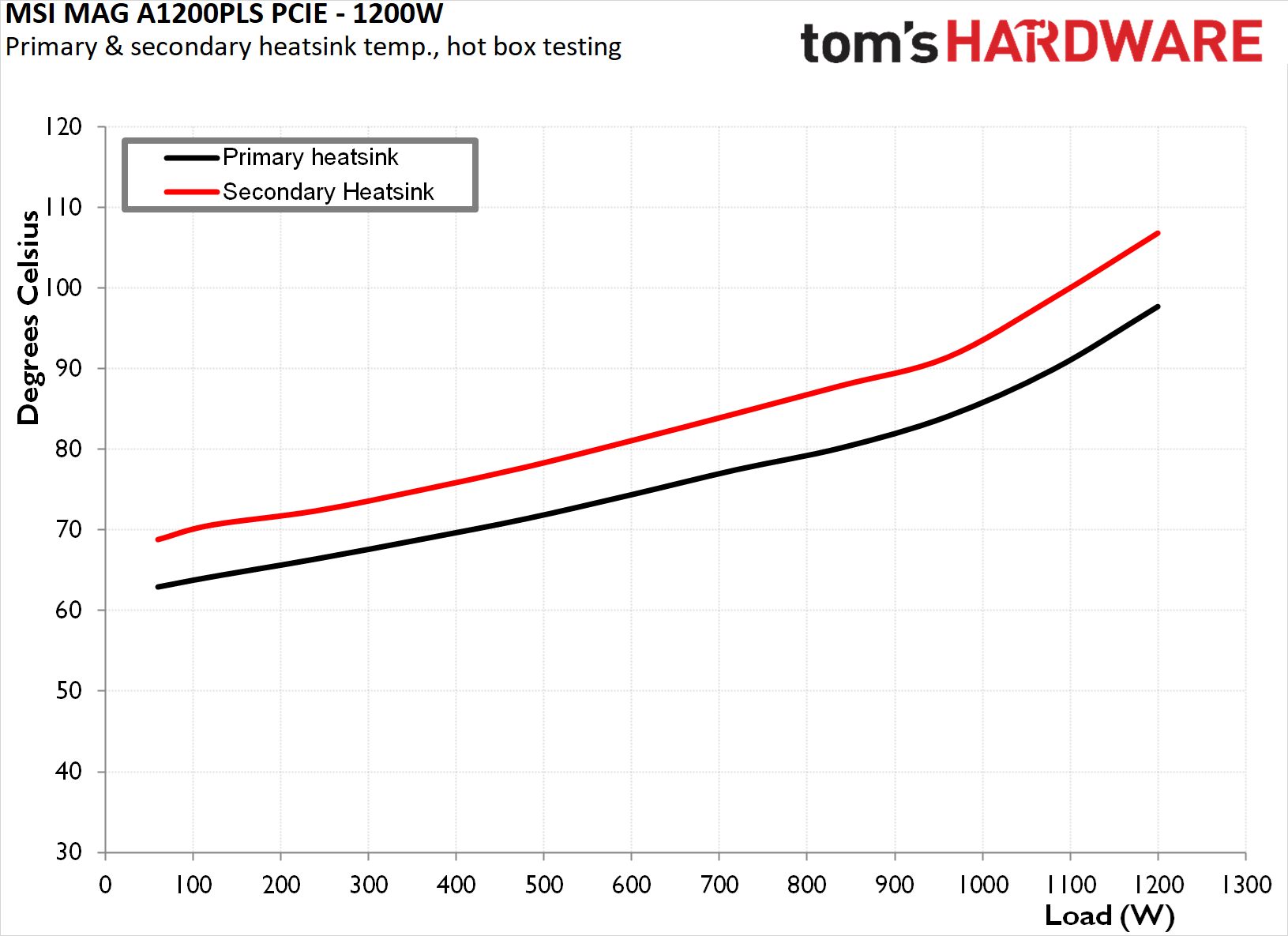
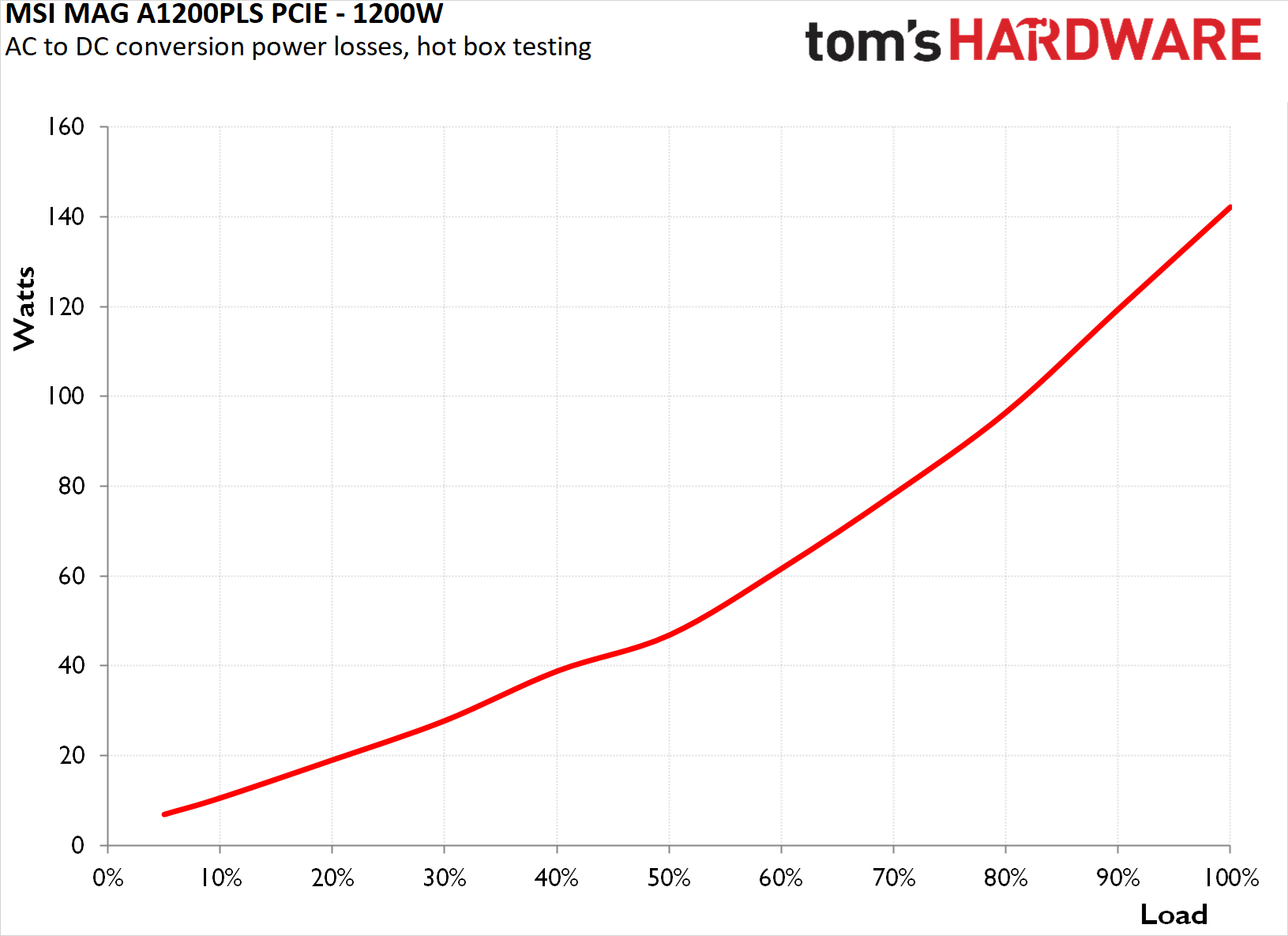
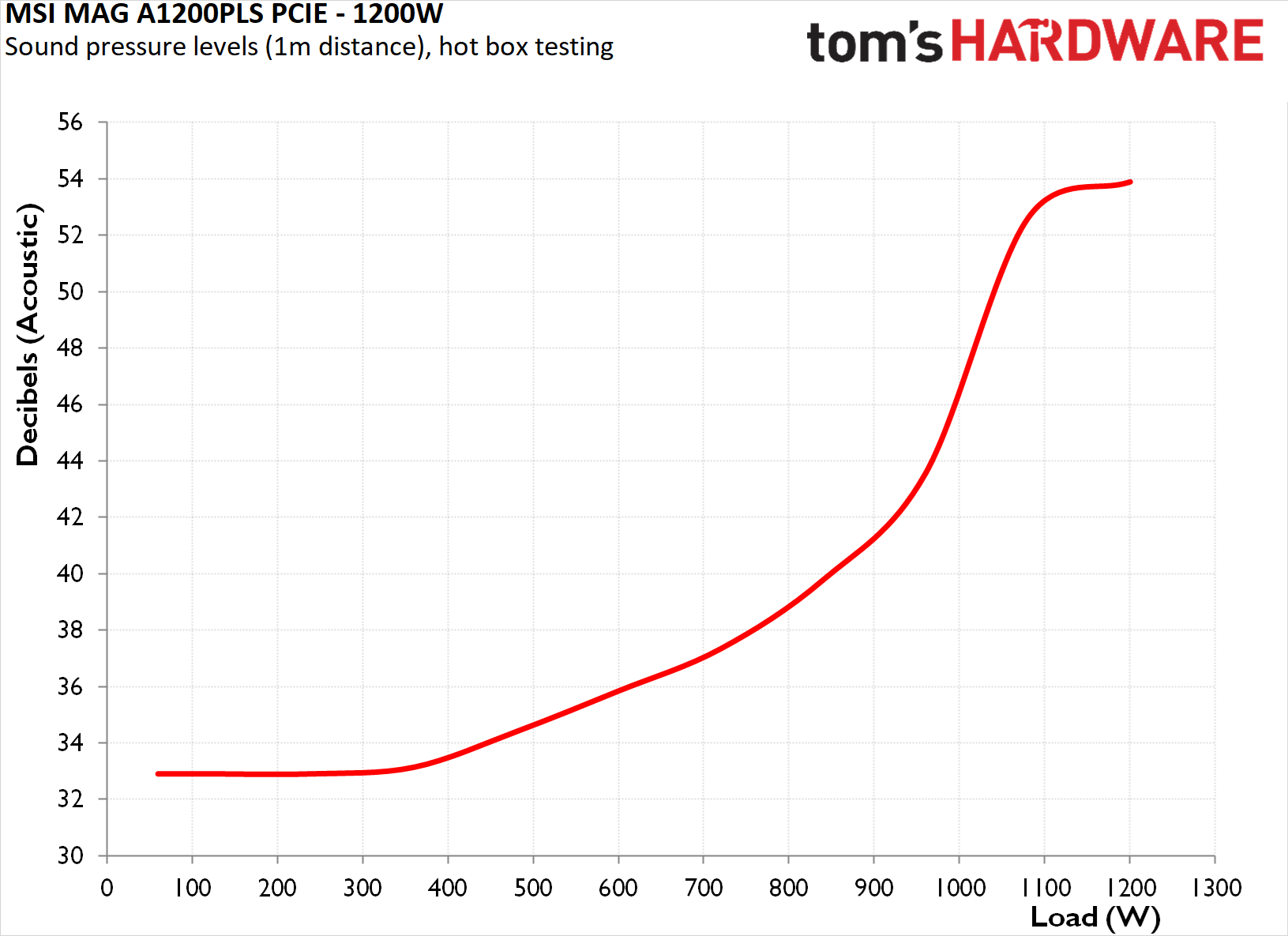
Fan behavior shifts more aggressively under these conditions. Speed increases at a faster rate than in cold testing and hits maximum output at approximately 90% load, well before the unit reaches rated output. Above that point, the fan is already turning at its ceiling and has no further capacity to compensate, which causes internal temperatures to climb at a steeper rate during the final portion of the load range. The unit did not trigger over-temperature protection during testing, but the thermal margin at full load in a warm environment is not generous. Under high sustained loads in a hot enclosure, acoustic output becomes noticeable. At low to moderate loads, the unit remains quiet even under elevated ambient temperatures.
PSU Quality and Bottom Line
Power Supply Quality
Voltage regulation is competent without being exceptional. The 12V rail holds to within 1.2% across the full load range, the 5V rail to 1.4%, and the 3.3V rail to 1.6%. These are acceptable numbers by current standards, though for a unit priced at $250, the expectation sits somewhat higher. Ripple filtering is where the MAG A1200PLS PCIE5 more clearly earns its tier. The 12V rail peaks at 44 mV, the 5V rail at 26 mV, and the 3.3V rail at 28 mV. All figures clear the ATX specification limits by a comfortable margin and represent genuinely clean output across all three rails.
During our routine evaluation, we examine the fundamental protection features of all power supply units we review, including Over Current Protection (OCP), Over Voltage Protection (OVP), Over Power Protection (OPP), and Short Circuit Protection (SCP). Protection circuit behavior is broadly well-tuned. The 3.3V OCP triggers at 136% of rated current and the 5V at 132%, both reasonable margins. The 12V OCP activates at 128%, giving enough headroom for transient loads without being dangerously lax. OPP under hot conditions engages at 126% of rated output, which is a responsible threshold given the thermal behavior observed at high load.
Swipe to scroll horizontally
Load (Watts) | 242.83 W | Row 0 - Cell 2 | 604.95 W | Row 0 - Cell 4 | 903.49 W | Row 0 - Cell 6 | 1199.68 W | |
Load (Percent) | 20.24% | Row 1 - Cell 2 | 50.41% | Row 1 - Cell 4 | 75.29% | Row 1 - Cell 6 | 99.97% | Row 1 - Cell 8 |
| Row 2 - Cell 0 | Amperes | Volts | Amperes | Volts | Amperes | Volts | Amperes | Volts |
3.3 V | 1.87 | 3.41 | 4.68 | 3.39 | 7.01 | 3.37 | 9.35 | 3.36 |
5 V | 1.87 | 5.08 | 4.68 | 5.05 | 7.01 | 5.03 | 9.35 | 5.01 |
12 V | 18.71 | 12.13 | 46.77 | 12.09 | 70.15 | 12.04 | 93.53 | 11.99 |
Swipe to scroll horizontally
Line | Regulation (20% to 100% load) | Voltage Ripple (mV) | Row 0 - Cell 3 | Row 0 - Cell 4 | Row 0 - Cell 5 | Row 0 - Cell 6 | |
| Row 1 - Cell 0 | Row 1 - Cell 1 | 20% Load | 50% Load | 75% Load | 100% Load | CL1 12V | CL2 3.3V + 5V |
3.3V | 1.60% | 18 | 18 | 22 | 28 | 20 | 26 |
5V | 1.40% | 18 | 18 | 24 | 26 | 20 | 26 |
12V | 1.20% | 26 | 26 | 34 | 44 | 42 | 28 |
Bottom Line
The MSI MAG A1200PLS PCIE5 is a competent 1200W unit from a known and capable OEM, with good power quality, and efficient room-temperature performance. Much of the marketing efforts are based on the striking, militaristic exterior design. The cable implementation is thoughtful, the fan alarm is a valuable inclusion, and the visual insertion confirmation on the 12V-2x6 connector partially addresses a real-world issue. There is genuine engineering consideration evident in the design.
The criticisms, however, accumulate at the price point MSI has chosen. Overall, we feel that the MAG A1200PLS is inadequate as a top-tier 1200W unit and should not require negotiation at $250. The secondary capacitor selection, with ChengX and Teapo where Rubycon or Nippon Chemi-Con would be expected, is a cost-cutting decision that conflicts with the premium positioning. The efficiency certifications are there and we cannot claim otherwise but we could not replicate equally good results. Even looking at the certification datasheets, they do tell a tale, with the efficiency peaking early and plummeting at higher loads, suggesting that the unit may be a little overdriven compared to its actual capabilities. And the thermal behavior under hot ambient conditions at high load, while not dangerous, is a reminder that this platform is working near its limits when conditions are unforgiving.
At $170 or even just below $200, many of these objections soften considerably. At $250, the MAG A1200PLS PCIE5 enters a tier where the competition is unforgiving, and the standards are higher. Buyers who operate primarily in the 40 to 70% load range and prioritize build aesthetics alongside electrical quality and quiet operation will find a capable and visually distinctive unit. Those planning sustained high-load operation or who expect both the aesthetics and components to match the stated tier should look carefully before committing.
MORE: Best Power Supplies
MORE: How We Test Power Supplies
MORE: All Power Supply Content







 English (US) ·