
 8 hours ago
5
8 hours ago
5
Unlike many past Windows updates, Windows 11 required some users to buy new PCs with specific CPU technologies and a Trusted Platform Module (TPM). Microsoft was widely criticized for excluding perfectly serviceable PCs, and that’s turning into a problem in 2026. The AI-driven shortage of storage and memory has made system upgrades vastly more expensive, potentially slowing upgrades. Some have also avoided Windows 11 due to Microsoft’s intense focus on AI features.
The result is that Windows 10 remains stubbornly popular. According to StatCounter data, Windows 10 is still running on about 26 percent of PCs, while Windows 11 sits at 72 percent. That means there are still hundreds of millions of active Windows 10 installs, but those machines will be up to date for at least an additional year.
Credit:
Microsoft
Credit:
Microsoft
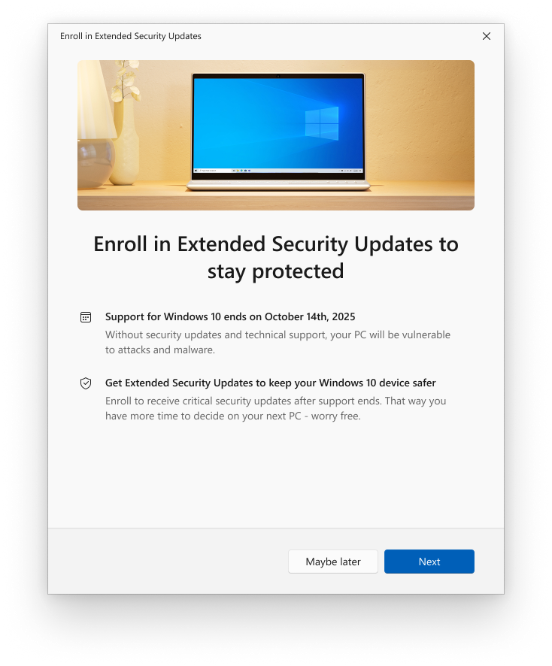
To join the ESU program, just look for the enrollment option in the Windows Update menu. Customers in the EU get these updates for free, but in other regions, you have to sign in with a Microsoft account and sync your system settings to be eligible for free updates. Otherwise, it costs $30 (or 1,000 Microsoft Rewards points) to join the program.
Once you’re in, the ESU license works on up to 10 devices, but Microsoft stresses this is for personal use—businesses have to pay per device for Windows 10 updates, but the program is available through 2028. But at this rate, Microsoft might be releasing Windows 10 updates even beyond that timeline.







 English (US) ·