


Published Mar 27, 2026, 8:01 AM EDT
Sign in to your Collider account
Summary
- Collider talks with producers Daniel Kwan, Ted Tremper, and Diane Becker for The AI Doc: Or How I Became an Apocaloptimist at SXSW 2026.
- In this interview, the trio discuss creating an accessible snapshot of AI's ideological battlefield, with insiders warning that it's moving too fast, and discussions about what's truly at stake.
- Kwan also shares the first big update for his next feature film with Everything Everywhere All at Once co-director Daniel Scheinert.
At this year’s South by Southwest Film & TV Festival, Collider had the opportunity to sit down with some of the festival’s biggest names in the industry for a packed slate of exciting upcoming projects. Among those thrillers, comedies, and hit streaming series was a particularly intimidating documentary, The AI Doc: Or How I Became an Apocaloptimist, produced by one half of the Academy Award-winning juggernaut team of Daniels behind Everything Everywhere All at Once, Daniel Kwan. In a deep-dive conversation with Collider’s Steve Weintraub, Kwan joined fellow producers Ted Tremper and Diane Becker, where the trio was candid about the information gleaned from the making of the documentary.
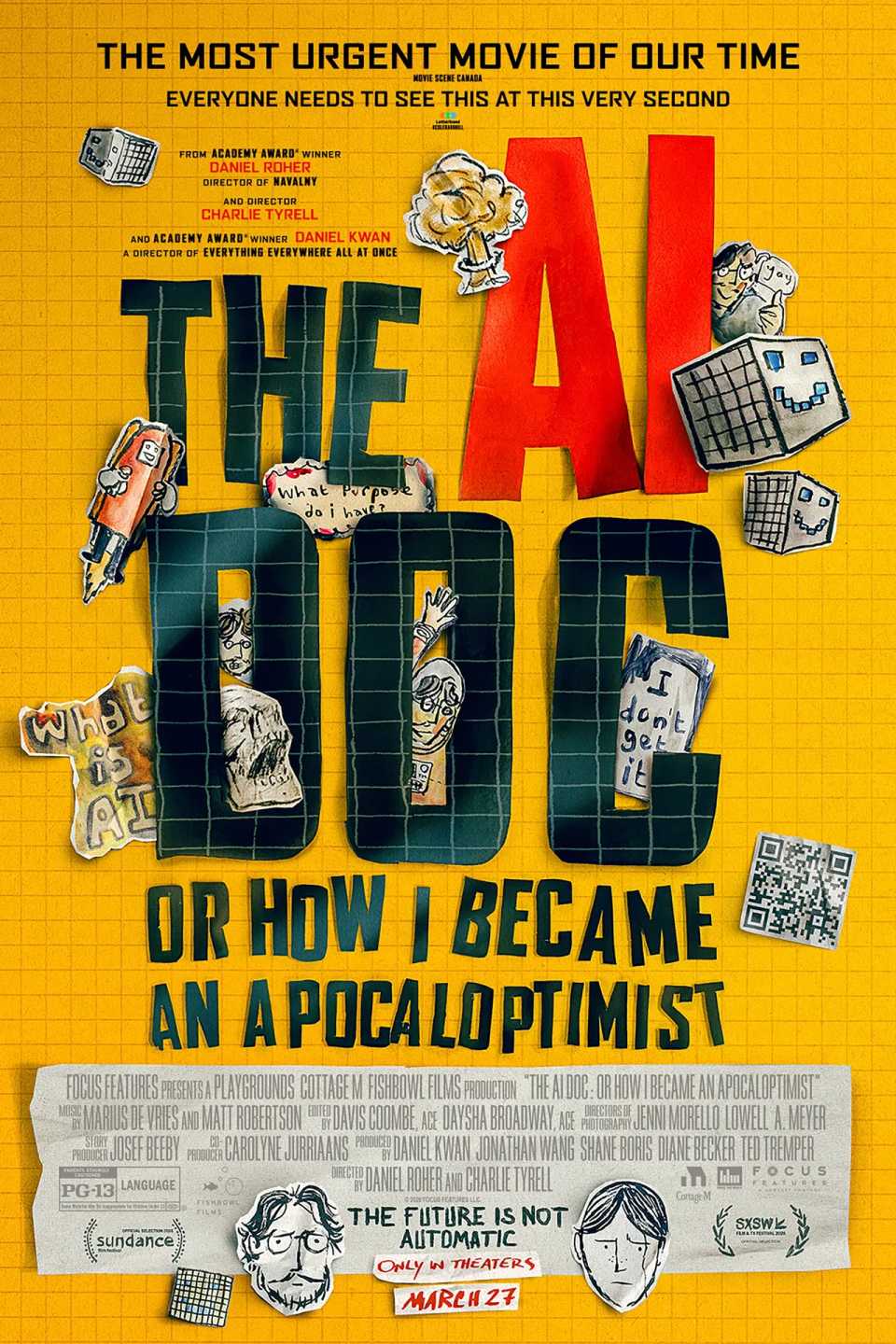
Co-directed by Charlie Tyrell and Daniel Roher, the quick rundown of The AI Doc is that it’s about a father-to-be (Roher) who goes on a quest to understand the rapidly evolving frontier of artificial intelligence. Roher speaks with the leading figures pioneering the field, from the people looking to fast-track generative AI to the harbingers of what’s truly at stake if humanity proves — as it so often does — that we aren’t responsible enough to control a power like this.
Kwan explains why The AI Doc is the perfect “entry point” for people wanting to learn more:
“It is meant to be a comprehensive look at the ideological landscape of all the different ways into this technology and how people are talking about it, so that it almost becomes like a first date for people who really have been avoiding the topic, or are like, ‘I'm not really sure where to begin.’ It's a really good entry point because we managed to get access to almost all the leaders in the space, all the architects and engineers, the ethicists and the activists, even the CEOs. It really becomes a sort of snapshot of a moment in time, just as this technology is beginning to ramp up and appear everywhere in our society.”
For anyone already invested in this crucial moment of our history, Tremper addresses the kinds of conversations audiences will see with the people working closest with AI:
“Just giving the full context of the movie, initially, we were going to be done in eight months, and it took two and a half years to make the film. Part of that was because in order to be able to build the relationships that we needed to, and the trust we needed to within the community, it was just building it all person by person. So, we initially sent out, I think 80 or 90 interview requests — we got six people who said yes. So, from those six people, we kept going wider and wider and wider. Basically, one of my main jobs was to learn everything about the technology, everything about the people. What are the different ideological spheres? ... We did over 40 on-camera interviews, over 100 background interviews, with 3,300 pages of transcripts.
“So, within all of that, to answer your question, you go back and forth. I developed confidential sources inside all of either current or former employees of every single lab, and the thing that gave me hope is I did not speak to a single person, even if they were at a lab that was, I would say, objectively moving faster than the majority of the people inside the lab wanted to go, in terms of developing it, that the consensus was that, even if they were in those labs, they knew that they could leave and speak up.”
Is It Too Late to Stop AI?
“There are no adults in the room.”
 Image via Focus Features
Talking with Weintraub, the producers cover the gamut of AI concerns and what they learned from the making of The AI Doc. It’s undeniable that without the proper control and safety measures, Artificial Intelligence most certainly has the potential to go Terminator on us — or The Matrix, I, Robot, heck even Avengers: Age of Ultron! These films were, like The AI Doc, cautionary tales, not a blueprint. But the biggest concern on our minds is, is it too late?
When asked whether speaking with CEOs of AI companies left them with any optimism for the future, Kwan reveals:
“Some of the people that we've been talking to in Silicon Valley, they told us that they went around Silicon Valley and they talked to everyone and said, ‘Hey, are you afraid? Does this feel like a bad idea? Are we going too fast?’ And a lot of the people they were talking to were like, ‘Yes. This is going too fast, but we can't do anything about it.’ It's kind of what you were saying before, ‘If our company doesn't do it, some other company will. If the US doesn't do it, China will.’
“You have to go to DC to ask them to regulate. So then these people go to DC, and they talk to all the congresspeople, and they show them the problem, they show the technology, they show where it's going, and the people in Congress are like, ‘You're right. This is scary. We should do something about it. But we can't do it. Congress is gridlocked. We don't understand this technology. We need public pressure, and there's not enough public pressure. Silicon Valley has to figure this out.’ So everyone's kind of pointing fingers. It's what you expect. There are no adults in the room…yet.”
Don’t miss the full conversation in the video above, with time codes below, where the producers discuss exploring the global AI “arms race,” AI’s decentralization of dangerous knowledge, how close we are to achieving Artificial General Intelligence (AGI), how AI may be affecting millions of jobs and the economy, and forming the Creators Coalition on AI. Kwan also shares the first big update for his next feature film with Everything Everywhere All at Once co-director Daniel Scheinert.
 Image via Photagonist
- 00:13 - Daniel Kwan explains the meaning behind the documentary’s title.
- 00:32 - Ted Tremper on approaching AI through a story about impending fatherhood.
- 02:18 - The documentary educates viewers about AI while remaining entertaining.
- 04:00 - The trio discuss exploring the global AI “arms race” and the difficulty of regulating it internationally.
- 06:14 - They discuss AI decentralizing dangerous knowledge and traveling the “narrow path.”
- 10:37 - Tremper and Kwan on behind-the-scenes conversations with AI leaders and how close the industry might be to achieving AGI.
- 21:17 - The trio discuss concerns over AI investment and automation, and how that could affect millions of jobs and the economy.
- 28:10 - Kwan teases his next feature with Daniel Scheinert and updates the project’s development status.
- 30:08 - Kwan also discusses his love of IMAX and why he plans to shoot “the majority” of the next film for IMAX.
- 31:56 - Kwan shares how making this doc influenced his thoughts on technology in filmmaking and the formation of the Creators Coalition on AI.
- 33:05 - Tremper reiterates why people should engage with the documentary in a theater.
The AI Doc: Or How I Became an Apocaloptimist is now playing in theaters.
Release Date March 27, 2026
Runtime 104 Minutes
Director Josef Beeby, Charlie Tyrell, Daniel Roher





 English (US) ·