IBM spruces up its mainframes with new support for modern Arm workloads — firm teams up with Arm to run Arm workloads on IBM Z mainframes
2 hours ago
3
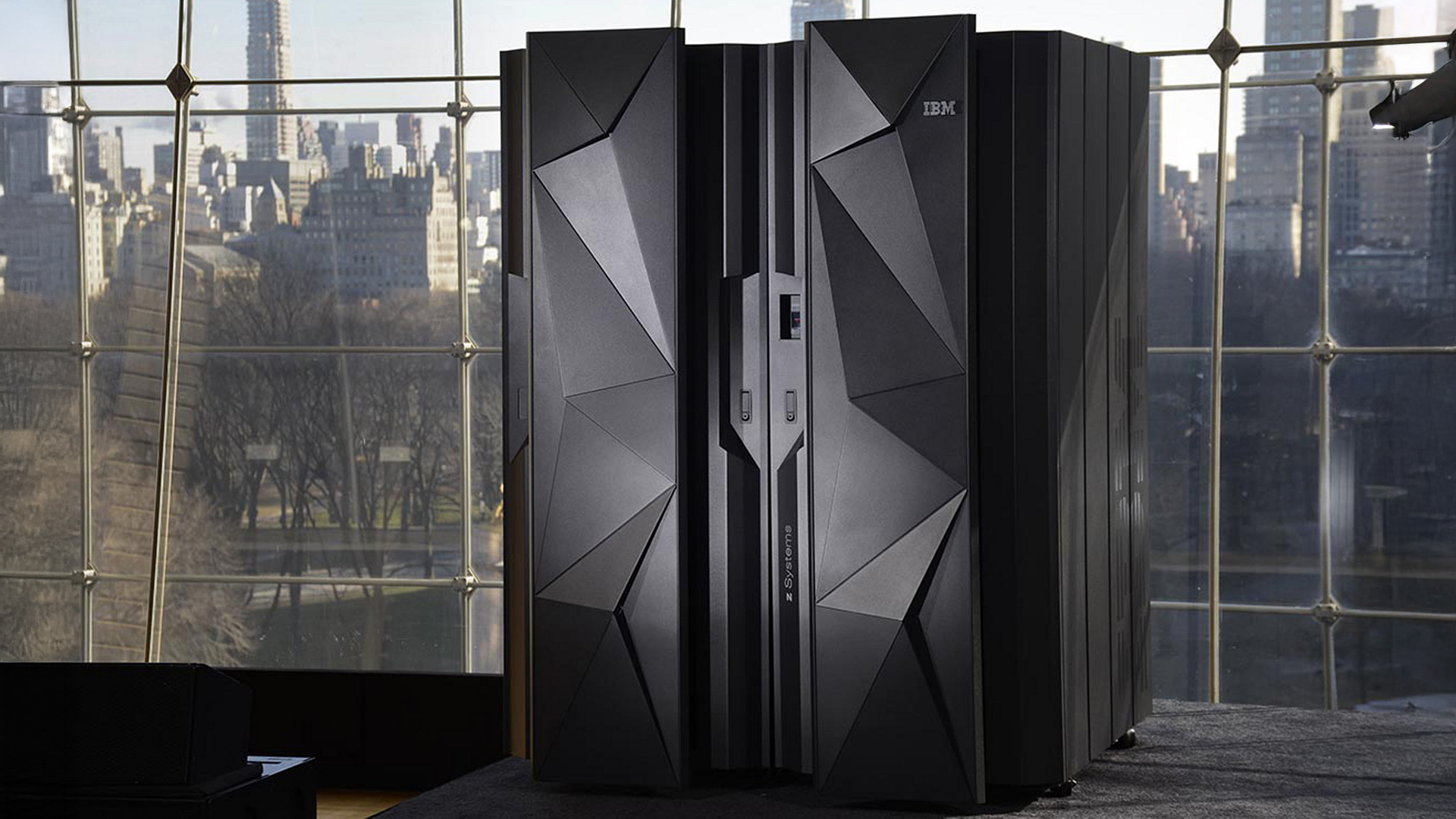
(Image credit: IBM)
IBM and Arm on Thursday announced a strategic collaboration to co-develop dual-architecture enterprise platforms that would enable software designed for the Arm ecosystem to work on IBM Z mainframes and LinuxONE systems in emulation mode. The collab is designed to enable enterprises to run AI and cloud-native workloads originally developed for Arm on mission-critical IBM Z enterprise hardware with ultimate reliability, availability, and security.
Nowadays, a lot of AI frameworks as well as data-intensive cloud-native applications are developed for the Arm ecosystem, whereas IBM Z platforms (based on the Z390x or z/Architecture ISA) excel in reliability, availability, and serviceability but have a narrower native software stack. This is why enterprises increasingly operate a mix of legacy transaction processing alongside AI inference and microservices, which are typically deployed on separate Arm or x86 servers, according to IBM.
Running Arm workloads on IBM Z is designed to enable running a broad software ecosystem on IBM's Z mainframe systems, particularly those that are based on the Telum II processor and Spyre AI accelerator, through virtualization or emulation without porting them to IBM Z, which is costly, time consuming, and not common for the modern industry that relies more on x86 and Arm and less on IBM Z. Therefore, by bringing these newer workloads onto the same system, IBM reduces architectural complexity, lowers integration overhead, and simplifies operations.
Article continues below
Furthermore, this approach keeps workloads close to where critical data already resides: financial systems, government databases, and high-value transactional engines, which reduces latencies, minimizes security and compliance risks, and eliminates the need to replicate datasets across external platforms.
"IBM's defining role in shaping enterprise infrastructure spans decades, showcasing the breadth and commitment required to support our clients' most intensive and sensitive workloads," said Christian Jacobi, Chief Technology Officer and IBM Fellow, IBM Systems Development. "This moment marks the latest step in our innovation journey for future generations of our IBM Z and LinuxONE systems, reinforcing our end-to-end system design as a powerful advantage."
The model is not intended for performance-hungry applications. In addition, emulation and virtualization introduce a host of additional performance penalties, so do not expect IBM Z systems running Arm workloads on Telum II CPUs and Spyre accelerators to demonstrate leading performance. That being said, enterprise decision-making does not prioritize performance per se, but rather total cost of ownership, operational stability, reliability, risk mitigation, and scalability.
As a result, the trade-off may well be justified, particularly for those companies that already use IBM Z for mission-critical workloads and yet have to run additional workloads on different types of hardware. At the end of the day, IBM customers do not want to replace all of their hardware and mission-critical applications, but rather want their already deployed hardware and software to evolve, which includes running modern applications alongside legacy software. Whether or not this could lead to eventual inclusion of Arm-based CPUs or accelerators into IBM servers is something that remains to be seen, but IBM does not talk about it at this point.
Get Tom's Hardware's best news and in-depth reviews, straight to your inbox.
Anton Shilov is a contributing writer at Tom’s Hardware. Over the past couple of decades, he has covered everything from CPUs and GPUs to supercomputers and from modern process technologies and latest fab tools to high-tech industry trends.

 2 hours ago
3
2 hours ago
3







 English (US) ·