
 2 hours ago
6
2 hours ago
6
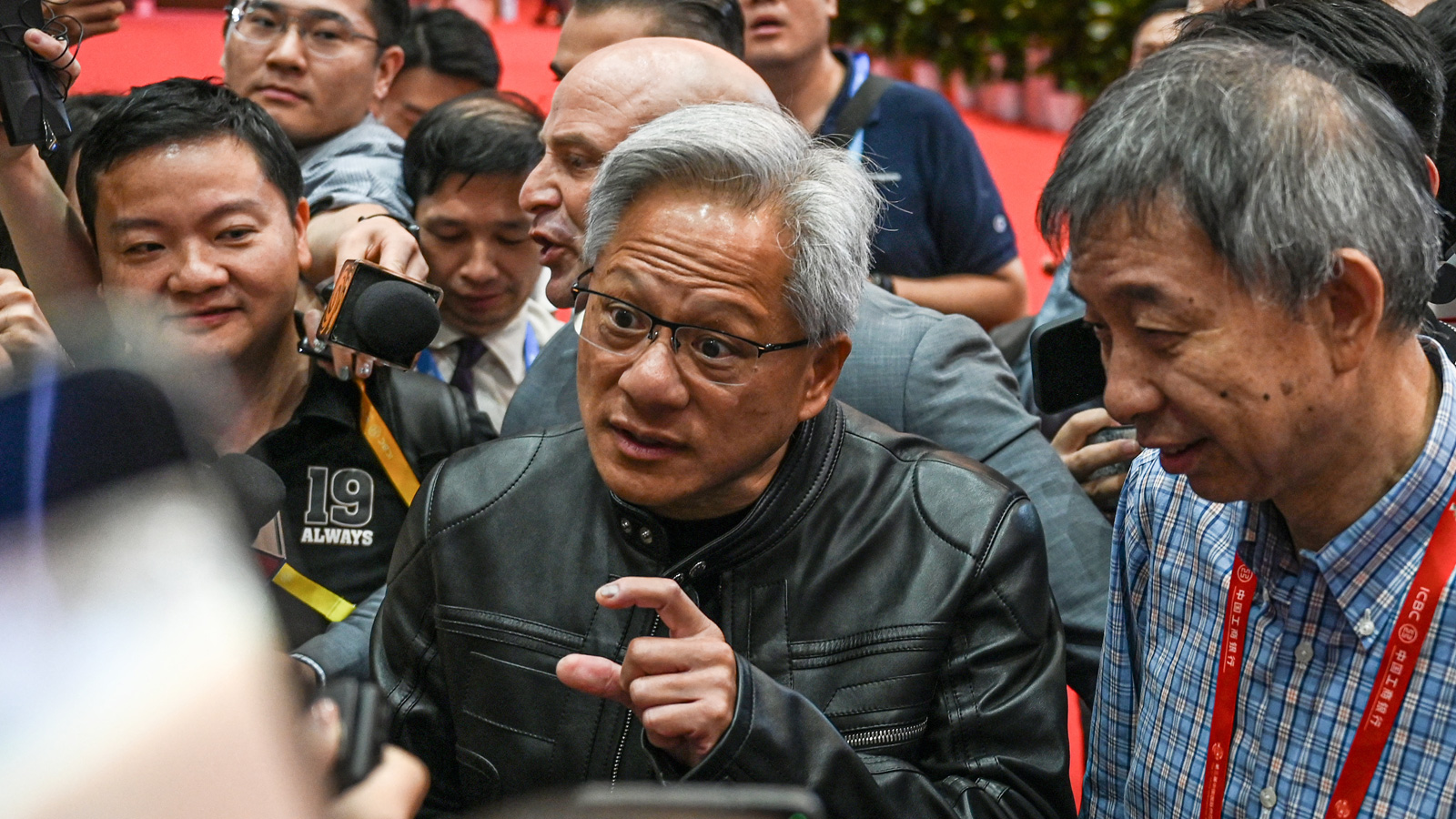
Chinese AI and graphics chips flooded the country's domestic market in 2025, leading to a decline in Nvidia's chip dominance in the region and a boon for China's efforts to foment a local supply chain for AI compute power. With 41% of the Chinese AI server market now controlled by Chinese suppliers, Nvidia has even more reason to restart its shipments of H200 GPUs to the region, despite the bipartisan efforts of U.S. Senators to stop that in its tracks.
Although Nvidia still holds a commanding stake in the region, with a 55% market share for AI server hardware, that's a huge downturn from Nvidia's claimed peak of 95% in 2022, before the U.S. began applying sanctions to China and trade export restrictions to Nvidia.
Article continues below
Losing its grip
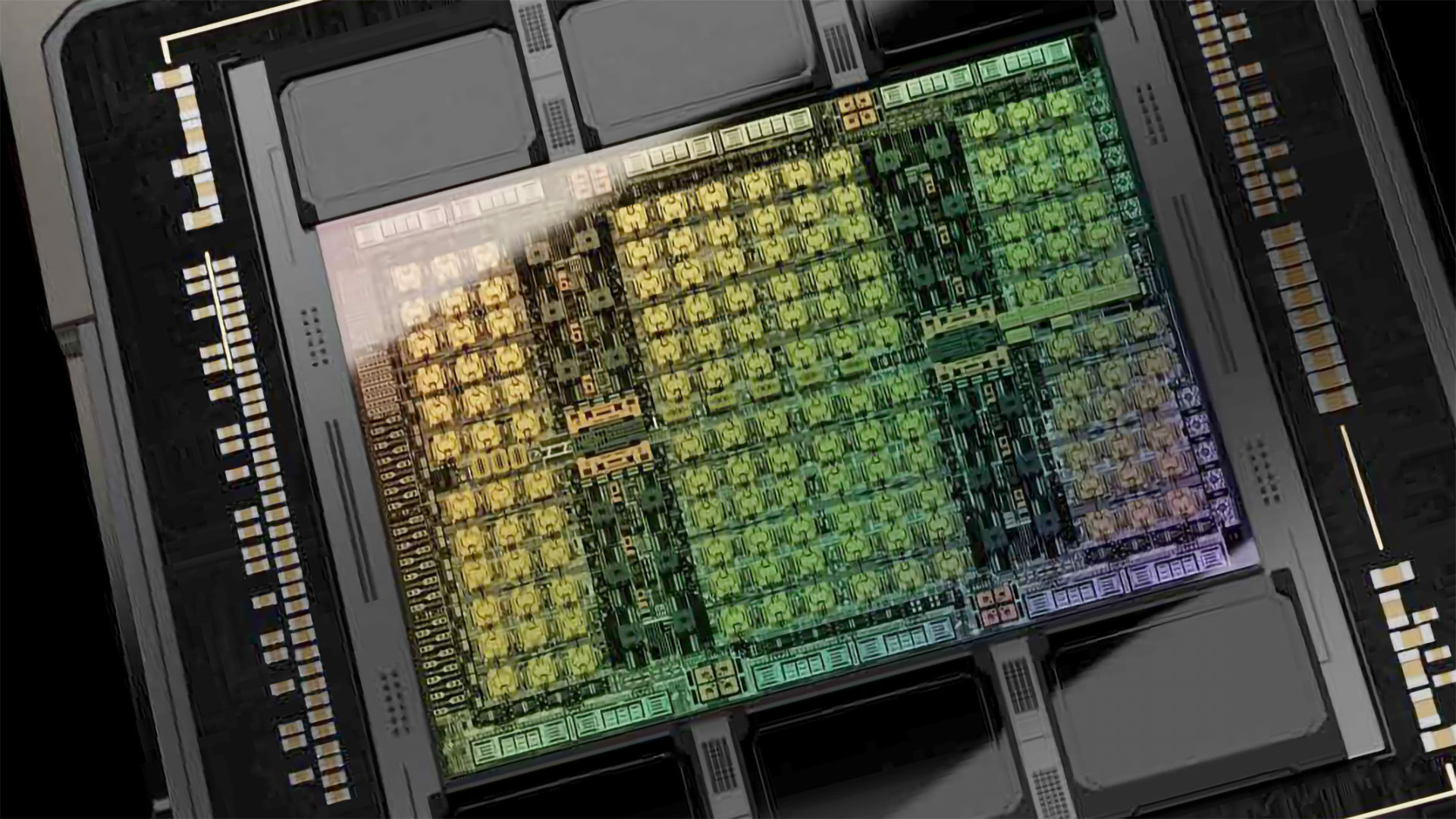
Although it's hard to verify how accurate Nvidia's "95%" claims were, it's fair to say that the US chip giant was once the only real player in town. Its GPUs are vastly more performative than even the best Chinese alternatives today, and even its cut-back China-specific GPUs like the H20 have their advantages.
But over the past few years, with turbulent supply and even more turbulent U.S. leadership, China has fostered its own chip industries with a range of measures. From energy subsidies to mandated chip deployments and enormous financial investment, China is betting the farm on developing its own alternatives to Nvidia's best.
The country isn't there yet: China had to roll back demands to use domestic chips for training, which just can't offer a clear alternative to Nvidia's hardware. But on the inference side of things, Chinese companies are catching up, and with the long, slow return of Nvidia's H200 GPUs, real competition has been rising.
Throughout 2025, Chinese tech giant Huawei shipped over 812,000 AI chips to Chinese firms and organizations, representing around half of all domestic shipments, making it the largest Chinese chip supplier of the year. This was followed by Alibaba's chip design unit, T-Head, which shipped 265,000 graphics cards, while Baidu's Kunlunxin and Cambricon each shipped around 116,000 GPUs, making them joint third.
Other Chinese suppliers like Hygon, MetaX, and lluvatar CoreX delivered sizeable shipments of their own.
All of this while Nvidia hasn't been able to ship its China-specific H20 GPUs, nor the more-capable H200 that it's been trying to get back to shipping. That time out of the market is leaving the door wide open for domestic alternatives. Perhaps that's partly why import licenses for companies interested in Nvidia's GPUs have taken so long to approve.
Real competition
Even with Chinese AI server chips more readily available to Chinese companies, many still push for Nvidia hardware — smuggling is still rampant for a reason. We've seen this with training chips, where domestic options don't measure up. But not with inferencing hardware. That's where real competition is starting to emerge.
As MUFG America's February 2026 study shows, the most capable Huawei chip, the Attend 910C, is within spitting distance of Nvidia's H100 in compute power and is vastly more capable than the H20. It falls behind both in memory bandwidth, but not by egregious amounts. It's well behind the latest-generation Blackwell generation GPUs, but progress is clearly being made.
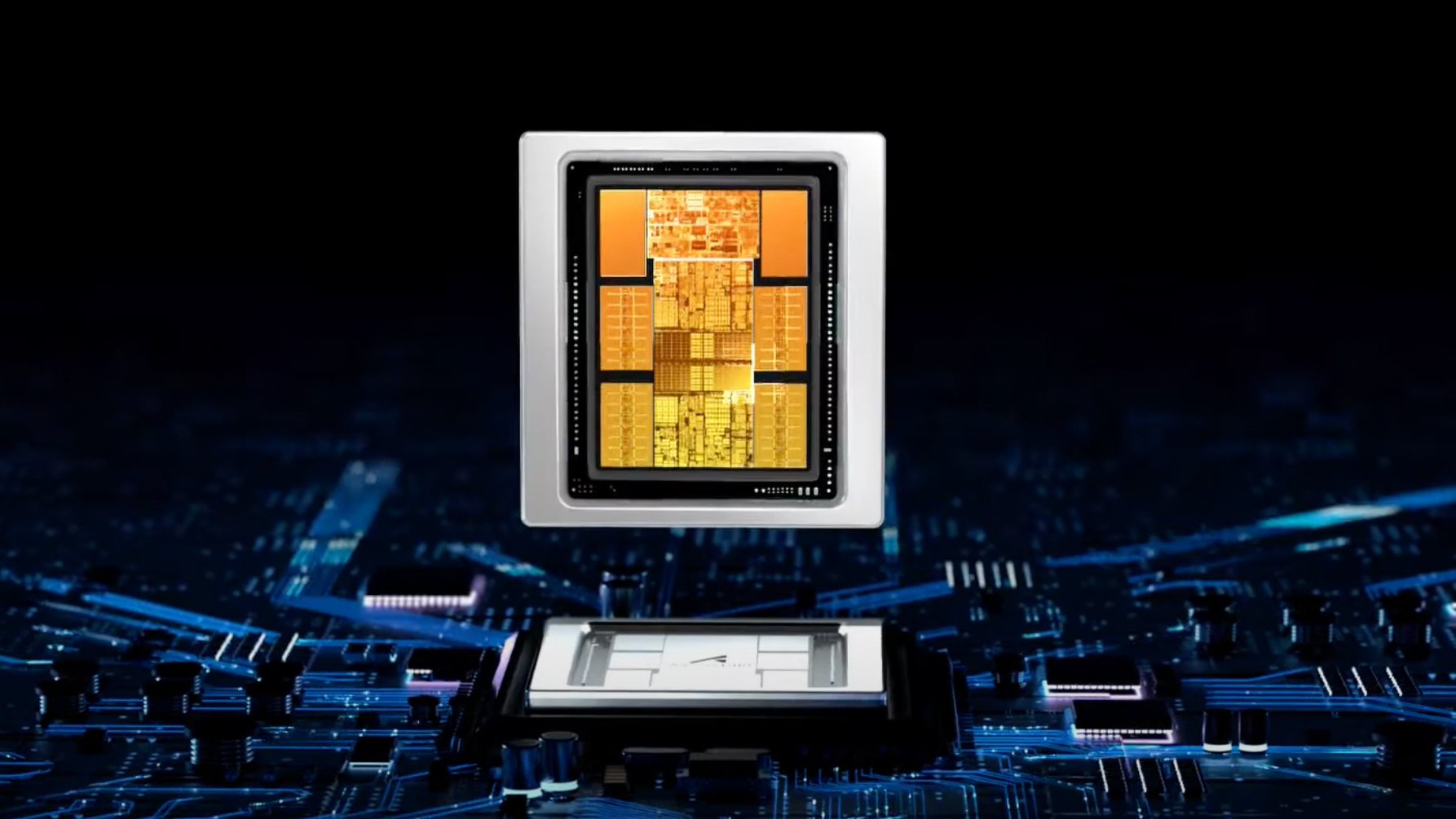
Huawei just announced its Atlas 350 AI accelerator based on its Ascend 950PR chip, promising almost three times the compute performance of Nvidia's H20. That could put it in the region of the H100 in terms of raw performance, leaving only Nvidia's Blackwell GPUs out in front, although a reported 1.4 TB/s memory bandwidth could represent a notable bottleneck.
Huawei has many more Ascend chips in the pipeline, but it's not the only one offering Nvidia competition. Alibaba unveiled its Zhenwu 810E AI chip in January, a chip said to be largely comparable to the H20. But it's 96GB of HBM2 memory delivers only around 700 GB/s of memory bandwidth; that's less than a quarter of the H20's.
Baidu announced its M100 and M300 AI chips in November last year, planning to launch them in 2026 and 2027, respectively. We couldn't find any direct Nvidia chip comparisons, but Baidu has suggested new supernode clusters of its chips could offer a 50% increase in performance over the last generation, suggesting major leaps in capability within short timeframes.
Cambricon's flagship Siyuan 590 AI accelerator falls behind Baidu and Huawei's efforts, yet it still expects to sell upwards of 500,000 units. The company is preparing its next-generation 690 chips for launch in 2026, although questions remain over whether it can get the materials it needs to manufacture them.
The race for relevancy
If Nvidia's AI hardware is its vanguard into the Chinese market, CUDA is supposed to be its backstop. That ecosystem is a protective moat that ensures those using CUDA-optimized software and Nvidia hardware keep doing so. But alongside Chinese hardware advances are Chinese software developments.
Baidu's Kunlunxin has translation layers that can run CUDA code efficiently, easing the transition from Nvidia hardware. Its PaddlePaddle framework is optimized for its Kunlun chips, too, so as Chinese providers make the switch, they can enjoy greater performance and efficiencies. Of course, there's also CANN, and this splintered approach could make China's local AI aspirations falter, if a unified approach is not fully adopted.
The longer Nvidia hardware isn't available, the more time Chinese companies and organizations have to transition to domestic alternatives that are easier to acquire, often come with government incentives, and are only likely to grow in power and efficiency, with an ever-more streamlined adoption pipeline.
That's what made it such a surprise that Nvidia told Tom's Hardware it wasn't planning to sell its Groq inferencing chips to China. ARM is very much looking to sell its new AI CPU there, though.
Nvidia's dominance is far from dead, and there really is no one likely to catch up in raw performance terms, or indeed in widespread support and compatibility for some time to come. But alternatives are rising, and the longer Nvidia's H200s sit in warehouses, with quiet production lines and strained trade routes, the more the tables will turn.





 English (US) ·