
Nothing Headphone (a) review
The Nothing Headphone (a) are just about the dream tech version 2.0 launch. As the follow-up to the Nothing Headphone (1), launched in 2025, they fix the sound problems I had with those headphones, they keep the excellent stuff I liked, and they somehow cut the price in half in the process (in one country, at least).
What more could you ask from something that's looking to go from audio also-ran to ranking among the best headphones available today? At their official price of $199 / £149 / AU$329, I think the Nothing Headphone (a) are arguably the best cans in their category — just with a few reasons why you might want to choose something else over them.
Let's start with the most important area: the sound. As soon as I fired these up, I felt a sense of relief. Nothing's first headphones baffled me in my Nothing Headphone (1) review with their oddly narrow soundstage that felt like the breadth of a song's traffic was being crammed down a single-lane road.
The Nothing Headphone (a) immediately feel like a big expansive highway in comparison – it's an open, wide and free-flowing soundstage that allows songs to spread out and to feel more energetic, emotive and satisfying. And when I say "in comparison", I mean I broke out the original $299 / £299 / AU$549 model for a listen, and while they have their strengths (a nicely refined frequency balance), the new model is so much more enjoyable to listen to.
And this improvement has come without any major downsides, though there's one quirk worth discussing. My unit came with the 'More Bass' setting activated out of the box, and this was certainly much more generous with the bass than the Headphone (1) was, to the point of wandering into the 'bass-heavy' category.
This was no problem at all with electronic or pop music — the strength of the lower frequencies gives a glorious foundation to deep drum machines or sinking synths. It's also well integrated into the overall balance, despite being so muscular, with the Headphone (a) having no problems delivering lower mids that can stand up to, or transition from, the bassier parts.
But it was too much for some tracks with real instruments. In Regulars by Allie X, the double bass that opens the song sounded like the instrument was collapsing under its own vibrations. I pulled up the EQ in the Nothing app, saw it was set to 'More Bass', switched to 'Balanced' instead, and immediately the double bass went back to sounding like a double bass, instead of a quadruple bass.
This took a bit of a punch out of electronic songs when I switched back to those, but the bass still had good depth, its integration with the rest of the sound was still excellent. But Nothing's superb app gives a nice option here that I decided to take it up on: I set one of the controls to be an instant EQ switch, so I could get the extra bass if I wanted it.
The Headphone (a) provide loads of space for the mid-range to express itself, with a nice chunkiness to guitars, the ability to handle a lot of complex instruments going on at once, and a nice clarity to vocals through it all.
Moving to the treble, it's again just very well worked into the sound, able to stand up for itself without ever feeling harsh or like it's overblowing in order to be heard even when songs get really energetic.
But there is a slight softness of detail to the Headphone (a)'s sound. They're not poor in this area by any means, but switching to the similarly-priced Sennheiser Accentum Plus reveals a slightly more convincing edge to the guitar strings and tambourine in Fleetwood Mac's Go Your Own Way, and more texture to the beat of sticks on drumskins in Sonny Rollins' St. Thomas. There's also better instrument separation in the mix.
The Sennheiser Accentum Plus also have a more neutral sound overall, but this comes alongside a shortfall in bass depth and less dynamic attack in playback. I probably prefer the Nothing Headphone (a) overall for sound given my personal predilection for electronic music, but if you're more of an acoustic fan, you may be better off leaning towards the Sennheiser.
This doesn't change when switching to Hi-Res Audio and listening over USB-C, or with LDAC higher-quality wireless, both of which are supported here (along with a 3.5mm headphone jack). The USB-C mode maybe had a little extra lightness of touch with instrument separation and detail, but any difference was minor.
The Sennheiser cans are also much lighter than the Headphone (a) at 227g, versus 310g for the Nothings. That's an improvement on the 329g that the Headphone (1) weigh, but is still higher than most of the competition, and means they still need a stronger clamping force to stay on your head than lighter competition.
Again, this isn't inherently a bad or good thing, but you will 'feel' them more than other headphones, and the synthetic pads aren't designed to be particularly breathable, so left the sides of my head feeling warm over time.
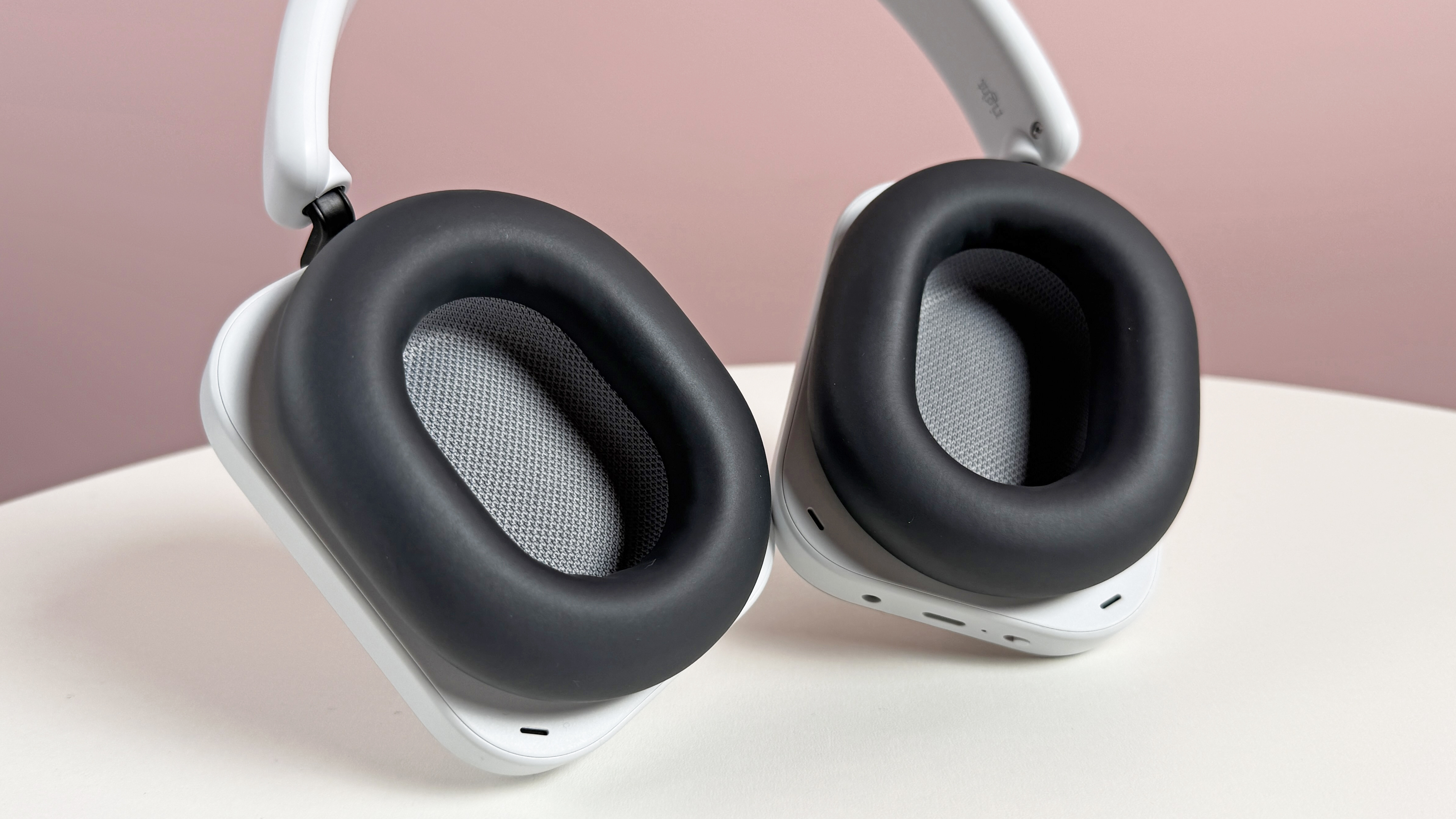
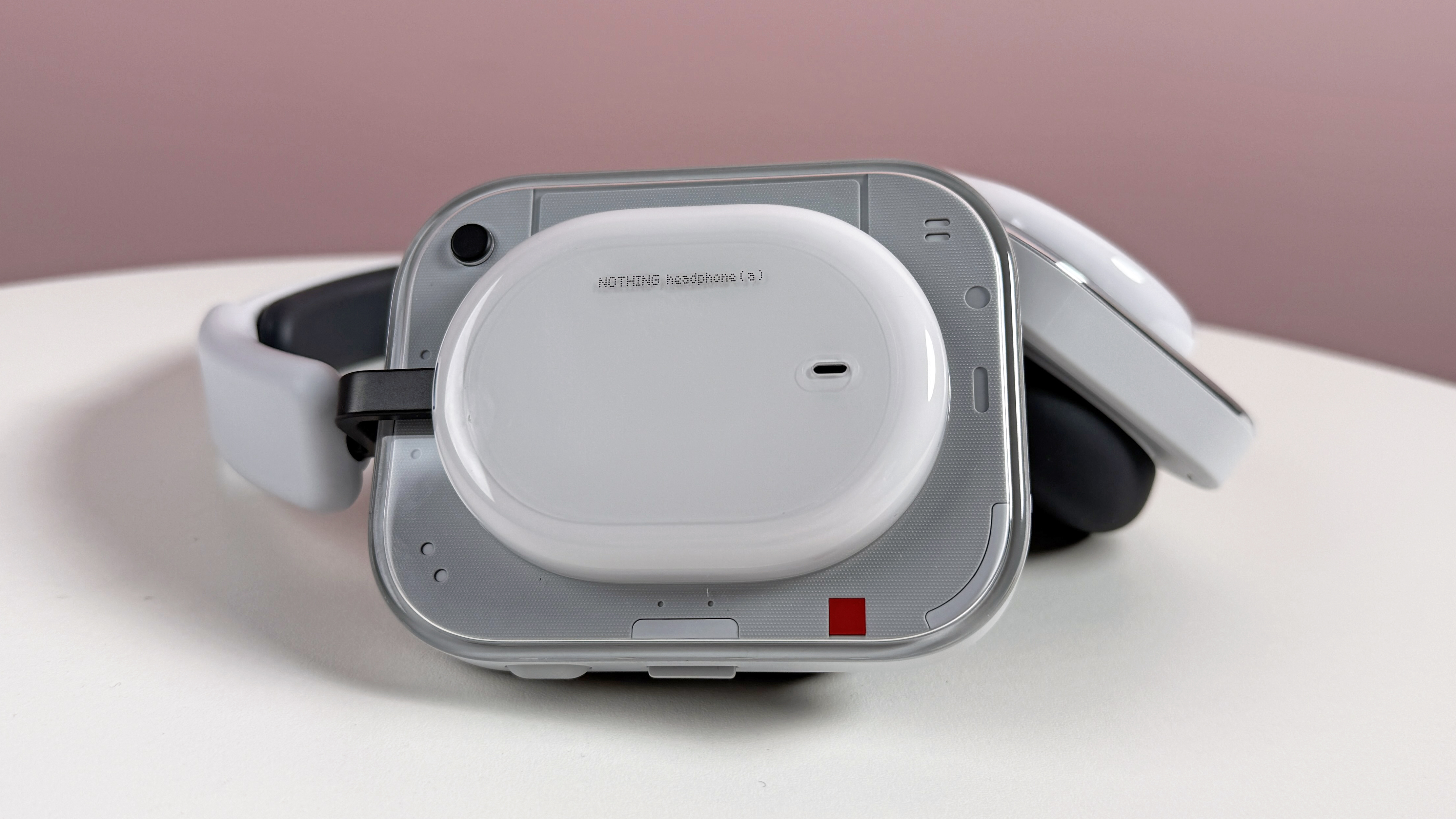
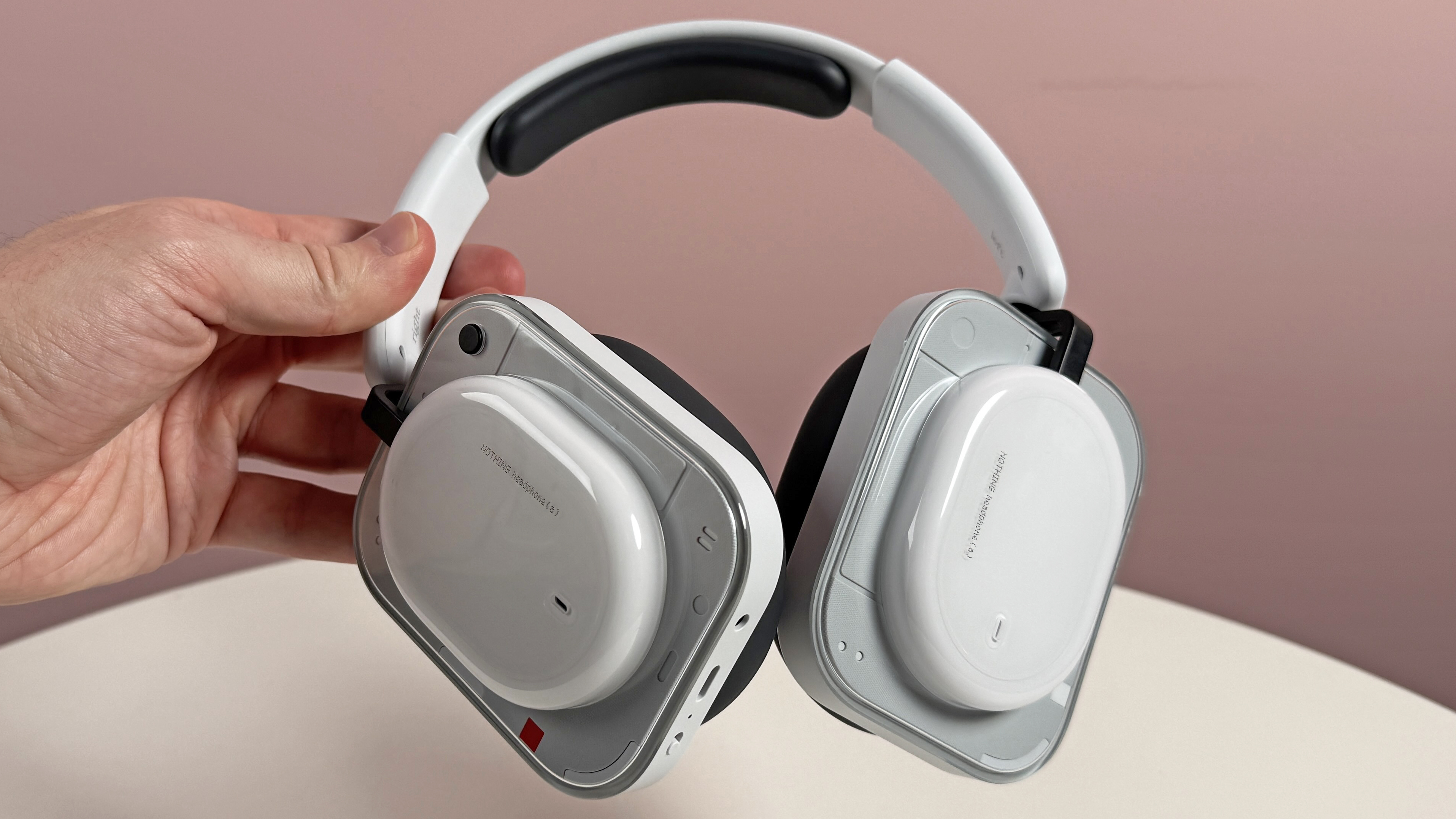
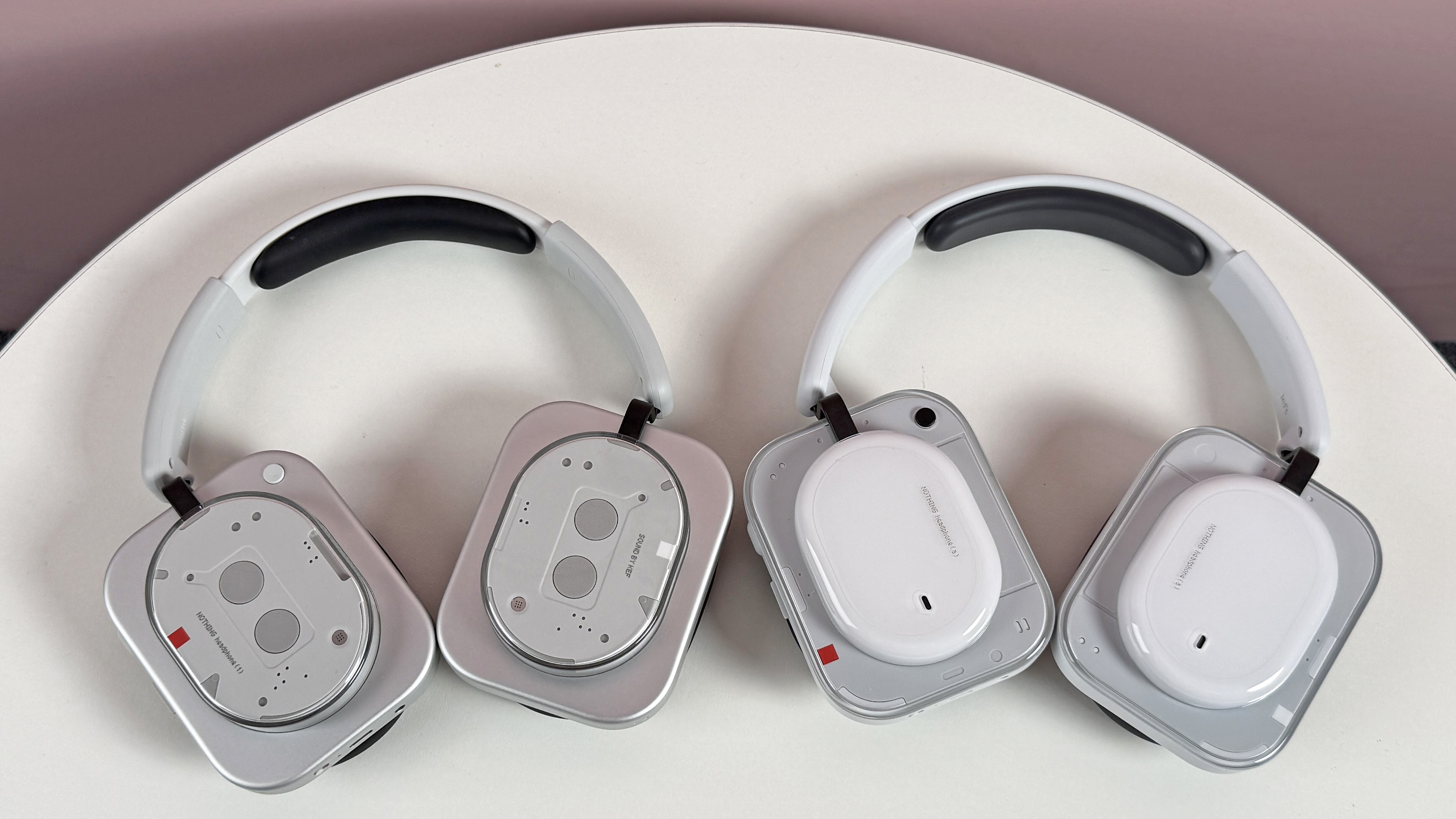
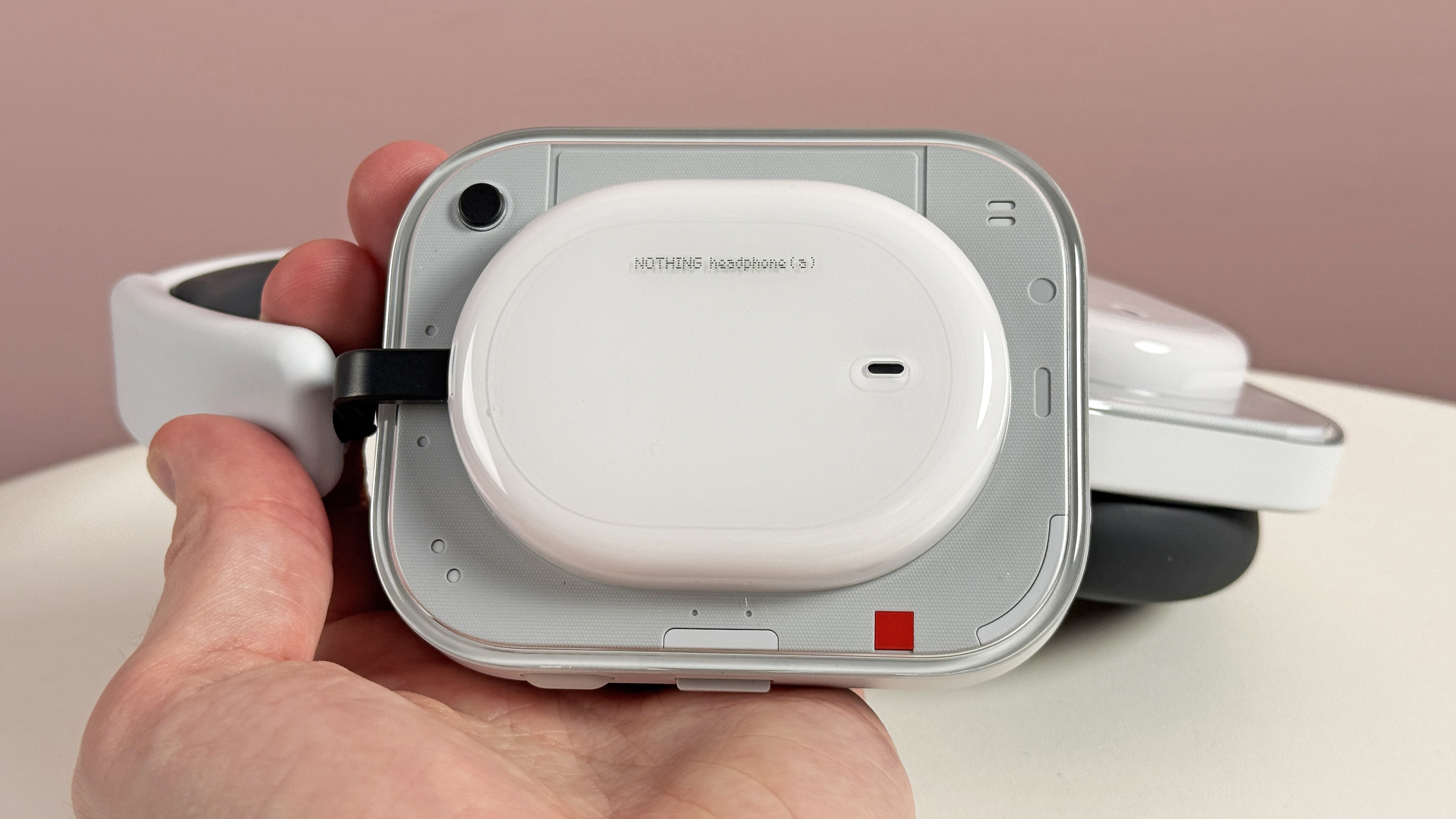
It's probably worth talking about the overall design for a moment here, which is very similar to the original, but has been 'softened' in a way that makes them feel less like they make you look like a cyborg (a good thing), but the ear cups look less like cassette tapes (a shame). Aluminum is now plastic, and gentler curves to the raised section in the middle of ear cups makes all the difference.
Sadly, I don't love the new yellow and pink colorful options. I think there's not enough color for it to really work – the yellow in particular looks like a fried egg, because the rounded yellow mound is surrounded by white. I think there needed to be more color throughout. I love the changes in the white and black models, though – undeniably Nothing, but more mainstream than the divisive Nothing Headphone (1).
Nothing has kept a quirk of headphone design that I don't like here, in that the size is adjusted at the top of the head, rather than by the ears, which I find makes it harder to make micro-adjustments, but isn't a big deal overall.
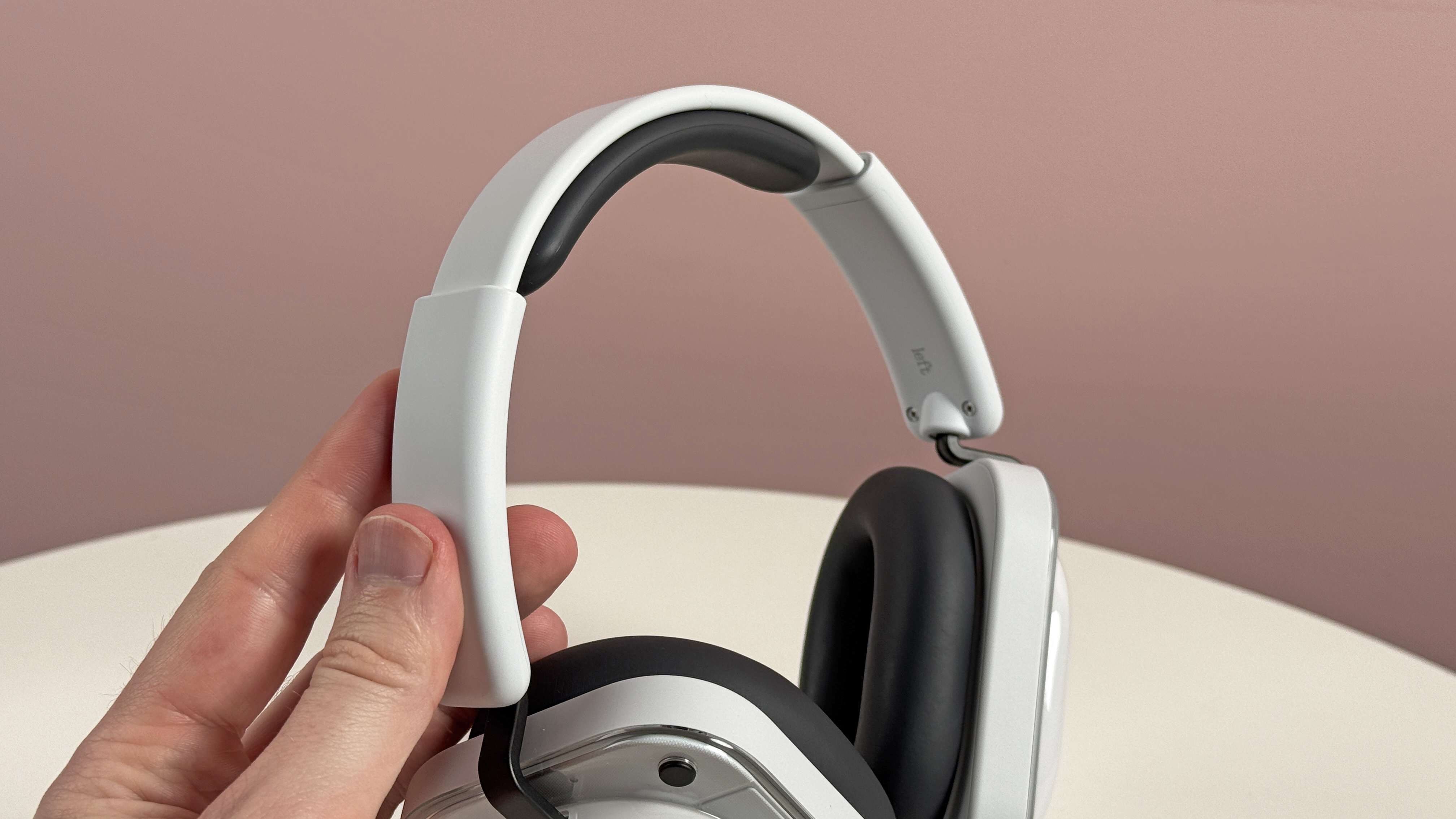
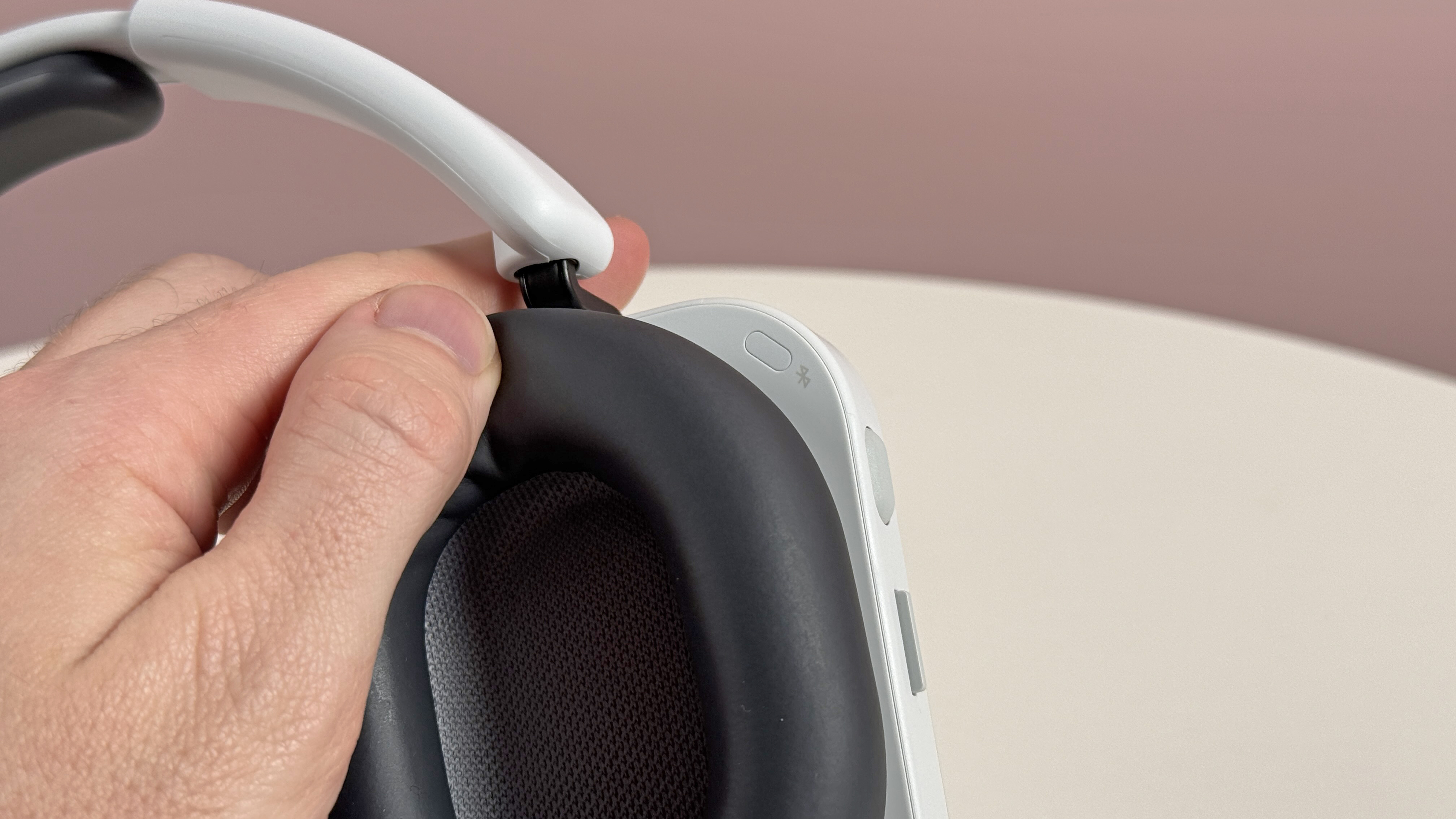
What is a big deal is that Nothing has kept the fantastic set of controls from the Headphone (1). In particular, the roller for volume control is my favorite control system on any pair of headphones, period. It feels so high quality, it moves reliably under the thumb, and audible clicks tell you that it's moving up through volume tiers. Anything else feels crude in comparison.
That is paired with a 'rocker' control underneath, which is also super-intuitive. Nudge it one way to skip forward, and the other way to skip back. At the top of the right ear cup is a round multi-function custom button that was set to trigger your Voice Assistant by default; I changed it to EQ control, as I mentioned, but it can also work as a camera remote trigger (a new feature for this model) or a mic mute button, or a few other options.
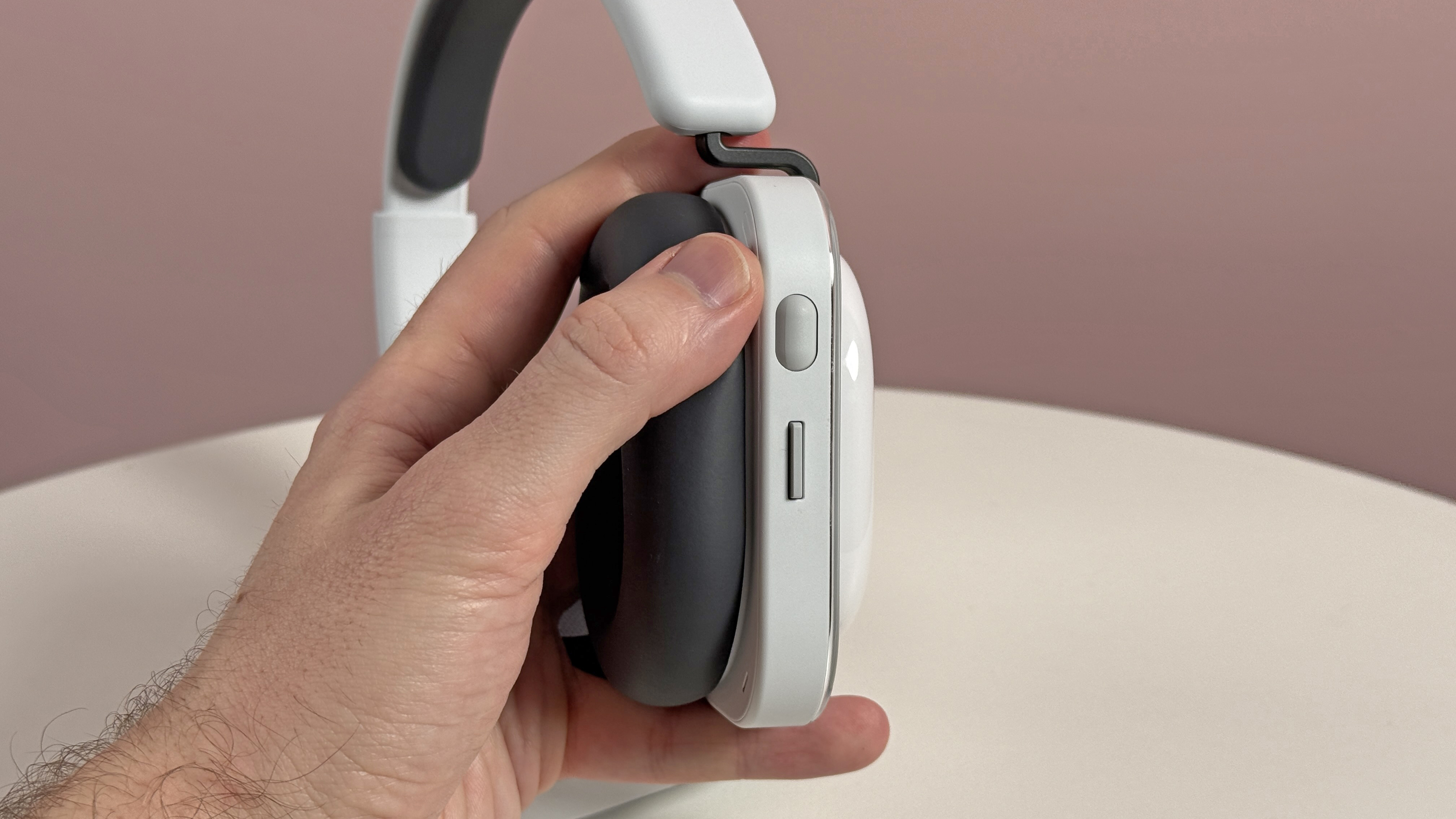
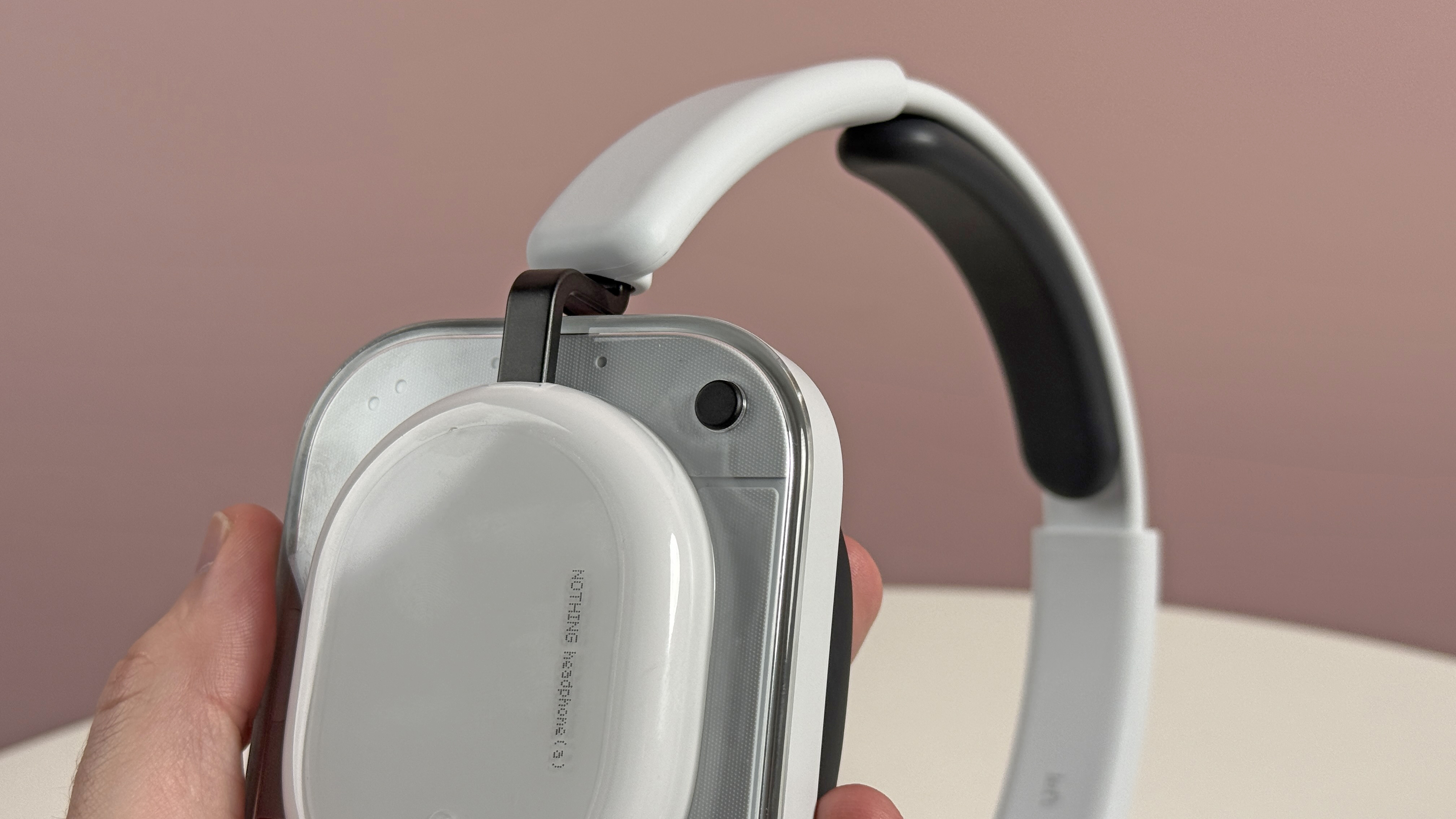
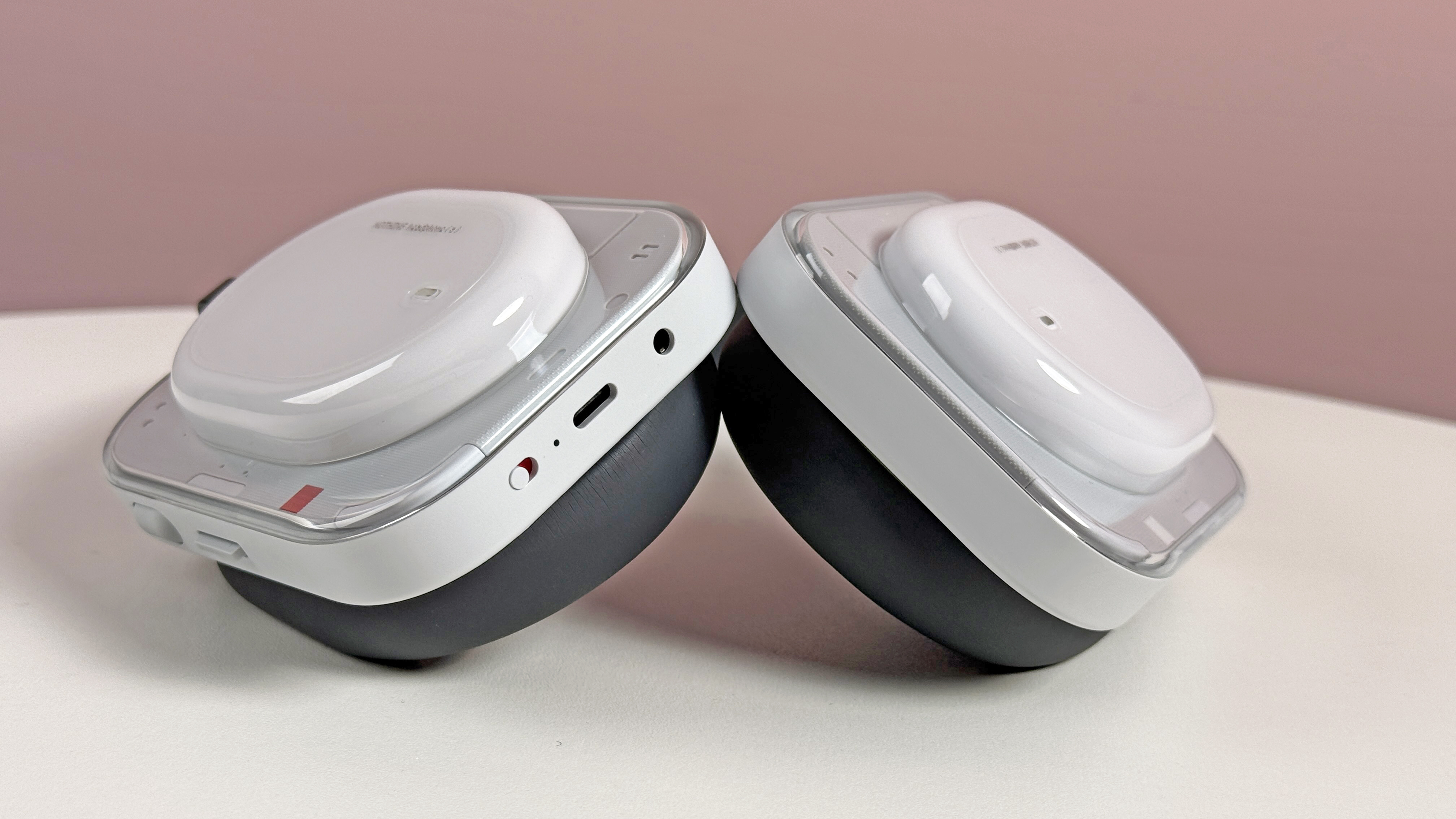
And you'll absolutely want to play around with this, because Nothing's app is so good. Not only are the headphones customizable in so many ways — different noise cancellation options, different spatial audio types, multiple EQ controls — it's also just really simple to find the key features you want to turn on and off, such as the low-lag mode for gaming, or dual-device connectivity (which really should be on by default, but most devices have it off, so I won't knock Nothing hard for that).
We recently knocked the Sony WF-1000XM6 earbuds for making it hard to find its essential features, so it's nice to see Nothing show how it should be done.
I mentioned spatial audio options before, and while you don't get head tracking or Dolby Atmos here, there are two options with processing handled by Nothing: Concert and Cinema. Concert does a good job of moving sound out from the ear cups, and making it feel like more of a speaker setup across and in front of you.
Cinema adds more left and right sound to that, while also pushing the EQ a little more towards the treble — going for more of a 'surround sound' experience and boosting voices, I suspect — and I found it useful for picking dialogue out of movie soundtracks, so I'd happily use it when watching while traveling.
Speaking of traveling, the noise cancellation here is strong, though not mind-blowing, and that's just fine for this level. Walking along a busy road while listening to music, I wasn't bothered by outside sounds at all. I could hear podcasts clearly while on public transport. The Transparency profile also works as advertised, and never makes things robotic or tinny.
But I want to briefly call out here that Nothing provides the best sounds to indicate what noise mode you're in. Switching to Transparency is announced by an exhaled breath as if sound is escaping; noise canceling is announced by the sound of something being sucked down and then slammed shut. There's no ambiguity here, and no annoying voice.
Nothing promises a phenomenal 75 hours of battery life with active noise cancellation turned on, and 135 hours with it turned off. I couldn't possibly test both claims fully in my time with them so far, even if I used them every waking hour. But I can say that they seem to live up to it, with the battery indicator dropping by 20% after around 13 hours of use.
This makes them essentially best in class, and phenomenal value. In general, I'd say these are about as good as headphones value gets in this space between the budget and premium options. There are only really two knocks against their value worth mentioning.
The first is that it's a shame they don't have an auto-pause feature (also called wearer detection) for when you take them off. It's pretty standard even in affordable stuff these days and while I'm not mad about it since they offer so much elsewhere, it's still surprising.
The second is that in lieu of a hard case (presumably dropped for cost reasons; again, it's understandable) they come with what I can only describe as a swimbag. Yes, it's like a smooth plastic fabric. Yes, it closes with a drawstring. Yes, it made me kind of nostalgic. No, it doesn't feel like a premium addition.

The thing with the Nothing Headphone (a) is that all the knocks I have against it are either minor like the above, or are more subjective, like the weight and clamping force.
There are enough little downsides or quirks that I can't quite give them full marks, but make no mistake that I think these are excellent headphones, that they'll be ideal for a lot of people, and that they're superb value.
Nothing Headphone (a) review: Price & release date
- Released on March 13th, 2026
- $199 / £149 / AU$329
The Nothing Headphone (a) arrive with an impressive price of $199 / £149 / AU$329, meaning that they come in at half the price of the earlier Nothing Headphone (1) and their £299 launch price in the UK, while they're a third cheaper than the $299 Headphone (1) price in the US. In Australia, the drop from AU$549 for the Headphone (1) is between those two percentages.
I should note that they Headphone (1) have been available for as little as $254 / £199 / AU$350 in sales events, though — but I have no doubt the Headphone (a) will see juicy discounts too.
Instead of putting them in direct competition with high-end releases from the likes of Bose and Sony, the Headphone (a)'s mid-to-low price tag puts them up against the likes of Sennheiser's Accentum Plus or Soundcore Space One Pro.
Nothing Headphone (a) review: Specs
Swipe to scroll horizontally
Drivers | 40mm |
Active noise cancellation | Yes |
Battery life (ANC off) | 135 hours |
Weight | 310g |
Connectivity | Bluetooth 5.4, LDAC, USB-C audio, 3.5mm jack |
Frequency response | 20Hz - 40kHz |
Waterproofing | IP52 |
Should I buy Nothing Headphone (a)?
Swipe to scroll horizontally
Features | They're generally best-in-class for features, but miss just a few minor options. | 4.5 / 5 |
Sound quality | Expansive and exciting with excellent balance, but a little soft on detail. | 4.5 / 5 |
Design | The best controls of any headphones, and a premium build – but a little heavy. | 4 / 5 |
Value | An excellent mix of features and performance for a very fair price. | 4.5 / 5 |
Buy them if…
You want excellent all-rounders for Android or iPhone
No matter which platform you're on, the Headphone (a) deliver an excellent range of features, great sound, and their mighty battery life.
You like a big and energetic sound
The Nothing Headphone (a) deliver fun and dynamic audio that's finely balanced, and is much more expansive than the Nothing Headphone (1).
You don't like to think about charging
75 hours with ANC on, and 135 hours without it, are as good as it gets in headphones right now.
Don’t buy them if…
You want a neutral, hi-fi sound
They're well-balanced, but still like to juice up songs a little — the Sennheiser Accentum Plus can deliver a more neutral sound with a little more instrument separation.
You don't like to 'feel' your headphones
Nothing has made these lighter than its first pair, but they're still heavier than most other options, and clamp the head more firmly as a result.
You need a protective case
If you don't treat your headphones very well in your work or gym bag, the flimsy plastic drawstring sack the Nothing Headphone (a) come with won't do much to help them.
Nothing Headphones (a) review: Also consider
Sennheiser Accentum Plus
If you'd like a more 'hi-fi' sound than the Nothing provide, in a lighter body, then these are ideal. They're a bit more detailed and neutral, and battery life is great at 50 hours. You'll miss out on a lot of features in comparison, though – but we do like them, as our Sennheiser Accentum Plus review explains.
Sony WH-1000MX4
Still available to buy over five years since they launched, and now available for a price in the same range as the Nothing Headphone (a). Good sound, great noise cancellation, a super-comfortable fit, and a hard case, for those who want one. They have a solid range of features, but not as many as the Nothing – and the battery life is 30 hours with ANC on. Still, they're great cans – you can read our original Sony WH-1000XM4 review there.
How I tested the Nothing Headphone (a)?

- Used for a week in my day-to-day life
- Tested largely over standard Bluetooth and USB-C hi-res wired audio
- Tested with a pre-release update to the Nothing X app
To test the Nothing Headphone (a), I started carrying them everywhere with me and made them part of my normal life. I used them on both walking and public transport commutes, around the house, and at the office.
I compared them directly to the Nothing Headphone (1), Sennheiser Accentum Plus and Sony WH-1000XM4 headphones, switching back and forth, as the headphones I think are the biggest alternative options. I had access to an early version of the Nothing X app with support for their features, so some details may change there before launch.
I lead TechRadar's AV team, and I've been reviewing audio gear for well over a decade, from the budget end of things all the way to up to high-end audiophile tech. I reviewed the earlier Nothing Headphone (1), as well as this newer model.
- Read TechRadar’s reviews guarantee
- First reviewed: March 2026






 English (US) ·