
 Image via HBO

Published Feb 7, 2026, 12:36 PM EST
Back in 2021, Hannah’s love of all things nerdy collided with her passion for writing — and she hasn’t stopped since. She covers pop culture news, writes reviews, and conducts interviews on just about every kind of media imaginable. If she’s not talking about something spooky, she’s talking about gaming, and her favorite moments in anything she’s read, watched, or played are always the scariest ones. For Hannah, nothing beats the thrill of discovering what’s lurking in the shadows or waiting around the corner for its chance to go bump in the night. Once described as “strictly for the sickos,” she considers it the highest of compliments.
With the announcement that HBO is developing a Baldur’s Gate television series with Craig Mazin attached as creator and showrunner, the response was less excitement than collective disbelief. Not because Mazin is an odd fit — after The Last of Us, he is one of the most trusted names working in video game adaptations — but because Baldur’s Gate 3 represents a fundamentally different kind of storytelling problem. Even with reports clarifying that the series is set after the events of Baldur’s Gate 3 rather than adapting its plot directly, the project remains a bigger creative risk than The Last of Us ever was. That risk isn’t about scale or ambition. It’s about what Baldur’s Gate 3 actually is: not a single narrative, but a constellation of them. Where The Last of Us asked audiences to reckon with one controversial choice, Baldur’s Gate 3 asked players to live with dozens — all of them permanent.
Player Choice Isn’t a Feature of ‘Baldur’s Gate 3’ — It’s the Foundation
 Image via Larian Studios
What made Baldur’s Gate 3 a cultural phenomenon wasn’t just its scope or polish. It was the way it trusted players with real narrative authority. The game doesn’t offer the illusion of choice; it offers consequences that echo across dozens of hours. Decisions made in Act One can reshape relationships, alliances, and endings by the time the finale arrives. Even the player character resists standardization. Tav is intentionally undefined, while the Dark Urge origin introduces a radically different relationship to agency, guilt, and control. The tone, moral framing, and emotional meaning of the story can shift dramatically depending on which path a player chooses. Nowhere is this clearer than in the companions. Characters in Baldur’s Gate 3 are not written with singular arcs. Each can end the game redeemed, corrupted, empowered, broken, or dead depending entirely on player choice. These aren’t cosmetic divergences; they are meaningfully different characters by the end — a level of narrative fragmentation television cannot replicate.
The Last of Us never faced that challenge. Joel’s final decision is morally divisive, but it is singular. HBO could adapt it, interrogate it, even reframe it, but it never had to decide which version of Joel existed, or whether Ellie survived into a different reality. The audience debated the choice; they didn’t author it. Baldur’s Gate 3 invites players to author the story itself, creating a personal bond any fixed adaptation inevitably disrupts.
Performance Is Canon Too, And ‘Baldur’s Gate 3’ Made That Inevitable
There’s another layer of risk Baldur’s Gate 3 brings with it — one that The Last of Us and even Fallout largely avoided: performance ownership. The game was built through extensive performance capture, with its actors inhabiting these characters physically, emotionally, and vocally over several years. That investment is inseparable from how fans understand the characters. Performances like Neil Newbon’s Astarion, Jennifer English’s Shadowheart, Tim Downie’s Gale, and Devora Wilde’s Lae’zel aren’t just voices layered onto digital models. Their physicality, timing, and emotional rhythms are baked into the characters themselves. For many players, those performances are the canon.
That creates a unique adaptation problem. If HBO’s Baldur’s Gate series uses these characters without bringing back the actors who already defined them, the disconnect won’t feel theoretical, it will feel personal. Fans didn’t just meet these companions; they spent tens or hundreds of hours with them. Recasting wouldn’t just be a creative decision, it would be a statement — one that risks signaling that the most emotionally resonant element of Baldur’s Gate 3 is interchangeable.

Related
‘Fallout’ Shows the Blueprint And Why ‘Baldur’s Gate’ Is Still Riskier
 Image via Prime Video
There is a recent example of television navigating a franchise built on branching narratives: Fallout. Like Baldur’s Gate, the games are defined by player choice, faction allegiance, and mutually exclusive endings. The key difference is distance. The series is set far enough removed from any single game’s events that it never has to canonize a specific outcome. Past conflicts are folded into lore rather than presented as definitive history. A post-Baldur’s Gate 3 series doesn’t have that luxury. BG3’s endings are immediate and world-altering. The fate of the city, its power structures, and the metaphysical consequences of the central conflict all hinge on player decisions. A continuation must choose which version of reality exists. Where Fallout can gesture toward ambiguity, Baldur’s Gate must name names. That distinction matters. Fallout fans can debate hypotheticals. BG3 fans know exactly what happened — because they made it happen.
Canonizing ‘Baldur’s Gate’ Is the Real Gamble
 Image via Larian Studios
This is where the adaptation risk becomes unprecedented. A Baldur’s Gate series doesn’t just reinterpret a story; it replaces countless personal ones with a single official version. For some fans, that will feel like validation. For others, it will feel like erasure. Consider romance alone. Baldur’s Gate 3 treats intimacy as a slow-burn, choice-driven extension of character development. A television series must choose who loved whom, collapsing an entire spectrum of player experiences into a single emotional truth. That’s not something The Last of Us ever had to contend with. Its emotional beats were shared. BG3’s were bespoke. This is why even Craig Mazin’s involvement cannot erase the underlying tension. Mazin excels at interrogating systems — institutions, ideologies, survival frameworks — and the Forgotten Realms offer fertile ground for that kind of storytelling. But television demands specificity. Baldur’s Gate 3 thrives on plurality. That tension isn’t a flaw: it’s the reason the game worked.
HBO’s Baldur’s Gate series isn’t just another fantasy adaptation. It’s a referendum on whether prestige television can meaningfully engage with stories built around player agency, or whether it will inevitably flatten them. If the series succeeds, it could open the door for a new kind of adaptation — one that treats canon as flexible and perspective-driven. If it fails, it will reinforce the idea that some stories draw their power from the fact that no single version can ever be definitive. That’s what makes Baldur’s Gate 3 a bigger risk than The Last of Us ever was. Adapting a beloved narrative is difficult. Adapting a beloved experience — one defined by choice, consequence, and personal authorship — is something television has barely attempted. Even with Mazin at the helm, HBO isn’t just adapting a game. It’s deciding whether player-driven storytelling can survive being fixed in place.
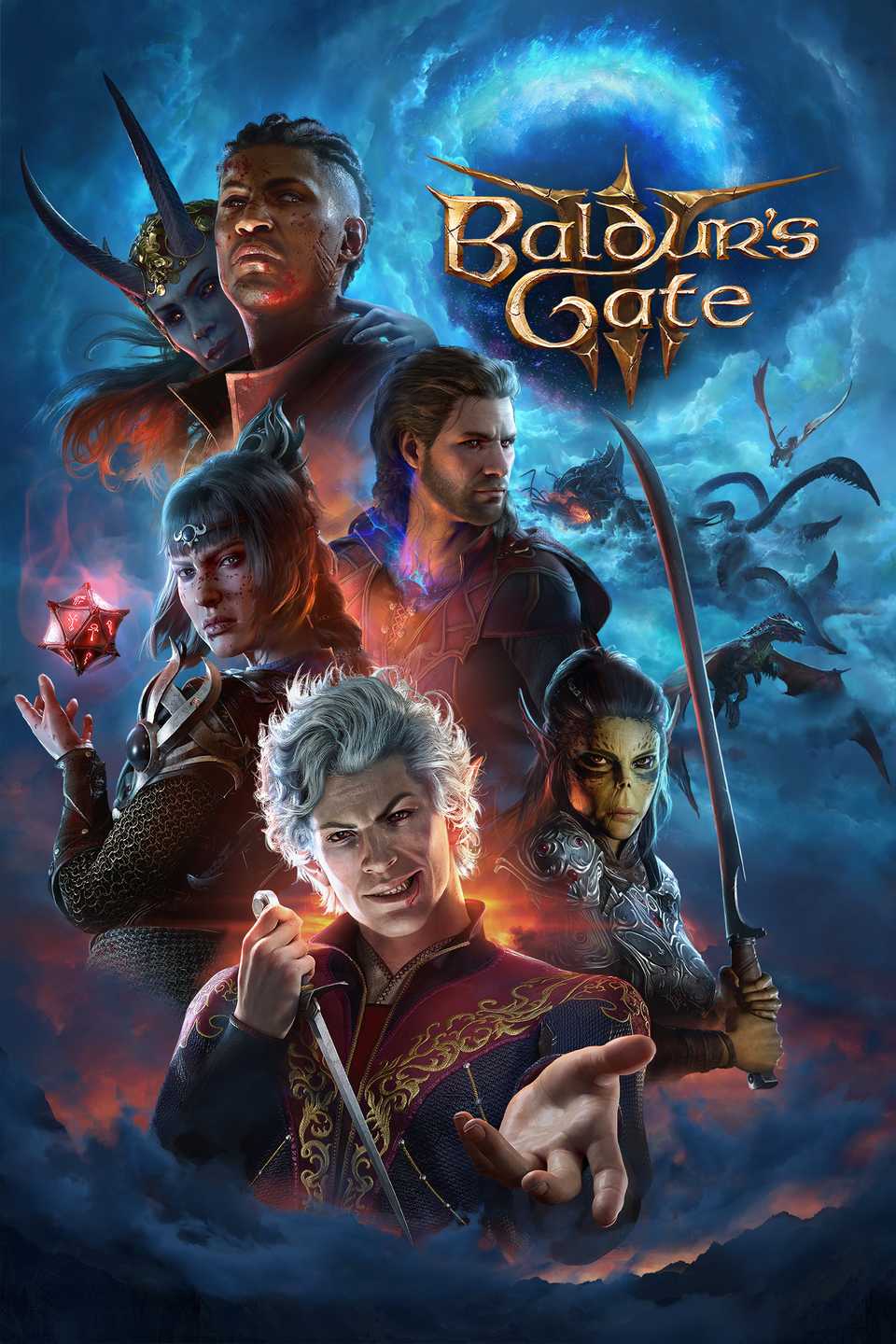
Released August 3, 2023
ESRB M
Developer(s) Larian Studios
Publisher(s) Larian Studios
Franchise Baldur's Gate





 English (US) ·