
 Image via BBC

Published Feb 11, 2026, 4:01 PM EST
Collier Jennings is an entertainment journalist with a substantial amount of experience under his belt. Collier, or "CJ" to his friends and family, is a dedicated fan of genre films - particularly science fiction, fantasy and comic book adaptations, not to mention all forms of animation animation. This stems from a close bond with his father, who introduced him to these genres via copies of X-Men comics and reruns of the original Ultraman series. Using his near-encyclopedic knowledge and bottomless love of genre, he's been able to tackle a wide variety of articles.
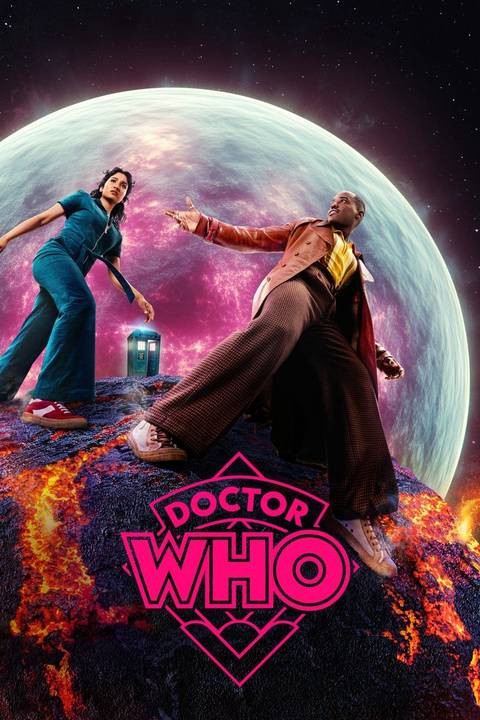
In the pantheon of science fiction, there are a few television shows that stand out as significant pillars of pop culture. One of those series is Doctor Who, thanks to its tried and true formula of sending the mysterious Doctor across time and space to battle various threats. Doctor Who recently arrived at a crossroads due to Disney and the BBC parting ways; the British network struck a landmark deal with the House of Mouse in 2022, which resulted in a larger platform for Doctor Who alongside greatly increased production values. Now that the deal is over, the question is: what's next for Doctor Who?
Even with the Disney deal falling through, Doctor Who continues to thrive as a franchise. Last year saw the release of the spinoff The Land Between the War and the Sea, which focuses on the government agency UNIT, and longtime writer/showrunner Russell T. Davies is scripting a Christmas special. An animated series is also in the works, which is meant to bring in a younger audience of Who fans. Any longtime Doctor Who fan could also tell you that the show's been through similar ups and downs over the years, and much like the Doctor regenerating into a new form, it usually changes to match the times.
‘Doctor Who’ Has Dealt With Cancellation Before
 Image via BBC
When Doctor Who was launched in 1963, it grew into one of the BBC's most popular series thanks to the introduction of classic alien species like the Daleks and the regeneration mechanic allowing actors to put their own unique spin on the Doctor. Yet the original series saw decreasing ratings and a lack of interest, eventually leading the BBC to cancel it. In 1996, Doctor Who would attempt to make a return as a TV film, with the BBC collaborating with Fox and Universal Pictures to bring Paul McGann's Eight Doctor to life. Once again, poor ratings stifled the show's run as it was going up against another popular show in Roseanne. Rik Moran, who ran one of the biggest Doctor Who fan clubs in the world, revealed in an interview that he knew the writing was on the wall: "We saw the American ratings and went, 'It's over, it's not going to happen,'"
BBC's next attempt to revive Doctor Who was a massive success, as Russell T. Davies was brought on to relaunch the series in 2005. Davies made a series of bold decisions that helped reinvigorate the franchise: the Doctor, now played by Christopher Eccleston, was the last of the Time Lords, giving the series more of an adult edge while also providing the perfect entry point for new viewers. The Doctor Who revival also saw the launch of Torchwood, a more adult-oriented series set in the world of Doctor Who focusing on an agency that hunts aliens. If the BBC wants to continue with more Doctor Who, they should look at Davies' run for inspiration.
When ‘Doctor Who’ Returns, It Should Go Back to Its Roots
The one element that's stood out about Doctor Who is that it's a show where anything can happen. After all, if your protagonist can travel through time and space and is nigh-immortal, the possibilities for storytelling are endless! Some of the best Doctor Who episodes have leaned into this aspect, taking place on the surface of Mars or the battlefields of World War I. According to Mark Gatiss, who wrote and starred in episodes of Doctor Who, the show should lean more into its weirder elements:
“It’s never going to be Star Wars...What it is, is Doctor Who — and I think that’s the key. The Disney money obviously did something, but in the end, it’s essentially a spooky show. It’s a weird show. And that’s what I’ve always adored about it...It’s not like anything else. And actually when it tries to be like something else, it’s not Doctor Who."
The BBC is committed to bringing Doctor Who back, according to BBC Studios Production Chief Zai Bennett. What form it takes has yet to be seen, but history proves that Doctor Who is a show that can change with the times.
Release Date May 11, 2024
Network BBC One
Directors Alex Pillai, Peter Hoar, Ben Chessell, Julie Anne Robinson, Jamie Donoughue, Amanda Brotchie, Dylan Holmes Williams
Franchise(s) Doctor Who / Whoniverse
-

-

Millie Gibson
Ruby Sunday




 English (US) ·