

Published May 8, 2026, 8:24 AM EDT
Hannah has been writing about horror, sci-fi, and all things nerdy since 2021. At Collider, she covers news and conducts interviews, along with contributing features that dive deep into genre storytelling and why it works. If there’s something lurking in the shadows, she’s probably already writing about it if she's not too busy watching a tape from her VHS collection.
The Alien franchise has always understood something most sci-fi releases eventually forget: space should feel terrifying. Not adventurous, not hopeful, but terrifying. Across nearly five decades and nine films, the franchise has built one of the most instantly recognizable worlds in genre cinema, filled with corporate greed, synthetic paranoia, biomechanical horror, and people making catastrophically bad decisions the second they encounter something beyond their comprehension that they should not touch.
That atmosphere is exactly why the franchise works so well as a weekend binge on HBO Max. Watching all nine films together, including the questionable Alien vs. Predator crossovers, highlights how flexible Alien became without ever fully losing its identity. The series shifts between survival horror, war movie chaos, existential sci-fi, gothic tragedy, and creature feature insanity while still feeling tied to the same cold industrial nightmare. And that clarity of identity is easier to appreciate when the films are watched as closely together as possible.
The Original 'Alien' Movies Still Feel Untouchable, And Probably Always Will
Alien and Aliens remain one of the strongest back-to-back combinations in sci-fi history because the movies compliment each other rather than competing with one another. Ridley Scott approaches Alien like a haunted house story trapped inside a rust-covered freight ship drifting through deep space, while James Cameron turns Aliens into a full panic spiral built around military escalation and collapsing control. Watching the two films close together makes the franchise's range immediately obvious. The original thrives on silence, dread, and slow-building inevitability, while Aliens pushes in the exact opposite direction without weakening the tension. The xenomorph becomes more aggressive, the scale becomes larger, and the violence becomes louder, but the fear still comes from how fragile humanity looks against something designed purely to survive and spread.
Even the later sequels become more compelling during a marathon because they are willing to get stranger and meaner than most modern studio franchises. Alien 3 strips the series down into something bleak and fatalistic, while Alien Resurrection fully embraces grotesque sci-fi weirdness. Neither movie is as universally beloved as the first two, but both benefit from the franchise's willingness to let different filmmakers push the mythology into uncomfortable territory rather than endlessly recreating the same film.
 Related
The Prequels and 'Alien vs. Predator' Movies Are More Fun Than Their Reputations Suggest
 Image via 20th Century Studios
One of the best parts of binging the entire franchise is realizing how much easier it becomes to appreciate the weirder entries once they are viewed as pieces of a much larger mythology instead of standalone disappointments weighed down by release expectations. Prometheus and Alien: Covenant become especially interesting in that context because they lean harder into existential horror than straightforward creature terror. Instead of simply repeating the structure of the earlier films, the prequels focus on creation, artificial life, and humanity's obsession with reaching beyond limits it does not fully understand. Michael Fassbender's performance as David ends up becoming one of the franchise's strongest connective threads because his fascination with perfection and authorship feels fundamentally tied to Alien's larger themes.
Then there are the Alien vs. Predator movies, which honestly become pretty entertaining once the pressure of taking them overly seriously disappears. Alien vs. Predator understands the basic assignment of smashing together two iconic monster franchises and letting the spectacle carry the fun. Aliens vs. Predator: Requiem leans fully into chaotic creature horror in ways that feel messy but undeniably memorable. Neither movie reaches the highs of the core Alien films, but they still fit naturally into a franchise built around hostile creatures, bad corporate choices, and escalating biological disasters.
The 'Alien' Franchise Still Feels Completely Unique
Part of what keeps Alien so bingeable is that no other sci-fi franchise really feels like it, including even the latest film release, Alien: Romulus. The series has such a specific visual and thematic identity that even weaker installments remain compelling to look at. H.R. Giger's biomechanical designs still feel invasive and deeply upsetting decades later, and the franchise's industrial environments continue to influence horror games, sci-fi films, and television across the genres. The xenomorph also remains one of the greatest movie monsters ever created because the horror surrounding it never feels shallow, and the continued use of practical effects for the perfect organism delivers an unsettling tangibility. Every stage of the xenomorph's life cycle is built around bodily violation, infection, and loss of control, which gives the franchise a physical discomfort many creature features never achieve. The xenomorphs evolve constantly, but the underlying horror always stays recognizable.
That atmosphere is ultimately what makes the Alien series such a satisfying weekend binge. These movies are not just connected through lore or recurring creatures, though they have plenty of both to provide. The movies are connected through tone, texture, and a shared understanding that humanity keeps walking directly into nightmares it was never prepared to survive. By the end of the marathon, the franchise leaves behind one of sci-fi horror's harshest and clearest truths: in the Alien universe, humanity's greatest threat has never been space itself, but the belief that any nightmare can be controlled once it becomes profitable.
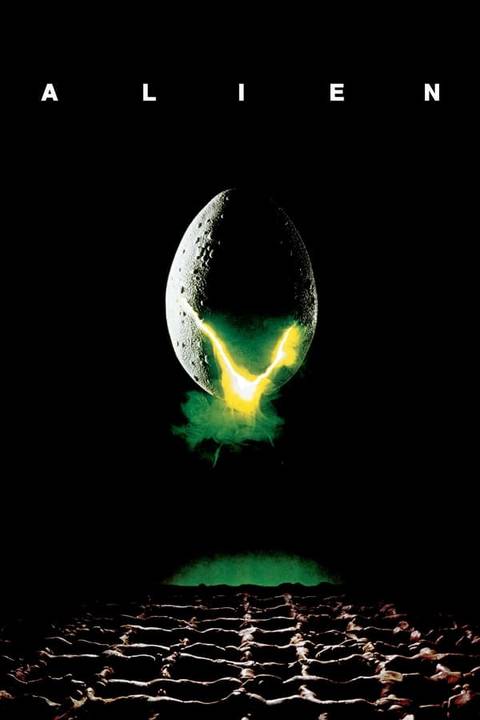
Release Date June 22, 1979
Runtime 117 Minutes
Writers Dan O'Bannon, Ronald Shusett








 English (US) ·