
Despite its big reveal at the Game Awards last month where it had the coveted “one last thing” slot, nobody outside of the development team had any idea what to expect from Highguard as we sat down to play several hours of the game at a launch event in Los Angeles. All we knew was that the team, Wildlight Entertainment, had christened it a “PvP Raid Shooter,” a term that meant close to nothing without knowledge of what the gameplay itself is like. Half a week later, I’m here to tell you that I understand what sort of game it is, and how it won me over.
Getting the inevitable out of the way, Highguard is a PvP hero shooter in which each match can be roughly divided into three disparate segments. At the start, players choose their characters, called “Wardens,” each with their own secondary ability and ultimate, and vote to select one of four “Keeps” which will act as the home base they must defend. Each base features three points of interest which the enemy team will want to destroy by planting bombs—think Counter-Strike—and at the start of each round teams are given a minute to choose which sections to prioritize for reinforcement with their limited resources. It’s a deceptively short amount of time; a trend that the rest of the gameplay loop follows through with.
Keeps can have radically different layouts, each one representing a set of trade-offs that make the choice meaningful. “Hellmouth” comes suspended over lava, making movement for both defenders and raiders considerably more restrictive; “Bellringer” instead goes for a more open floor plan, buoyed by multiple towers and a central zipline. It’s easier to traverse, but leaves defenders and raiders alike out in the open as they make their way to their objective. Just a handful of hours is far from enough to come to grips with the quirks of every Keep in the game, but it’s fair to say that each of the ones I competed on felt unique both visually and in terms of game feel.
 Wildlight Entertainment
Once the initial timer lifts, players ride out of their keep into the wider map in search of resources; armor, weapons, additional material to reinforce sections of your Keep, and accessories for your Warden as well as saddles to buff your mount. Players have several minutes to prepare before the “Shieldbreaker”—the flag—spawns, and everyone collapses on the same central location marked on the map via a storm cloud. Once it spawns, the game becomes Capture the Flag, with the twist that you’re meant to bring the Shieldbreaker to the opposing team’s base to damage its health and knock down its shields to start a raid. Once the Shieldbreaker has been planted, the defending team has some time for last-minute preparations, as a Siege Tower appears that will act as the opposing team’s spawn point for the duration of the raid.
On paper it’s a lot to explain, yet in practice it’s all surprisingly intuitive. Developer Wildlight was formed by folks who had worked on Apex Legends and Titanfall, and that lineage is apparent in the feel of Highguard; while it’s a weightier, more deliberate experience than those games, it still fits like a glove with some excellent-feeling gunplay and responsive controls. The user interface is polished and immediately readable and the game’s art direction is rather strong, with a ton of heart. Scattered across the game’s maps and at each team’s spawn point is Flynn, the shopkeep who can exchange resources mined from the environment for gear, and always has a delightful cross-eyed Owlbear Koala called Gregory by his side.
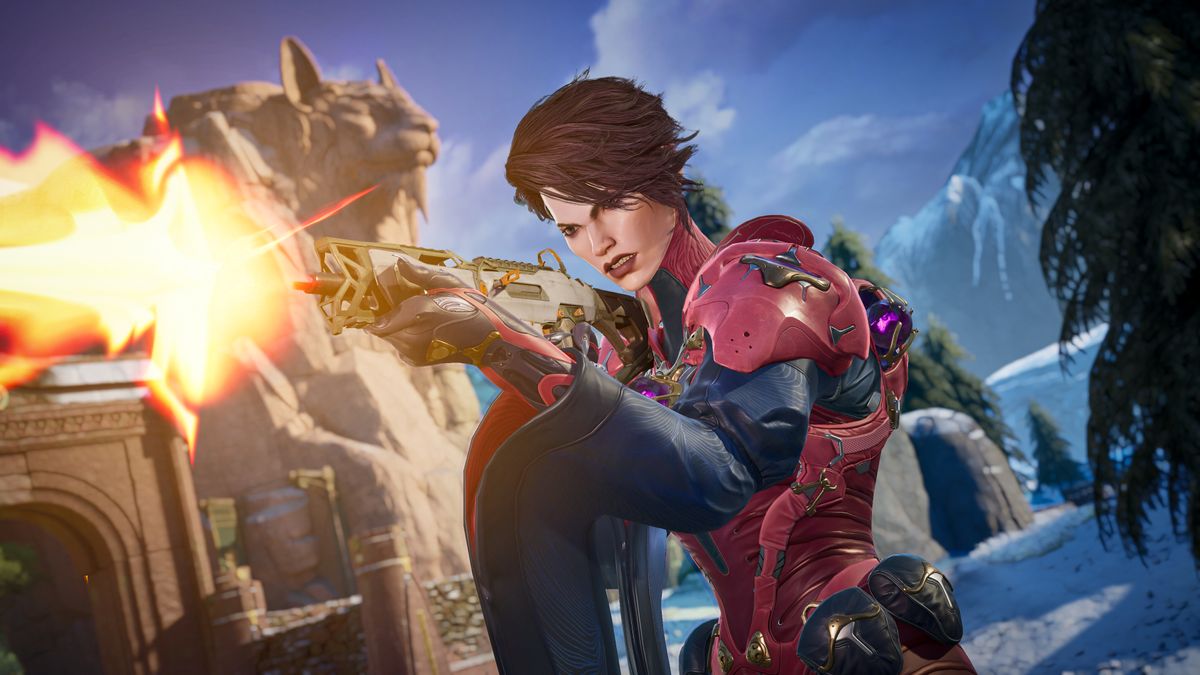
Wardens, too, showcase a lot of personality in action. Kai’s ability to conjure ice walls and send them slamming forward into enemies is delightful enough on its own, but what was even more memorable was some of his banter with other Wardens about his ultimate ability that lets him shapeshift into a frost giant. I wasn’t able to see too many of these conversations between characters, but the ones that I managed to witness ultimately helped endear them to me.
Of course, Wardens come with their own set of kits. Some are more suited for defense, like Una who can summon spirits which lob grenades at enemies in their line of sight. Others excel at subterfuge; Scarlet, for instance, has the ability to shift destructible walls into sand, allowing her to pass through the environment while minimizing the sound left in her wake. Every Warden I tested felt laser-focused on what role they’re meant to fill during a match; watching players learn exactly what those archetypes are over the course of the day was one of the most enjoyable moments of the whole experience.
 Wildlight Entertainment
Throughout the launch event, the devs stressed that they wanted to avoid matches that stall out for hours on end; at most, Highguard‘s games are designed to last 30 minutes. Even then, chances are the average will clock in at closer to 15 to 20 minutes. Each time a team successfully defends against a raid, the whole loop starts over again with a twist; the rarity level of gear increases, and weapons and tools alike gain additional perks. A sniper might become full-auto, a shotgun’s reload speed might be reduced, or a zipline gun might cloak anyone riding the ziplines it sets. When the Shieldbreaker is active, if it hasn’t been set after a few minutes the match will shift to Sudden Death in order to force the issue. If that’s not enough, it will automatically activate on the closest base if enough time has elapsed.
It’s an interesting philosophy, and in practice it means that even in matches where both teams trade blows it never feels like you’re at a standstill. Whether those feelings will last after dozens or even hundreds of games remains to be seen, but for now it lends Highguard a brisk energy that I didn’t really expect from such an involved gameplay loop. Certainly it accomplishes Wildlight’s stated goal of making something truly unique for the genre; it does feel like a breath of fresh air, even if individual elements are stuff we’ve seen time and again.
My first look at the game, made the poor reception to its reveal sting all the more. Highguard has spent the last several weeks being the butt of the internet’s jokes, and it leaves me wondering if players will give it the chance it probably deserves. It’s easy for a developer to claim that they’ve developed something truly new for a genre, and at the same time it’s equally rare for a studio to deliver on that promise. Highguard well and truly feels like something special, and like Titanfall before it I could see it garnering a rabid fanbase. I just hope it’s afforded that chance.



 English (US) ·