
 Image via Lionsgate

Published Jan 26, 2026, 10:00 PM EST
Sign in to your Collider account
Musicals aren’t for everyone, and that’s perfectly fine. The genre demands patience and investment, but if you’re a true film buff, it’s impossible to ignore the power of a good musical. These films combine performance, movement, and music to tell powerful stories of love, resistance, and just about every human emotion. Musicals aren’t meant to be watched; they are meant to be experienced.
At the heart of that experience are the performers who make it all feel real instead of theatrical. The power of this genre lies in the ability of its actors to really sell sincerity in worlds where music replaces dialogue and the stakes are meant to feel exaggerated. Obviously, that’s not an easy feat to achieve, but these 10 musical movie masterpieces pull it off with perfection.
10 ‘The Rocky Horror Picture Show’ (1975)
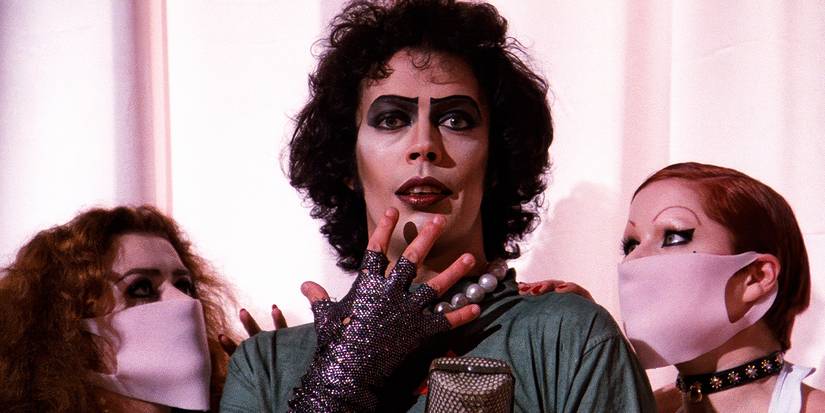 Image via 20th Century Studios
The Rocky Horror Picture Show is a cult classic that will never get old. The film, directed by Jim Sharman, begins on a relatively straightforward note. You have Barry Bostwick and Susan Sarandon playing Brad Majors and Janet Weiss, respectively. The young couple wanders into a nearby castle on a stormy night after their car breaks down. That’s when they run into Dr. Frank-N-Furter (Tim Curry), a self-proclaimed “sweet transvestite from Transsexual, Transylvania,” who presides over a chaotic household of servants, groupies, and other eccentric misfits. From the moment you see Frank coming out of the elevator in a corset and heels, all realism goes out the window. The film deliberately mirrors 1850s B-horror and science fiction and is meant to feel exaggerated.
Aside from the theatrical spectacle, the musical features some of the most powerful performances the genre has ever seen. Curry is grotesque, cruel, and yet strangely vulnerable as Frank, but never lets the character come across like a gimmick. The film’s second half is where you really start to see the contrast between Brad and Janet’s rigid moral framework and the unchecked freedom Frank represents. That’s exactly why the final act lands with the perfect emotional intensity and gives the film its lasting power. You have to be patient to understand the message of The Rocky Horror Picture Show fully, but the payoff is more than worth it.
9 ‘West Side Story’ (1961)
 Image via United Artists
Robert Wise’s adaptation of West Side Story is one of the greatest films of the last 100 years. The film takes Shakespeare’s Romeo and Juliet and places the story in 1950s New York, where two teenage gangs, consisting of white, working-class Jets and the Puerto Rican Sharks, are locked in a cycle of rivalry. At the center of this chaos, you have Jets co-founder Tony (Richard Beymer) and Maria (Natalie Wood), the sister of Sharks’ leader Bernardo (George Chakiris). The two fall for each other almost instantly, but their connection feels virtually impossible to sustain given the hostility that surrounds them.
West Side Story is one of the most realistic depictions of Manhattan. The city feels almost suffocating, and even when the characters are bursting into song, there’s a sense that violence is never too far away. It’s interesting how the film treats dance as a confrontation with the Jets and Sharks sizing each other up through rhythm and music instead of fists and knives. The story is nothing without Beymer and Wood, though, because the connection viewers develop with their characters is what makes everything feel so personal.
8 ‘Singin' in the Rain’ (1952)
 Image via MGM
This one’s for people who actively don’t like musicals because no one can deny the magic of Singin’ in the Rain. On the surface, it is bright. self-aware romantic comedy that takes place against the backdrop of Hollywood’s transition from silent films to sound in the late 1920s. The story follows Don Lockwood (Gene Kelly), a silent film idol whose carefully curated image begins to crack when talking pictures or “talkies” begin to take over. The film begins as a satire about evolving with technology, but it does so in a very human way as studios scramble to keep up with the times. The conflict arises when Don is paired with Lina Lamont (Jean Hagen), a silent screen goddess whose piercing speaking voice threatens to end her career overnight. Enter Kathy Selden (Debbie Reynolds), an ambitious performer whose talent makes her indispensable, even as the studio works overtime to keep her invisible.
Singin’ in the Rain is one of those musicals where the songs actually make sense and fit into the narrative without ever breaking the experience of it all. Kelly steals the show with his physical storytelling and the confidence he brings to his portrayal of Don, even in his darkest moments. The film would be nothing without Reynolds, though, who balances the heightened comedy around her and gives the musical its emotional intensity. Singin’ in the Rain is a timeless story that talks about the cost of progress and what happens to those who fail to embrace it. You don’t even realize how immersed you are in this heartwarming story before the credits roll, and it’s time to say goodbye, and that is the mark of any good film.
7 ‘Chicago’ (2002)
 Image via Miramax Films
If a rom-com isn’t your cup of tea, don’t be fooled, because Chicago is a musical that really leans into crime drama, satire, and black comedy. The film is based on the stage musical by Bob Fosse and Fred Ebb, set in 1920s Chicago, and follows Roxie Hart (Renée Zellweger) and Velma Kelly (Catherine Zeta-Jones), two women accused of killing their lovers, who discover that fame and public sympathy might be their only way out of prison. Instead of treating its musical numbers as reality, Chicago presents them as performances that take place inside Roxie’s imagination. The real world feels cold and gritty, but this format leaves room for the musical sequences to go into extremely stylized fantasies.
This creative choice actually solves the problem of believability that musicals often face. Every musical number blends seamlessly into the overall narrative, and Zellweger does a great job of making everyone fall in love with Roxie’s desperate hunger to be seen. She’s not presented as naturally charismatic like Velma, but that’s what makes her rise to fame feel so earned. Zeta-Jones also deserves appreciation for the way she completely stalls every scene she is in and creates this persona driven by sexuality and humor that you just can’t look away from. I love how Chicago never pretends like any of these characters are fully innocent, because the point of the story is to expose how easily crime can become entertainment. This cynical honesty is why the musical feels so mature compared to most other films in the genre.
6 ‘Tick, Tick… Boom! (2021)
 Image via Netflix
Tick, Tick… Boom!, directed by Lin-Manuel Miranda in his feature directorial debut, adapts Jonathan Larson’s semi-autobiographical stage work into an intimate story about a young artist confronting the reality of the creative struggle and realizing that talent alone might not be enough. Andrew Garfield stars as Jonathan Larson, a music composer approaching his 30th birthday while trying to get his ambitious musical “Superbia” produced in early-1990s New York. Two of Michael's major relationships in life include his girlfriend, Susan (Alexandra Shipp), who wants stability, and his best friend, Michael (Robin de Jesús), who has chosen financial security over his passion while being a gay man during the AIDS crisis. Both individuals represent the two different kinds of future Jonathan can choose for himself.
The film’s plot revolves around a single week leading up to Jonathan’s birthday and a workshop performance of his musical, which is essentially his last real chance to break into the industry. The plot feels like a literal ticking clock where every single choice comes with consequences. Garfield’s incredible performance is what makes all of this feel so intense and painfully human. He perfectly captures Jonathan’s struggle of loving people deeply, but always choosing his work over them because he thinks the sacrifice will eventually be worth it. Tick, Tick… Boom! isn’t just about the choice Jonathan makes, though. It’s about the journey he goes on while coming to that decision. You don’t have to be an artist to understand this musical, but you’ll definitely end it feeling more empathetic toward people who pursue the arts.
5 ‘Cabaret’ (1972)

Image via Allied Artists
Cabaret, directed and choreographed by Bob Fosse, takes place in Berlin in 1931, during the final, fragile days of the Weimar Republic. You might think that musicals are a form of escapism, but this one is the exact opposite. The story centers on Sally Bowles (Liza Minnelli), an American cabaret performer at the decadent Kit Kat Klub, and Brian Roberts (Michael York), a reserved British academic newly arrived in Berlin. The two are quickly drawn to each other, but their relationship obviously exists within a bubble of denial and avoidance. Not just that, but the musical also features a secondary romance involving Fritz (Fritz Wepper), a German Jew hiding his identity, and Natalia (Marisa Berenson), a wealthy Jewish heiress, that mirrors Sally and Brian’s connection.
Cabaret is also one of the most believable musicals out there because its musical numbers are performed on the stage of the Kit Kat Klub, and this framing allows the film to operate primarily as a drama. Minelli’s performance grounds the film, and her portrayal of Sally isn’t typical in any sense. The leading lady is unapologetically impulsive, needy, and even selfish, but you still root for her through it all. Songs like “Tomorrow Belongs to Me” and “Maybe This Time” are the perfect vehicles for the film’s emotional and political duality, and that is the film’s genius. Cabaret leaves you unsettled and aware that the characters aren’t immune to the political catastrophe unfolding around them, but that is the inevitability of life.
4 ‘Les Misérables’ (2012)
 Image via Universal Pictures
Tom Hooper’s Les Misérables is an experience like no other. The film, set in post-revolutionary France, follows Jean Valjean (Hugh Jackman), a former prisoner attempting to redeem his life after serving nineteen years for stealing bread, while being relentlessly hunted by the rigid police inspector Javert (Russell Crowe). Hooper made a controversial yet defining choice to have the cast sing live on set instead of having them pre-record tracks. That’s what give sthe musical its raw and extremely intimate feel. The imperfect voices, every crack and audible strain feel jarring at first, but it’s essential to the narrative that talks about poetry, revolution, love, and sacrifice, all of which lead up to the June Rebellion of 1832.
Anne Hathaway’s portrayal of Fantine is one of the film’s standout elements, and her downward spiral from a factory worker to absolute destitution is one of the most heartbreaking character arcs in the story. Even critics who were divided on the film as a whole couldn’t deny the power of Hathaway’s honest rendition of “I Dreamed a Dream.” The supporting cast, including Eddie Redmayne, Samantha Barks, and others do absolute justice to the film’s melodrama and fully commits to the maximalist scale. Les Misérables refuses to soften its blow or tie everything up in a neat bow. The musical forces its audience to sit with discomfort.
3 ‘La La Land’ (2016)
 Image via Lionsgate
La La Land is a quintessential musical that tells a story of love and ambition. The film, directed by Damien Chazelle, is bright and colorful, but it delivers a narrative that’s much more than just good fun. The story is set in modern-day Los Angeles and follows Mia (Emma Stone), an aspiring actress stuck in a loop of failed auditions, and Sebastian (Ryan Gosling), a jazz pianist clinging to a purist vision of a genre that is slowly fading away. Their relationship is a slow burn of annoyance, mismatched timings, and chance encounters. However, that’s the entire point of the film. La La Land presents its love as alignment, instead of presenting it as destiny. Mia and Sebastian are just two people who happen to cross paths for a brief moment in time. In doing so, they inspire each other, drive each other’s ambitions, and become each other’s safe space.
Ultimately, though, they find their careers pulling them in opposite directions, and that’s when their mutual love starts turning into compromise. Chazelle doesn’t tell this story through big dramatic fights or confrontations. Instead, he focuses on the small choices that strain relationships. Stone delivers one of her most intense performances here, especially in the moments where Mia slowly begins to lose hope for her and Sebastian. Gosling serves as the perfect counterpart with his stubborn romanticism and a hint of insecurity. La La Land is infamous for its heartbreaking ending, but if you ask me, ending the film on that brutally realistic note was the key to its lasting impact.
2 ‘Wicked: Part One’ (2024)
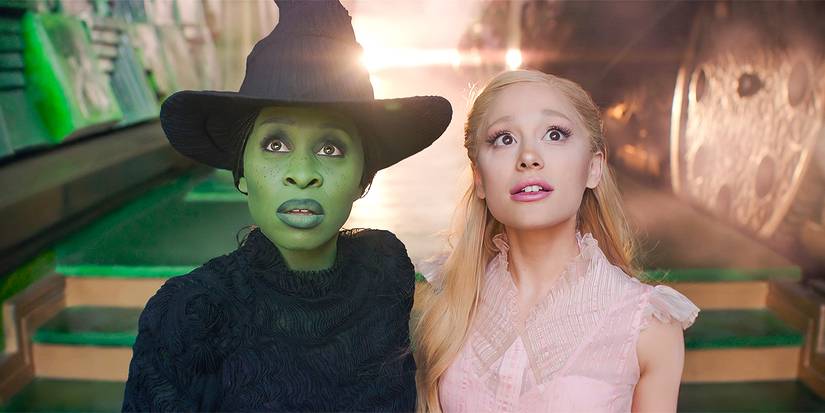 Image via Universal Pictures
Wicked: Part One arrived at a time when musicals didn’t guarantee box office success. However, the gamble definitely paid off because, against all odds, it became one of the biggest commercial hits of 2024. The film, directed by Jon M. Chu, adapts the first act of the beloved stage musical and follows the unlikely friendship between Elphaba (Cynthia Erivo), a brilliant, green-skinned outcast, and Galinda, played by Ariana Grande. The story is set years before Dorothy ever follows the yellow brick road and tells the story of how the Wicked Witch of the West came to be, and the role society played in her creation. The film is set in Shiz University, where Elphaba’s raw magical ability draws the attention of Madame Morrible (Michelle Yeoh) and ultimately the Wizard himself (Jeff Goldblum).
What begins as a familiar coming-of-age story quickly turns into an exploration of systemic oppression, manipulation of the truth, and the way power exploits fear to maintain control. The film is grand in scale, but the cast’s convincing performances make everything feel grounded. The live vocals add to the emotional intensity of the musical numbers, and the way the story balances its exaggerated comedy with sharp self-awareness is its strongest suit. Wicked: Part One ends on a cliffhanger with “Defying Gravity,” where you’re almost hit by the weight of everything Elphaba has been carrying. The finale promises a spectacle in the second half and establishes Wicked: Part One as a defining musical of the modern age.
1 ‘The Sound of Music’ (1965)
 Image via 20th Century Studios
The Sound of Music is often labeled as too sweet and sentimental, but this Robert Wise masterpiece has endured for nearly six decades because of its utter sincerity. Sure, the musical has its fair share of picture-perfect imagery and memorable songs, but beneath all that, it’s a story about moral choice and courage. The narrative, set in Salzburg, Austria, in 1938, follows Maria (Julie Andrews), a free-spirited nun who clashes with the rigid expectations of Nonnberg Abbey. After Maria is sent to work as a governess for the seven children of widowed naval officer Georg von Trapp (Christopher Plummer), she gradually transforms a household ruled by strict discipline into one filled with music, laughter, and emotional vulnerability.
However, this sweet story takes place against the backdrop of Austria falling under Nazi control, where the von Trapps are forced to choose between compliance and exile. Andrews brings a childlike quality to Maria without ever crossing into immaturity. She sings, dances, and plays with the children while also being the emotional backbone of the film. The actress makes all of this look effortless and never makes Maria’s optimism feel hollow. The Sound of Music has the power to resonate across generations and cultures because it’s a film that makes you feel alive in every sense of the word.

The Sound of Music
Release Date March 2, 1965
Runtime 174 minutes
Director Robert Wise
Writers Ernest Lehman, Howard Lindsay, Russel Crouse




 English (US) ·