

A24
Over the last couple decades, the remake has become not just more commonplace in film and television, but also more of a selling point, too. While the majority of remakes tend to be genre films and shows, there have been a handful of productions that've sought to find new angles on milestones and masterpieces: Gus Van Sant's "Psycho" is the most obvious, but for instance, Martin Scorsese's "The Departed" remade the excellent Hong Kong thriller "Infernal Affairs," and Christopher Nolan remade the 1997 Norwegian hit "Insomnia" in 2002. As those examples indicate, it's much easier for a filmmaker to remake a great movie when there's either a large gap of time or culture involved.
That brings us to this week's "How to Make a Killing," a new movie that you may not even realize is a remake. The film, written and directed by John Patton Ford and starring Glen Powell, does not contain the same setting, time period, or character names as its source material. Yet the fact remains that it's secretly a remake of "Kind Hearts and Coronets," a British film produced at Ealing Studios in 1949, directed and co-written by Robert Hamer. That movie was itself an adaptation of the obscure early 20th-century novel "Israel Rank: The Autobiography of a Criminal." All three versions of the story feature the same basic tale of a young man who, after being denied a huge inheritance he has a partial claim to, embarks on a quest to murder the rest of his relatives. While "How to Make a Killing" might wish to distance itself from its predecessor due to being more of sharp satire than a comedy, the fact is that "Kind Hearts and Coronets" is a comedy masterpiece which still holds up today.
Kind Hearts and Coronets is an invaluable part of comedy history
StudioCanal
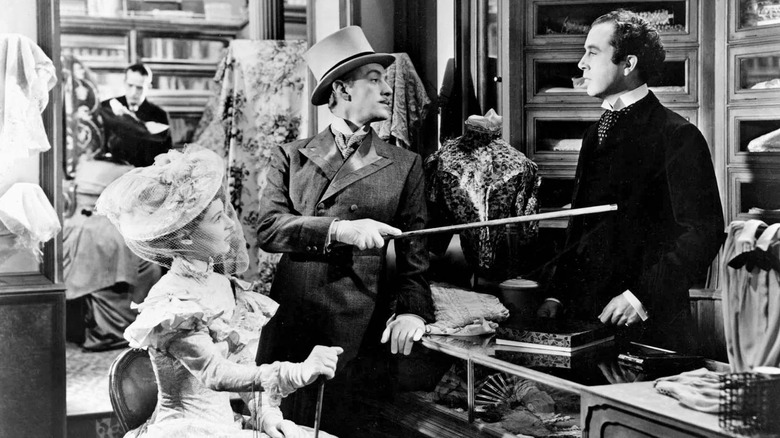
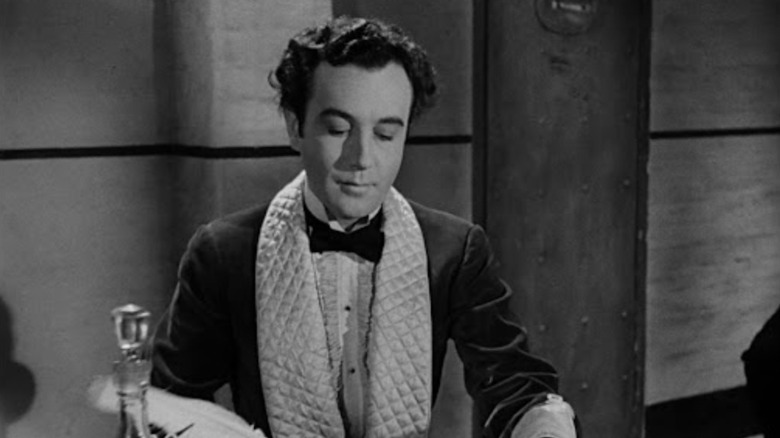
If the black comedy inherent in "How to Make a Killing" appeals to you, then there's no doubt you'll appreciate "Kind Hearts and Coronets." Its script, by Robert Hamer and John Dighton, belongs to the same literary, witty, deliciously dry tradition of Oscar Wilde. The cast is spectacular: Dennis Price plays the young Louis Mazzini, heir to the D'Ascoyne family fortune. In the midst of his plan to prune his family tree, he's torn between pursuing a socially advantageous marriage to his ex-sister-in-law, Edith D'Ascoyne (Valerie Hobson), while balancing the advances of his childhood friend and mistress Sibella (Joan Greenwood). With this dynamic, the film becomes more than just a black comedy about murder, and involves themes of sex, social politics, and other potentially immoral matters. For lovers of British comedy, "Kind Hearts and Coronets" represents the golden age of Ealing Studios, continuing a historical run of films from 1948 to 1955 that includes "The Lavender Hill Mob," "The Man in the White Suit," and "The Ladykillers."
The star of most of these milestone comedy films was Alec Guinness, and yes, he was also the original Obi-Wan Kenobi, "Star Wars" nerds. "Coronets" was Guinness' first Ealing film (and his fourth feature ever!), and it was a helluva debut, as Guinness portrays not one but eight members of the D'Ascoyne family. This gimmicky yet highly rewarding choice (and Guinness' commitment to it) helped inspire Peter Sellers, who pulled off the technique in several of his films, including "Dr. Strangelove." Sellers, in turn, inspired folks like Eddie Murphy in "The Nutty Professor" and Mike Myers in "Austin Powers." As you can see, a lot of comedy movie history leads back to Ealing, Guinness, and "Kind Hearts."
How to Make a Killing proves Kind Hearts and Coronets is still relevant
StudioCanal
There are some comedies made only 20 years ago which feel hopelessly dated in 2026, let alone 77 years ago. Yet "Kind Hearts and Coronets" sidesteps this issue with grace and elegance. For one thing, its set in Edwardian England, making it a period piece even when it was first released. For another, while there are off-putting cultural differences here and there in the film (most notably the casual use of a racial slur as part of a children's nursery rhyme), the movie's comedic and satiric targets aren't antiquated.
The entire film is a send-up of the British class system and so-called polite society, a movie in which an unrepentant murderer is seen — even by the audience, perhaps — as justified. It's this theme which John Patton Ford retains most heavily in "How to Make a Killing," pointing out by inference how the English class system of nearly 80 years ago (or even longer) isn't all that different to the disparity of wealth and billionaire-friendly culture we have in America today.
Ford's film does right by Hamer's movie by never trying to copy or overwrite it. The two films, despite clearly sharing the same basic story, plot dynamics and structure, coexist well with each other. This is best seen in their endings: "Coronets" wraps up with an ingeniously ambiguous final shot, while "Killing" is far more conclusive, yet deliciously bitter. So, if you enjoyed "Killing" and haven't seen "Coronets" before, give it a spin. It just might be the cure for what's Ealing — er, ailing you.








 English (US) ·