
 1 month ago
29
1 month ago
29

Lots of photographers might dismiss the Flashback One35 V2 as a gimmick; a digital non-disposable camera aimed at image-conscious Gen Z users more interested in aesthetics than artistry. That characterization, however, misses the mark.
There is a clear tension right now between the generations in photography: the Head of Instagram waded into it recently when he declared that camera manufacturers pursuing perfection are going in the wrong direction. I would imagine that he thinks Flashback, a startup from Australia, is just the antidote.
A clear competitor to Camp Snap, the Flashback One35 V2 costs just over $100, it’s incredibly light — sliding into just about any pocket — and most importantly, it’s very fun.
Before using the camera, I didn’t bother to check things like the focal length, the sensor size, or the resolution. Of those details, all I can tell you is that it has a 13-megapixel sensor. This camera isn’t about the specs, it’s about the vibes.
 Classic
 Classic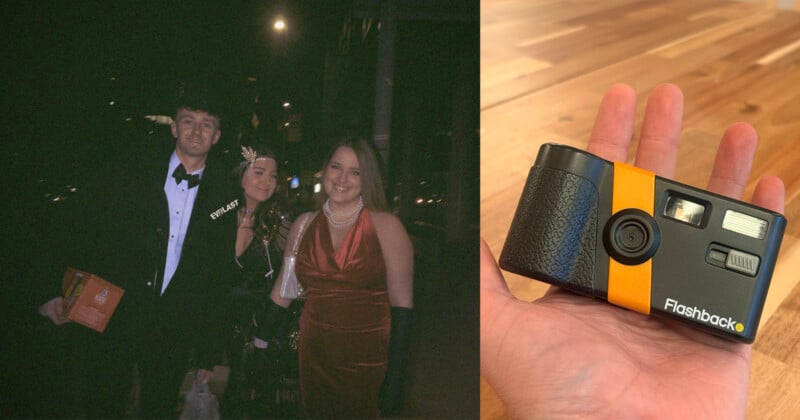
The Flashback App
Since the camera looks exactly like one of the old disposable film cameras, it doesn’t have any controls other than the winder, the shutter button, and the flash. But it’s still a digital camera, so the accompanying Flashback app is a crucial component.
At the top of the app is My Camera. When Flashback One35 is turned on via the nostalgic winder, the camera appears there, and it tells you how much battery is left and how many shots are left on the current film.
This is also where you can choose from four film simulations: #flashbackclassic, #flashbackmono, #flashbackbeta, #flashbackcine. A self-timer is in the app, a handy little feature for when you’re taking a group photo that you would like to be in.
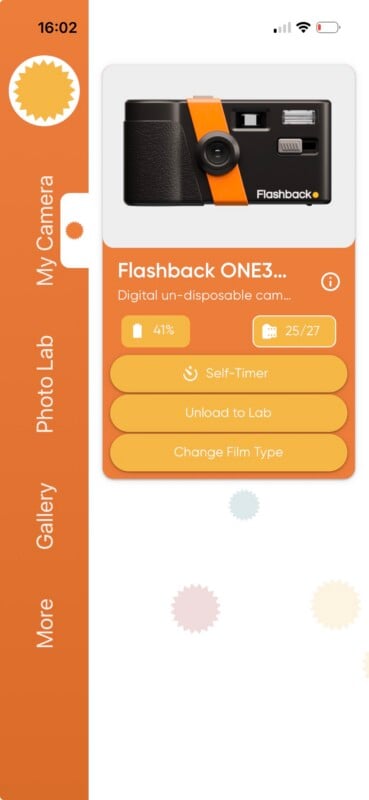
The app can be a little buggy; it crashed on my iPhone 16 on more than one occasion. Viewing the photos on the Gallery tab isn’t a great experience either; it’s far better to download them onto your device to view them there. But at least it organizes your photos into folders which tell you which film type you used and there’s a beta feature to have your “Negatives” exported to you — a useful feature for those who might want to build their own film recipes.
 Cine
Cine Cine
Cine Beta
Beta Beta
Beta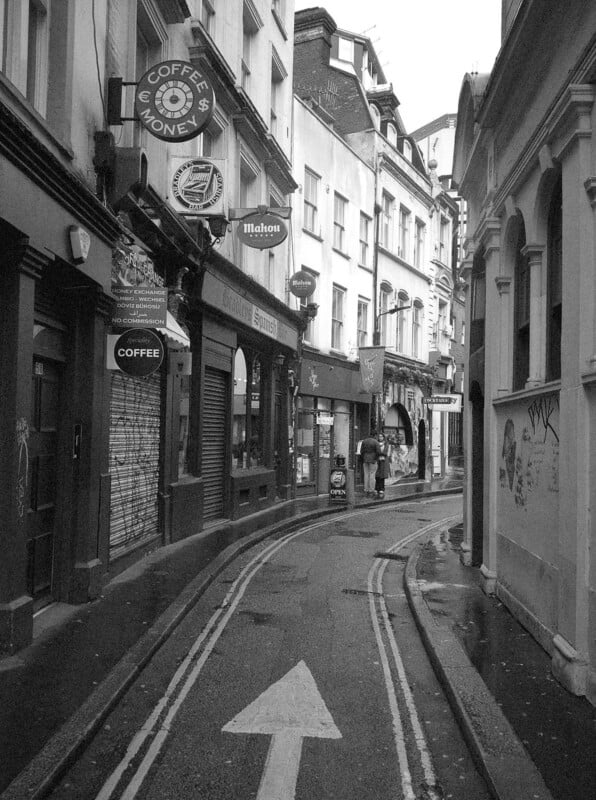 Mono
Mono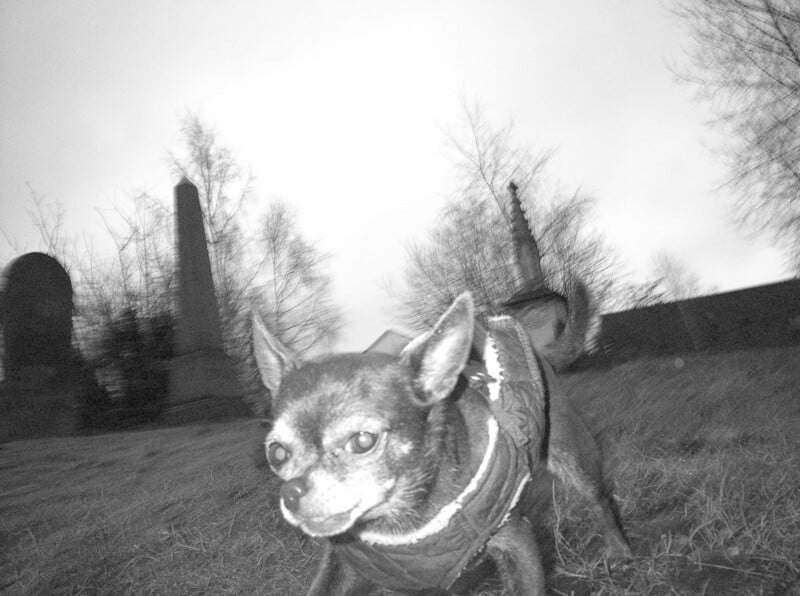 Mono
MonoTo Wait or Not to Wait
When you first get the camera, it’s set to Film Camera Mode, which means you have to wait 24 hours before you can see the photos. When I first got it, it was New Year’s Eve and I was with family and friends. I was excitedly shooting rolls and then going through the odd experience of waiting for the photos to be developed.
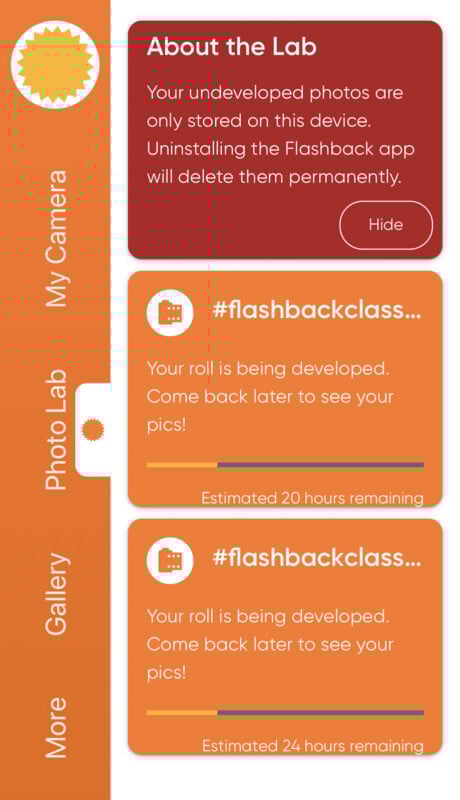 Anxiously waiting for my films to be developed, not in a lab but in cyberspace.
I wound up getting bored with this novelty and switched it to ‘Digicam Mode’ instead, which lets you see the photos as soon as you’re ready to unload them. Obviously, you can’t see the photos on the back of the screen (since there is no screen), so you still get an analog experience, which is nice.
 Speaking of the film rolls, there are 27 shots available on each one, which was the standard amount of exposures that came with a pre-loaded disposable camera back in the day.
Shooting Experience
Here’s my one major gripe: I’m a tall, 6-foot-4-inch man and my fingers are kind of long. I repeatedly got my middle finger in front of the lens. Even after I became aware of the problem, I just couldn’t help it.


It got so bad that I started pressing the shutter with my middle finger instead of my index just to keep it out of the way. When shooting vertically, I used my thumb to trigger the shutter. But hey, an imposing digit on a photo is all part of the disposable camera charm, I think?

Then there’s the framing: the viewfinder doesn’t really mean all that much. I mean, sure, you can look through it and see this distorted view of the world, but the crop and the composition aren’t closely related to what the lens is seeing. It’s better just to point and shoot; you look cooler doing that anyway.
The Photos
When you nail a photo on this camera, it’s undeniably nice. And to me, that is standing close enough to the subject so the flash illuminates them and the background is a couple of stops darker.

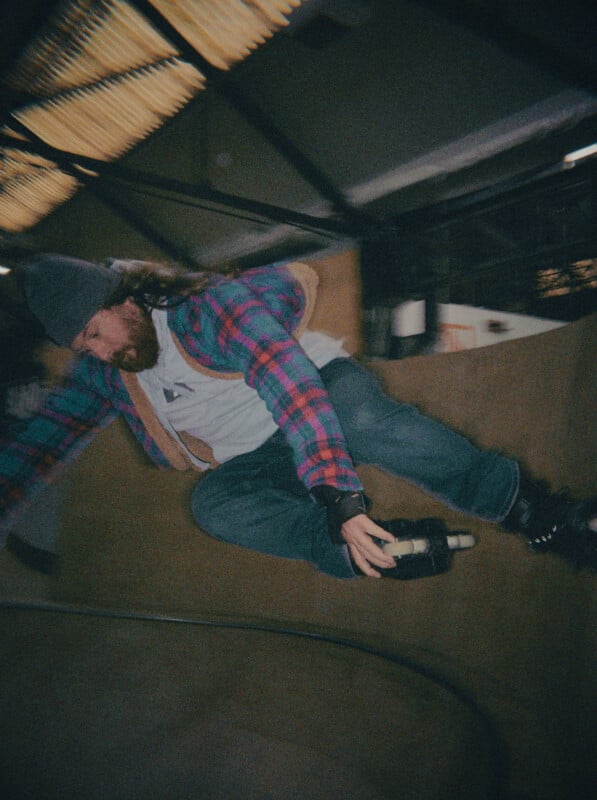

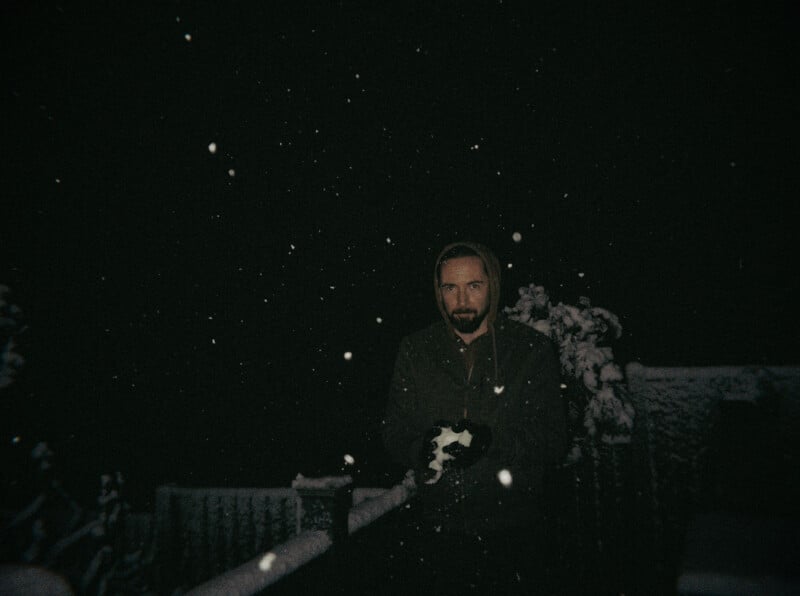
There were plenty of situations in which it didn’t do so well: the snow, for example, it really struggled to find the right exposure settings. But in most daylight settings it looked good enough. Obviously, with a smaller sensor, it doesn’t perform well in low light without the flash.
 Two little dogs on a snowy day. Handled the exposure badly.
 Best not to use it for nightscapes.
Conclusion
I had great fun with this camera, and it caught the eye of many other people who were curious about this nostalgic and novel device. While it’s aimed at casual photographers who want to take nice pictures of their friends for social media, I think professional photographers could also use it… hear me out. Say you’re a wedding or an events photographer, it’s a great alternative camera that you could shoot a roll on, just as a little extra something for the client. Heck, you could even give the camera to a guest and let them run riot with it — the client might love it.
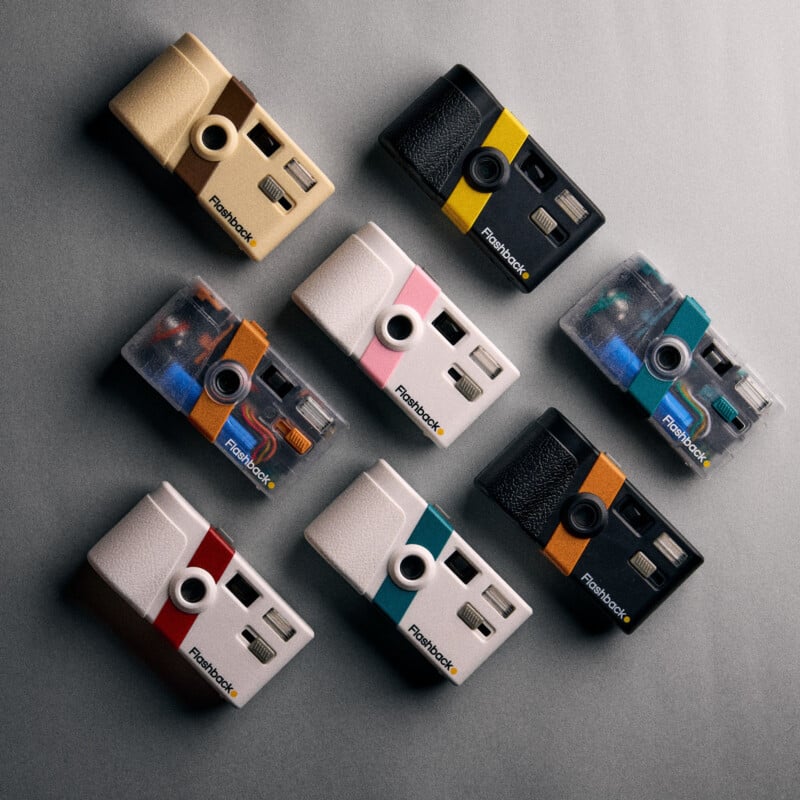 The Flashback ONE35 V2
Is There an Alternative?
Yes, you can shoot with real disposable cameras for around $15. But you only get one roll for that price.
Otherwise, there are many other cheap toy cameras that people can buy, but certainly the Camp Snap is the most obvious competitor.
Should You Buy It?
Yes. It’s only $100 and you get to have some whimsy fun. What’s not to like?





 English (US) ·