
 1 month ago
26
1 month ago
26
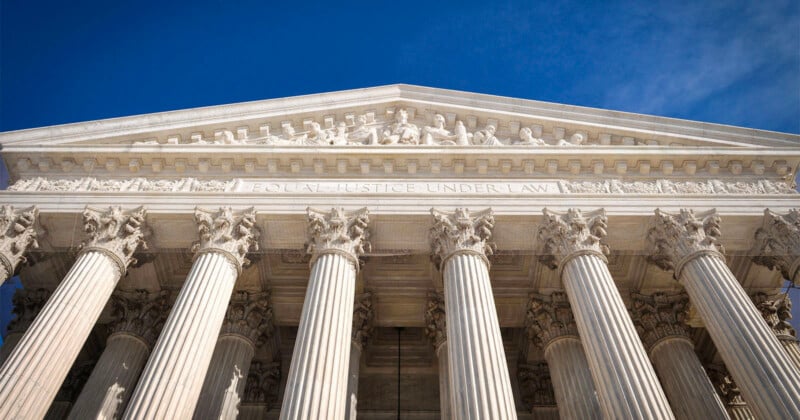
The United States Supreme Court has struck down President Trump’s controversial global tariffs in a 6-3 ruling.
The majority ruling, authored by Chief Justice John Roberts, upheld a lower federal court’s ruling that President Trump’s unilateral use of the 1977 International Emergency Economic Powers Act (IEEPA) to enact sweeping global reciprocal tariffs is illegal. Every lower court that had considered Trump’s use of tariffs had ruled against him.
“The president asserts the extraordinary power to unilaterally impose tariffs of unlimited amount, duration, and scope. In light of the breadth, history, and constitutional context of that asserted authority, he must identify clear congressional authorization to exercise it,” Chief Justice Roberts wrote in the majority opinion.
Roberts continued, citing prior rulings, that the President lacked the congressional authorization required to justify his power to impose sweeping reciprocal tariffs originally unveiled on “Liberation Day” April 2, 2025.
“…Our task today is to decide only whether the power to ‘regulate … importation,’ as granted to the President in IEEPA, embraces the power to impose tariffs. It does not,” Roberts writes
The IEEPA allows the President to enact economic policy during a national emergency, but, per the U.S. Constitution, Congress alone has the power to impose taxes and tariffs. No president before Trump had ever used IEEPA to impose tariffs.
Lower courts have also questioned whether the U.S. is in any economic emergency, despite the President’s repeated claims to the contrary.
The President has used reciprocal tariffs as a significant tool in his broader economic and foreign policy, consistently defending them as necessary for national security.
Critics have claimed that the President’s tariffs and broader economic policy have significantly damaged geopolitical relations, destabilized the domestic and global economy, and caused major harm to American citizens, who bear the brunt of the tariffs. American photographers know this firsthand, having been forced to pay higher prices on cameras and lenses since last April. Few industries rely as heavily on foreign-made products as photography, as every single major camera and lens maker is located outside the U.S.
Ultimately, President Trump’s tariffs are taxes on American consumers and businesses, per economists, rather than on foreign governments or companies, despite what the President has repeatedly claimed.
Reuters reports that the U.S. government has collected more than $175 billion in tariff revenue, and this sum “likely would” need to be refunded in light of the Supreme Court’s ruling today.
The President has previously said he would develop a type of plan B in the event the U.S. Supreme Court ruled against him and his tariff policy, although it remains unclear at this time what that alternative approach may be.
Chief Justice John Roberts was joined in his majority ruling by Justices Neil Gorsuch and Amy Coney Barrett, both conservatives appointed by President Trump in his first term. Conservative Justices Brett Kavanaugh, another Trump appointee, Samuel Alito, and Clarence Thomas dissented.
In his dissent, Justice Kavanaugh remarked that the majority had said nothing about whether the government should return the “billions of dollars that it has collected from importers” or how that would occur.
Today’s ruling does not impact all of the Trump administration’s tariffs, only the ones related to IEEPA, which are the reciprocal tariffs placed against broad imports. Presidents have long utilized tariffs to protect specific industries in the U.S., and these more precise, protectionist tariffs are not affected by today’s ruling.
The President’s Response
Speaking this morning at a gathering of state governors at the White House, President Trump called the Supreme Court’s ruling a “disgrace.”
Yesterday, speaking at an event in Georgia, Trump speculated about what would happen if the Supreme Court struck down the majority of his tariff policy.
“Without tariffs… everybody would be bankrupt. Everybody. The whole country would be bankrupt… And the language is clear that I have the right to do it as president. I have the right to put tariffs on for national security purposes,” the President said, as Reuters reports.
Other Responses
Senate Democratic Leader Chuck Schumer said the Supreme Court’s ruling was a “victory for the wallets of every American consumer.”
Democratic Senator Elizabeth Warren expressed concern that massive corporations, not the American people, will be the ones to benefit from the ruling and pocket any potential refunds.
Republican Senator Rand Paul argued today that the ruling will prevent future presidents from using emergency powers to enact economic policy, including democrats who may want to “enact socialism.”
A Coalition of Small Businesses Reacts to the Supreme Court Ruling
“Today’s Supreme Court decision is a tremendous victory for America’s small businesses who have been bearing the crushing weight of these tariffs. Our coalition members, who through hard work, late nights, and sweat equity built local businesses, have paid billions in tariffs that never should have been imposed,” said Dan Anthony, Executive Director of We Pay the Tariffs, a coalition of over 800 American small businesses.
“They’ve taken out loans just to keep their doors open. They’ve frozen hiring, canceled expansion plans, and watched their life savings drain away to pay tariff bills that weren’t in any budget or business plan. Today, the Supreme Court has validated what we’ve been saying all along: these tariffs were unlawful from the start.
“But a legal victory is meaningless without actual relief for the businesses that paid these tariffs. The administration’s only responsible course of action now is to establish a fast, efficient, and automatic refund process that returns tariff money to the businesses that paid it. Small businesses cannot afford to wait months or years while bureaucratic delays play out, nor can they afford expensive litigation just to recover money that was unlawfully collected from them in the first place. These businesses need their money back now.
“With refund money back in their hands, American small businesses will do exactly what they’ve been telling us they would do all along: hire workers, expand operations, invest in inventory, pay down debt, and contribute to their local economies. Returning these funds will provide local economic impact from the ground up, putting money directly into the businesses that drive local job creation and economic growth.
“Small businesses are rightfully worried that the Administration will respond to this legal defeat by simply reimposing the same tariff policy through other means. Small businesses cannot afford for the administration to double-down on failed tariff policies. Tariffs imposed under IEEPA crippled small businesses; tariffs reimposed under different statutory approaches would have the same destructive effect. The path forward should prioritize refunds, not new rounds of tariffs under different names.”
Image credits: Header photo licensed via Depositphotos.






 English (US) ·