
 1 hour ago
3
1 hour ago
3
Just because they look harmless doesn't mean you should be irresponsible with your data.
OpenAI/Meta
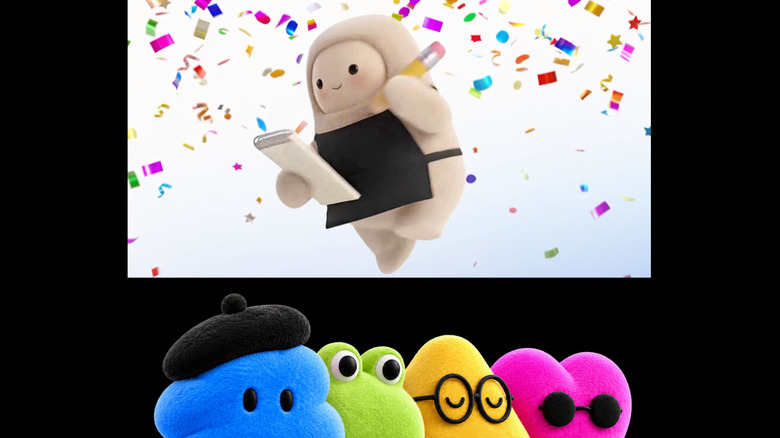
You're not imagining it, the AI agents are getting alarmingly cute. First, there was Meta's Muse, whose mascot is a fuzzy egg-shaped creature called Jolly. Now, OpenAI has unveiled its own muppet-like personal agents, Dots.
Both companies are encouraging users to treat their agent like a digital pet, with distinct names and appearances. Given the current rhetoric around AI safety and the public's general suspicion of the industry, it's not surprising that companies would want to make its agents look cute and non-threatening. This isn't a faceless chatbot that might lead you into AI psychosis, it's an adorable little sidekick that will make you more productive. But just because these tools look like cartoon characters doesn't mean there aren't real risks to using them.
Both OpenAI and Meta claim there are layers of safeguards in place to protect your data and to keep their personal agents from going rogue. But even when they are working as intended, these systems can take actions you might not have intended.
Consider tech YouTuber Matt Robb, who asked his Muse to help him sell some items on Facebook Marketplace. He said that his agent gave out his home address to someone without permission for a transaction he never agreed to. After his posts about the interaction went viral and Meta executive David Singleton got involved, Robb explained that his agent hadn't gone rogue after all. He had in fact given it permission to share his address, he just didn't realize he had done so.
When he first asked his agent to handle the listing, he explained, it created a template that included the pickup address. He mistakenly believed the agent would check back with him before sharing this information, but because he had checked "allow always" rather than "allow one time," the agent had gone ahead and sent the message to "everyone that gave me an offer." It's exactly the kind of mistake that's easy to make when using an agent.
Others who consider themselves tech savvy have also run into issues. Jason Aten, a columnist for Inc. reported that after installing the Muse Mac app, the agent was able to read all of his text messages even though he thought he had "explicitly" denied access to them. After some digging, he learned that the Muse Mac app had, in fact, synced messages from his computer. The same Meta executive, Singleton, replied to Aten's X posts, saying that message syncing is opt-in. If Aten's messages had synced, he must have chosen to do so, his post implied.
Aten feels certain he never granted Muse permission to see his messages, but notes that the situation is problematic regardless. "If we grant Singleton's premise that I managed to unknowingly click something that enabled this capability, I still think that's really bad," he wrote. "You should not design your system in a way that people end up surprised by this kind of thing."
These mishaps didn't happen because the Muse has a cute avatar, but Meta seems to be leaning heavily into the aesthetics of its agent's mascot. Seemingly every Muse update — and there have been many just in the last week — is accompanied by posts on X with prominent images and videos of appropriately-themed Jolly mascots. Singleton even used one in a lengthy post explaining Muse's VM. And its cartoonishness has already resulted in untold free marketing for Meta. In the week since Meta's Connect conference — where we were introduced to Mark Zuckerberg's Roman empire-inspired Muse — Jolly has been the source of memes on X.
pov: codex is down pic.twitter.com/jHEe31W3yJ
— claire vo 🖤 (@clairevo) September 25, 2026
OpenAI's Dots also seem ripe for meme fodder. At its launch, the company shared a promotional video showing people talking very earnestly to Dots of varying colors, shapes and accents. There's a green one with googly eyes and a bowtie that looks suspiciously like Kermit the Frog. Another one looks kind of like a cloud wearing a beret. None of them seem to have noses or mouths.
But the attempted cuteness of these tools is also a very real distraction from the fact that their creators want you to give them access to vast swaths of your digital life. Email inboxes, credit card details, documents, text messages, health data, productivity apps; you'll need to connect all of these and more to your agent if you want it to be able to accomplish everything OpenAI and Meta say is possible.
Have you ever emailed someone a copy of your ID, or a tax document, medical record or anything else with personal information? If you have, and you give an AI agent access to that account, it will also have visibility into those documents.
That's why I've been cautious with my own use of agents. I've been experimenting with Muse for a few weeks, but have only given it access to two non-Meta accounts, both of which I consider to be pretty low-stakes (OpenTable and Spotify). So far, my worst experience was Muse missing the mark when I asked it to create a new playlist similar to one I frequently listen to. At the same time, I've actually been fairly impressed with what Muse has been able to do even with limited access to outside accounts. I've set up several price trackers, created a recipe book based on videos I've saved from Instagram and created a custom dashboard to track my published work.
I'll also be the first to admit that I, a longtime fan of adorable robots, am not completely immune to the "cute" factor. I named my own Muse "boo" and gave it a cat avatar. When I give it tasks, the cat dramatically puts on a pair of headphones and starts typing away on a tiny laptop. I'd be lying if I said this silly animation didn't bring me a tiny bit of joy.
I also know that behind that cute facade is a company that has repeatedly compromised its users' privacy. And recent history has proved that agents are adept at finding surprisingly creative ways to wreak havoc. We shouldn't be so quick to give them the power to do so in our personal lives.



 English (US) ·