
 3 weeks ago
43
3 weeks ago
43
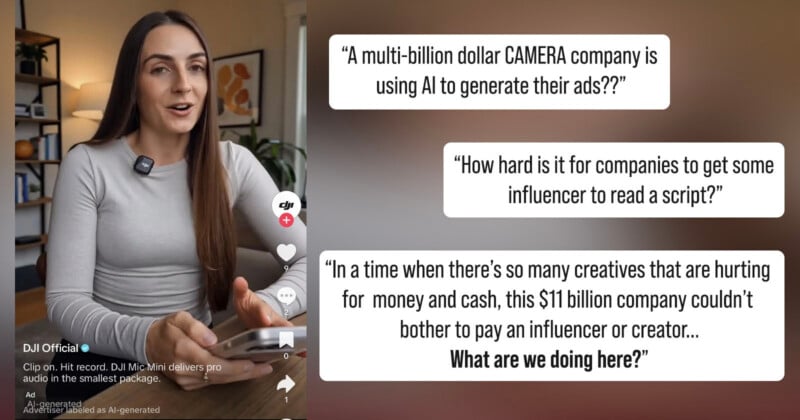
DJI is in a bit of hot water after it was discovered publishing an AI-generated ad on TikTok, where AI-generated people are not all that unusual. DJI’s now-deleted ad featured a video with an AI avatar who looks, mostly, like a real, actual person.
As expected, people online are upset that a creator-focused company like DJI would use an AI-generated “human” in an advertisement for its new DJI Mic Mini, when it could have very easily afforded the time and money required to hire an actual person. DJI is not hard up for cash.
“If you’re selling products to creators, and you’re not even using those creators to talk about and sell your brand, that’s a problem — all you have to do is give that creator your $60 microphone and someone would love to talk about it,” says Colden Raisher in the latest episode of his podcast.
Over on Reddit, the story is similar.
“A multi-billion dollar CAMERA company is using AI to generate their ads?? WHAT IN THE HELL? Your entire business relies on creators and you choose to cheap out on an ad that could have given those very creators a job? What a disappointment,” writes Reddit user Top-Manufacturer5872.
“How hard is it for companies to get some influencer to read a script?” asks u/Ruepic.
On social media, Jakob Owens of production company Buff Nerds Media, takes serious issue with DJI’s ad. While the ad has since been taken down, Owens’ post on Threads shows it very clearly.
“This ad from DJI to promote their new mic is completely AI-generated using an AI avatar. Not a real person, not a real creator, not a real filmmaker, photographer, content creator, you name it, but an AI-generated content creator to promote a product that real people, real content creators, need to actually record themselves,” Owens says.
“This is a product that DJI needs real people to buy and use to make content, but they’re using an AI-generated influencer to promote said product. In a time when there’s so many creatives that are hurting for money and cash, this $11 billion company couldn’t bother to pay an influencer or creator, a real person but instead chose to generate one to talk about their new mic. What are we doing here? What are we doing?”
While the understandable reaction among many content creators so far has been one of frustration, it is important to note that AI-generated advertisements like the one DJI posted and then deleted on TikTok are not viewed with this same level of skepticism in all locations.
For example, as PetaPixel‘s Matt Growcoot noticed when he was watching television during a recent trip to China, AI-generated advertisements were everywhere.
AI-generated ads are on television in North America, too, but the reaction to them is often negative. What may not be cared about or even noticed in one market can create outrage in another.
This is not to give DJI, a Chinese company, a pass. The company should have known how this ad would be received, and running with it and then deleting it is a bad look.
However, as a DJI spokesperson tells PetaPixel, it remains committed to utilizing real people as part of its marketing strategy.
“Like many brands in the industry, DJI continues to explore emerging technologies and creative formats as part of our marketing efforts. To be clear, this should not be viewed as a broader shift in DJI’s marketing strategy. Creators, filmmakers, photographers, and storytellers are central to DJI’s identity, and we deeply value the relationships we’ve built with them over the years. We remain focused on supporting and collaborating with the creators who bring DJI products to life in authentic and inspiring ways,” DJI tells PetaPixel.
Image creditsDJI



 English (US) ·