
 1 day ago
11
1 day ago
11
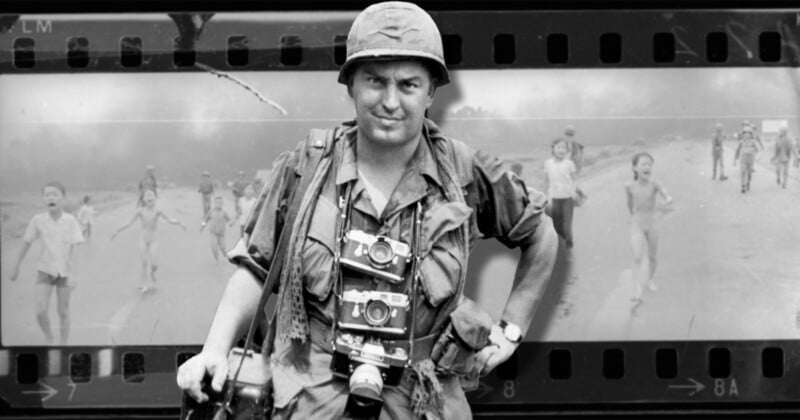 Horst Faas, courtesy Michael Ebert
If there is a villain in The Stringer documentary, then it is not so much Nick Ut, the AP photographer who has long been credited with taking the famous Napalm Girl photograph, but Horst Faas, the Chief of Photos in Saigon who allegedly swapped the credit on Napalm Girl.
But who is Horst Faas? Before the film, he was probably best known as the photographer and editor who spent more time covering the Vietnam War than any other journalist. He won the Pulitzer Prize in 1965 for his images of the conflict and is also heralded for his work as a picture editor, not just for Napalm Girl, but also for Eddie Adams’ notorious photo, Saigon Execution.
However, The Stringer documentary on Netflix essentially says this: Horst Faas ordered the Napalm Girl credit to be changed from a local freelancer to AP staff photographer Nick Ut, cheating the freelancer out of a lifetime of accolades and glory. The film suggests that Faas did this out of loyalty to Ut, out of a compassion that Faas felt for the death of Ut’s brother, and because Faas was playing to win and didn’t want an iconic AP photo credited to a photographer who was not staff.
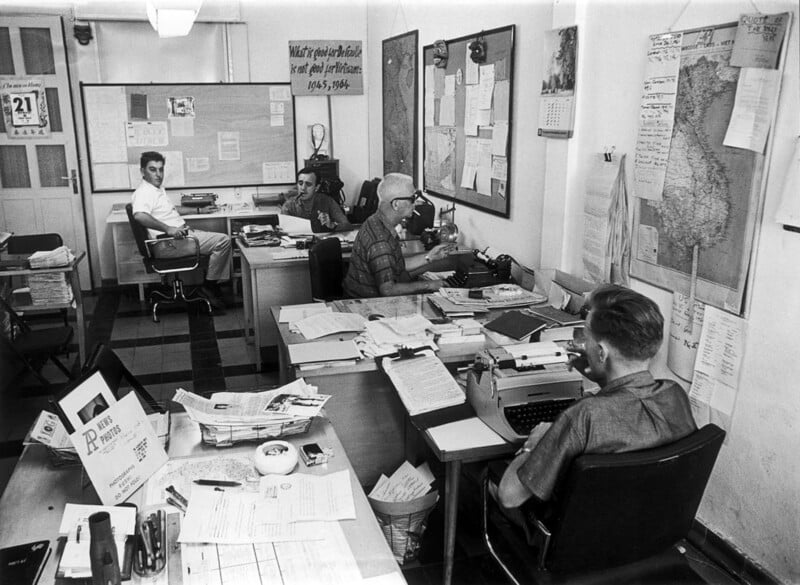 Horst Faas, left, in the Associated Press Saigon Office with correspondents Peter Arnett (second left) and Malcolm Browne (bottom right), date unknown. | AP Photo
It’s a series of devastating accusations, made all the more galling by the fact that Faas died in 2012. His absence — and inability to speak for himself in The Stringer — makes him a convenient scapegoat.
PetaPixel has tried for months to get in touch with someone who could speak for Faas, eventually finding Michael Ebert, who met Faas in the late 1990s through his work with the German Society for Photography, and oversees Faas’ estate and archives.
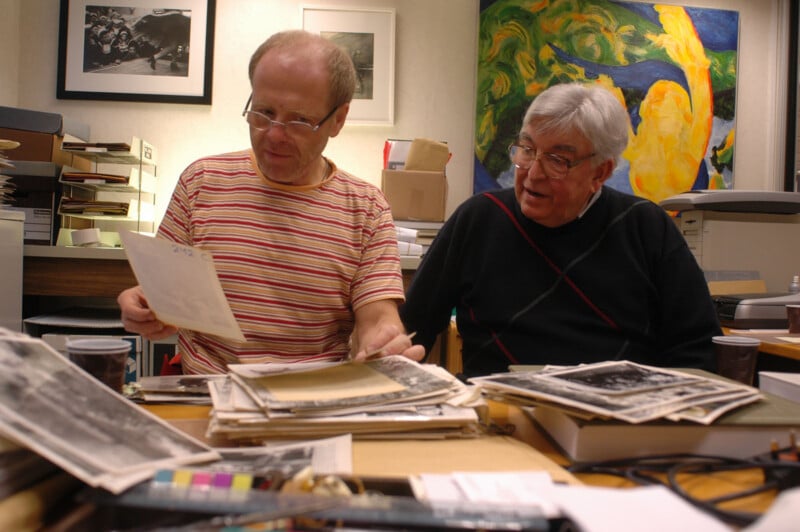 Michael Ebert, left, with Horst Faas.
Ebert tells PetaPixel that the Faas estate consists mainly of personal memorabilia, documents, and magazines. But there are also hidden treasures, like hard drives of images, and a number of Faas’ prints that no longer have negatives — AP still holds the rights to Faas’ images.
“We occasionally make new discoveries,” Ebert says. “For instance, in 2018, we found seven Tri-X pan negatives and were able to verify that Nick Ut had taken them on June 8 in Trang Bang. Unfortunately, these aren’t particularly significant images.”
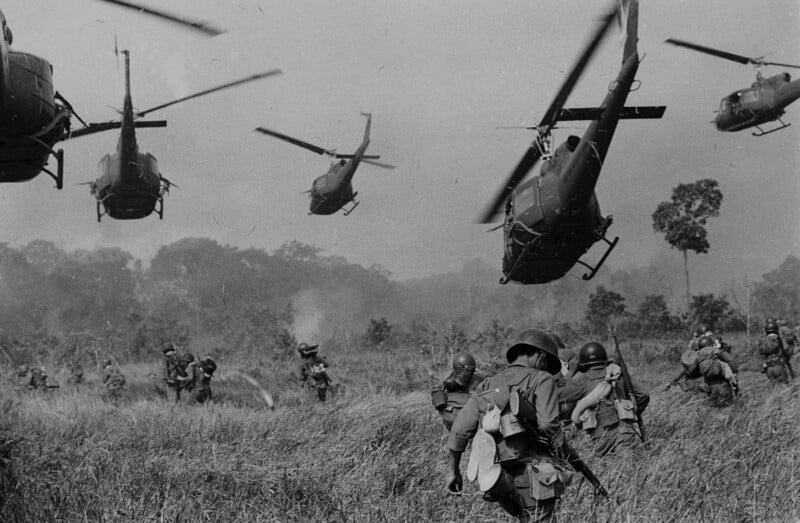 As well as being an iconic photo editor, Faas was also an incredible photographer. This dynamic image shows U.S. Army helicopters peppering the tree line with machine gun fire to cover the advance of South Vietnamese ground troops in an attack on a Viet Cong camp. | AP Photo/Horst Faas
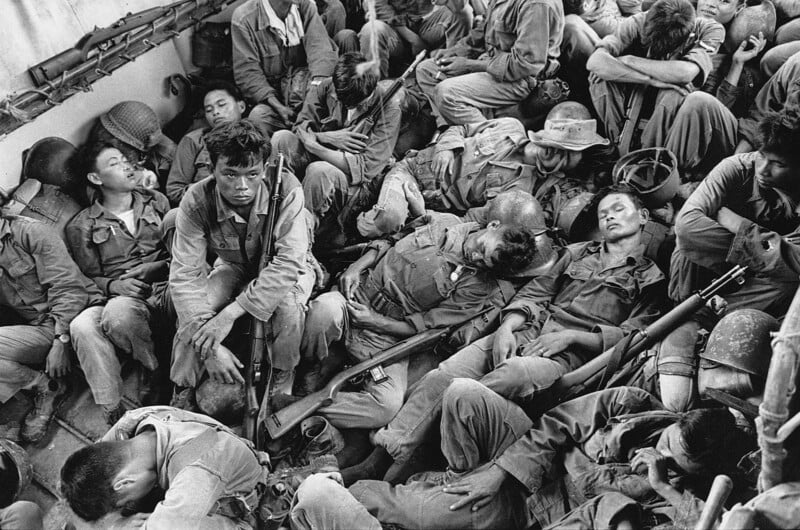 South Vietnamese government troops from the 2nd Battalion of the 36th Infantry sleep in a U.S. Navy troop carrier, 1962. | AP Photo/Horst Faas
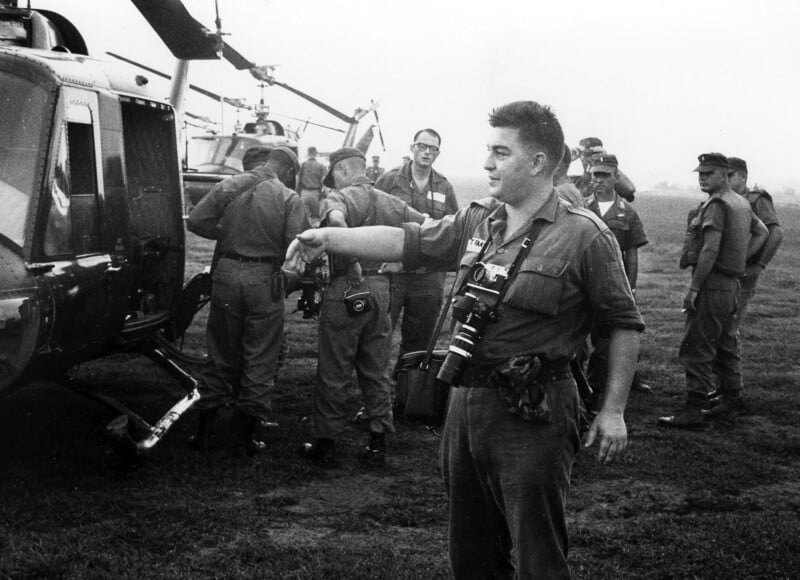
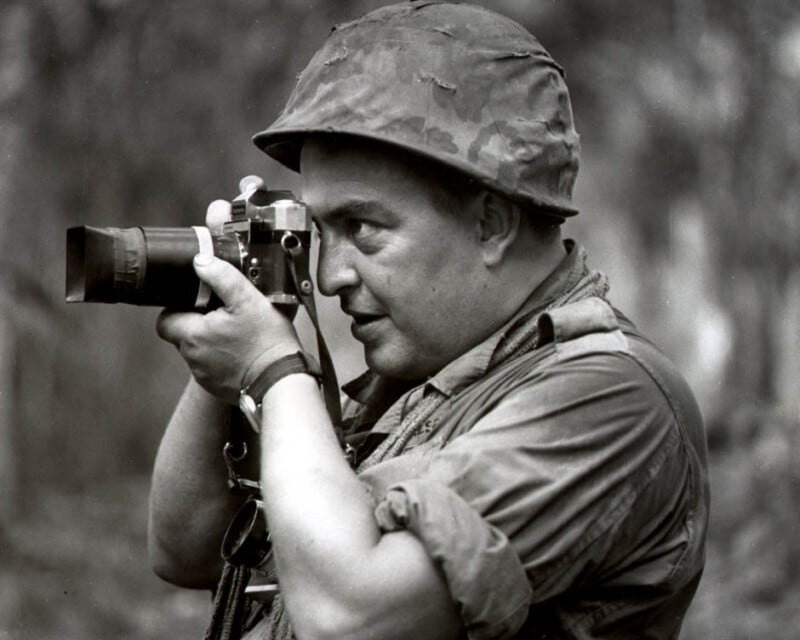 Faas taking photos in Vietnam, 1967. | AP Photo
Ebert says that he was contacted about The Stringer last year by the Associated Press and the VII Foundation. The AP wanted help checking the authenticity of a photo, but says his conversation with Fiona Turner, one of the film’s producers, was limited to a few emails.
“I got the impression that the producers didn’t think my opinion fit into their film concept,” he says. “It was similar to other people involved, like Fox Butterfield from the NYT.”
Fox Butterfield, a former New York Times journalist who was present at the scene of Napalm Girl and witnessed the severely injured Kim Phuc, told Variety last year that, “it was hard for me to watch somebody claiming that Nick Ut didn’t take the picture… I was on the scene and saw the real thing.”
Butterfield said he did speak to the filmmakers, but they would only share their evidence with him if he signed a nondisclosure agreement — which he refused to do.
I Got the Impression That the Producers Didn’t Think My Opinion Fit Into Their Film Concept.
“There’s a lot of criticism in the film,” Ebert says. “Above all, the journalistic approach is criticized. Plus, there are plenty of technical errors.” He cites one factual error in the film: that Malcolm Browne won his Pulitzer Prize for the Burning Monk photo. “That’s not true,” he says. “Mal received the Pulitzer Prize for his book on the early phase of the Vietnam War.”
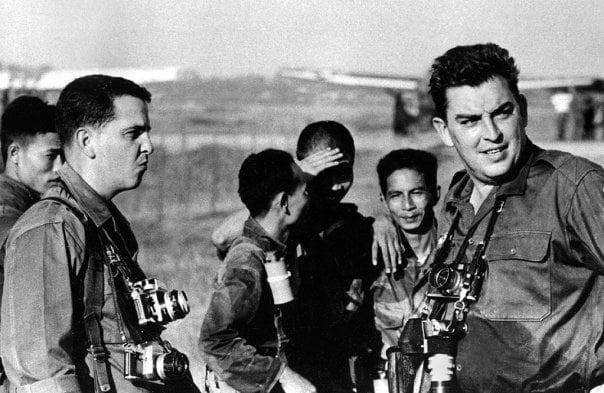 Horst Faas, right, waiting for a flight in the Mekong Delta, 1963.
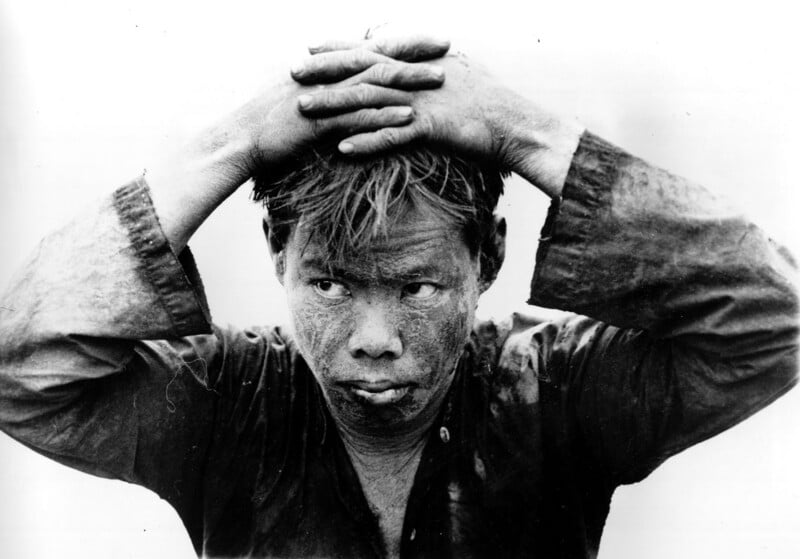 A North Vietnamese farmer waits with his hands clasped over his head to be transported to a prisoner of war interrogation camp after capture by South Vietnamese government forces on Jan. 29, 1964, during the Vietnam War. | AP Photo/Horst Faas
As for the main questions in The Stringer — Did Nick Ut take the photo or not? If he didn’t, then how did it end up at the AP office? And did Horst Faas instruct Carl Robinson to misattribute it? — Ebert says that while they are almost impossible to answer, he doesn’t believe Faas switched the credit.
“Horst was too upright and too intelligent for that,” says Ebert. “Ultimately, one must conclude that the absolute truth will remain hidden in the fog of war after more than 50 years and the death of most of the eyewitnesses.”
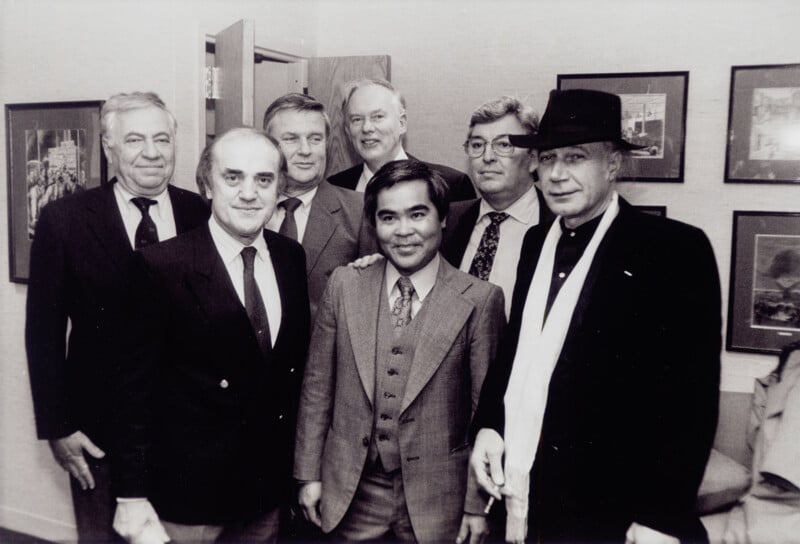 Horst Faas and Nick Ut (second and third from right), at a Pulitzer meeting in New York. Eddie Adams (far right) is also present, along with Malcolm Browne (back center).
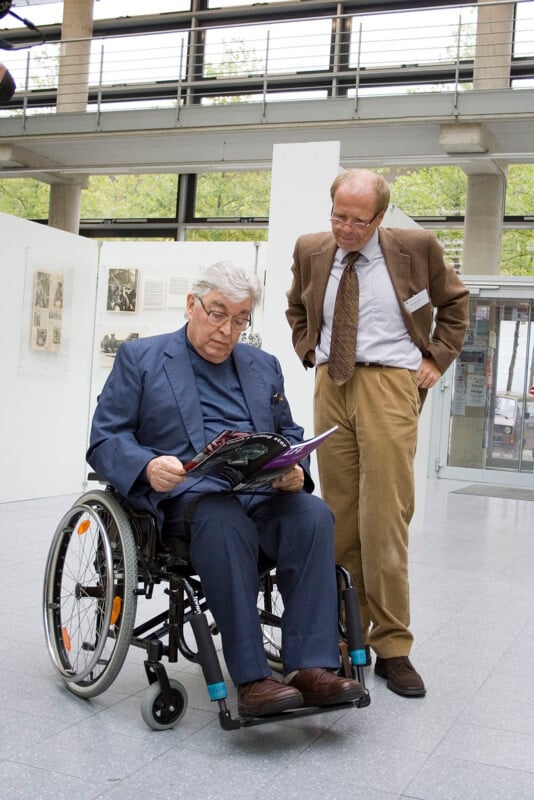 Michael Ebert with Horst Faas in Hannover, 2005. Faas required a wheelchair after falling ill with a spinal hemorrhage.
Carl Robinson
Carl Robinson is the key piece in the documentary; it is his claims that, as a photo editor in the Saigon AP office, he was the one who swapped the photo credit at the behest of Horst Faas.
“Faas and Robinson did not always have the best relationship,” says Ebert. “Although Horst had installed Robinson as his successor, the latter’s performance was evidently not up to par.”
“Horst was set to become the AP’s Asia photo chief and therefore left Saigon,” Ebert continues. “When the Viet Cong’s Easter Offensive began in 1972, Faas had to return because AP lost the battle against [rival agency] UPI. That was the reason Horst was in Saigon at all when the photo of the Napalm Girl was taken.”
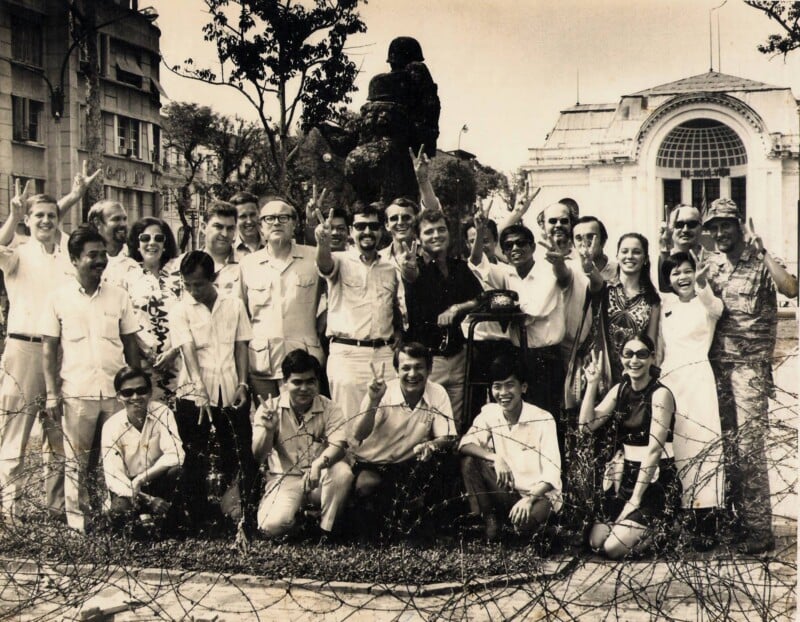 In this group photo of the AP Saigon staff taken in June, 1970, Nick Ut can be seen kneeling (second from left), Horst Faas is standing (sixth from left), while Carl Robinson is seen flashing the peace sign highest of anyone in the center of the frame.
Ebert characterizes Robinson as an “underdog” in the story of Napalm Girl prior to The Stringer being released.
“After all, he was considered the photo editor who refused to publish what is probably the most important war photo of the 20th century,” Ebert says. “Perhaps that’s comparable to an editor who rejected the manuscript for Harry Potter.”
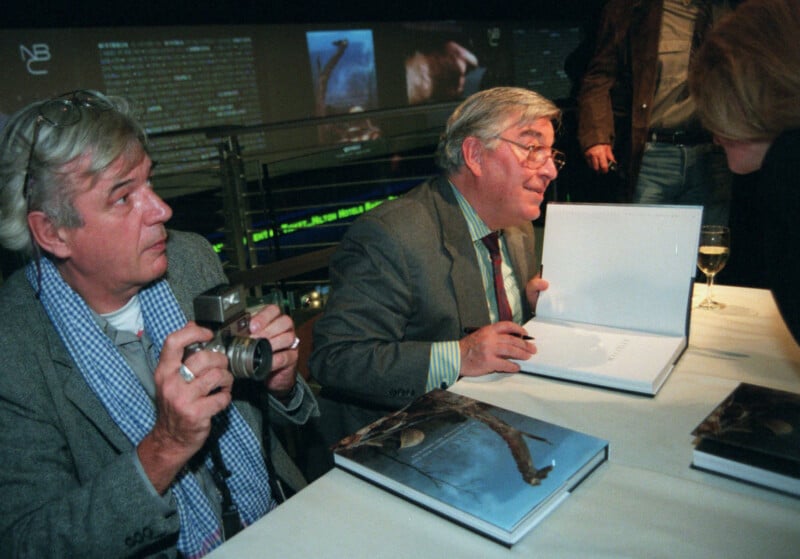 Horst Faas, right, autographs the book Requiem: By the Photographers Who Died in Vietnam and Indochina, that he co-authored with Tim Page, left, November, 1997. | AP Photo/Karin Cooper
Ebert says that before The Stringer, it was “well known that Carl Robinson had repeatedly dropped hints in Vietnam veteran circles.” But he was often rebuked by colleagues, including legendary war photographer Tim Page, who he says reacted “very grimly” to Robinson’s claims.
Ultimately, One Must Conclude That the Absolute Truth Will Remain Hidden in the Fog of War After More Than 50 Years and the Death of Most of the Eyewitnesses.
Ebert also points to the key witnesses in AP’s Saigon bureau that day who have since died, like Yuichi “Jackson” Ishizaki, a key witness who developed the film. “Those who have passed away never doubted Nick Ut’s authorship, and those who are still alive view the allegation with skepticism, at the very least,” he says.
Horst Faas: The Man
Faas was born in Berlin in 1933, the same year the Nazi Party took control of Germany. “Horst belongs to the generation of war children,” Ebert says. “I once put it this way: Horst Faas was either in a war, facing a war, or recovering from a war.”
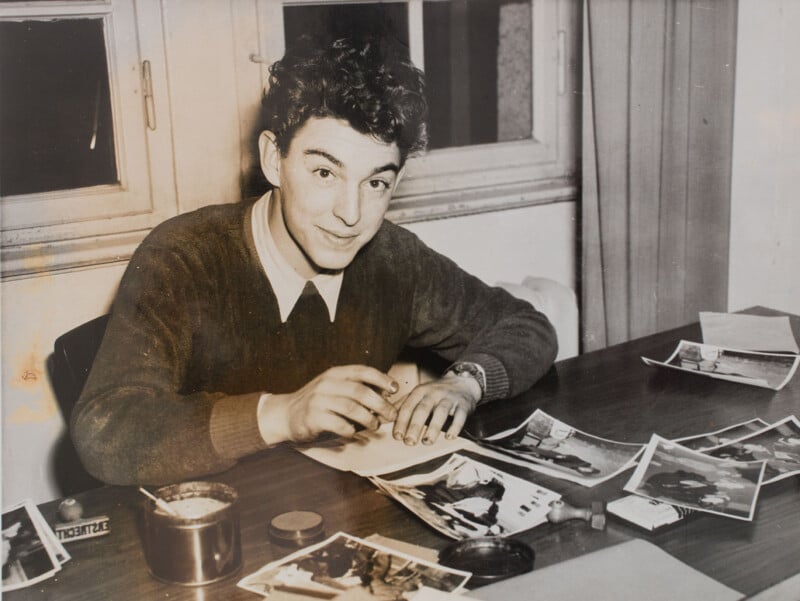 A young Horst Faas, already working on photos.
By the age of 21, Faas had established himself as a photojournalist capable of covering major events. He joined AP in 1956 and stayed with the news agency until his retirement in 2004, covering conflicts in Vietnam, Laos, the Congo, Algeria, and Bangladesh along the way.
Despite a lifetime spent covering strife, Ebert, who met Faas later in his life, knew him as an empathetic person. “Camaraderies, esprit de corps, and loyalty were very important to him,” he says. “He always stood 100% behind his staff, but also behind AP.”
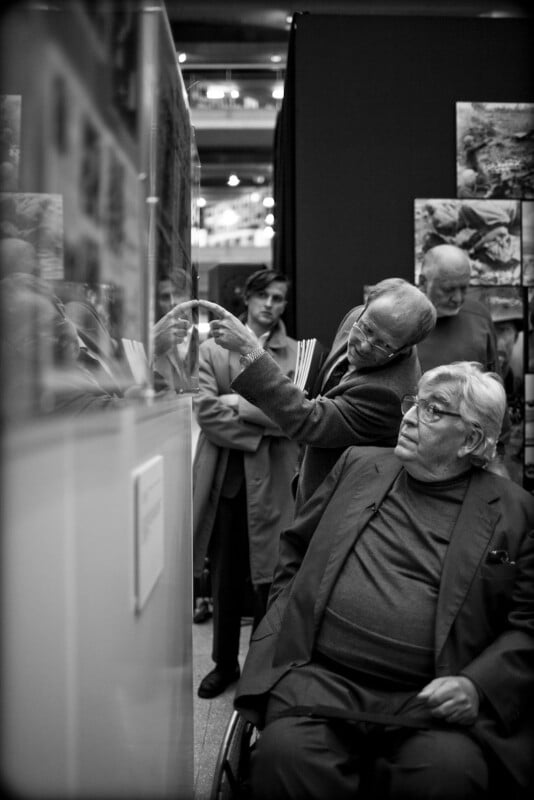 Ebert and Faas
In The Stringer, Gary Knight calls Faas “complex… a paradox, tough, competitive, and yet capable of great compassion.” Ebert says that if someone crossed a line, Faas could be strict.
“He respected professionalism and competence, and he was impressively well-educated,” adds Ebert. “Beyond that, he was a very sensual person who greatly appreciated good food and a glass of wine.”
 Women and children crouch in a muddy canal as they take cover from intense Viet Cong fire at Bao Trai, about 20 miles west of Saigon, Jan. 1, 1966. | AP Photo/Horst Faas
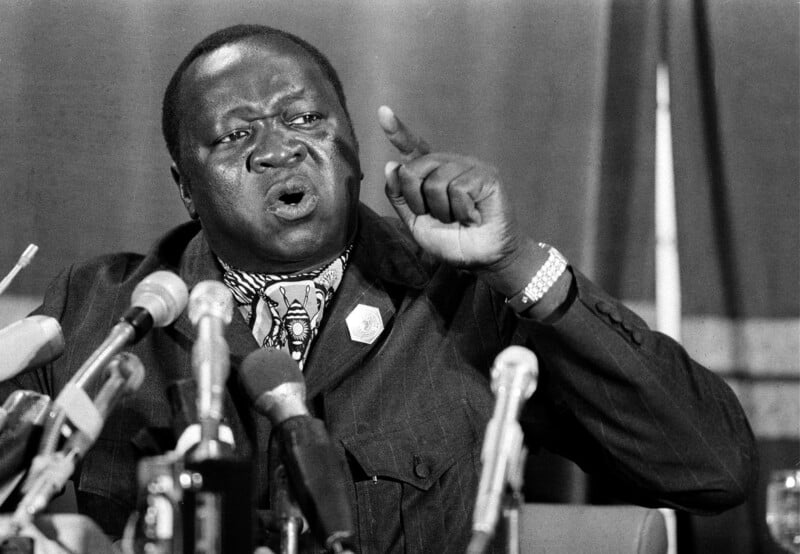 President of Uganda Idi Amin is shown at a news conference at the Arab League Headquarters in Cairo, Egypt, on March 8, 1977. | AP Photo/Horst Faas
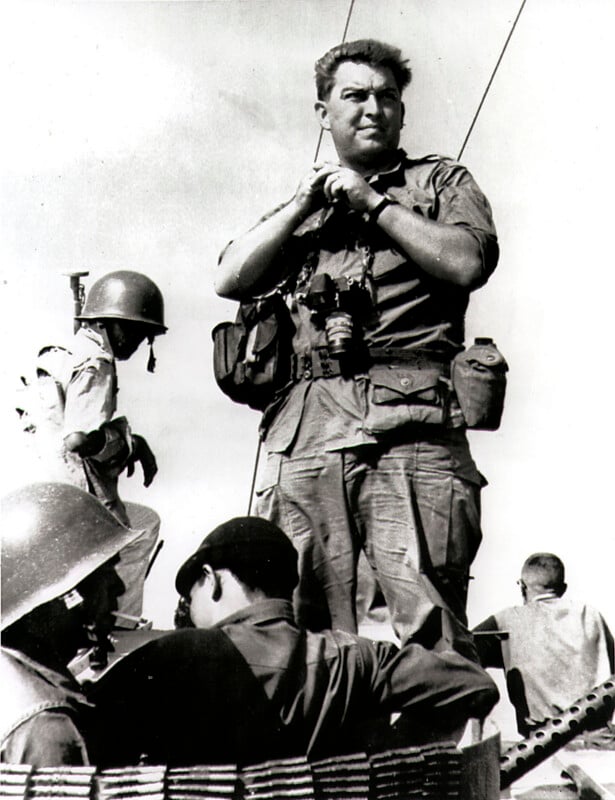 Horst Faas on assignment in South Vietnam, 1964.
Ultimately, Ebert believes that despite the film’s conclusion that Faas changed the credit on Napalm Girl, which prompted World Press Photo to revoke Nick Ut’s credit, his legendary reputation will remain intact.
“His body of work and reputation are so enduring that this film has not harmed him,” he says. “Remarkably, there is a very large group of colleagues who still believe that Nick Ut took the photo.”
After The Stringer documentary was released on Netflix last year, Nick Ut has filed a defamation lawsuit against the streaming service and the VII Foundation over claims that he didn’t take the photo.
Image credits: Courtesy Michael Ebert/AP/Horst Faas








 English (US) ·