
 2 days ago
10
2 days ago
10
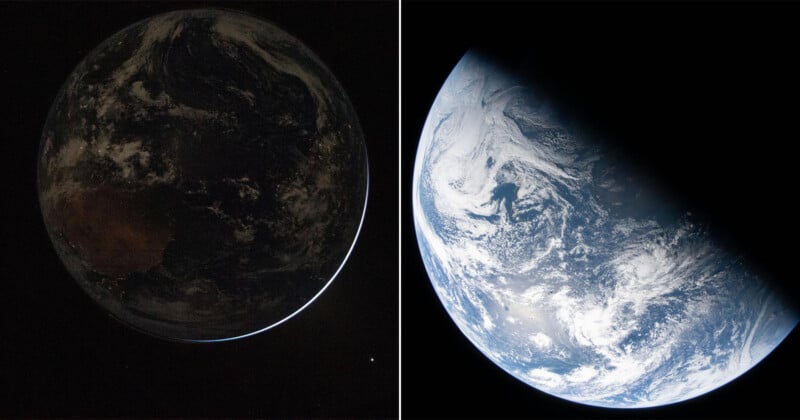
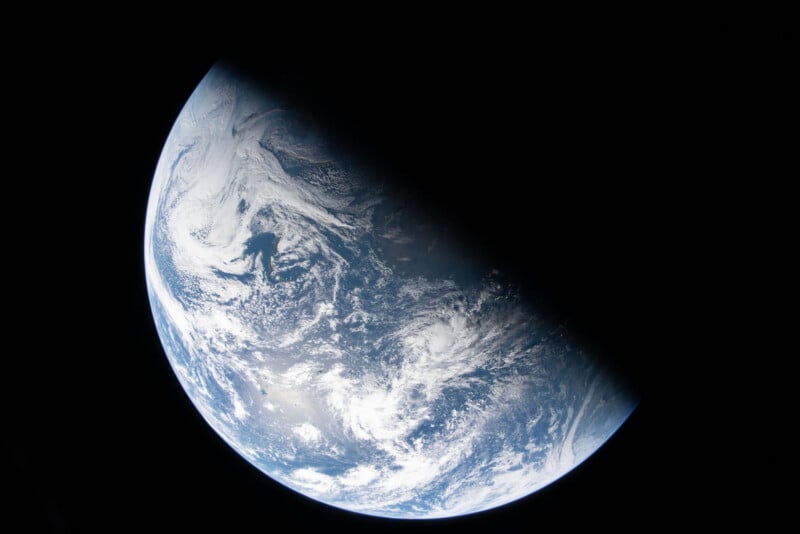
Just a few hours after sharing the Artemis II crew’s first photos of Earth, NASA shared two more photos captured by Artemis II Commander Reid Wiseman, this time showing the dark side of the Earth and Earth’s Terminator Line, the constantly moving boundary that separates day and night.
Starting with the partially-illuminated photo, officially titled “Artemis II Captures the Terminator Line,” it was shot through one of the Orion spacecraft’s four windows after completing the mission’s translunar injection burn by NASA astronaut and Artemis II Commander Reid Wiseman. Presumably, the image was captured using one of the crew’s Nikon D5 DSLRs, like the other two shots the Artemis II crew downlinked to NASA earlier today.
 Credit: NASA / Reid Wiseman
Wiseman’s other new photo, “Artemis II Captures Dark Side of the Earth,” shows an almost entirely dark Earth, with the Sun wrapping a ring around the lower right quadrant of the planet. This was also shot following the completion of the translunar injection burn.
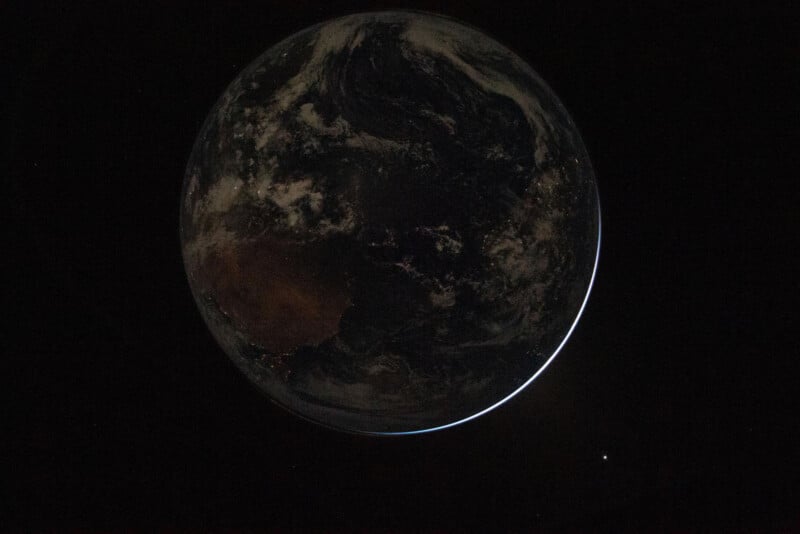 ‘Even in darkness, we glow,’ NASA says of this new photo. | Credit: NASA / Reid Wiseman
As NASA explains, this dark image of Earth was taken only minutes apart from the full illuminated disk view NASA shared earlier today.
“These two images were taken by @astro_reid only minutes apart. The stark difference is the result of camera settings. In the first, a longer shutter speed let in much more light from Earth, while the shorter shutter speed in the second emphasizes our planet’s nighttime glow,” NASA writes.
These two images were taken by @astro_reid only minutes apart. The stark difference is the result of camera settings. In the first, a longer shutter speed let in much more light from Earth, while the shorter shutter speed in the second emphasizes our planet's nighttime glow. pic.twitter.com/4H5gFymlcl
— NASA (@NASA) April 3, 2026
Cornell University commented on NASA’s Instagram post featuring the pair of new photos, borrowing a brilliant quote from the late astronomer and scientist Carl Sagan, who was David Duncan Professor of Astronomy and Space Sciences at Cornell University: “Look again at that dot. That’s here. That’s home. That’s us. On it everyone you love, everyone you know, everyone you ever heard of, every human being who ever was, lived out their lives.”
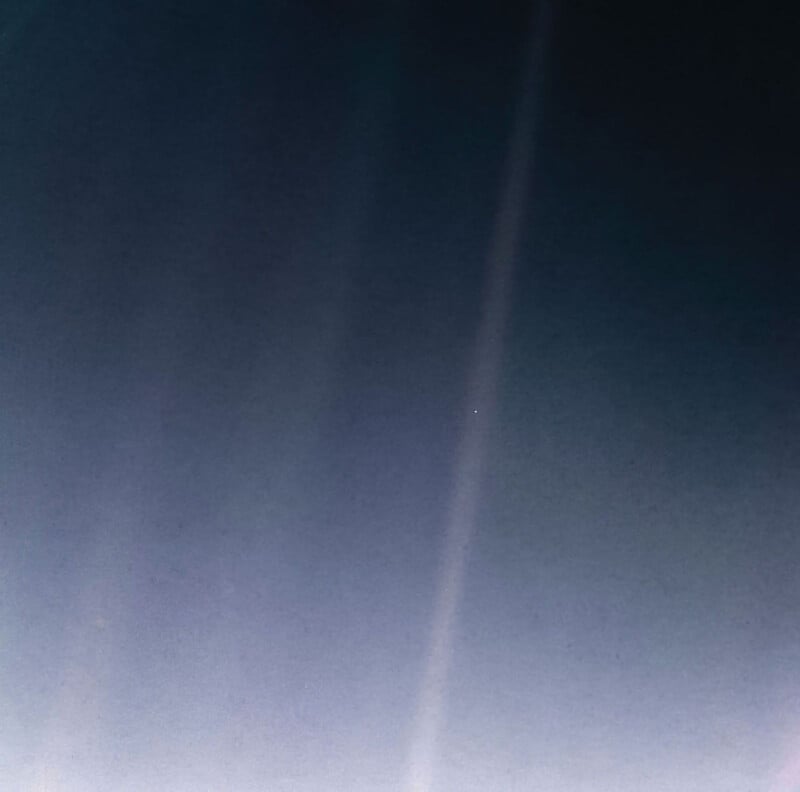 ‘Pale Blue Dot.’ That tiny white speck inside the prominent sunbeam is Earth. | NASA/JPL-Caltech
This wonderful quote from Sagan’s book “Pale Blue Dot” was inspired by an iconic photo the Voyager 1 spacecraft captured of Earth from a staggering four billion miles (6.4 billion kilometers) away. While the Artemis II crew is much closer to Earth, although steadily getting farther away on their way to orbit the Moon, Sagan’s sentiment remains as relevant as ever.
These new photos Wiseman captured of Earth encompass everyone and everything humanity has ever touched. Earth looks so small, and yet, what it represents rarely looms larger.
Image credits: NASA / Reid Wiseman








 English (US) ·