
 5 hours ago
7
5 hours ago
7
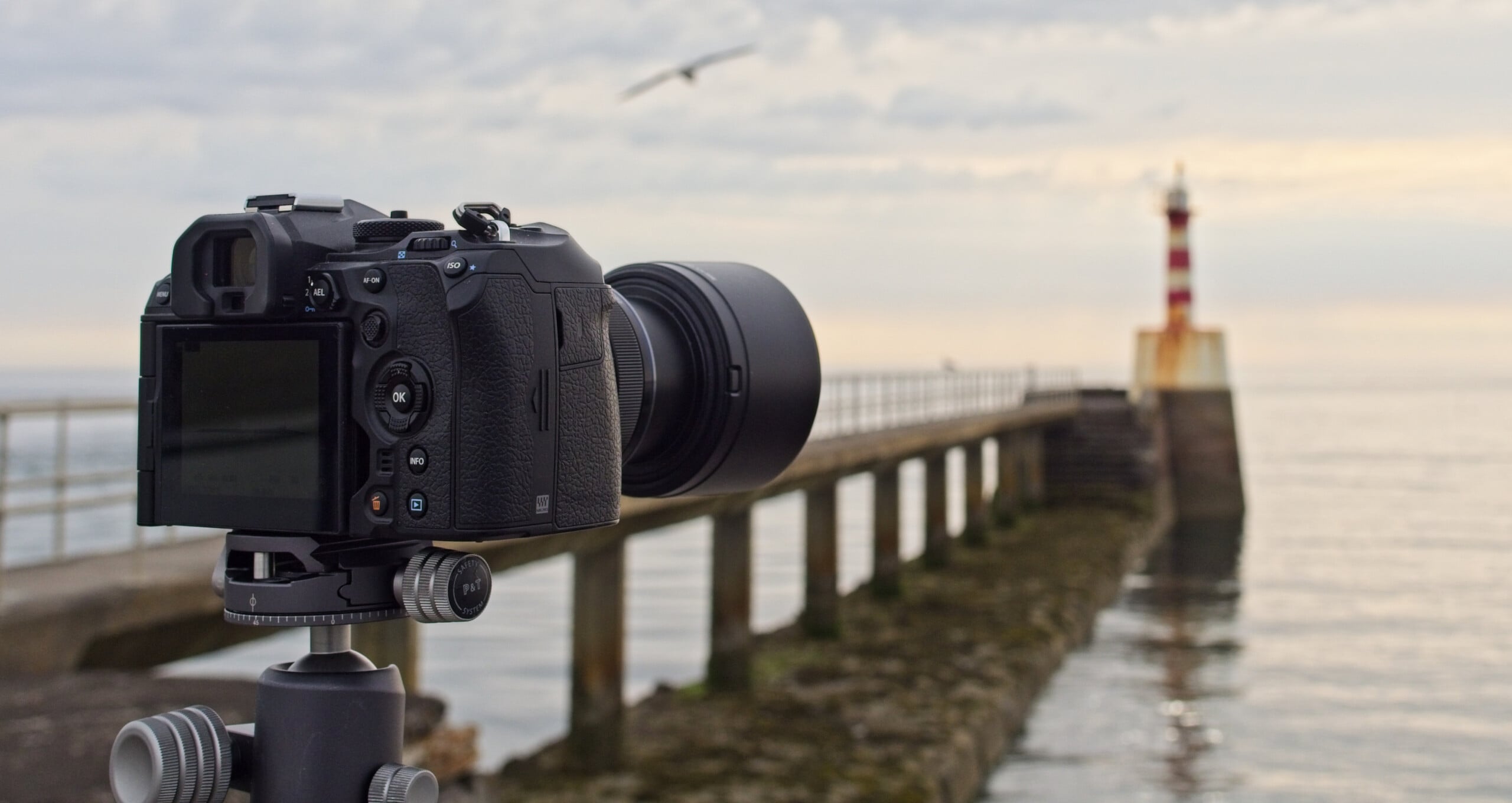
There’s more to running a successful professional photography business than just taking good pictures. True success lies in how effectively you run your business.
People are crying out for good-quality information about how to take better photos. Consequently, supply grows to meet that demand. As a result, there is plenty of advice available on how to do photography. You can find it in websites and magazines, at photo clubs, and at workshops run by professional photographers.
What is less common is information about what makes a successful photography business. That information is useful both to those who run photography businesses and those looking to engage a professional photographer.
So, let’s look at that side of photography.
Before You Start a Business, Think About This

Running a photography business can be incredible fun. I cannot think of any other job that gets me into exciting events, gives me a reason to get up and watch the sunrise, helps me learn about wildlife behavior, is both technical and creative, and lets me meet such a wide range of people. However, it’s not all plain sailing. Like everything in photography, there are always compromises.
If you want to succeed in business, don’t expect to be working five days a week from nine till five. It takes a lot more dedication and effort. Be prepared to put in many extra hours every day of the week. Especially so in the first few years, your work will be a major part of your life. Consequently, you will need to make sacrifices.
So, weigh up the opportunity cost. By running your business, you will be missing out on other things. Only you can decide whether those things are more or less important than a business’s success.
Also, although I am steering clear of financial control in this article, you must have a firm grasp of it. Similarly, effective time management.
Reputation and the Virtuous Circle of Success
 Every business relies on its reputation. A farm local to me is well respected because its fields are neat and its vehicles are clean. Consequently, people buy products from his shop. Similarly, the workshop of the busiest car mechanic in this town is spotlessly clean and uncluttered. Professional photographers must strive for the same quality of service.
A virtuous circle is the opposite of a vicious circle. It’s a positive feedback loop, set in motion by one important force: reputation.
Every successful business consistently delivers high quality in everything it does. When it achieves that, it more than gratifies its clients, which, in turn, leads to a good reputation. So, your growing reputation brings even more clients. You please the new clients by delivering an excellent level of service that exceeds their expectations. So, it goes on.
Breaking Into the Circle of Success
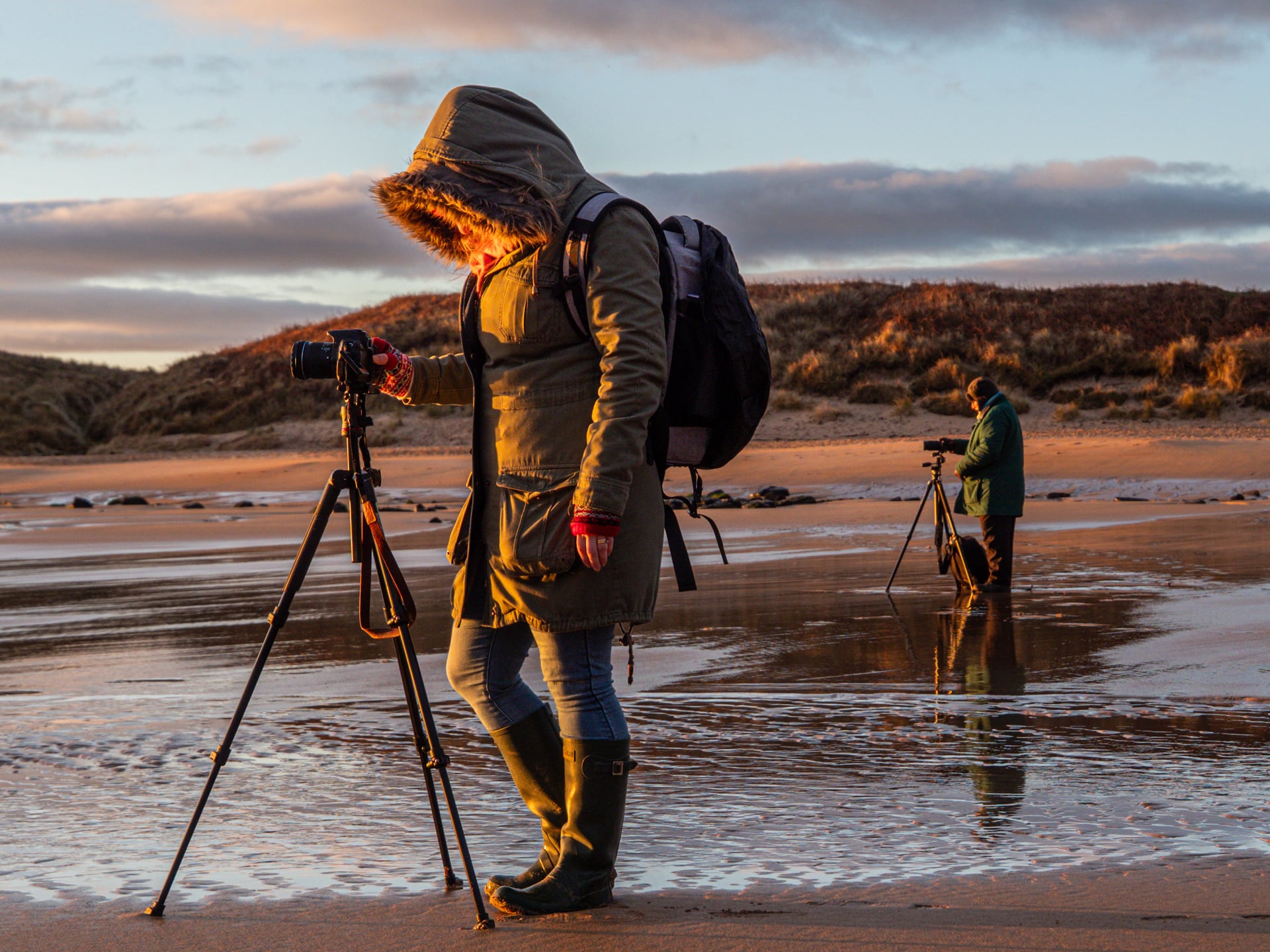
Your customers are discerning. They often look at how long a business has been in business, which is a big part of reputation. Therefore, it can be challenging to find new customers in the first couple of years of trading. Nevertheless, everyone started somewhere, and every great professional photographer was once a beginner.
Of course, getting a good reputation to start with means that you must have worked to gain it. It doesn’t matter how good a photographer you are; clients are unlikely to employ you if they don’t know who you are, and there is no evidence of your standards.
So, getting aboard a circle of success might require undertaking unprofitable work at first, where clients take little or no financial risk. That may mean volunteering at a photography club, producing free portraits for a charity, putting on an exhibition, acting as a second to a wedding photographer, and so on.
Address Your Success
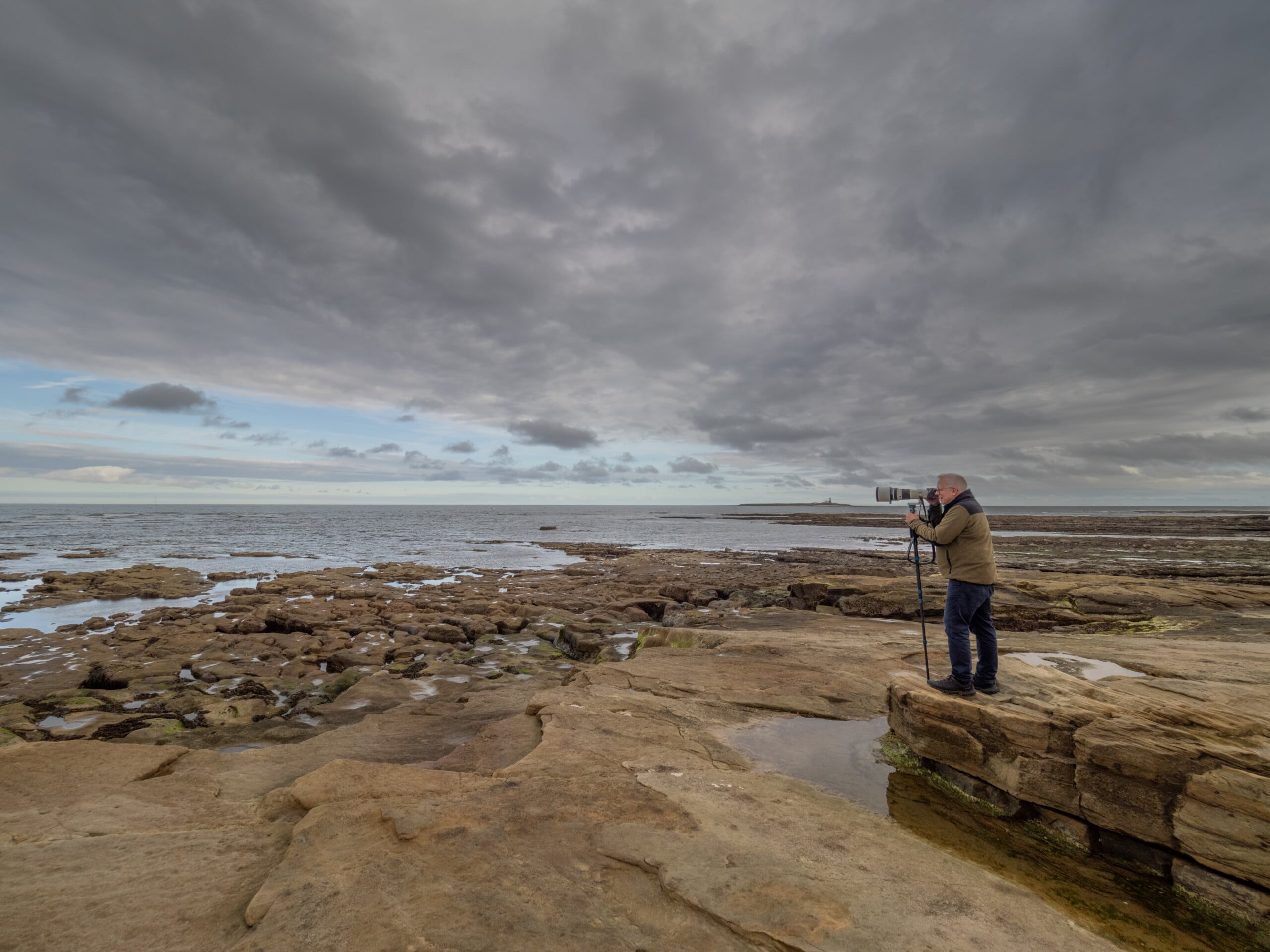
People often suggest that half of all businesses fail in the first year. It is a myth. In the USA, around 20% of businesses fail in their first year. In the UK, it is around 7-8%. Nevertheless, over the long term, 90% of startups in the US fail between years two and five. That’s around 60% in the UK. That difference is despite the UK figures including voluntary closures, mergers, or owners retiring, whereas many US statistics focus solely on legal closure and bankruptcy events. Those occur earlier and far more frequently in the US system. The reason for that difference is mainly due to the UK’s welfare and healthcare system. It isn’t tied into the business, thus reducing early‑stage pressure.
A measure of long-term sustainability is whether your business breaks even by the end of the first year. If it isn’t, and you are working every hour sent, then there is probably something amiss.
No matter how well your business is doing, it’s always useful to get someone experienced from the outside to assess what you are doing. A mentor will review your business and help you see what is going well and what you could improve. A good mentor will identify areas where you are spending unproductive time. They will also observe your business from the outside, as a client, and tell you with kind honesty where you are going right and wrong.
Business Growth
 Attend any business forum, and you’ll hear regular talk about continually growing your business. Indeed, at first, you want it to grow. But there may come a point when you are as busy as you want to be. Therefore, maintaining a business’s size can be a perfectly acceptable approach as well.
Competition

There are many different demands for photographic services. When starting, look to provide a service in a thriving market if you know you can outshine your competition. Alternatively, your market research might identify a niche market with insufficient supply.
Don’t worry about competition. In a limited market, it means taking business away from other photographers. To do that, you must be better than your business rivals, partly in price but mainly in quality of service. If you are losing work to them, then you need to do better. Aim for excellence.
Collaboration

Another, possibly better, approach is to cooperate and collaborate with others. All of the most successful photographers I deal with always talk about the work they do with others who are also at the top of their game. That mutual respect and support add to all their good reputations.
When You Make a Mistake

Aiming for excellence does not mean you won’t ever make mistakes. Nobody is perfect. My experience is that most people accept that you have erred so long as you address it in one way. It’s vitally important to own the mistake.
Admit that you made a mess of it. Then not only apologize and put it right, but also give the client more than they paid for. Exceed their expectations.
Online Feedback
 Rubin’s vase | Graphic by Nevit, CC-BY-SA 3.0.
Online feedback is important.
Always remember that not everybody sees things the same way you do. For example, many years ago, I ran a series of workshops in which two participants hardly engaged with me at all. They went off and did their own thing. They then sent me “constructive feedback,” saying that they didn’t get anything from it. Everyone else was active on the course and gave entirely positive reviews afterward.
Always reply to feedback, whether positive or negative. People will judge you on your replies and how you come across when you make them. Thank those who make positive comments.
But what if you get genuine negative feedback? Reply and thank them as well. But also apologize for what went wrong. Then, include something explaining what you will do (or have done) to make it up to them.
Fake Online Reviews

Those businesses that resort to leaving fake positive reviews for themselves or negative reviews for their competitors do so only because their work is inadequate. They feel the need to bolster their own reputation or to damage others’ only because they themselves are not good enough.
Some low-quality businesses might try to disparage yours by leaving false negative feedback. There are people I know whose businesses received libelous, fake feedback. The good thing is that it inevitably backfires on the person making the fake feedback. There are many well‑documented cases in which people were successfully sued or held legally responsible for posting false or defamatory online reviews or feedback.
Nevertheless, receiving fake reviews is disheartening. The good news is that review platforms are getting much better at filtering out fake negative reviews. So always report them to the review platform.
If you do receive a fake review, let your friendly customers know and ask them to counter it by writing something positive about you.
You can also use a reply to a fake review to reinforce your own good reputation. Writing something along the lines of, “I am so sorry that you have had a bad experience somewhere. It seems you have left a negative review on the wrong business, as you have never been a customer of mine. If I can help you in any way, please feel free to get in touch directly.”
Conversely, some businesses have attempted to boost their reputation by leaving positive reviews for themselves. They only do it because they are not good enough. That practice is, of course, false advertising and could result in prosecution by whichever national or state agency is responsible for enforcing it.
Word of Mouth

Although online reviews have become important, consumers are becoming increasingly skeptical of them. Businesses often overlook word-of-mouth reputation, but it matters.
Virtually every photographer lives in a community. Consequently, much of their business will come through word of mouth.
If people have a good experience, they will tell one or two others. However, if their experience is bad, they will tell ten.
Fame and Fortune?

Some people want to become famous. If that appeals to you, work at it, but it is not something I can advise you on because it holds no interest for me. However, it isn’t essential for business success. Many run perfectly well without shouting about what they do to thousands of people on social media or appearing on TV.
As for fortune, although it is the aim of some people, successful businesses do not come from a desire to make lots of money. People notice and dislike the approach of doing everything for profit. Instead, view income as a nice byproduct and not the main aim of your work. Income will come naturally when you deliver a good service.
SEO and Being Found Online
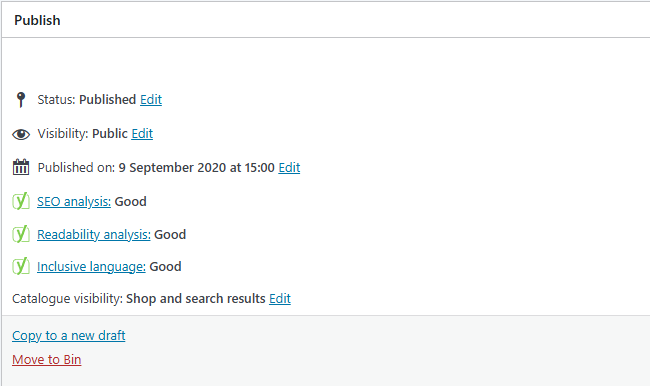 A screenshot of a WordPress post’s publish settings showing “Good” ratings for SEO analysis, readability analysis, and inclusive language.
When you start, your website will be new and relatively unknown. Even if you regularly update it with strong content, it probably won’t attract much traffic. Search engines usually rank new sites lower than established ones.
However, over time, regularly updating your site with good content, promoting it, adding links to reputable sites, and arranging for reputable sites to link to you will all help your website’s visibility.
Your Online Behaviour Matters

Finally, your online conduct outside your business reflects directly on your business. A rude or hostile comment on any platform can damage your reputation and cost you customers.
These days, people do good research before spending their money. Therefore, always avoid unprofessional online behavior.
The opposite is also true. Being professional and kind always helps your business.
In Conclusion
Every business is different, and the information in this article is generic. I deliberately have not given specifics in some areas because I don’t know what your business involves.
So, when starting a business, think about the specific strategies you can use to build your initial reputation. Consider how you can effectively balance your personal life with the demands of running a successful business. Then, brainstorm some common pitfalls to avoid during the first few years of operating a photography business. But overall, be the kind of person and offer the quality of service that you want to receive.







 English (US) ·