
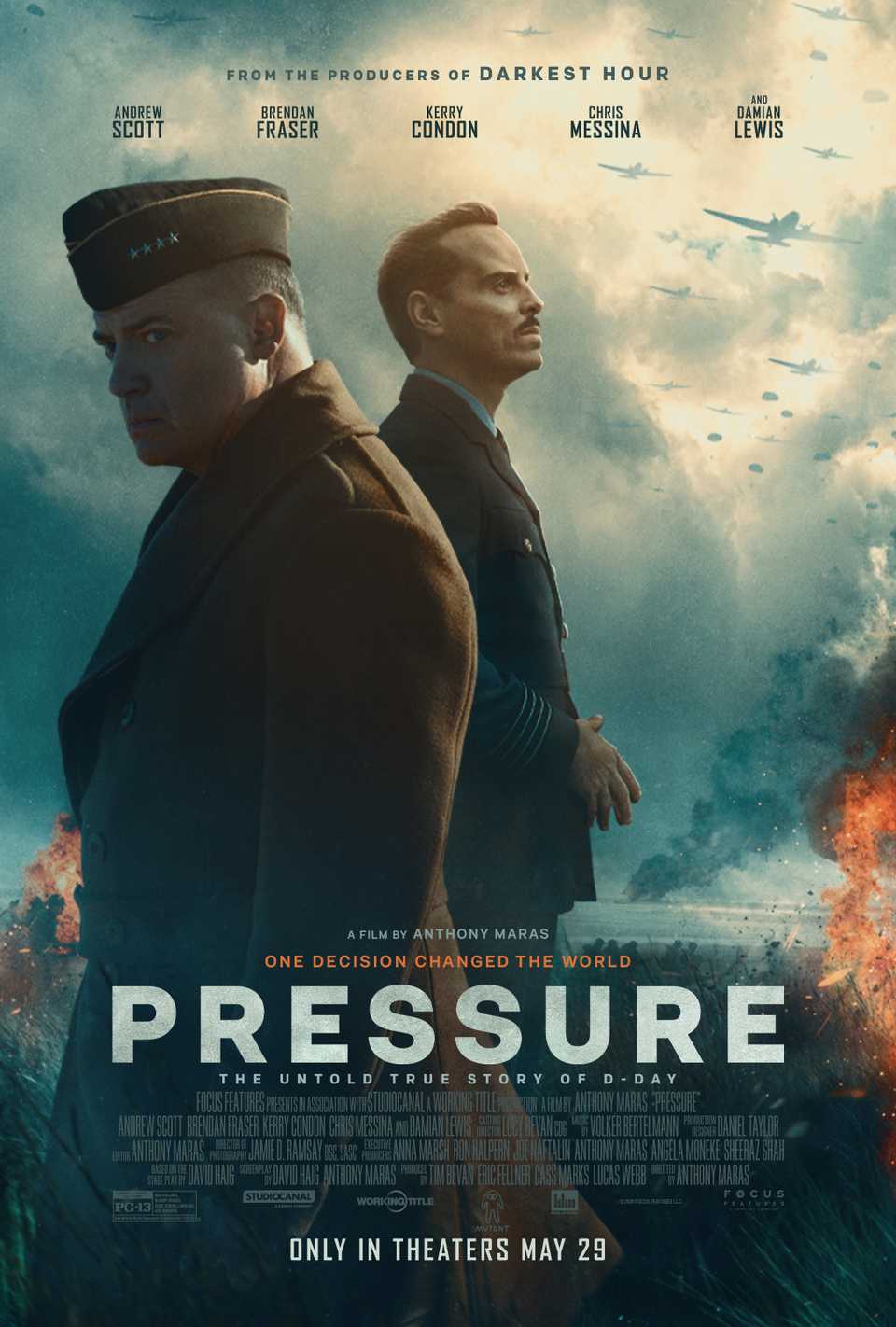
With Anthony Maras’ World War II drama, Pressure, in theaters now, Collider’s Steve Weintraub had the chance to sit down with star Andrew Scott, who portrays Dr. James Stagg, a meteorologist whose contributions to history went largely unnoticed for nearly a century. In this interview, we were able to discuss not only the weight of Stagg’s role in D-Day and the preparation for the film, but also the exciting projects coming up for the stage and screen actor.
Don’t miss the full conversation in the video above, or the transcript below, where Scott explains the unbelievable impact of Stagg’s advice and how his time spent on the set of Steven Spielberg’s Saving Private Ryan was beneficial for Pressure. Scott also shares exciting details on his next biographical role as the renowned Scottish actor Ian Charleson in Simon Stone’s Elsinore, with Olivia Colman, Billie Piper, and Johnny Flynn, plus what he’s currently filming.
Andrew Scott Recalls Filming 'Saving Private Ryan' 30 Years Before His New WWII Movie
"To have that in my mind was certainly beneficial."
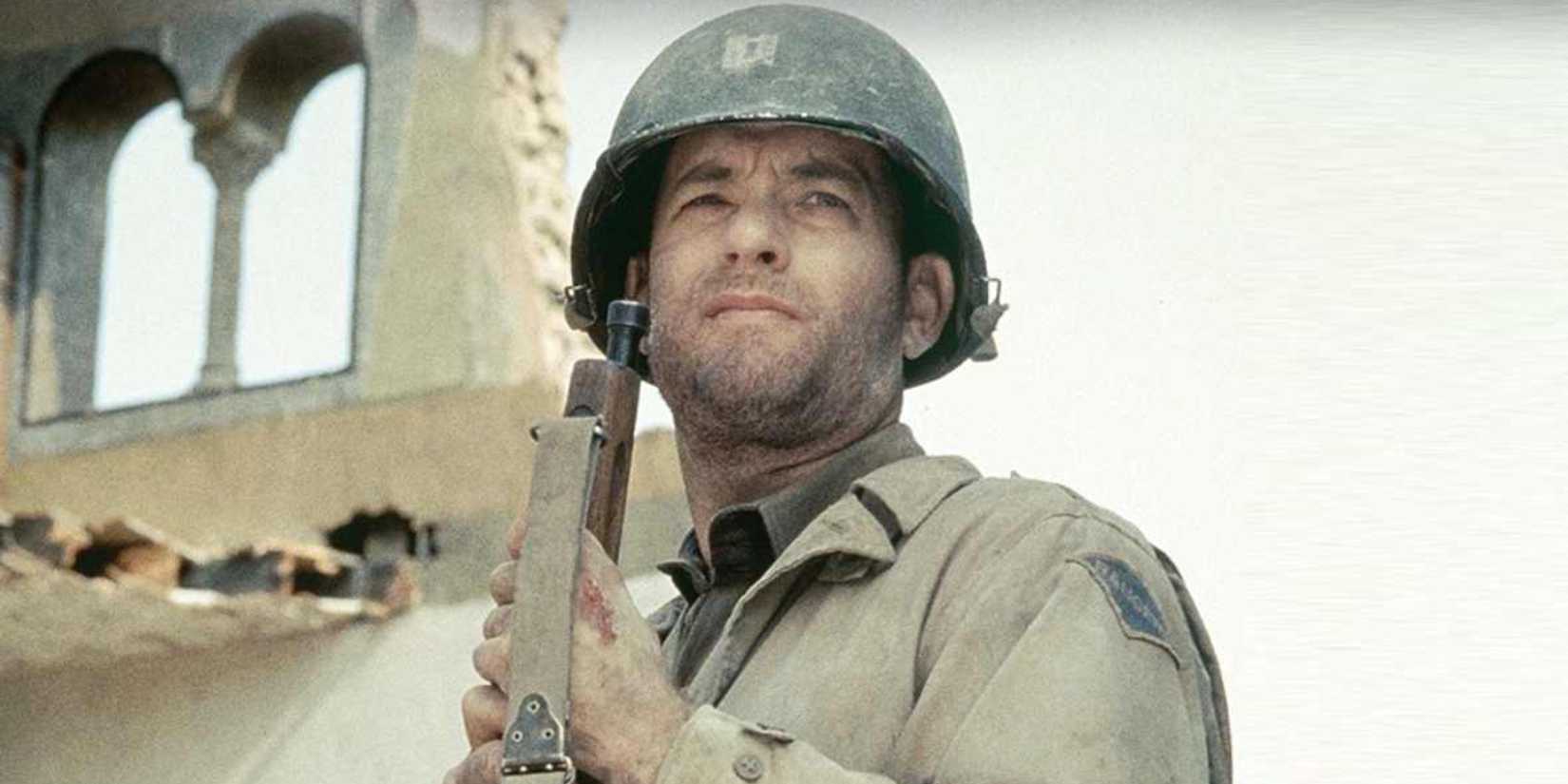 Image via DreamWorks Pictures
COLLIDER: At the beginning of your career, you were in Saving Private Ryan, and you had one episode of Band of Brothers. At that point in your career, you're obviously hoping, “Will I make it as an actor?” You don't really know what's going to happen. What is it like, full circle now, 30 years later, to be the lead in a World War II movie?
ANDREW SCOTT: Well, do you know what? It's very beneficial to have been in Saving Private Ryan, to have shot that extraordinary sequence, the D-Day landing sequence, that sort of iconic sequence, Spielbergian sequence that I was able to witness firsthand on Curracloe Beach in Ireland. So actually, when we were talking about the stakes of the movie, our characters, a lot of the movie takes place in a sort of think tank about war strategy rather than actually being on the battlefield itself, but it was amazing for me to have, in some way, a sort of physical manifestation and representation of that, because on Curracloe Beach all those years ago, I remember the sky was covered up and it was, of course, nothing like the real D-Day landings, but the attempt was a valiant one, and that atmosphere on that set was really, really extraordinary and very, very dark and very, very, harrowing. So, to have that in my mind was certainly beneficial.
What's scarier for you, picking up a newborn baby or having to deliver a 20-page monologue without making a mistake?
SCOTT: [Laughs] Well, usually what you have when you're picking up a newborn baby, because the baby is starring in the film, is that you have the newborn baby’s mom, and they give over their trust to you, so that is pretty intimidating, I gotta say. So, maybe I'll go for the latter.
I was wondering, because when I see stuff like that in movies and TV, and it's a real baby, I'm always thinking, “This probably is the most nervous day on set for the actor. I cannot imagine how nervous they are,” because God forbid.
SCOTT: Well, I mean, I didn't think that I was going to put the baby in harm, so I was a little nervous, but I like the baby.
 Related
Andrew Scott on the Wild True Story Behind His WWII Movie
"It's completely fascinating."
 Image via Focus Features/StudioCanal
A lot of this movie takes place in a room, you're talking about numbers, you're talking about showing the weather balloon, but a lot of it is you using your brain to figure out: is it safe with the weather? Were you nervous at all about, “How is this going to be cinematic? How is he going to film this and edit this to give suspense to the audience?”
SCOTT: Of course. Yes, of course. That was a real consideration. But actually, what I think audiences really love is expertise on film. People love to see people being really good at what they do, and I think audiences love to learn about something about which they didn't necessarily know before. So one of the challenges was to be able to understand all that jargon and the weather speak that I had to use, and not to also make it too complicated, so we didn't dumb it down, but also that it didn't become like a sort of word vomit of weather terminology that the audience wasn't going to understand. So we had a meteorological expert there the whole time.
Actually, what's pleasurable, I think, for the audience in this film is that you think, “Oh, it's a movie about weather. What's this going to be like?” Actually, it's completely fascinating, and actually people's favorite thing about the film. You're like, "Wow, I had no idea that, of course, the weather, which dictates how we live our lives so much, and it's arrogant for us to think that the weather is just something that's small talk or whatever, that actually, of course, it was going to influence an enormous invasion like D-Day." Of course, there were going to be experts who were going to say, “Well, is it going to be safe? What are the conditions going to be like? Are the soldiers going to be able to land safely? Is there going to be wind? What's the visibility?” All those things. Of course, of course, of course.
I've been to London many times, and the one thing I'm certain of is that even modern forecasts are wrong. So, when you think about it in the ‘40s, how the F did this guy do this?
SCOTT: Yes, of course. And one of the conflicts in the film is that if you're predicting weather forecasting in Florida, it's going to be very different than predicting a forecast in England or France, in those parts of the world. The two different cultures, meteorologically, we're very different, and so you go, “Well, this is the way it might be done here.” That's why analog charts, the charts that they used to predict weather, just weren't as relevant in this particular case. So all that stuff becomes actually very interesting if you understand the terminology and you understand the culture behind weather forecasting.
Could 'Elsinore' Be an Awards Contender?
Scott teases the "incredible story" and his next movie with Emily Blunt and Mia Goth.
 Image via Searchlight Pictures / Courtesy Everett Collection
So I was at CinemaCon a few weeks ago, and I saw footage from Elsinore. My jaw was like… It looks so spectacular, and your performance looks so awesome.
SCOTT: Oh, wow.
I'm sure I'm probably one of the only people who’s seen footage.
SCOTT: I think you probably are.
I definitely would like you to tell everyone what this film is about, because it just looks so good.
SCOTT: I'm incredibly excited about it, and I’m incredibly excited that you've seen the footage. It tells the story of Ian Charleston, who's a very highly regarded Scottish actor, and when he was very sick with HIV, he took on the role of Hamlet at the National Theater, which is one of the most enormous jobs that you can ever undertake.
It's very funny and incredibly moving. We have this absolutely extraordinary cast, and it's one of the most special things I've had the privilege to work on, and I'm really thrilled. You're the first person that I've spoken to who's seen any footage of it, so I'm glad that you responded to it in the way that you did.
Until I've seen the movie, until we've all seen the movie, who the hell knows? But this is a movie that when I was watching the footage, I was like, “Oh, this could be an awards movie. This is some spectacular stuff here.”
SCOTT: There's some beautiful stuff in it. It's an incredible story and beautifully written by Stephen Beresford and directed by Simon Stone.
 Related
When you're getting ready to do a role like this and when you're getting ready to do a role like that, are you placing the same pressure on yourself for every performance, or is there a little bit of, like with Elsinore, “Oh, this I really need to be the top of the game?”
SCOTT: [Laughs] Yeah. I guess because I had to do a lot of Shakespeare in that one, too, as I’m playing Hamlet as well. Yeah, there was a huge amount of pressure there. But having said that, I always feel pressure. I'm always like, “Oh gosh, don't mess it up this time!” So, no matter what it is, you gotta care. You gotta care. But thank you for saying that. It means a lot to me.
What are you filming this year?
SCOTT: So I've just finished with Emily Blunt in this beautiful movie called Walk the Blue Fields, a kind of romance film based on a Claire Keegan novel, directed by John Crowley. And I'm about to start filming with Justine Triet in France with Allison Janney, Mia Goth, and a great bunch of people.
Pressure is in theaters now.
Release Date May 29, 2026
Runtime 90 Minutes
Director Anthony Maras
Cast
-

-

Kerry Condon
Captain Kay Summersby
-

Marshall Bernard Montgomery
-






 English (US) ·