
 Image via TIFF
Published Oct 8, 2026, 6:00 AM EDT
Sign in to your Collider account
Summary
- Collider's Perri Nemiroff chats with Amanda Seyfried, Tim Blake Nelson, and Scoot McNairy for The Life and Deaths of Wilson Shedd at TIFF 2026.
- The trio discusses Nelson's 12-year journey with the film, how they first came together, and what it was like collaborating on set.
- Seyfried also teases Lin-Manuel Miranda's Octet, and Nelson discusses joining Task Season 2.
Writer and director Tim Blake Nelson (Leaves of Grass) is back behind the camera with The Life and Deaths of Wilson Shedd, and back at the Toronto International Film Festival, where he world-premiered the star-studded psychological drama, and spoke with Collider’s Steve Weintraub about bringing this original script to life on screen.
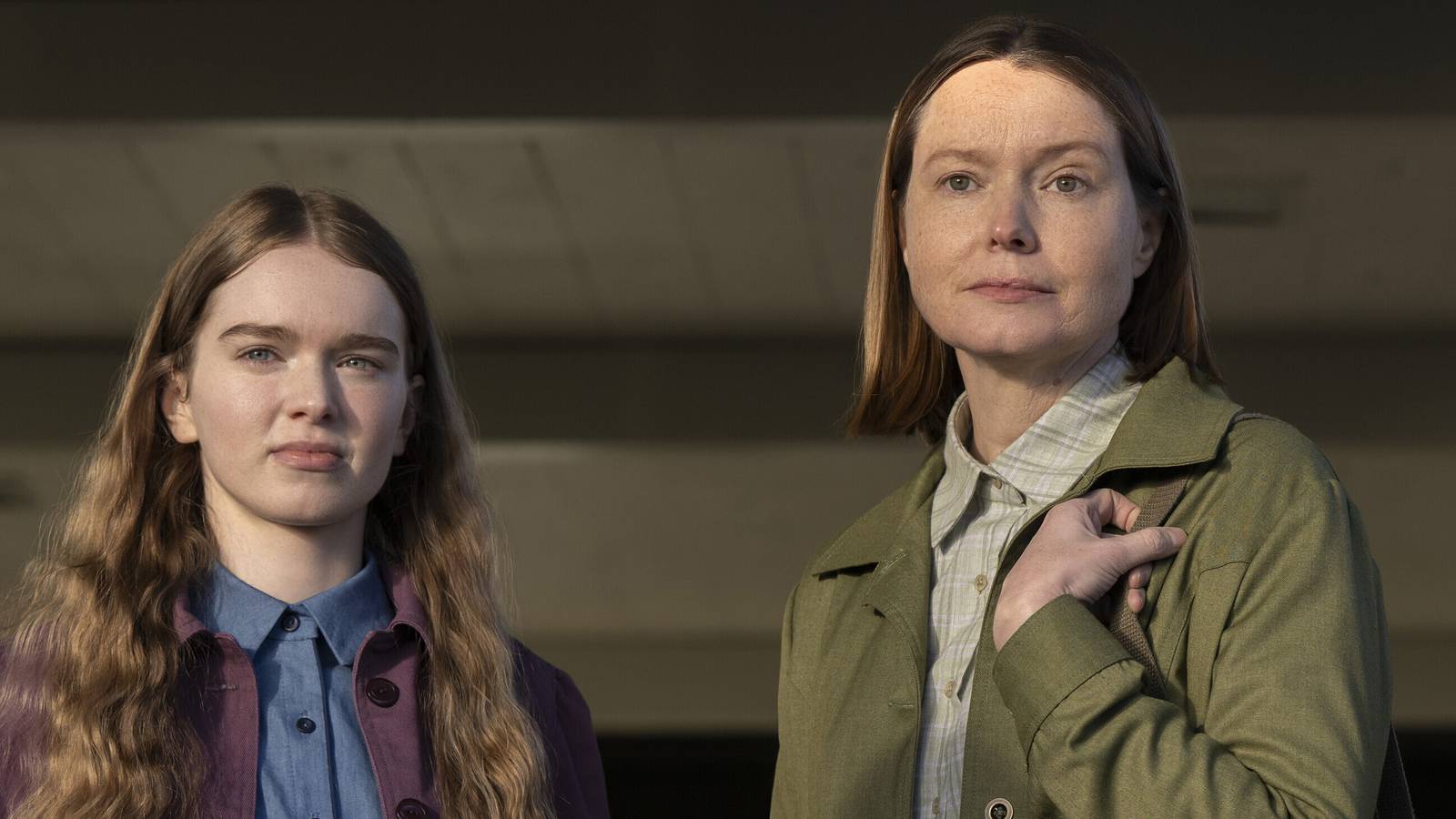
In the film, Academy Award nominee Amanda Seyfried (Mank) plays Karen, a teacher trapped in an abusive marriage. When she takes a job at a maximum security prison, Karen meets the charismatic Wilson (Scoot McNairy), an enigmatic prisoner whose surprising tenderness manages to reach beyond Karen’s carefully equipped emotional armor. For Karen, this connection is so electric that it leads her to risk everything for a chance at Wilson’s freedom.
In this interview, Seyfried, McNairy, and Nelson stop by the Collider Media Studio, presented by Campari and The Cayman Islands, to celebrate their filmmaking family from The Testament of Ann Lee, and what filmmakers like Mona Fastvold and Brady Corbet are doing in the industry. Nelson shares the 12-year journey he took with the film, how Seyfried and McNairy were pivotal in getting it off the ground, and how they collaborated together on set. Seyfriend also chats about the musical “fever dream” of Lin-Manuel Miranda’s Octet, and Nelson shares why he’s honored to join Task Season 2.
Tim Blake Nelson Explains How Amanda Seyfried Made His 12-Year Passion Project Possible
The two met on the set of The Testament of Ann Lee.
 Image by Photagonist
PERRI NEMIROFF: Because our audience is probably first going to learn about your movie through our interview, would you mind giving a brief synopsis of The Life and Deaths of Wilson Shedd?
TIM BLAKE NELSON: I don't mind at all. So, Scoot McNairy plays the title character, Wilson Shedd. He's an inmate in a maximum security prison. Amanda's character, whose name is Karen, comes in to teach creative writing, which she calls fiction writing. She is a rare teacher who doesn't condescend to the prisoners, but takes them quite seriously, treats them effectively as if they're college students, and I actually know people who go in and teach in the prisons, and they're like that. So, there's an energy that emerges between them that is of the romantic variety, and the film explores that relationship, how it ramifies in quite tragic ways, and it takes you on a journey that explores what we're capable of doing to one another.
I was reading about how this took you “a dozen years” to make happen. I’m going to ask you one of my favorite questions about the green-light process. Can you give me a low during that time period, something that happened that made you think to yourself, “I'm never going to get to make this movie?” But I also want an example of the opposite, a high, something that happened that signaled to you, “Now is the time?”
NELSON: You know, there were so many oscillations, so many times that the movie was financed and then the financing fell through. There were about five times that happened over a dozen years. Each one of those was a low.
The high was in Budapest. I was working on The Testament of Ann Lee, and I met this actress right here, and everything changed. And then she signed on. Then it plateaued in a really nice way in that high, and Scoot was a part of that, bringing him on as well. But the real start of it was meeting Amanda Seyfried.
I have to follow up on that. How does that make you feel? We've talked about this a little when it comes to producing credits, too. You've earned the ability to make things happen in this industry that might not if you're not a part of it, and that is incredible.
AMANDA SEYFRIED: A big privilege. Yeah, for sure. It does feel empowering. Also, I do feel like I gravitate towards people who create a family and then are loyal to that family in every creative process, and Mona Fastvold and Brady Corbet do that. They've created a world that everybody wants to continue being a part of, and they continue to make movies together, and Tim appreciated them.
They got Tim to play with us in Ann Lee, and I was incredibly surprised and excited to meet him. And it just goes to show how amazing Brady and Mona are to bring Tim on, to bring him to Budapest. And so, I don't know, it's so nice when people continue to work together and come together for the sheer art of something, the respect, and the trust, and stuff.
Scoot, something Amanda said made me want to ask you this broader question. What would you say is guiding your project-choosing compass the most right now, and how does that compare to what was maybe guiding it the most a decade-plus ago?
SCOOT MCNAIRY: That's a great question. What was guiding it a decade ago, I can tell you: Anything and everything that they would hire me for, so there wasn't much choosing or picking. Earlier on in my career, I am really grateful for some of the filmmakers that I got to work with in movies with much smaller roles.
In thinking now, that's a good question. I don't know how I pick them. Whatever's challenging or I'm scared to do, or somebody like Tim, who I'm a huge fan of, and his body of work and his taste in cinema and his intelligence, and a great script. This particular project, I mean, I kind of said yes the second he popped up on the Zoom, but I let him talk for a little while.
Tim Blake Nelson Highlights Scoot McNairy's Performance
"The whole project is lightning in a bottle."
 Image by Photagonist
Tim, I want to come back your way and ask another question about the time it took to get this off the ground, because I also like hearing about how projects evolve from beginning to end. What would you say is the biggest difference between how you pictured this film turning out maybe 12 years ago and the finished film everyone's going to get to see here at TIFF?
NELSON: I guess my best answer for that would be these two actors to my right, and, as well, the rest of our company. When I write scripts, largely from an actor's point of view… I love photography; I'm very interested in that. I was obsessed with it as a kid. I know a lot about the gear, etc., etc., so I love being a filmmaker and engaging in every aspect of the craft of it, but my way in is writing great roles for actors that I would never be able to play, and watching extraordinary performers engage with the challenges of those roles — because to write a great role for an actor, you want to give them challenges — and it was really seeing this company elevate the material.
Screenplays, as an artifact that's written, are unlike plays, even. Because you can study a play in high school, like Death of a Salesman; or you can read an Eugene O'Neill play with some gorgeous prose in the stage directions and some beautiful writing; you can read Shakespeare and get an enormous amount out of it without needing to see a production. A screenplay is effectively just a blueprint, and it needs to be leavened by great actors. And look at these two.
I was praising Amanda, which I will never tire of doing. One of my great honors with this movie is to be able to give Scoot the role that he has been deserving for over a decade.
MCNAIRY: That's very kind, Tim, and I thank you for that. He's not wrong. This character was incredibly rich, and I don't get opportunities like this. So for Tim to see that, I mean, giving me the opportunity to take the risk, I was incredibly grateful to be able to come in and play this. As well as Amanda having me, as well. I don't know that I'll get a role like this for a while.
NELSON: I can tell you that a lot of my director friends are gonna say, “You asshole! You got to be around Scoot when he was finally doing that? Oh my God!”
You're going to inspire a lot of filmmakers. It’s only the beginning with these types of roles.
NELSON: I think so. And any way I can help Amanda out because she's just struggling so much.
Yeah, you don’t work enough!
NELSON: And so to be able to give her a role… [Laughs]
SEYFRIED: I do. I feel very lucky. But I just also have to say, it's hard. I mean, the industry's the way it is, and it's got its complications. It's frustrating, but it's also amazing. It's evolving and breathing differently than it used to, I think. I will never understand it in a lot of ways. I'm just grateful that I get to work.
But I say, you're just a very unique… You're just very unique. You're very unique, and there's no false note. And I do feel like it's not a lot of people… I always find, even some of my favorite actors, I watch a movie, and I'm like, “Why are they acting so much?” And it's just so…
NELSON: You’ve clearly seen a lot of my work.
SEYFRIED: Tim never acts. He's never acting. I mean, we all are acting, but that's the trick. And I just feel like this was like ideal for me. I remember asking you; we were in the prison, and we overlapped three days on this movie — three days — and I was like, “God, you’d be great for this TV show I'm doing next year!” I was like, “God, you’d be so great.” I'm not gonna be able to get him, but he would be incredible. I still am gonna… It's like eight months away, but you know?
MCNAIRY: The whole project is lightning in a bottle, down to the crew, the location, the people we were working with, the people that Tim surrounds himself with. Just everything went great on this. And I know it's a really dark movie, but we found moments to have a lot of fun when we were shooting it.
SEYFRIED: Because we knew what the game plan was. You made it very clear what the game plan was. And also, we love to do it. We love to do it, thank God. So many movies, you're like, “Ugh.” Making movies is hard, and this didn't feel hard — as hard as it looked.
Amanda Seyfried Discovered "a Lifetime of Work" in One Electrifying Scene
"It was everything."
 Image by Photagonist
Oh, you just walked yourself into one of my favorite questions. Not only is making movies hard, but you're also making a movie with incredibly heavy subject matter. Can you each single out the moment of making this film that brought you the most joy as an artist? A moment that made you stop, look around and think to yourself, “My god, am I lucky to be here right now?”
SEYFRIED: I was in the darkest place, like physically some of the darkest places that exist, this little room, and it was my first scene with Scoot, and I walked into the room, and all of a sudden my whole body forgot where I was and what I was doing, except I knew where I needed to be and I knew the lines. I was just taken aback by the electricity between these two characters and what we've already kind of built in our minds. I don't know, I've never felt that present and that physically affected by the way a scene is lit and the way a scene is written and the way a scene is blocked, and then who I'm opposite. It was a lifetime of work for that moment. It was everything.
MCNAIRY: And Amanda had to build in all that love and feelings and emotions around this character before I ever met her. She shot the first three weeks of the shoot, and then we only shot her last three days. So, I mean, it's a testament to you to build out a whole relationship with somebody she never even met.
SEYFRIED: What was your most joyful moment in the shooting? Do you remember?
MCNAIRY: I mean, it was probably me fishing for bass at that lake. I went back out there during the shooting. There's that lake that we shot at; I went fishing out there. I don't know. It's a hard question for me to answer. I was kind of focused during this shoot. There were great times.
SEYFRIED: He loved the water moccasins, huh? You loved that. That was joyful for you, right?
NELSON: Cottonmouths.
SEYFRIED: Cottonmouths? Who told me it was water moccasins? Well, that’s different.
NELSON: That's all good. That's still snakes. It's such a privilege to get to do this. My highs during this process were on weekends when I would cook for the cast and crew, and everybody would show up. They didn't want to stay away. They didn't beg off. And so I had this apartment where a lot of the crew, some of the department heads, were staying, and Amanda was staying there, and you stayed there, too, and my apartment would just be packed with people. We would be, on a Sunday or a Saturday, just mingling together. No pecking order, just a group of people who loved being with one another and felt privileged to be able to tell this story. Those were my highs.
Understandable. That’s a beautiful thing to have while making a movie.
NELSON: Yes.
The Stars at the Center of 'The Life and Deaths of Wilson Shedd' Shine
"I know it's a two-hander, but it's also just kind of an incredible ensemble."
 Image by Photagonist
I want to talk about a couple of your co-stars that are not here. Amanda, I'll come your way first, because I'm obsessed with Wunmi [Mosaku].
SEYFRIED: Oh my God. She's here. She's in Toronto, though.
She's done this in many things I've seen her in, but especially with the role she has to fill here. She's just radiating warmth, like a ray of light. Can you tell me about playing your character while soaking in her energy?
SEYFRIED: Oh, God. I mean, she's Karen's support, her only support, and family, and her safe place. And Wunmi creates this safe place wherever she goes. I mean, she does radiate. She's just professional, wants to be where she is. We all, the four of us in that room, we just hung out. And she tried not to go into her British accent, but she has the sweetest voice, and she is calm in the center of this incredible storm that Tim wrote. Especially that big scene when Grant [Harvey] comes in. I don't know. She's magic. I'm so, so happy that she did it. You told me that she was, and you were so excited to tell me.
I mean, the casting is amazing, and it's so necessary. It was so necessary for it to be so specific. There's an ensemble. I know it's a two-hander, but it's also just kind of an incredible ensemble.
I'll highlight somebody else in the ensemble with you, Tim, because I'd love to hear everything about casting Missi [Pyle] in her role. I've seen so much of her work, and it feels like this type of character is something that people don't assume she could play, but she's got range for days, and you gave her an opportunity she deserves.
NELSON: Again, I love doing that. I love giving an actor a gift of the chance to do something they've never done before, because when it's been given to me, I've been so unbelievably grateful. It's a gift given with a warm hand.
I had directed Missi in a TV pilot years ago, and then we were in a movie together, and I just knew this was a role for her. There was no question in my mind. And I knew exactly why — because I know Missi. I know where she's from. I know that woman. I know her, and there was a really specific iteration.
She plays a prison warden in the movie that, for me, has a military background, probably in the Air Force, and I know that Missi, because I know a lot about her biography, can be dead-serious and has a gravity to her. So what, she can be hilarious? That doesn't mean that she can't play a dramatic role. And man, did she blow us away down there.
I knew she was capable of it, but right before I saw your movie, I had binged all of Sterling Point, and seeing back-to-back projects from her that are so wildly different, I just love when that happens.
NELSON: There's a scene in this movie in which she just gets to take it over, effectively, and I don't know of anybody who could have pulled it off better.
Scoot McNairy Reveals How the Film's Most Demanding Sequence Was Captured
"I want you to think of it more as a play."
 Image via TIFF
Scoot, I don't want to reveal too many specifics about the tail end of the movie, but I do have to try to dance around it and highlight your work there a little bit because my jaw was on the floor. It's a prime example of something that, as an outsider looking in, my brain cannot compute how you do that as an actor, how you prepare yourself to get into the headspace necessary to do material like that. So, what would you say is the biggest difference between how you prepare to do the end of the movie versus, not only anything else you do in this film, but maybe anything else you've ever done before?
MCNAIRY: That's a great question, and I appreciate the compliments. I was nervous about shooting it. I had some reservations, or some thoughts, but Tim created a space, and he told me this going into it: He said, “I'm not going to cover this thing traditionally. I want you to think of it more as a play, the whole last half.” So he would run these, like for me walking in, to getting put on the table, to getting put down. We ran the whole sequence, which took about six, seven, eight minutes or something. So, it was helpful to do it in those long pieces versus him breaking it up and trying to cover it.
I don't remember. I just remember thinking it was exhausting, and I just remember thinking, “God, this day is tough, and it's hard, and I'm tired, and this is really exhausting.” It was a huge sense of relief when we got sort of towards the back end of it. And that was our last day of shooting. We wrapped right after that scene.
Tim Blake Nelson Teases What's Ahead in 'Task' Season 2
Seyfriend and McNairy also tease future projects.
 Image via HBO
I have to start winding down with you, but I am a greedy fan of all three of you, so I want to take a brief moment to look to the future. Scoot, given what we were talking about earlier, I want to ask you a broader question. Give me something that still remains on your acting bucket list, something that you would be most eager to tick next in hopes of manifesting whatever it is you want to do.
MCNAIRY: That's a great question. It's really hard for me to answer. I feel like I'm a junkie for the writing at the end of the day. Obviously you want to connect with it in some way or have some sort of connection to it that you understand, but great writing. Great writing, great characters. I mean, that's what we're addicted to. And I’ll do it for free, or I'll do it for pay.
SEYFRIED: What about deadpan comedy?
MCNAIRY: I'd like to dive into some comedy. You know, I did comedy for a long time, and everyone in Hollywood is like, “That guy’s not funny.” I'm funny!
SEYFRIED: Okay, be funny!
MCNAIRY: So anyway, yeah, I’d like to dive into a comedy, maybe. Lighten things up.
Bring it on! You make a comedy, and I'll be sitting right here eager to cover it.
Amanda, for you, I'll go to Octet because that sounds like so much fun.
SEYFRIED: A fever dream.
Lin [Manuel Miranda] at the helm and also just a staggering ensemble.
SEYFRIED: Also, just acapella music. An octet singing acapella music. Oh god, it was a childhood dream of mine. And I didn't know the music. I didn't know Dave Malloy’s show, but boy, oh, boy, now I do.
Can you give me an example of a time on that set when you saw one of your co-stars do something that would make you want to run and tell a fan of theirs, “You think you know what they're capable of, but wait until you see what they do in that movie?”
SEYFRIED: Jonathan Groff is the biggest, like, cracker. Like, he cracks so easily. Like, you can you just look at him wrong. I'm not going to give too much away, but we were all in a circle because it starts out in the basement of this church, and oh man, I can't. We still have a really off-the-chain group chat. Obviously it's nine of us, and Lin. I don't know if anyone's ever had that much fun or laughed that much.
It was insane because, yes, it's dark and heavy at times, but it's a musical, and everybody knew that the whole time. The whole thing is batshit. I don't even know if I was even ever there. It might have been a dream. No joke.
I feel like “fever dream” and “batshit” are the best descriptors you could give me to make me even more hyped for that.
SEYFRIED: We were all standing around a monitor trying to videotape this moment where Sheryl Lee Ralph cracks, because we're so tired at this point. She accidentally calls me by my name, not my character's name, and then we all just… Lin actually sent us home that day. He was like, “We have to finish this tomorrow.” Our joke was, “Octet, settle. Octet, settle.” He's talking to a bunch of adults. “Octet, settle.” The best kind!
I love it. I can't wait to see you play with that group of artists.
SEYFRIED: These magical things happen to us, and we were a part of them. They're our whole lives for this chunk of time, and we are just unfolding into it. And so coming back to this, I get to revisit what we did in Columbus, Georgia, next to the Chattahoochee River.
I'll borrow Amanda's word to incorporate into your question about Task Season 2, Tim. She used the word “magical.” Tell me something about jumping aboard that fast-moving train that you would deem a magical aspect of that on-set environment, maybe something that speaks to just how incredibly successful they were with Season 1, and then how they'll continue to up the bar in Season 2.
NELSON: It's pretty easy. My answer is going to be short. I was recently on set doing Brad Ingelsby’s writing, who writes Task but also wrote Mare of Easttown and was the screenwriter for a wonderful movie with Sienna Miller called American Woman. So doing his writing with Mark Ruffalo, Mahershala Ali, Harry Melling, and Edgar Ramirez, and that I was allowed in their company to act in a scene with them, it just vindicated the choice. I am incredibly grateful to be playing the role and to be a part of that world.
The Life and Deaths of Wilson Shedd does not yet have a release date. Check back with Collider for more updates!

Release Date September 13, 2026
Runtime 121 minutes






 English (US) ·