


Published Oct 7, 2026, 12:00 PM EDT
Kyle is a senior writer at ScreenRant and has been part of the team for over two years. Having led coverage on The Walking Dead projects alongside Rick & Morty, Kyle is well versed in numerous genres.
Born in Glasgow, Scotland, Kyle is a passionate journalist who has a keen interest in TV and film. He has six years of experience studying journalism including a HND in Practical Journalism and a BA Honours in Journalism, Media and Communication and History. Alongside his love for TV and film, Kyle enjoys video games, football and Formula 1.
Sign in to your ScreenRant account
Having concluded over 20 years ago, Teen Titans has aged gracefully, remaining a visually impressive masterpiece that many consider an all-time great. For some, it deserves to be recognized as one of the best animated TV shows of all time and is a true classic that defines this legendary team of heroes.
The Cartoon Network series dared to be something different by standing out from anything else on TV, allowing each season to expand on these interesting characters. Naturally, not every episode could live up to the likes of "The Apprentice" or "Haunted", but the animated gem remained charming throughout and has kept its status as a fan favorite after all this time.
Teen Titans' Brotherhood of Evil fight even felt like DC's Endgame equivalent over a decade before the Avengers movie happened, showing it was a true pioneer. However, the reception wasn't always so positive. In fact, rather than being seen as a beloved classic, Teen Titans was panned during its initial run and drew plenty of backlash.
Sure, there was certainly still an audience for it, but several critics trashed the show, making its legacy even more impressive. While some of these critiques feel incredibly harsh or trivial in hindsight, others are more understandable. So, here are some of the key reasons the show received such a divisive reception during its initial run.
Teen Titans Lacked Strong World Building

Over the course of five seasons, Teen Titans got many things right, such as its characters' personalities, the team dynamic, stunning animation, and genuinely hard-hitting storylines. Despite all this though, it's impossible to ignore how empty Jump City feels at times, with a lack of truly memorable locations or side characters.
Whereas the main heroes and villains are often given depth and detailed arcs, many of the side characters are shoehorned in and don't get a lot of development. The likes of Terra, Titans East, and Kid Flash feel like central figures during their time in the spotlight, but those that are on the sidelines very much stay there.
Regular civilians barely exist, and the Titans don't even have regular hangout spots other than the Tower and pizza joints, none of which have branded names. Visually, Jump City looks nice, but there is little going on, nor is there a greater connection to the wider DC world, as adult heroes seemingly don't exist.
While the Teen Titans should have the spotlight, it feels like the show goes out of its way not to mention Batman, despite Robin being his protégé once upon a time. As a result, some viewers struggled to really sink their teeth into the series, with there being little to latch onto outside the main action, which was, in fairness, almost always entertaining.
Some Critics Found The Show "Annoying"
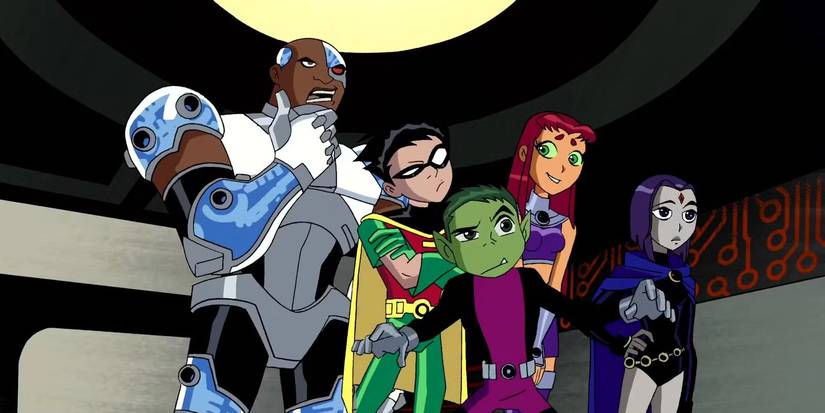
Criticism around the lack of world building certainly felt justified back in the early 2000s, but the idea that the show was simply annoying comes across as extremely harsh. One of Teen Titans' best traits was how emotive it was, with vibrant expressions and hilarious animation highlighting exactly how characters feel about certain jokes or insults.
For some, this was all a little bit jarring, and with the humor being aimed at a younger demographic, it clearly didn't land for everyone. Beast Boy's loud comedy, Starfire's misunderstanding of Earth culture, and gag villains like Mad Mod or Control Freak all seemingly rubbed people the wrong way, despite being extremely charming to others.
IGN's Teen Titans season 1 review even seems to take a shot at the iconic theme song, mentioning "Its painfully annoying signature tune." Considering many feel Teen Titans has one of the best opening credits of any superhero show purely because of the theme song, it's a criticism that has certainly aged badly for many.
Puffy AmiYumi delivered an opening track that people still love over two decades later, with the Japanese version even being used for some episodes. Therefore, what critics may have found annoying back in the day certainly isn't the sentiment all these years later, and you'd have to be extremely brave to describe Teen Titans as annoying in today's climate.
Teen Titans Was A Big Shift From The DC Animated Universe

For as great as Teen Titans was, it acted as a big shift away from the DC Animated Universe, which was nearing the end of its televised run. By the time Teen Titans came to an end, Justice League Unlimited had aired its final episode and marked the end of the DCAU shows, making Teen Titans the start of a new era for DC animation.
Tonally, it was completely different, as despite still having some edge to it, the Cartoon Network project was nowhere near as serious as something like Batman: The Animated Series, which is often considered the greatest superhero show ever made.
Despite how different each DCAU series was, they all had a similar level of maturity and used signature storytelling tropes. As a result, Teen Titans' direction was a concern for many, who felt it was inferior to what fans had come to expect. Unfortunately, this meant the 2003 classic had to live up to incredibly high expectations.
Even though it was trying to forge its own identity, many were still comparing Teen Titans with the DCAU and even viewing it as a supposed Batman: The Animated Series successor, which it clearly wasn't. Heavy criticism was therefore unavoidable, giving the now-beloved cartoon a lot of unfair negativity to overcome.
The Character Interpretations & Tone Were Too Childish For Some

Just like Teen Titans was criticized for being annoying, it was also called out for being childish, another point that seems rather harsh upon reflection. Compared to the DCAU, Teen Titans was certainly more light-hearted, having almost as many low-stakes comedy episodes as it did important, story-oriented outings, particularly in the first season.
However, with the protagonists being teenagers, alongside many of the villains, it was always intended to be a bit more laid-back than something like Batman: The Animated Series. That said, characters such as Robin and Raven were still portrayed as predominantly serious, something their teammates often poked fun at, continuing to add humor to the series.
The show is certainly guilty of getting a little too silly at times, with episodes like "Employee of the Month" and "Fractured" really pushing the boundaries of how absurd Teen Titans could be. That said, the likes of "How Long Is Forever?" and "TROQ" only scratch the surface as to how emotionally mature the series was at the same time.
Overall, the balance between cheesy comedy and heartfelt storytelling was healthy, countering Entertainment Weekly's point that "The Teen stories and animation aren’t compelling for anyone over the age of about 11." Teen Titans Go! only makes these complaints more ironic in hindsight, since the OG show looks dark and edgy in comparison, which its successor often jokes about.
Teen Titans' Anime Inspiration Didn't Resonate With Everyone
 Image via Game Rant
There is no denying that Teen Titans was inspired by anime, a genre that was still growing at the time. Although Dragon Ball Z and Sailor Moon were hits in the 90s, One Piece and Naruto hadn't long debuted by the time Teen Titans came out, while Bleach hadn't even started, making this art form far from mainstream in the West.
Anime may be a cultural phenomenon today, but there was still a sense of snobbery towards it back in the early 2000s, prompting criticism from many. Alongside the theme song, things like the art direction, poppy animation, and general aesthetic were dismissed for being too Japanese-inspired, as opposed to the more Western look of the comics.
While many Western animated shows have an anime feel in modern TV, Teen Titans felt like a bit of an anomaly back then, making its differences an easy aspect to throw digs at. Looking back over 20 years later, these are easily some of the project's best traits, with time proving to change public opinion, especially with how big anime has become.
Still, back in 2003, many people trashed Teen Titans because of its inspiration, yet the creators weren't fazed and even doubled down with the follow-up movie, Teen Titans: Trouble in Tokyo, which really allowed the team to go all in on these Japanese references.
Cartoon Network's Teen Titans Was Not A Faithful Comic Adaptation

One criticism that remains relevant today with all comic book adaptations is how faithful they are, with the mixed reception to Lanterns being the perfect example. Clearly, this is a trend at least two decades old, as Teen Titans faced the same backlash when it debuted, having veered massively from the source material it was based on.
With Teen Titans having numerous comic runs, it was always going to be impossible to please everyone with a transition to TV, but even still, characters like Starfire and Raven are vastly different in the Cartoon Network series and arguably influenced future comics more than they took inspiration from previous ones.
Even the roster itself is relatively controversial, since Robin is the only OG member of the team to be a regular in 2003's Teen Titans. The five members we see in the show were never an exclusive unit in the comics, making the decision to sideline other prominent figures upsetting for those seeking an accurate adaptation.
In fairness, the show does somewhat adapt certain storylines such as The Judas Contract and Terror of Trigon, but even these feature major changes to fit the cartoon, while Teen Titans introduced brand-new characters as well. Rightfully or wrongfully, the show was panned heavily for deviating from the source material, despite ultimately succeeding anyway.
Sources: IGN, Entertainment Weekly

Release Date 2003 - 2006-00-00
Network Cartoon Network
Directors Michael Chang, Alex Soto, Ben Jones, Ciro Nieli, Matt Youngberg
Writers David Slack, Amy Wolfram, Rob Hoegee, Adam Beechen, Greg Klein, Rick Copp, Tom Pugsley, Marv Wolfman, Richard Elliott, Simon Racioppa, Dwayne McDuffie, John Esposito, Melody Fox, Joelle Sellner, George Pérez
-

Greg Cipes
Beast Boy (voice)
-




 English (US) ·