

Published May 17, 2026, 9:00 AM EDT
Sean Migalla (he/him) is a non-fiction and fiction writer with a B.A. in Television from Columbia College Chicago. He is a life-long fan of video games, having started on an NES as a kid and continuing to play ever since. Sean also has a strong love for all things table-top gaming, especially TCGs and TTRPGs.
Thanks to MagicCon Las Vegas, we recently got a look ahead at what's coming this year for Magic: The Gathering. The convention's panels gave us our first look at the upcoming Marvel Super Heroes set, and a sneak peek of The Hobbit. Perhaps the most exciting reveal, however, was the first look at the upcoming Reality Fracture set that is releasing in October.
Reality Fracture is set to be the conclusion to a years-long Magic: The Gathering story arc that started back in 2023 with Wilds of Eldraine. The set takes place in an alternate reality created by Planeswalker Jace Beleren in an attempt to fix the Multiverse. Even if you haven't been following Magic's story, this is still a set to be excited about. Mainly, because it is bringing back a decades-old gimmick that has the potential to shake up a lot of decks across multiple formats.
Magic: The Gathering Is Revisiting Planar Chaos And Possibly Breaking The Color Pie
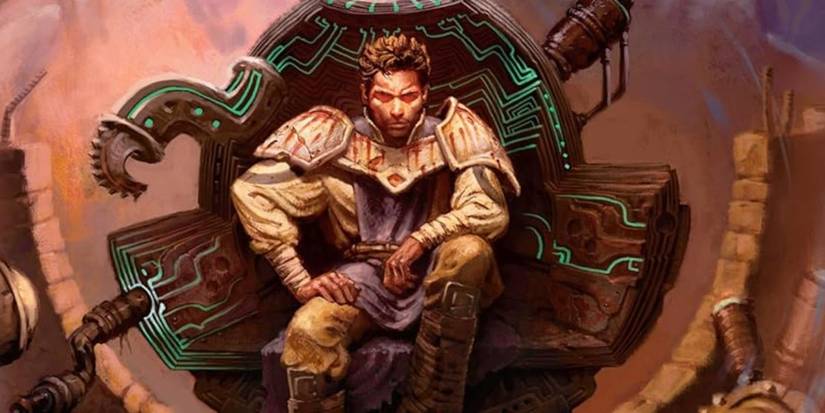
Back in 2006 and 2007, Magic: The Gathering released the Time Spiral block. Each of the three sets in the block had a unique set of cards, with Time Spiral having cards from Magic's past reprinted, and Future Sight included cards that would show up again in future sets. Maybe the most exciting of the three was Planar Chaos, which gave us alternate reality cards, which were existing Magic cards, but in a different color of mana. This gave us cards like Damnation, the black equivalent to Wrath of God, and Mana Tithe, the white version of Force Spike.
Reality Fracture is bringing back alternate reality cards, and from the previews we've gotten, it's clear Wizards of the Coast isn't afraid to give us some seriously powerful game pieces in a new color. If Planar Chaos is any indication, Magic may also be breaking its color pie, which refers to how game mechanics are split across the game's five colors of mana. If the original alternate reality cards gave us a white counterspell, who knows what Wizards might have in store for us in Reality Fracture?
A Powerful Magic: The Gathering Card Is Getting A Color-Swapped Clone

The first alternate reality card we've seen from Reality Fracture is Stingcaster Mage, a red version of the popular blue card, Snapcaster Mage. Both cards give one of your instants or sorcery cards the flashback keyword, allowing you to cast that card from your graveyard the turn these creatures enter. This essentially gives you an extra copy of a spell you've played, and in a game where consistent draws is such a determining factor, that is a powerful ability.
Now, Stingcaster Mage does have one downside in comparison to Snapcaster Mage. While Snapcaster Mage has the keyword flash, allowing it to be played on any turn, Stingcaster Mage has haste instead. This makes Stingcaster Mage slightly less useful, and also shows us an important aspect of how Reality Fracture is handling its alternate reality cards. Instead of being a one-for-one reprint like Planar Chaos, these cards seem to be making an effort to stick closer to the color pie. Flash is typically a blue keyword, and haste a red one.
Although Stingcaster Mage might have a slight downside over Snapcaster Mage, its existence will have a big impact on one style of deck in Magic: The Gathering. Storm decks typically use red and blue mana, and rely on casting a lot of spells for their strategy. This means these decks now have access to not only Snapcaster Mage, but also Stingcaster Mage when it comes to finding ways to increase their storm counter. Mono-red storm decks, like the popular Goblin Storm archetype, can also make good use of Stingcaster Mage.
How Breaking The Color Pie Affects Magic: The Gathering

It's nice to see that Wizards of the Coast has seemingly altered their approach to color-shifted cards a bit since Planar Chaos. Flashback already appears more often on red cards than blue ones, and changing flash to haste on Stingcaster Mage makes it much more in line with red than blue. Hopefully, this is the approach that the rest of the alternate reality cards take in Reality Fracture, because Magic: The Gathering's color pie is integral to how the game is balanced.
Magic balances cards in two ways, through pure mana value, and the colors of mana. Mana value is the total amount of mana it costs to play a card, and more expensive cards are typically more powerful. Cards are also balanced by limiting certain abilities to certain colors of mana, meaning if a deck wants to be able to access multiple abilities across the color pie, then it will need to use multiple colors of mana. Needing multiple colors to cast a card makes it more difficult to cast, therefore it's harder to build a deck that can do it all.
While the occasional color pie break like Mana Tithe or Damnation won't ruin the integrity of the game, the more often it happens, the more the color pie's ability to balance the game erodes. This is especially true in formats where cards never rotate out, meaning every color pie break ever printed is still available (unless it's been banned). Stingcaster Mage seems like the safe way to do alternate reality cards, and hopefully Magic: The Gathering limits the number of color pie breaks in this upcoming set, though getting a few could be fun.
Created by Richard Garfield
Main Genre Fantasy
Release Date August 5, 1993
Character(s) Jace Beleren, Chandra Nalaar, Liliana Vess, Garruk Wildspeaker, Nissa Revane, Ajani Goldmane, Nicol Bolas, Teferi, Gideon Jura, Sorin Markov, Ral Zarek







 English (US) ·