
20th Century Studios
Director Marc Forster's 2005 film "Stay" is a tricky sell. It's a stylized, latter-day-MTV type of movie where the editing and camerawork evoke an angsty, perpetual dream state. What's more, its story doesn't make a lot of sense by design, as one or perhaps several of its characters are losing their grip on reality.
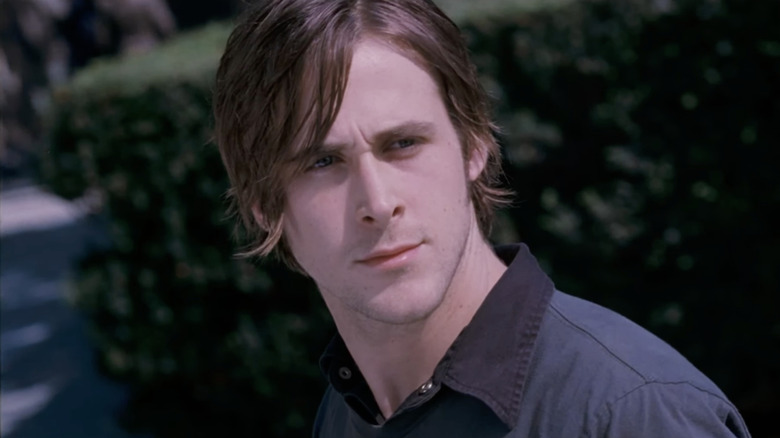
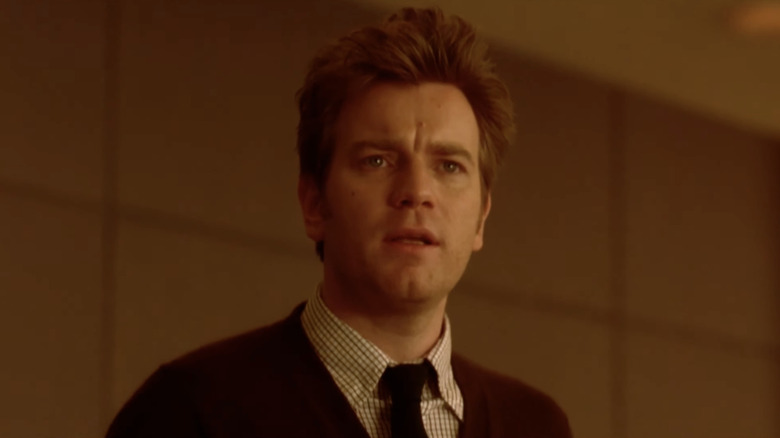
"Stay" stars Ryan Gosling as Henry, a 20-something who is depressed and despondent. He goes to see his usual shrink (Janeane Garofalo), only to find that she has been replaced by a substitute named Sam (Ewan McGregor). Henry then informs Sam that this coming Saturday, at precisely midnight, he intends to take his own life.
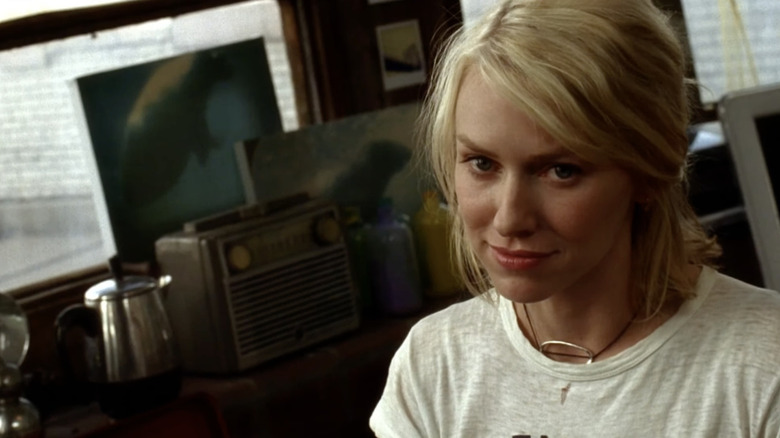
Henry's dark plan leads Sam to begin delving into Henry's life. Sam consults his once-suicidal fiancee Lila (Naomi Watts), and she offers to help. However, there is something amiss about Henry's case. Sam, for instance, introduces Henry to a blind friend of his (Bob Hoskins), only for Henry to claim that the man is actually his deceased father. This happens later in the movie as well, wherein Sam meets a woman that another character declares to have been dead.
Scenes begin repeating themselves. Conversations become circular. At one point, Sam goes to talk to Athena (Elizabeth Reaser), a young woman rehearsing a scene from "Hamlet," and she vanishes down a staircase. When he returns to the stage, she's suddenly back. What?
"Stay" was written by David Benioff, who had previously penned the Spike Lee-directed "25th Hour" and the Wolfgang Petersen-helmed "Troy." He would go on to write Forster's "The Kite Runner" film adaptation, in addition to co-writing "X-Men Origins: Wolverine" and director Ang Lee's sci-fi flop "Gemini Man." Nowadays, of course, he's best known for co-creating the "Game of Thrones" TV show, making "Stay" a somewhat under-appreciated item on his resume.
Game of Thrones' David Benioff wrote the 2005 movie Stay (which critics hated)
20th Century Studios
There is an explanation for why reality seems to be bending around in "Stay," but it may not satisfy a lot of viewers. And while I won't reveal it, I will tease that it's reminiscent of the ending to one of the best horror movies of 1990 (which was quite the year for the genre). All the while, Marc Forster layers on the style as if it's running out in the film, bending and inverting images and shaping the very mise-en-scène into a pliable cloud of hallucinations.
Despite its attention-grabbing aesthetics and impressive cast, though, folks didn't flock to "Stay." As mentioned, it's a tough sell. It's not really a thriller, and because it's deliberately hallucinatory, the story doesn't ever feel like it's adding up. Its clues intentionally don't make sense, either, and nothing comes together until the movie's final moments. That's not exactly the type of film that mainstream audiences typically flock to, so it's little surprise that "Stay" misfired at the box office.
Critics weren't kind, either. Andrew O'Hehir, for example, called the film a "complete waste of time," writing for Salon:
"Forster and cinematographer Roberto Schaefer have established their mode of permanent disorientation: The straight lines go all bendy, perspective is oddly foreshortened, the camera lists from side to side and then sinks, like someone passing out. This is not a movie for those prone to barfing."
O'Hehir, and other critics, also noted that Ewan McGregor's character wears shockingly short, pea-green trousers throughout the movie, and it's a strange enough costuming choice to be distracting. If you leave a psychological thriller mainly thinking about a character's pants, then it's probably safe to say the film didn't work for you.
Stay found a champion in Roger Ebert (and, later, Letterboxd)
20th Century Studios
Roger Ebert, on the other hand, stood apart from most critics, giving "Stay" three-and-a-half stars. Ebert was impressed by the film's style, and he spent the bulk of his review describing how clever it was. As he saw it, the dreamlike editing leaned into the film's ultimate meaning, and he was clearly swept away. To quote him directly:
"When the movie is over, and we know all that is to be known, it deserves some thought. The ending is an explanation, but not a solution. For a solution we have to think back through the whole film, and now the visual style becomes a guide. It is an illustration of the way the materials of life can be shaped for the purposes of the moment."
Ultimately, "Stay" does brush up against some heady topics, including death, despair, and the memories that bind these things together. Depending on who you ask, though, the movie either is or is not exciting, emotional, or overall intriguing enough to communicate its ideas effectively. That being said, younger and more modern cinephiles seem to have come around to it a bit, as evidenced by its respectable rating on Letterboxd. One of its top reviews on the website even describes the film as "Ryan Gosling's 'Donnie Darko.'"
Not that David Benioff is currently hurting for greater recognition. He, as mentioned, co-created HBO's "Game of Thrones" and served as its co-showrunner alongside D.B. Weiss for all eight seasons of the hit fantasy series (garnering lots of acclaim — and criticism — in the process). Benioff and Weiss have since teamed up with Alexander Woo to create another TV adaptation of a literary best-seller in the form of "3 Body Problem." They're keeping busy.


 English (US) ·