
 Image via Warner Bros.

Published May 2, 2026, 6:05 PM EDT
Sign in to your Collider account
Horror remakes fail in a very particular way. They almost never die because the original was too sacred to touch. They die because somebody looked at the original and misread the source of the fear. They saw the mask, the fog, the clown, the house, the prom dress, the hook, the killer on the road, and thought those were the movie. They were not. The movie was the mood, the rhythm, the moral tension, the texture of the time, the way dread spread through ordinary space until the whole world felt contaminated.
That is why these 8 bad remakes of ’80s horror feel so insulting to fans of the genre. They keep bringing back the iconography while ripping out the nervous system. And ’80s horror especially needed that nervous system. That decade was full of tactile grime, practical effects, suburban rot, campfire unease, VHS menace, synth dread, and a real understanding that fear gets stronger when the movie trusts stillness, atmosphere, and ugly little human weaknesses. These remakes mostly do the opposite. They overexplain, overcut, flatten, sterilize, and confuse noise for threat.
8
7 'Prom Night' (2008)
 Image via Sony Pictures
The original Prom Night was never untouchable masterpiece territory, but it had a grubby little slasher pulse and an understanding of how old secrets, adolescent vulnerability, and ritual spaces like prom can become pressure cookers for fear. The remake somehow turns all of that into hotel-lobby horror. That is the problem in one phrase. It looks clean, behaves clean, and dies clean. A prom-night slasher should feel feverish, hormonal, overdecorated, and unstable, like a huge rite-of-passage event being slowly invaded by death. This movie feels like a showroom.
The writing keeps reaching for thriller polish instead of teenage panic. Donna Keppel (Brittany Snow) is given trauma from the start, but the film never really lets that trauma become the emotional shape of the night. The killer is obsessive, yes, though the obsession never develops into anything especially deranging or memorable. Scene after scene feels professionally assembled and spiritually empty. The party itself barely becomes a social ecosystem worth corrupting. That matters more than people think. If prom is just a backdrop, then killing at prom is just scheduling. A good slasher uses the setting to sharpen humiliation, performance, sex, status, exposure. This one just escorts characters through generic suspense beats until it runs out of hallway. It is horror with its tie straightened too carefully.
6 'The Hitcher' (2007)

The reason the original The Hitcher works is that John Ryder (Rutger Hauer) feels less like a man than an event. He enters the road movie from hell and turns the entire open highway into a spiritual trap. The movie is lean, sun-blasted, and cruel in a way that feels almost mythic. Jim Halsey (C. Thomas Howell) is not just being chased. He is being psychologically dismantled by somebody who seems to understand that terror grows best when reality itself starts losing its moral logic. The Hitcher remake, however, sees the road, the handcuffs, the violence, the iconic threat, and misses the metaphysical sickness underneath it.
Sean Bean is a terrific actor, but the script reduces Ryder into a more ordinary sadistic pursuer. That is fatal. Once he becomes understandable in the wrong way, the film loses the original’s nightmare abstraction. Sophia Bush gets pulled into the rewrite as the girlfriend, which changes the dynamic but never deepens it. The writing keeps substituting louder violence and slicker set pieces for the escalating soul-poison of the original. It wants to be nastier and more intense, though it never becomes more disturbing because it has no idea how to make evil feel uncanny. The first movie made the highway feel infinite and morally empty. The remake just gives you another violent chase thriller with a horror skin stretched over it.
5 'Child’s Play' (2019)
 Image via United Artists Releasing
This one fails for almost the opposite reason of some of the others. It is not lazy in the usual remake way. It tries a new angle. It modernizes Child’s Play into smart-tech nightmare territory, drops the voodoo soul-transfer element, and reframes the doll as a corrupted AI companion. On paper, that is not a stupid idea at all. In fact, there is a strong contemporary horror concept buried in there somewhere, loneliness outsourced to consumer tech, childhood attachment mediated by surveillance capitalism, a “friend” product learning emotional logic through bad inputs. That could have been sharp. The movie just never gets that sharp.
The original Child’s Play works because Chucky (Brad Dourif) has a filthy, malicious personality from the second the premise kicks in. He is funny because he is a murderer trapped in absurd plastic. That tension gives the writing a perfect engine. In the remake, the doll’s threat is more diffuse. He is confused, needy, adaptive, and then violent, which makes him conceptually interesting for a while but much less instantly combustible as a horror antagonist. The film keeps wobbling between satire, gore-comedy, kid friendship movie, and tech paranoia without ever locking into the ugliest implications of any one of them. Karen Barclay (Aubrey Plaza) brings some offbeat life, and there are a few good kills, but the script never fully proves why this version had to exist beyond “what if Chucky was an app-era product.” Good pitch. Half-formed movie.
4 'Day of the Dead' (2008)
 Image via First Look Studios
Remaking Day of the Dead badly should honestly be difficult, because George A. Romero already handed future filmmakers such a brutal, self-contained dramatic machine. A bunker. A collapsing world above. Soldiers and scientists below. Fear, authoritarianism, ethical rot, exhaustion, human beings turning on each other faster than the dead can.
The zombies matter, obviously, but the real point of Day of the Dead is that civilization has already become a claustrophobic argument about control, cruelty, and hopeless adaptation. It is a pressure-cooker film with political teeth. The remake throws that away almost immediately. Instead of simmering moral collapse, you get infected-sprinter chaos, military plotting with no real psychological density, and a story that feels weirdly generic despite using one of the richest titles in zombie horror. Even the Bub variation, Bub (Sherman Howard), one of the original’s most haunting ideas, the undead reflecting back damaged traces of humanity, gets flattened into thin gimmickry. The writing never understands containment. It is not just missing atmosphere. It is missing the argument. And a Romero remake without the argument is already dead on arrival.
3 'Poltergeist' (2015)
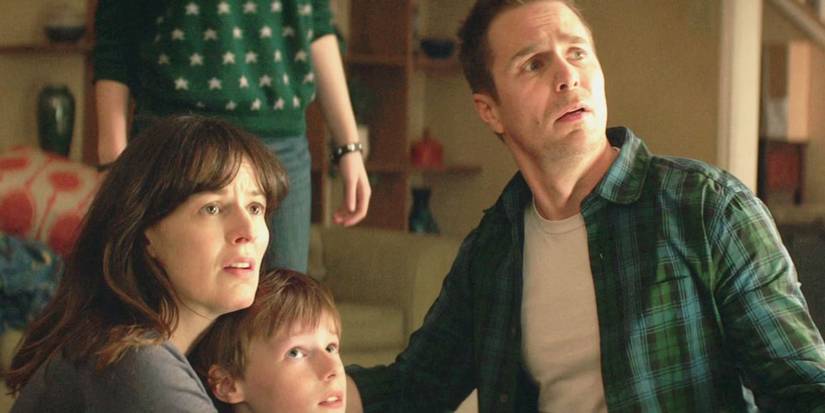 Image via 20th Century Studios
The original Poltergeist is one of the best examples of family-space horror ever made because it knows exactly how to violate comfort. The suburban home is warm, noisy, lived-in, full of television glow, clutter, sibling friction, tired parents, ordinary life. Then the supernatural starts moving through that space one object at a time until the house itself becomes spiritually hostile. That is why the movie lasts. It is not merely about ghosts but about the most intimate zone of safety being rewritten into a trap. The remake never really understands the sanctity of that violation.
It rushes. That is the writing problem above all else. Instead of letting dread accumulate through strange domestic details, it starts playing the hits too early and too mechanically. The family barely becomes a family before the haunting begins demanding emotional investment. Eric Bowen (Sam Rockwell) and Amy Bowen (Rosemarie DeWitt) try to give the household some human looseness, though the script never slows down enough to let their rhythms take root. Then there is the ghost mythology itself, overpackaged, overexplained, more interested in updated effects language than in the patient contamination of reality. Good haunting stories depend on escalation that feels invasive and intimate. Here the haunting becomes productized spectacle. The original felt like your house turning against your deepest assumptions. The remake feels like a familiar IP going through effect beats.
2 'A Nightmare on Elm Street' (2010)
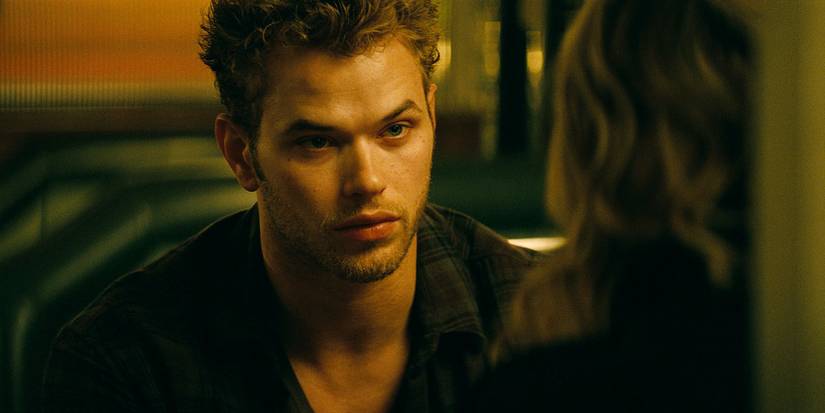 Image Via Warner Bros.
Freddy Krueger (Robert Englund) is one of the hardest horror icons to remake because the original A Nightmare on Elm Street needed a very delicate balance. He is frightening, yes, but he is frightening inside a concept that is even stronger than he is: sleep itself becoming unsafe. Wes Craven understood that dream logic has to feel slippery, invasive, and barely manageable. The teenagers are already vulnerable because their own bodies will betray them eventually. That is primal horror. The remake somehow takes that premise and makes it feel procedural.
Jackie Earle Haley is not the problem. He is an intelligent, intense actor, and there are moments where you can see the movie almost discovering a more wounded, predatory, human-scaled Freddy. But the writing keeps sanding everything down into grim explanation. Nancy Holbrook (Rooney Mara) and the others never develop the same desperate teenage reality as kids trying to stay awake while adult disbelief closes around them. The dream sequences are more literal and less unnerving. Worst of all, the script’s handling of Freddy’s past fumbles the exact zone of ambiguity and contamination it should be playing with. Instead of deepening the moral rot, it muddies it in a way that feels clumsy rather than sickening. Elm Street should feel like adolescence under supernatural siege. This remake makes it feel like forensic gloom.
1 'The Fog' (2005)
 Image via Sony Pictures Releasing
This one takes the top spot because it commits the most boring version of remake failure: it turns atmosphere into plot explanation. John Carpenter’s The Fog is all mood, guilt, coastline myth, campfire unease, church secrets, and that extraordinary feeling of something old and maritime and wrong drifting back into town on the night air. It is frightening because the fog itself becomes a carrier of history, a moving wall of dread that seems to know where every fragile human light is. The remake looks at that and decides the answer must be backstory, exposition, romantic linkage, and visual gloss.
Everything gets worse from there. The town no longer feels like a place with old sins buried under ceremony and routine. The haunting no longer feels like revenge rising organically from communal guilt. It feels packaged. The spectral attackers lose force because the movie keeps trying to clarify and prettify them instead of letting them remain part of one big rolling curse. The writing keeps insisting on narrative connections that shrink the story. Carpenter’s film trusted that a ghost story can be strongest when it moves like weather and guilt at once. This version turns it into thin supernatural bookkeeping. That is why it is number one. It does not just fail to scare. It misunderstands the whole reason the original could haunt anyone at all.
Collider Exclusive · Horror Survival Quiz Which Horror Villain Do You Have the Best Chance of Surviving? Jason Voorhees · Michael Myers · Freddy Krueger · Pennywise · Chucky
Five killers. Five completely different ways to die — if you're not smart enough, fast enough, or self-aware enough to avoid it. Only one of them is the villain your particular set of instincts gives you a fighting chance against. Eight questions will figure out which one.
🏕️Jason
🔪Michael
💤Freddy
🎈Pennywise
🪆Chucky
TEST YOUR SURVIVAL →
01
Something feels wrong. You can't explain it — you just know. What do you do? First instincts are the difference between the survivor and the first act casualty.
ALeave immediately. I don't need to understand a threat to respect it. BStay quiet and observe. If I can see it, I can understand it. If I can understand it, I can avoid it. CStay awake. Whatever this is, I am not going to sleep until I feel safe again. DConfront it directly. Fear grows in the dark — I'd rather know what I'm dealing with. ECheck everything, trust nothing. The threat might be closer than I think — and smaller.
NEXT QUESTION →
02
Where are you most likely to find yourself when things go wrong? Setting is everything in horror. Where you are determines which rules apply.
ASomewhere remote — a cabin, a campsite, off the grid and away from people. BA quiet suburban neighbourhood where nothing ever happens. Except tonight. CIn my own head — the most dangerous place of all, depending on what's already in there. DWherever children are — because something about this place attracts the worst things. ESomewhere ordinary — a house, a toy store, a place where the last thing you'd expect is a threat.
NEXT QUESTION →
03
What is your most reliable survival asset? Every survivor has a quality the villain didn't account for. What's yours?
APhysical fitness — I can run, I can swim, I can outlast something that relies on brute persistence. BSpatial awareness — I always know the exits, the hiding spots, the fastest route out. CPsychological resilience — I've faced my worst fears before. They don't have the same power over me. DEmotional steadiness — I don't panic. Panic is what gets you caught. EScepticism — I don't underestimate threats because of how they look. Size is irrelevant.
NEXT QUESTION →
04
What kind of fear is hardest for you to fight through? Knowing your weakness is the first step to not dying because of it.
AThe unstoppable — something that will not stop, cannot be reasoned with, and is always getting closer. BThe invisible — a threat I can feel but can't locate, watching from somewhere I can't see. CThe psychological — something that uses my own mind and memories against me. DThe unknowable — something ancient, shapeless, that feeds on the fear itself. EThe mundane — a threat so ordinary-looking that no one will believe me until it's too late.
NEXT QUESTION →
05
You're with a group when things start going wrong. What's your role? Horror movies are brutally clear about who survives group situations and who doesn't.
AThe one who says "we need to leave" first — and means it, even when no one listens. BThe one who stays quiet, watches the others, and figures out the pattern before anyone else does. CThe one who holds the group together when panic sets in — because someone has to. DThe one who asks the questions nobody wants to ask — because ignoring them gets people killed. EThe one who takes the threat seriously when everyone else is laughing it off.
NEXT QUESTION →
06
What's the horror movie mistake you're most likely to make? Honest self-assessment is a survival skill. Denial is not.
AGoing back for someone — I know I shouldn't, but I can't leave them behind. BAssuming I'm safe once I've found a hiding spot. That's when it finds me. CFalling asleep when I absolutely cannot afford to. Exhaustion is its own enemy. DLetting my curiosity override my instincts — I always need to understand what I'm dealing with. EDismissing the threat because of how it looks. That's exactly what it wants.
NEXT QUESTION →
07
What's your best weapon against something that can't be stopped by conventional means? Every horror villain has a weakness. The survivors are always the ones who find it.
AThe environment itself — I use the terrain, the water, the geography against it. BPatience — I wait, I watch, and I strike at the one moment it doesn't expect. CLucidity — if I can stay in control of my own mind, it loses its primary weapon. DCourage — facing it directly, refusing to run, taking away the fear it feeds on. EImprovisation — I use whatever's at hand, however unconventional. Creativity over brute force.
NEXT QUESTION →
08
It's the final scene. You're the last one standing. How did you make it? The final survivor always has a reason. What's yours?
AI kept moving. I never stopped, never hid for too long, never let it corner me. BI figured out the pattern before anyone else did — and I used it against the thing following it. CI stayed awake, stayed lucid, and refused to give it the one thing it needed most. DI stopped being afraid of it. And the moment I did, everything changed. EI took it seriously from the start — and I never once made the mistake of underestimating it.
REVEAL MY VILLAIN →
Your Survival Odds Have Been Calculated Your Best Chance Is Against…
Your instincts, your strengths, and your particular way of thinking under pressure point to one villain you actually have a fighting chance against. Everyone else — good luck.
Jason Voorhees
Jason is relentless, but he is also predictable — and that is the gap you would exploit.
- He moves in straight lines toward his target. He doesn't strategise, doesn't adapt, doesn't outsmart. He simply pursues.
- Your ability to keep moving, use the environment, and resist the panic that freezes most victims gives you a genuine edge.
- The Crystal Lake survivors were always the ones who stopped running in circles and started thinking about terrain, water, and distance.
- You think like that. Which means Jason, for all his indestructibility, would face someone who simply refused to be where he expected.
Michael Myers
Michael watches before he moves. He is patient, methodical, and almost impossible to detect — until it's too late for anyone who isn't paying close enough attention.
- But you are paying attention. You notice the shape in the window, the car parked slightly wrong, the silence where there should be sound.
- Michael's power lies in the invisibility of ordinary suburbia — the fact that nothing ever looks wrong until it already is.
- Your spatial awareness and instinct to map every room, every exit, and every shadow before you need them is precisely the quality Laurie Strode had.
- You are not a victim waiting to happen. You are someone who already suspects something is wrong — and acts on it.
Freddy Krueger
Freddy wins by getting inside your head — using your own fears, your own memories, your own subconscious as weapons against you. That strategy requires a target who can be destabilised.
- You are harder to destabilise than most. You've faced uncomfortable truths about yourself and you haven't looked away.
- The survivors on Elm Street were always the ones who understood what was happening and chose to face it rather than flee from it.
- Freddy's greatest weakness is that his power evaporates in the presence of someone who refuses to give him the fear he feeds on.
- Your psychological resilience — the ability to stay grounded when reality itself becomes unreliable — is exactly the quality that keeps you alive here.
Pennywise
Pennywise is ancient, shapeshifting, and feeds on terror — but it has one critical vulnerability: it cannot function against someone who genuinely stops being afraid of it.
- The Losers Club didn't survive because they were braver than everyone else. They survived because they faced their fears together, and faced them honestly.
- You ask the questions others avoid. You look directly at what frightens you rather than turning away.
- That directness — the refusal to let fear fester in the dark — is Pennywise's worst nightmare.
- It chose the wrong target when it chose you. You are exactly the kind of person whose fear tastes like nothing at all.
Chucky
Chucky's greatest advantage is that nobody takes him seriously until it's already too late. He exploits the gap between how something looks and what it actually is.
- You don't have that gap. You take threats seriously regardless of how they present — and you never make the mistake of underestimating something because of its size or appearance.
- Chucky relies on surprise, on the delay between recognition and response. You close that delay faster than almost anyone.
- Your instinct to treat every unfamiliar thing with appropriate scepticism — rather than dismissing it because it seems absurd — is the exact quality that keeps you breathing.
- Against Chucky, not laughing is already winning. You are very good at not laughing.
↻ RETAKE THE QUIZ

The Fog
Release Date October 14, 2005
Runtime 100 Minutes
Director Rupert Wainwright
Writers Cooper Layne



 English (US) ·