
If we're honest, most medical dramas are just relationship dramas with fluorescent lighting and the occasional code blue. The good ones, though, the perfect ones, use the hospital as a way to get at something true about people under pressure, systems that fail, and what it actually costs to care. The shows on this list are the good ones.
Some are network classics, some are criminally underseen streaming series, one is a BBC miniseries you definitely haven't seen (but should), and one is the best new drama of the decade. All of them are excellent from first episode to last, which in this genre is rarer than you'd think.
'The Pitt' (2025–Present)
Technically not a reboot of ER (HBO Max's lawyers will tell you so loudly, and often), The Pitt is nonetheless ER for a world that has been through a pandemic and has graduated beyond the McDreamy vs. McSteamy discourse of network medical dramas past. The show chronicles the high-pressure workings of a Pittsburgh hospital emergency room, with Noah Wyle starring as chief attending physician Dr. Michael "Robby" Robinavitch. The genius structural conceit: each of the 15 episodes covers one hour of a single 15-hour shift, immersing viewers in the nonstop pressures of emergency medicine. (It's 24, but with more chest compressions and fewer moles.)
What makes The Pitt something special is how doggedly it commits to the idea of authenticity. The series has been praised by the medical community for its accuracy and realistic portrayal of healthcare workers, all while addressing the psychological challenges faced in a post-pandemic world. The ensemble — Isa Briones, Fiona Dourif, Katherine LaNasa as the charge nurse holding everything together with only a thick, working-class accent and a head of fresh accent — is stacked. The first season swept the Emmys, winning Outstanding Drama Series, acting awards for Wyle and LaNasa, and recognition for its casting. The second will likely do the same. Now's the time to jump in (before another shift starts).
'House' (2004–2012)
 Image via FOX
At its core, House is a show about a man who is laughably bad at being a decent, empathetic person and damn good at diagnosing exotic diseases. Hugh Laurie's Dr. Gregory House, a pill-popping, cane-wielding, misanthropic genius, is a Sherlock Holmes transplant to Princeton-Plainsboro Teaching Hospital, and the medical cases function exactly like mystery plots: symptoms as clues, differential diagnoses as deductions, and a big reveal at the end where House is, irritatingly, right about everything. The supporting cast — Omar Epps, Jennifer Morrison, Jesse Spencer, Lisa Edelstein as the long-suffering Cuddy, and Robert Sean Leonard as Wilson, House's improbably patient best friend — exists largely to be wrong so that House can be right, and they do it beautifully.
Episodically-speaking, the show is aggressively formulaic, and yet it worked for eight years because Laurie is simply extraordinary. His House is funny and cruel and occasionally, against his will, moved by the patients he refuses to care about. The standout arc remains Season 2's "Three Stories," a non-linear episode about three patients with leg injuries that serves as a compelling reintroduction to the anti-hero you thought you knew, but every season is worth a watch.
'The Knick' (2014–2015)
 Image via Cinemax
What if someone made a prestige cable drama set at a turn-of-the-century New York hospital, directed every single episode themselves, and scored the whole thing with anachronistic electronic music just to watch people's heads explode? That someone is Steven Soderbergh, and The Knick is his magnificent, canceled-too-soon masterpiece. Soderbergh directed all 20 episodes, crafting a story of era-defining medical developments through characters at the Knickerbocker Hospital and somehow creating a drama that feels vibrantly current despite being set in 1900. Clive Owen plays Dr. John Thackery, a cocaine-injecting surgical genius who is simultaneously a visionary and a catastrophe, and André Holland is Dr. Algernon Edwards, a Black surgeon trained in Europe who is forced to operate in secret because his white colleagues refuse to acknowledge his talent. Their dynamic is the show's moral and dramatic engine.
Because Soderbergh shoots and edits everything himself, the show looks unlike anything else on television. Cinemax cancelled it in 2017 despite critical acclaim, which should be diagnosed as proof of insanity on the part of TV executives, but unfair endings aside, audiences still got two perfect seasons of medical quackery to marvel over with the gift of hindsight. This is definitely a "look how far we've come" kind of watch.
'This Is Going to Hurt' (2022)
 Image via BBC
Adapted from Adam Kay's brutal, funny, and deeply sad memoir about his years as an NHS junior doctor, This Is Going to Hurt is the rare medical drama that delivers laugh-out-loud hilarity, then chases it down with an emotionally complex gut punch to remind you people's lives are on the line here. It is a thought-provoking examination of the U.K.'s National Health Service, a prickly character study played with a rich disinterest in likability by Ben Whishaw. Whishaw's Kay is an OBGYN doctor drowning in paperwork, bad decisions, and a secret he's keeping from his partner, and the show takes a Fleabag-ish approach via fourth-wall breaks and dark irony, that gives the whole thing a confessional kind of appeal.
Whishaw's performance is a superbly judged high-wire act: his relentless sarcasm softens when dealing with patients but curdles into something nastier when managing his junior colleague Shruti, played by Ambika Mod. The show is also, it must be said, not for the faint-hearted, with obstetric emergencies that are graphic in ways that will test certain viewers in the first five minutes, and one episode dealing with a possible case of domestic abuse that is a heartbreaking mini-masterpiece handled with total empathy. Seven episodes, no filler, and an ending you won't see coming… this is the best British medical drama of the last decade.
Collider Exclusive · TV Medicine Quiz Which Fictional Hospital Would You Work Best In? The Pitt · ER · Grey's Anatomy · House · Scrubs
Five hospitals. Five completely different ways medicine goes sideways on television — brutal, chaotic, romantic, brilliant, and ridiculous. Only one of them is the ward your instincts were built for. Eight questions will figure out exactly where you belong.
🚨The Pitt
🏥ER
💉Grey's
🔬House
🩺Scrubs
FIND YOUR HOSPITAL →
01
A critical patient comes through the door. What's your first instinct? Medicine under pressure reveals who you actually are.
AStay completely present — block everything else out and work through it step by step, right now. BTriage fast and delegate — get the right people on the right problems immediately. CTrust my gut and move — I work best when I stop overthinking and just act. DAsk the question everyone else is ignoring — what's the thing that doesn't fit? ETake a breath, make a joke to cut the tension, and then get to work — panic helps no one.
NEXT QUESTION →
02
Why did you go into medicine in the first place? The honest answer says more about you than the one you'd give in an interview.
ABecause I wanted to be where it matters most — right at the edge, when someone's life is actually on the line. BBecause I wanted to help people — genuinely, one patient at a time, in a system that makes it hard. CBecause I was drawn to the intensity of it — the stakes, the drama, the feeling of being fully alive. DBecause medicine is the most interesting puzzle there is — and I needed a problem worth solving. EBecause I wanted to make a difference — and also, honestly, I didn't know what else to do with my life.
NEXT QUESTION →
03
What do you actually want from the people you work with? Who you want beside you under pressure is who you are.
ACompetence and calm — I need people who don't fall apart when things get bad. BTrust and reliability — I want to know that when I pass something off, it's handled. CConnection — I want colleagues who become family, even if that gets complicated. DIntelligence and the willingness to be challenged — I have no interest in people who just agree with me. EFriendship — people I actually like spending twelve hours a day with, because those hours are going to happen either way.
NEXT QUESTION →
04
You lose a patient you fought hard to save. How do you carry it? Every doctor who's worked a long shift has had to answer this question.
AI carry it. All of it. I don't look for ways to put it down — that weight is part of doing this work honestly. BI process it and move — you have to, or the next patient suffers for the one you just lost. CI feel it deeply and lean on the people around me — I don't think you're supposed to handle that alone. DI go back over every decision — not to punish myself, but because I need to understand what I missed. EI grieve it genuinely, find some way to laugh about something unrelated, and try to be kind to myself — imperfectly.
NEXT QUESTION →
05
How would your colleagues describe the way you work? Your reputation on the floor is usually more accurate than your self-image.
AIntense and completely present — no small talk during a shift, but exactly who you want there. BSteady and dependable — not the flashiest in the room but never the one who drops something. CPassionate and occasionally chaotic — brilliant on the hard cases, prone to drama everywhere else. DBrilliant and difficult — right more often than anyone else, and everyone knows it, including me. EWarm and self-deprecating — not the most intimidating presence, but genuinely good at this and easy to like.
NEXT QUESTION →
06
How do you feel about hospital protocol and procedure? Every institution has rules. What you do with them is a choice.
AProtocol is the floor, not the ceiling — I follow it until the patient needs something it can't provide. BI respect it — the system is broken in places, but the structure is there for a reason and I work within it. CI follow it until my instincts tell me not to — and my instincts are usually right, even when they cause problems. DRules are for people who haven't thought hard enough about when to break them. EI try to follow it and mostly do — with a few memorable exceptions that still come up in meetings.
NEXT QUESTION →
07
What does this job cost you personally? Nobody works in medicine without paying a price. What's yours?
AEverything outside these walls — I've given this job my full attention and the rest of my life has gone around it. BMy idealism, mostly — I came in believing the system could be fixed and I've made a complicated peace with that. CStability — my personal life has been as chaotic as the OR, and that's not entirely a coincidence. DMy relationships — I am not easy to know, and the people who've tried to would probably agree. EMy sense of gravity — I use humour as a coping mechanism, which not everyone appreciates in a hospital.
NEXT QUESTION →
08
At the end of a long shift, what keeps you coming back? The answer to this question is the most honest thing about you.
AThe fact that it's real — that nothing else I could be doing would matter this much, right now, today. BThe patients — individual human beings who needed something and got it because I was there. CThe people I work with — I have walked through impossible things with these people and I'd do it again. DThe next unsolved case — there's always another puzzle, and I'm not done yet. EBecause despite everything — the exhaustion, the loss, the absurdity — I actually love this job.
REVEAL MY HOSPITAL →
Your Assignment Has Been Made You Belong In…
Your answers have pointed to one fictional hospital above all others. This is the ward your instincts, your temperament, and your particular brand of dysfunction were built for.
The Pitt
You are built for the most unsparing version of emergency medicine television has ever shown — one that puts you inside a single fifteen-hour shift and doesn't let you look away.
- You need your work to be real, not romanticised — meaning over drama, honesty over aesthetics.
- You find purpose inside the work itself, not in the chaos surrounding it.
- You've made peace with the fact that this job takes from you constantly, and gives back in ways that are harder to name.
- Pittsburgh Trauma Medical Center demands exactly that kind of person — and you would not want to be anywhere else.
ER
You are the person who keeps the whole floor running — not the most brilliant in the room, but possibly the most essential.
- You show up, do the work, absorb the losses, and come back the next day without needing the job to be anything other than what it is.
- You care about patients as individual human beings, not as cases to solve or dramas to live through.
- You believe in the system even when it fails you — and you understand that emergency medicine is about holding the line just long enough.
- ER is television about endurance. You have it.
Grey's Anatomy
You came to medicine with your whole self — your ambition, your emotions, your relationships, your history — and you have never quite managed to leave any of it at the door.
- You feel things fully and form deep attachments to the people you work with.
- Your personal and professional lives are permanently, chaotically entangled — and that entanglement drives both your greatest disasters and your most remarkable saves.
- You understand that extraordinary medicine often happens at the intersection of clinical skill and profound human connection.
- It's messy at Grey Sloan. You would not have it any other way.
House
You are drawn to the problem above everything else — the symptom that doesn't fit, the diagnosis hiding underneath the obvious one.
- You're not primarily motivated by the patient as a person — though you are capable of caring, even if you'd deny it.
- You work best when the stakes are highest and the standard answer is wrong.
- Princeton-Plainsboro exists to house one extraordinary, impossible mind — and everyone around that mind is there because they're smart enough to keep up.
- The only way forward here is to think harder than everyone else in the room. That is exactly what you do.
Scrubs
You understand that medicine is tragic and absurd in almost equal measure — and that the only sane response is to hold both of those things at the same time.
- You are warm, self-aware, and funnier than most people in your field.
- You use humour to get through terrible moments — and at Sacred Heart, that's not a flaw, it's a survival strategy.
- You lean on the people around you and let them lean back. The laughter and the grief are genuinely inseparable here.
- Scrubs is a show about learning to become someone worthy of the job. You are still very much in the middle of that process — which is exactly right.
↻ RETAKE THE QUIZ
'The Resident' (2018–2023)
 Image via FOX
The Resident arrived with a chip on its shoulder and a refreshing willingness to make its hospital the villain. Rather than the usual gleaming meritocracy where brilliant doctors save the day through grit and genius, The Resident digs into the business of American medicine — the insurance loopholes, the corrupt administrators, the financially motivated decisions dressed up in clinical coats. Matt Czuchry plays Dr. Conrad Hawkins, a cocky but idealistic senior resident who mentors new intern Devon Pravesh (Manish Dayal) while butting heads with the hospital's deeply compromised power structure. Emily VanCamp rounds out the love-interest-turned-full-human-being arc as nurse practitioner Nic Nevin, while Malcolm Jamal-Warner joins as a brilliant surgeon with a short fuse.
The show's antagonist in the early seasons is Dr. Randolph Bell, played by Bruce Greenwood with the kind of slimy menace that makes you want to throw things at your screen, but he undergoes a bit of a transformation, making way for the show to keep targeting the real baddie: our healthcare system. The series isn't afraid to let patients die, or institutions fail, or its heroes be wrong. It ran for six seasons on Fox, and each one was a fun watch.
'St. Elsewhere' (1982–1988)
 Image via NBC
Before ER, before Grey's Anatomy, before any of it, there was St. Elsewhere, the scrappy, criminally underrated NBC drama that essentially invented modern medical television and was thanked for it by never cracking the top 50 in the ratings rankings. The show revolved around St. Eligius, a declining urban hospital in Boston that served destitute, downtrodden patients — "St. Elsewhere" being medical-world slang for non-teaching hospitals that serve "undesirable" patients. The series was everything 1980s network TV wasn't supposed to be: serialized, morally ambiguous, willing to kill its darlings, and genuinely weird.
The cast may be the most impressive ever assembled for a TV program, too. In the first season alone, the list of credits includes future movie stars Denzel Washington, Tim Robbins, Ally Sheedy, Christopher Guest, Ray Liotta, and Tom Hulce. St. Elsewhere wielded creative influence on ER and served as a training ground for talent, in front of the camera and behind it. All that to say, it's definitely essential viewing.
'New Amsterdam' (2018–2023)
 Image via NBC
New Amsterdam is the golden retriever of medical dramas, by which we mean it's boundlessly enthusiastic, occasionally exhausting, and impossible not to love anyway. Based on the memoirs of Dr. Eric Manheimer, the series follows Dr. Max Goodwin as he becomes the medical director of one of America's oldest public hospitals, aiming to reform the neglected facility by tearing up its bureaucracy. Ryan Eggold plays Max with earnest, wide-eyed charisma that should be annoying but somehow isn't, and his catchphrase, "How can I help?" functions as a mission statement for the whole series.
The ensemble cast has no weak spots: Freema Agyeman is electrifying as Dr. Helen Sharpe, and Jocko Sims, Janet Montgomery, Tyler Labine, and Anupam Kher round out a group with genuine chemistry. The show wears its politics openly: American healthcare is broken, public hospitals are underfunded, the system eats its workers, but delivers those points in the most accessible, warm-hearted packaging possible. For five seasons it was reliably moving, occasionally daring, and never boring. Think of it as comfort food, cut up by a few scalpels.
'ER' (1994–2009)
 Image via NBC
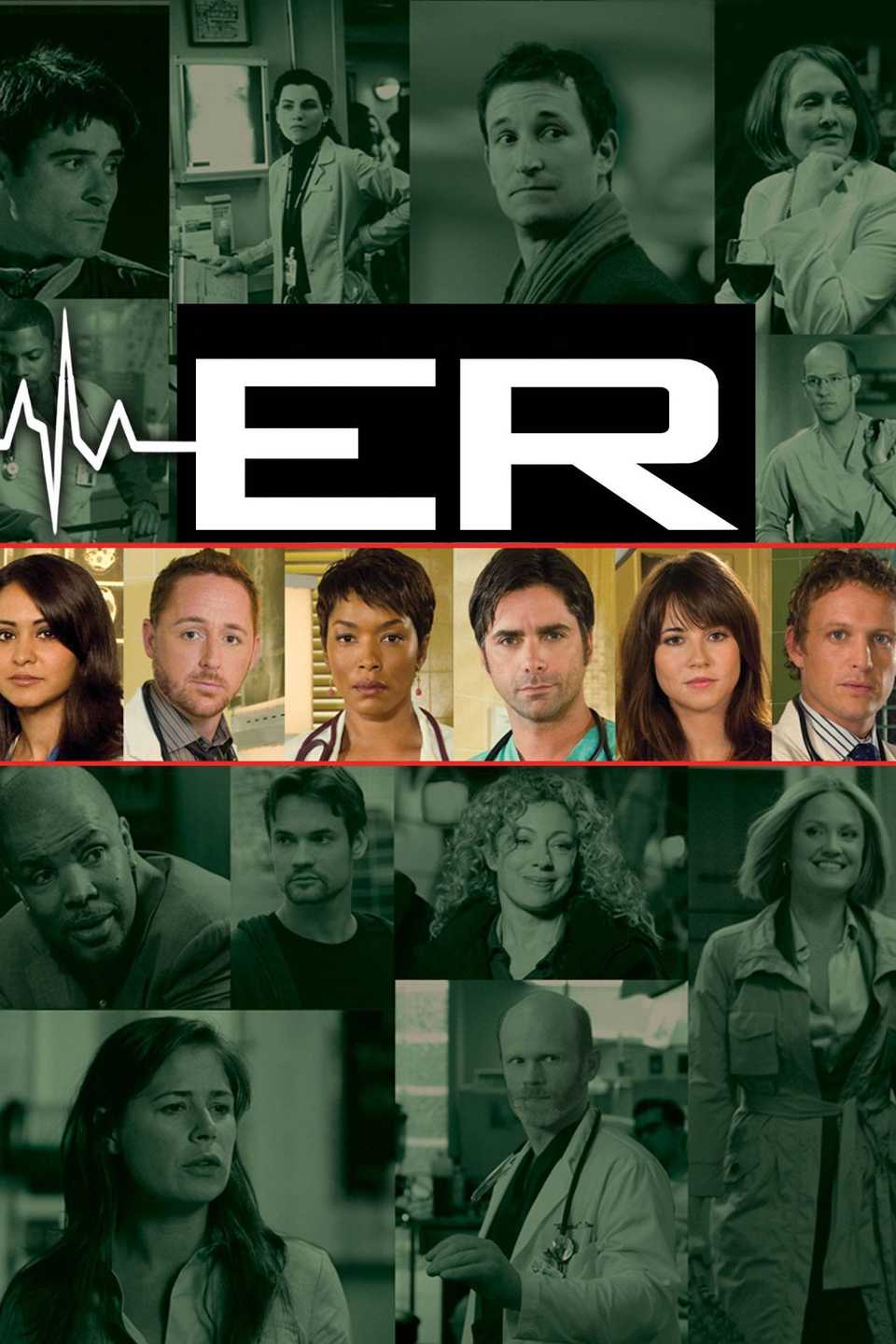
We've invoked ER's name enough, it's time to explain why every show that came before and after is chasing its glory. 15 seasons. 331 episodes. More cast members than some small nations. ER is the medical drama against which all other medical dramas are measured, found wanting, and sent to wait in the cold. Created by Michael Crichton and produced by John Wells, the show dropped viewers into the controlled chaos of Chicago's County General Hospital and essentially never let them breathe again. George Clooney's Dr. Doug Ross launched the most noteworthy career, but the show's real genius was in its willingness to cycle through talent — Clooney, Julianna Margulies, Anthony Edwards, Noah Wyle, Eriq La Salle, Maura Tierney, Goran Visnjic — without ever losing narrative momentum. The pilot alone is a 75-minute feature film's worth of controlled chaos, and the show maintained that kinetic energy for years.
The series was groundbreaking in its use of long tracking shots through the ER, a visual language that made you feel like you were sprinting alongside the gurneys. Landmark episodes are never in short supply, but "Love's Labor Lost," in which a routine delivery becomes an unbearable tragedy, remains one of the most devastating hours in television history. Even as the later seasons got a little unhinged — beware of helicopter blades — the show's core commitment to its characters and its setting never wavered. ER didn't just set the template for medical drama. It was the template.
ER
Release Date 1994 - 2009-00-00
Showrunner Michael Crichton
Directors Michael Crichton







 English (US) ·