
Adult Swim played an imperative role in bringing anime to the western audience in the early 2000’s, by airing late-night shows that mixed action, philosophy, with creative storytelling. While blockbusters like classics like Cowboy Bebop and Fullmetal Alchemist continue to dominate conversations, many other gems have slipped away despite their quality and cultural impact.
These shows brought different perspectives to genres like sci-fi, mystery, and mecha, but bigger mainstream titles have overshadowed them. This list discusses eight standout anime that aired on Adult Swim and deserve a second look or maybe a rewatch. Each one brings something distinctive to the table, from survival tales to psychological thrillers, proving that the block’s programming was far more diverse than people remember.
Blue Gender (1999)

Blue Gender is one of the most unflinching sci-fi survival series ever broadcast on Adult Swim. Premiering in Japan in 1999 and arriving on the programming block in 2003. The story centers on Yuji Kaido, a man who wakes from a long sleep to find an Earth overrun by aggressive, bug-like creatures called Blue.
The narrative blends action with dark commentary on human evolution, corporate greed, and threats. Unlike many contemporaries, the show refuses to take the characters’ heroism for granted. They suffer immense pain, including the loss of alliances, hopelessness, and failed plans.
Blue Gender was a success because the anime embraces and addresses discomfort. The refusal to sanitize war makes the series a forgotten reference for mature anime on Western television. For those who enjoy post-apocalyptic drama more than flashier modern entries, Blue Gender is a classic that will have one on the edge of their seat.
Wolf’s Rain (2003)

Wolf’s Rain is different from most anime. The plot follows four wolves that resemble humans as they search for a special place called paradise in a dying world. The story paces slowly, with beautiful music and amazing backgrounds. There’s not much action; instead, the theme emphasizes a sad, thoughtful journey through life, death, and the meaning of home.
The characters don’t dialogue much, but viewers can see their loneliness wrapped in hope. Fans say the show is one of the most beautiful and deepest on Adult Swim. Though the elements of Wolf’s Rain might not be for everyone, all the series asks for is an open mind and rapt attention.
Ghost in the Shell: Stand Alone Complex (2002–2005)

Ghost in the Shell: Stand Alone Complex stands out as the television expansion of the famous Ghost in the Shell universe. The protagonist, Major Motoko Kusanagi, leads a special task force that handles the most dangerous cyber threats in a near-future Japan where almost everyone has cybernetic enhancements. The team tackles standalone cases in many episodes.
These episodes explore heavy themes, including what makes a human when body parts become replaceable, governmental control of technology, and the accuracy of artificial intelligence developing its own will. Even now, the animation quality remains impressive, with fight scenes flowing smoothly with precise choreography.
For many viewers, the show’s balance between action and philosophy is perfect. Compared with other, more recent cyberpunk shows, Stand Alone Complex is more focused and confident. Adult Swim began airing the first season in 2004, giving many Western fans their first taste of deep, mature sci-fi anime.
Eureka Seven (2005)
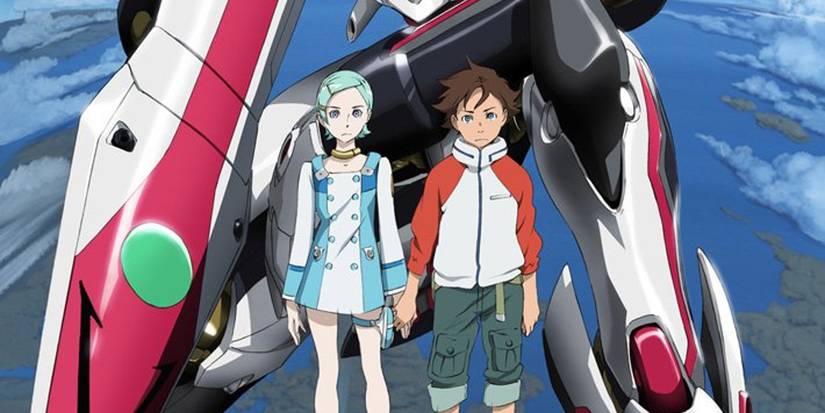
Eureka Seven is one of the best shows in Adult Swim’s library. The series mixes sky-surfing battles with a genuine, slow-building love story. The plot centers on Renton Thurston, a restless teenager, who leaves his small town to join the Gekkostate, a crew of outlaws who fly LFOs. There, he meets Eureka, and they form a deep bond.
The animation shines brightest during the flying scenes, where ships and robots glide through glowing waves against blue skies. Yoko Kanno’s soundtrack lifts every pivotal scene. Renton starts cocky and relatively immature, but he grows up through loss, friendship, and his bond with Eureka.
By episode 50, the show has developed real emotions and relationships. That patience rewards fans with one of the most satisfying endings in mecha anime. Adult Swim brought this gem to late-night viewers in 2006. Eureka Seven balances exciting action with heart in a way few other shows manage.
Witch Hunter Robin (2002)

Witch Hunter Robin aired on Adult Swim in 2004 and remains one of the era’s best supernatural thrillers. The story follows Robin Sena, a teenage girl with powerful pyrokinetic abilities, who joins STN-J, a secret organization that hunts dangerous witches in modern Japan. At first, the show feels like a case-of-the-week series, but there’s a sudden shift that transforms the show into a conspiracy thriller.
Robin is quiet, serious, and morally conflicted. She uses her powers to capture rather than kill, which puts her at odds with some teammates who prefer lethal attacks. As the season progresses, she uncovers troubling secrets about the organization she works for and questions whether witches are truly the villains. The gothic visuals, dark palette, and soundtrack create a sense of unease.
Many viewers appreciate how the show handles prejudice, power, and corruption without long speeches. The slow pacing builds real suspense, and the final episodes deliver a substantial emotional payoff. At 26 episodes, Witch Hunter Robin concludes, not overstaying, and pushing the plot further. Adult Swim fans who enjoyed the moody, thoughtful series still consider it a gem worth watching today.
FLCL (2000)

FLCL (Fooly Cooly) is a creatively chaotic masterpiece that aired on Adult Swim in 2003. As one of the most experimental anime, this six-episode OVA follows Naota Nandaba, a bored middle-school boy whose quiet life explodes when Haruko Haruhara crashes into him. She carries a giant electric guitar that doubles as a weapon, and she literally hits Naota in the head, triggering strange events.
Medical robots emerge from his forehead, giant irons attack the town, and a corporation called Medical Mechanica builds a massive factory shaped like an iron. The story mixes coming-of-age themes with action, giant robots, and symbolism about puberty, identity, and growing up.
The soundtrack, mainly by the Pillows, is legendary. Songs like “Ride on Shooting Star” and “Hybrid Rainbow” still define the series for fans. FLCL moves fast, never explains everything, and trusts the audience to connect with the energy rather than understand every detail. That raw, rebellious spirit made FLCL stand out on Adult Swim.
The Big O (1999–2003)

The Big O is about the protagonist, Roger Smith, a negotiator in Paradigm City, a place where, forty years ago, everyone lost their memories. He lives in a retro-futuristic world with shadowy streets and megadeuses, which are giant mechas that appear when the city is threatened.
Roger pilots The Big O, a black robot with an intimidating presence. He solves cases involving lost memories, rival negotiators, androids, and shadowy organizations while keeping his demeanor. The show blends episodic mysteries with a puzzle about the city’s past.
The animation style is clean and deliberate. Giant robot fights are slow and weighty rather than flashy. The show aired during Adult Swim’s golden era of eclectic anime, and the unique tone still sets The Big O apart. Mystery mecha and retro cool lovers will be pleased with The Big O, as this classic remains one of the block’s most stylish hidden classics.
Paranoia Agent (2004)

Paranoia Agent aired with a 13-episode series that begins with rumors of a boy on rollerblades assaulting people with a golden baseball bat. The assailant, nicknamed Lil’ Slugger, becomes a media sensation while victims appear everywhere. Each episode focuses on a new character whose life is under social pressure, who feels guilty, or who faces isolation.
The story explores collective anxiety, the escape into fantasy, and how modern life crushes people’s minds. One episode follows a failing manga artist, another a lonely older woman, another a bullied student. all connected through the mysterious attacker.
The animation switches between realistic and surreal styles. The music amplifies the tension perfectly. The show refuses simple answers and instead shows how fear spreads through society. By the end, the line between reality and delusion is completely blurred. Paranoia Agent is short, intelligent, and disturbing in the best way.

Paranoia Agent
Release Date 2011 - 2005-00-00
Directors Satoshi Kon
Writers Seishi Minakami
Franchise(s) Paranoia Agent






 English (US) ·