7 Worst Superhero Resurrections In Comic History, Ranked
4 weeks ago
22
Published Mar 8, 2026, 7:15 PM EDT
Nicolas Ayala is a Senior Writer for the Comics team at ScreenRant, with over five years of experience writing about Superhero media, action movies, and TV shows.
In the world of Marveland DCcomics, death is nothing but a temporary narrative hurdle that eventually leads to a dramatic return. There was once a time-honored industry adage that "no one stays dead except Bucky Barnes, Jason Todd, and Uncle Ben," but even that rule has been broken more than once.
Sometimes, though, certain characters should have remained dead for good, or at least remain dead for much longer than they did.
7
Barry Allen
Barry Allen's Return Was Necessary, But It Undermined The Best Comic Book Sacrifice
Barry Allen's death in 1985's Crisis on Infinite Earths, where he runs so fast he disintegrates while destroying the Anti-Monitor’s anti-matter cannon, is arguably the most important sacrifice in DC Comics history. Barry singlehandedly saves the multiverse, erasing himself from existence. His death also allows his nephew Wally West to go from a sidekick into DC's definitive Flash. In 2009's The Flash: Rebirth, Barry Allen retakes his role as the centerpiece of DC's Flash lore, a status he maintains to this day.
Barry Allen's permanent death gave the DC Universe a rare sense of consequence. Quite expectedly, though, his return confirmed that no sacrifice is truly final and that no successor can ever truly replace the Silver Age original. When Barry is alive, the Flash's stories regress into a cycle of Barry trying to fix the timeline he himself keeps breaking while other speedsters watch.
6
Jean Grey
Jean Grey Is The Poster Child For Undone Deaths
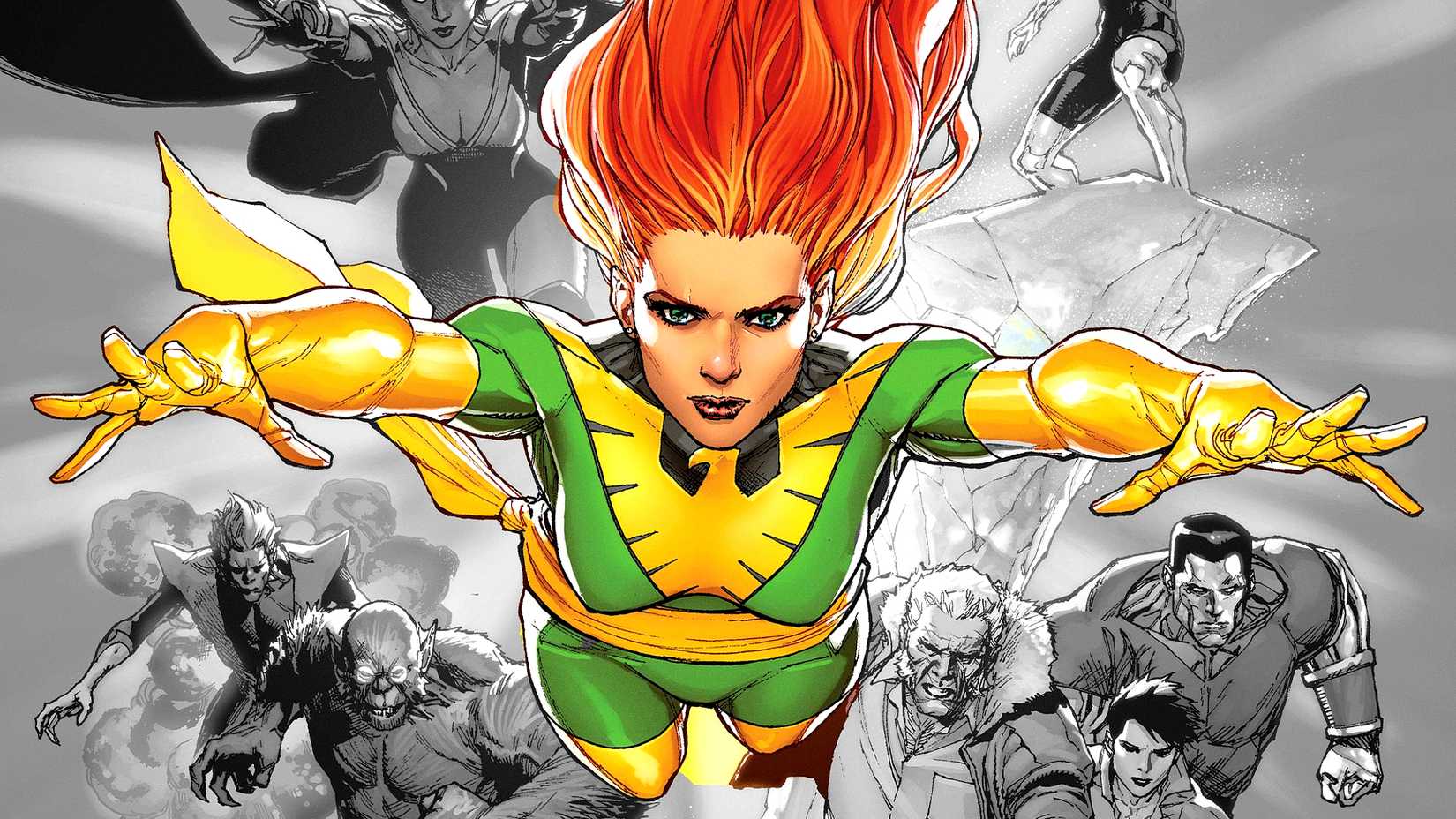
The Dark Phoenix Saga is widely known for Jean Grey's most notable death. Realizing she can't control the cosmic fire within her, Jean Grey chooses to die as a human rather than live as the Dark Phoenix. That's until the mid-'80s, when Marvel decided to bring her back for the launch of X-Factor. Through a convoluted retcon, it's revealed that the Jean who dies on the moon is merely a construct, while the real Jean has been in a cocoon at the bottom of Jamaica Bay the entire time.
Jean Grey's Dark Phoenix death is a perfect, heartbreaking finale for an already tragic mutant hero who sacrifices her own life for the greater good. It makes sense for one of the most famous X-Men to return eventually, but Jean's first major resurrection is the patient zero for comic book deaths that lose their impact. Marvel robbed the character of her redemption by undoing her sacrifice. More recent death and returns have only reinforced the idea that dying is a synonym for taking a break when it comes to Jean Grey.
5
Steve Trevor
Steve Trevor Has Overstayed His Welcome For Decades
In DC's original continuity, Steve Trevor's first death happens during Wonder Woman's lowest point, when she gives up her powers. Steve returns twice afterward, both through contrived means, before being erased from existence and then established in the present as a modern-day government agent. Despite being a permanent fixture of Wonder Woman lore, Steve Trevor has been sidelined and killed off multiple times, and his character evolution has remained stagnant for decades, at least in DC's main continuity.
When Steve Trevor is dead, Diana’s stories are forced to explore her divinity, her duty, and her relationships with her Amazon sisters. When Steve is resurrected, the story tends to regress into a "will-they-won't-they" dynamic that feels dated. Fifty-seven years after his first death, Steve Trevor feels like a remnant of Wonder Woman's Golden Age stories.
4
Hal Jordan
Hal Jordan's Return Swept His Cosmic Crimes Under The Rug
Hal Jordan’s fall from grace in Emerald Twilight is one of the most daring heel turns in DC history. After the destruction of Coast City, the greatest Green Lantern murders his fellow Corps members as Parallax. Then, in The Final Night, Hal Jordan sacrifices his life to reignite Earth’s dying sun in a stunning conclusion to a tragic arc. However, the 2004 miniseries Green Lantern: Rebirth reveals that Hal isn't actually responsible for his crimes. Instead, Hal was possessed by an ancient yellow fear parasite.
The problem with Hal’s resurrection is that it fundamentally sanitizes a character whose best story is rooted in his failure. For only a few years, Hal Jordan was known as the one major Justice League hero who succumbed to corruption and died for good. Hal's return depicts him as a victim of circumstance, which is far less interesting. On top of that, Hal's return immediately shoves Kyle Rayner back into the shadows.
3
Moira MacTaggert
Marvel Had Two Great Options To Retire Moira MacTaggert... And Chose The Third, Most Disappointing One
Decades after her original death in Uncanny X-Men #388, Jonathan Hickman's House of X / Powers of X completely reinvented Moira MacTaggert as the hope of all mutantkind. Her ten deaths became essential for the future of mutants, with Moira's final demise being make-or-break for every character with an active X-Gene. Unfortunately, as the Krakoan dream dies, Moira is resurrected as a genocidal cyborg villain, and mutantkind neither lives in peace nor is wiped out, negating the influence of Moira's reincarnation powers.
The problem with post-House of X Moira MacTaggert is that her villain turn betrays one of the best X-Men-centered ideas Marvel has put forward in decades; and worse, it strips her of her heroic roots in exchange for very little impact on herself, the X-Men, and the mutants she's supposed to save or doom. Moira MacTaggert's permanent death could have left an indelible mark on Marvel's mutants and allow House of X / Powers of X to leave the X-Men in a different place than they were before the 2019 event.
2
Kraven The Hunter
Kraven Lives Under The Shadow Of His Own Legendary Death
After almost defeating Spider-Man by burying him alive and assuming his identity, Kraven realizes he has nothing left to achieve and takes his own life in 1987's Kraven's Last Hunt. Kraven's death is a haunting and oddly triumphant conclusion for a man obsessed with the hunt. However, the 2010 storyline Grim Hunt sees Kraven’s family use a blood ritual to resurrect him against his will. Kraven returns as an immortal, brooding husk of his former self, cursed to live until he's killed by Spider-Man.
Marvel has had some deaths that frustrated fans enough to feel like shock value rather than purposeful storytelling. Which did fans hate the most?
Resurrecting Kraven destroys the closure of one of the best Spider-Man comics to date. Following Grim Hunt, Kraven has reverted to being just another recurring villain in Spider-Man’s crowded rogues' gallery. None of his individual or team appearances have come close to the heights of his eerie Last Hunt victory. Alive, Kraven the Hunter is a relic who has spent years in a series of increasingly forgettable hunts that can never hope to match the gravitas of his original exit.
1
Aunt May
Spider-Man Rewrote Reality And Ruined His Own Life To Undo The Most Necessary Death In Marvel Comics
In 1995's The Amazing Spider-Man #400, titled "The Gift," a frail but lucid Aunt May reveals she has known Peter Parker is Spider-Man for years, and she shares a quiet, heartfelt goodbye on her deathbed. Peter's last parental figure gone, meaning he's finally a fully realized adult. Yet, through a series of increasingly desperate editorial mandates that culminated in the now infamous One More Day, Marvel refused to let May stay in the grave, going as far as having Peter make a literal deal with the devil to trade his marriage for her life.
To this day, keeping Aunt May alive is arguably the single most destructive narrative decision in Spider-Man history. Marvel froze Peter Parker into a state of permanent adolescence, preventing him from ever truly growing up or facing the natural consequences of his superhero life. What's worse, the fact that Spider-Man consciously gives up his entire life to resurrect May makes him look extremely selfish for choosing his own comfort over May’s natural passing, a transition she herself would have wanted him to accept.
What comic book character would you prefer to keep permanently dead?







 English (US) ·