
 Image via Tor Books
Published Jun 26, 2026, 11:09 PM EDT
Diego Pineda has been a devout storyteller his whole life. He has self-published a fantasy novel and a book of short stories, and is actively working on publishing his second novel.
A lifelong fan of watching movies and talking about them endlessly, he writes reviews and analyses on his Instagram page dedicated to cinema, and occasionally on his blog. His favorite filmmakers are Andrei Tarkovsky and Charlie Chaplin. He loves modern Mexican cinema and thinks it's tragically underappreciated.
Other interests of Diego's include reading, gaming, roller coasters, writing reviews on his Letterboxd account (username: DPP_reviews), and going down rabbit holes of whatever topic he's interested in at any given point.
Sign in to your Collider account
It's difficult enough to write an excellent book, but it's an entirely different art unto itself to craft an equally excellent trilogy of them. As long as each book offers a feeling of self-contained satisfaction, and the author also manages to make the whole trilogy feel like an escalating, meaningful, satisfying progression, any trilogy has the potential to be deemed great.
Throughout the 21st century in particular, there have been a few noteworthy book trilogies that haven't just been great, they've been the absolute best of the last 26 years. From YA classics like the Hunger Games series to period pieces like the Wolf Hall trilogy, these have been some truly exceptional sets of novels that have demonstrated why the art of the book trilogy is still alive and well in modern times.
7 The Wolf Hall Trilogy
 Image via Henry Holt & Company
British writer Hilary Mantel was a great master of the historical fiction genre, and she demonstrated that greatly with the last three novels she ever wrote: Wolf Hall, Bring Up the Bodies, and The Mirror & the Light. Set during the 16th century, this trilogy is a sweeping saga chronicling the rise and fall of Thomas Cromwell (which is why this is also known as the Thomas Cromwell trilogy), the son of a blacksmith who became the chief minister to King Henry VIII.
Anchored by Mantel's beautifully vivid prose and a brilliantly creative reinvention of the Tudor era.
Before it became one of the best miniseries worth watching over and over, Wolf Hall was the greatest historical fiction trilogy of the 21st century. Anchored by Mantel's beautifully vivid prose and a brilliantly creative reinvention of the Tudor era, the trilogy masterfully strikes the perfect balance between mythologizing Cromwell and also humanizing him with unexpected depth. It's an entirely unique approach to the genre that makes court politics feel like the most gripping, modern-feeling source of drama imaginable.
6 The MaddAddam Trilogy
 Image via McClelland and Stewart Ltd.
Saying that novelist, poet, and literary critic Margaret Atwood is one of the greatest and most important Canadian writers of the 20th and 21st centuries would be quite an understatement. But it's not all The Handmaid's Tale with Atwood; there's also the MaddAddam trilogy, a speculative fiction and adventure romance trilogy (which technically also counts as sci-fi, even if Atwood rejects the label) about a dystopian near-future Earth that's been decimated by climate collapse.
From Oryx and Crake to The Year of the Flood to the eponymous MaddAddam, the trilogy is a wonderfully human yet bitingly satirical critique of genetic engineering and unchecked capitalist greed. We're talking about three of the greatest climate-fiction novels of the 21st century, a trio of books bolstered by some exceptional worldbuilding, which present a sense of hope readers don't often find in the dystopian genre.
5 The Infernal Devices Trilogy
 Image via Margaret K. McElderry Books
With the unprecedented success of J. K. Rowling's Harry Potter series, the 21st century saw an unprecedented boom in the Young Adult genre across all media, including literature. From this boom came Cassandra Clare's The Mortal Instruments series, six of the most widely beloved YA fantasy novels of the last two decades. Before she finished the series, though, Clare wrote the Infernal Devices trilogy, a prequel series to the Mortal Instruments saga.
To this day, many fantasy fans still deem the Infernal Devices series as not just considerably superior to the original saga, but also three of the best YA books of their era. With its tremendous emotional depth, richly atmospheric Victorian setting, and one of the best love triangles in the history of the YA fantasy genre, Clockwork Angel, Clockwork Prince, and Clockwork Princess are worth reading even for adult readers. With a more mature writing style than The Mortal Instruments, as well as an emotionally stirring exploration of themes of grief and sacrifice that should resonate with anyone, every reader should love this trilogy, no matter their age.
4 The Hunger Games Trilogy
At this point, with it being such a tremendously successful multimedia franchise, there's barely any need to even introduce Suzanne Collins' Hunger Games trilogy. It should hardly be surprising that the series, which originated and spearheaded the YA dystopia fad of the 2010s, consistently remained the best of the bunch. Still, all that fame and popularity can, at times, make people forget that this is actually a legitimately exceptionally written trilogy.
There's an argument to be made that the trilogy got slightly weaker as it went on, but Catching Fire and Mockingjay are both still a pair of incredible sequels. There are only a handful of dystopian books better than The Hunger Games, and when it comes to dystopian book trilogies? It doesn't get much more iconic than this one. With its high-stakes, adrenaline-pumping action, chillingly relevant critiques of authoritarian power and the media's exploitation of the public, and the profoundly compelling character writing, these three books are essential reading for all those who love the dystopian genre.
3 The Remembrance of Earth's Past Trilogy
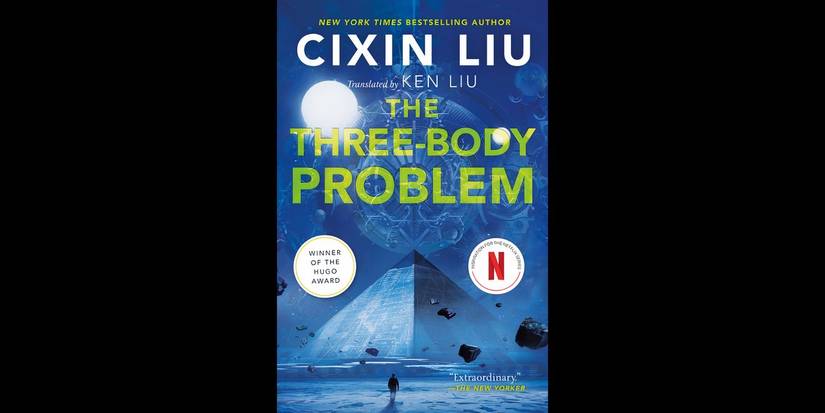 Image via Tor Books
It's not only the English-speaking world that has produced exceptional book trilogies throughout the last 26 years. Case in point: Cixin Liu's Chinese series Remembrance of Earth's Past, consisting of The Three-Body Problem, The Dark Forest, and Death's End. It was the inspiration for one of the most near-perfect hard sci-fi shows on Netflix, and itself fittingly consists of three books that wonderfully blend hard and soft science fiction elements. Sometimes read as an allegory for China-United States relations, the series is about humanity's preparation for the invasion of an alien threat.
Alien invasion stories are aplenty, but few reach the awe-inspiring, downright epic cosmic scale that the Remembrance of Earth's Past trilogy benefits from. Mind-bending, sharply political, and boldly philosophical, it's a series that perfectly lends itself to some of the most profound analyses that one will get from any 21st-century book trilogy. It's a must-read for all those who enjoy literary science fiction, and even though its characters may sometimes feel like somewhat shallow vessels for the plot, the plot itself is so deliriously entertaining and emotionally compelling that it's easy to forgive that as a feature, not necessarily a bug.
2 The Broken Earth Trilogy
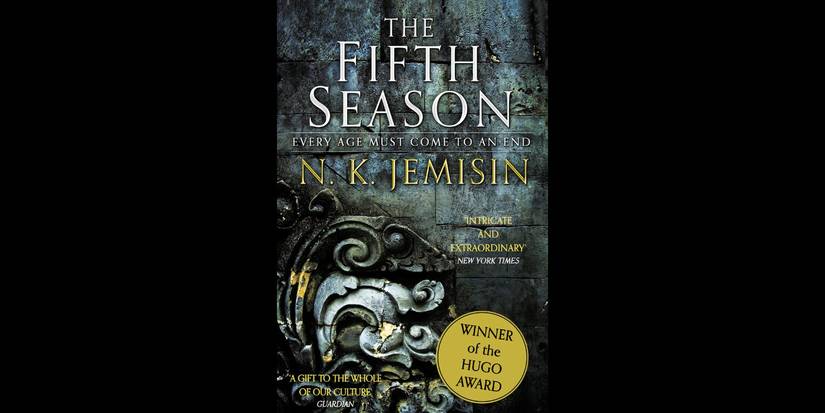 Image via Orbit
When science fiction meets fantasy in a way that blurs the line between both genres, along the same vein of the kind of magic that Star Wars achieves, it becomes a genre known as science fantasy—and N. K. Jemisin's The Broken Earth is one of the best science fantasy book trilogies in history, let alone of the 21st century. It's an epic post-apocalyptic tale set on a supercontinent called the Stillness, where humanity struggles to survive cataclysmic natural disasters that occur periodically.
The Fifth Season won the Hugo Award for Best Novel, as did its first sequel, The Obelisk Gate. The Stone Sky may not have achieved the same honor, but it is the highest-rated book of the trilogy on Goodreads, and isn't the favor of the court of public opinion the ultimate award? In any case, these are three of the best sci-fi books of the last 10 years. With Jemisin's unique eye for breathtaking world-building, instantly captivating imagination, and ambitious narrative structure, it's no wonder that the Broken Earth series has received so much praise. Jemisin is well-known for her bold artistic choices, and there are plenty of those here (including a particular POV being narrated in second person), making this essential reading for sci-fi fans.
Collider Exclusive · Star Wars Quiz
Which Force User
Are You?
Light Side · Dark Side · Or Somewhere Between
The Force is not a binary. It is a spectrum — from the serene halls of the Jedi Temple to the shadowed corridors of Sith space. Ten questions will reveal where you truly fall. The Force has always known. Now you will too.
🔵Jedi Master
🟡Padawan
🔴Sith Lord
⚫Inquisitor
⚪Grey Jedi
IGNITE YOUR SABER →
01
What is the Force to you? Your relationship with the Force defines everything else.
AA living energy I must be worthy of — it is not mine to control. BSomething vast and mysterious I'm only beginning to understand. CNeither light nor dark — just a current I choose to ride. DPower. Pure and simple. The strong take it; the weak don't.
NEXT QUESTION →
02
When you feel strong emotions — anger, grief, love — what do you do? The Jedi suppress. The Sith feed. Others choose differently.
AAcknowledge them, then release them. Attachment leads to suffering. BFeel them fully, then decide what to do — they're not the enemy. CBury them. Emotion is a liability I can't afford to indulge. DUse them. Passion is the engine of the dark side for good reason.
NEXT QUESTION →
03
The Jedi Council gives you an order you disagree with. You: How you handle authority reveals your alignment.
AFollow it. The Council's wisdom surpasses my own perspective. BVoice my objection clearly, then defer to the decision. CComply outwardly while doing what I think is right. DIgnore it. The strong don't answer to committees.
NEXT QUESTION →
04
You are offered forbidden knowledge that could give you enormous power. The cost is crossing a moral line. You: The dark side's pull is never more than a choice away.
ARefuse without hesitation. There is no cost worth that price. BWeigh it carefully — sometimes darkness holds real answers. CFeel the pull but walk away — for now. DAccept it. Power justifies the method used to obtain it.
NEXT QUESTION →
05
Your approach to training and learning is: A student's habits become a master's character.
ADedicated but humble. There is always more to learn from my masters. BRigorous and patient. Mastery is earned through years of discipline. CEclectic — I draw from every tradition, not just one. DRelentless and brutal. Pain accelerates growth. Rest is weakness.
NEXT QUESTION →
06
In a duel, your lightsaber fighting style reflects: Combat is the purest expression of a Force user's philosophy.
ADefense and composure — I wait for my opponent to overcommit. BFast and instinctive — I trust the Force to guide my movements. CUnpredictable — I blend styles to keep enemies off-balance. DOverwhelming aggression — I end fights before they begin.
NEXT QUESTION →
07
A defeated enemy lies at your feet, powerless. You: Mercy — or its absence — is the truest test of alignment.
AStrike them down — compassion toward enemies is naïve and costly. BNeutralize them permanently. I can't afford loose ends. CSpare them if I can — but stay clear-eyed about the risks. DOffer them a chance to surrender. Every being deserves that.
NEXT QUESTION →
08
The Jedi Code forbids attachment. Your honest view on love and bonds: The source of the greatest falls in the galaxy.
AThe Code is right. Attachment clouds judgment and invites suffering. BLove is not a weakness — the Jedi Code got this one wrong. CI have no attachment — only loyalty to my master's mission. DI feel it deeply but struggle to reconcile it with my training.
NEXT QUESTION →
09
Why do you use the Force at all? What's the point? Purpose is the difference between a knight and a weapon.
ATo learn. I'm still figuring out what I'm capable of. BTo protect and serve. The Force is a responsibility, not a gift. CTo survive — and maybe carve out something worth having. DTo dominate. Strength demands to be expressed, not contained.
NEXT QUESTION →
10
At the final moment — light side or dark side pulling at you — what wins? In the end, every Force user faces this moment. What does yours look like?
AThe light. I choose peace, even when darkness would be easier. BNeither fully — I carve my own path through the middle. CWhoever I serve — my loyalty defines me more than my morality. DThe dark. Power is the only thing that's ever actually been real.
REVEAL MY ALIGNMENT →
Your Alignment Has Been Determined Your Place in the Force
The scores below reveal how the Force sees you. Your highest number is your true alignment. Read on to understand what that means — and what it will cost you.
🔵 Jedi Master
🟡 Padawan
🔴 Sith Lord
⚫ Inquisitor
⚪ Grey Jedi
Disciplined, compassionate, and deeply attuned to the living Force, you have walked the path long enough to understand its demands — and accept them. You lead not through authority alone, but through example. You have felt the pull of the dark side and chosen otherwise, every time. That is not certainty. That is courage.
You are earnest, powerful, and brimming with potential — and you know it, which is both your greatest asset and your most dangerous flaw. You act before you think, trust your gut over your training, and sometimes confuse impatience for bravery. The Masters see something in you, though. The question isn't whether you have what it takes — it's whether you'll be patient enough to find out.
You are not simply dangerous — you are certain, and that is worse. You have decided what the galaxy needs, and you have decided you are the one to deliver it. Your power is genuine and formidable, earned through sacrifice that would have broken lesser beings. But examine your victories carefully. Every Sith believed their cause was righteous. The dark side's cruelest trick is that it agrees with you.
You were forged in fire and reshaped by those who found you at your lowest. You serve, because service gave you structure when you had none. Your allegiance is not to an ideology — it is to survival and to the master who gave you purpose. But there is something buried beneath the conditioning. The Jedi you hunt? You recognize them. Because you remember what it felt like before the choice was taken from you.
You have looked at the Jedi Code and the Sith Code and found both of them incomplete. You walk the line not out of indecision but out of conviction — you genuinely believe both extremes miss something essential. The Jedi don't fully trust you. The Sith think you're wasting your potential. They're both partially right. But so are you.
↻ RETAKE THE QUIZ
1 Era One of Mistborn
 Image via Brandon Sanderson / Tor Books
Those who have grown tired of the likes of George R. R. Martin and Patrick Rothfuss seeming unable to finish the book series that they've been promising for well over a decade ought to take a look at Brandon Sanderson. He is easily one of the greatest fantasy authors of modern times, and few of his works demonstrate that better than the Mistborn series. The books are organized into four eras (only two of which have been completed up to this point) with large time jumps between each other, making it so that each era feels entirely like its own series. Era One of Mistborn is composed of The Final Empire, The Well of Ascension, and The Hero of Ages, and it feels like a completely self-contained story as high-quality as any of Sanderson's previous and future masterpieces.
It's one of the few fantasy book series better than Harry Potter, the kind that must be read in order to be truly believed. It's a masterpiece of modern fantasy unlike any other, with one of the best hard magic systems ever written, a powerful subversion of the "Dark Lord" trope, and a mind-blowing ending that recontextualizes the whole thing and makes a re-read instantly tempting. It's an exquisitely creative work of genre literature that always takes full advantage of its fascinatingly original premise, full of the same kind of slow-building tension and airtight structure that all fans of Sanderson have come to expect. Some have called Sanderson's prose here overly simplistic, but those who appreciate highly accessible and functional language over unnecessarily flowery styles are bound to find Mistborn irresistible.



 English (US) ·