
 Image via NBC

Published Apr 2, 2026, 2:58 PM EDT
Lloyd 'Happy Trails' Farley: the man, the myth, the legend. What can be said about this amazing - and humble - man that hasn't been said before? Or, more accurately, what can be said in public? Born in Calgary, Alberta, Canada, Lloyd is a master of puns and a humorist, who has authored one pun book to date - Pun and Grimeish Mint - and is working on a second. His time with Collider has allowed Lloyd's passion for writing to explode, with nearly 1,000 articles to his name that have been published on the site, with his favorite articles being the ones that allow for his sense of humor to shine. Lloyd also holds fast to the belief that all of life's problems can be answered by The Simpsons, Star Wars, and/or The Lion King. You can read more about Lloyd on his website, or follow his Facebook page and join the Llama Llegion. Happy trails!
Sign in to your Collider account
Over the years, Star Trek: The Original Series' Captain Kirk (William Shatner) has earned a reputation as a womanizer and a man of action. While the former isn't an entirely fair statement, there's little doubt that Kirk is willing to do whatever it takes for the sake of his crew. Sure, he may be down from time to time, but Kirk's never out of a fight, and he rarely finds himself not holding the upper hand at some point over the course of a storyline. But 57 years ago, one of the series' most crushing and best episodes, "The Empath," brought Captain Kirk to a place he's rarely been — at a distinct disadvantage — while showing off a side to the series that hadn't been seen before.
'Star Trek's "The Empath" Has an Ominous Beginning
The USS Enterprise is sent to Minara II, a planet whose star is about to go supernova, on a mission to extricate Federation research personnel from the planet's surface. Captain Kirk, Dr. McCoy (DeForest Kelley), and Science Officer Spock (Leonard Nimoy) beam to the surface, with Kirk telling Scotty (James Doohan) to move the Enterprise some distance away to keep it from being damaged by solar activity in the area. However, when they enter the research station, there is no one there, and a recording shows that the two men, who were there as recently as three months ago, simply disappeared in a flash.
Collider Exclusive · Sci-Fi Survival Quiz Which Sci-Fi World Would You Survive? The Matrix · Mad Max · Blade Runner · Dune · Star Wars
Five universes. Five completely different ways the future went wrong — or sideways, or up in flames. Only one of them is the world your instincts were built for. Eight questions will figure out which dystopia, galaxy, or desert wasteland you'd actually make it out of alive.
💊The Matrix
🔥Mad Max
🌧️Blade Runner
🏜️Dune
🚀Star Wars
TEST YOUR SURVIVAL →
01
You sense something is deeply wrong with the world around you. What do you do? The first instinct is often the truest one.
APull on every thread until I understand the system — then figure out how to break it. BStop asking questions and start stockpiling — food, fuel, weapons. Questions don't keep you alive. CKeep my head down, observe carefully, and trust no one until I know who's pulling the strings. DStudy the patterns. Every system has a rhythm — learn it, and you learn how to survive it. EFind the people fighting back and join them. You can't fix a broken galaxy alone.
NEXT QUESTION →
02
In a world of scarcity, what resource do you guard most fiercely? What we protect reveals what we believe survival actually requires.
AKnowledge. If you understand the system, you don't need resources — you can generate them. BFuel. Everything else — movement, power, escape — runs on it. CTrust. In a world of fakes and informants, a truly reliable ally is rarer than any commodity. DWater. And after water, information — the two things empires are truly built on. EShips and credits. The galaxy is big — you survive it by being able to move through it freely.
NEXT QUESTION →
03
What kind of threat keeps you up at night? Fear is useful data — if you're honest about what you're actually afraid of.
AThat reality itself is a lie — that everything I experience has been constructed to keep me compliant. BA raid. No warning, no mercy — just the roar of engines and then nothing left. CBeing identified. Once someone with power decides you're a problem, you're already out of time. DBeing outmanoeuvred — losing a political game I didn't even know I was playing. EThe Empire tightening its grip until there's nowhere left to run.
NEXT QUESTION →
04
How do you deal with authority you don't trust? Every dystopia has a power structure. Your approach to it determines everything.
ASubvert it from the inside — learn its rules well enough to weaponise them against it. BIgnore it and stay out of its reach. The further from any power structure, the better. CAppear to comply while doing exactly what I need to do. Visibility is the enemy. DManoeuvre within it carefully. You can't beat a system you refuse to understand. EResist openly when I have to. Some things are worth the risk of being seen.
NEXT QUESTION →
05
Which environment could you actually endure long-term? Survival isn't just tactical — it's physical, psychological, and very much about where you are.
AUnderground bunkers and server rooms — cramped, artificial, but with access to everything that matters. BOpen wasteland — brutal sun, no shelter, constant movement. At least the threat is honest. CA dense, rain-soaked city where you can disappear into the crowd and nobody asks questions. DMerciless desert — extreme heat, no water, and something enormous living beneath the sand. EThe fringe — backwater planets and busy spaceports where the Empire's attention rarely reaches.
NEXT QUESTION →
06
Who do you want in your corner when things fall apart? The company you keep is the clearest signal of who you actually are.
AA tight crew of believers who've seen behind the curtain and have nothing left to lose. BOne or two people I'd trust with my life. Any more than that and someone talks. CNobody, ideally. Alliances are liabilities. I work alone unless I have no choice. DA community bound by shared hardship and mutual survival — people who need each other to last. EA ragtag team with wildly different skills and total commitment when it counts.
NEXT QUESTION →
07
Where do you draw the line — if you draw one at all? Every survivor eventually faces a moment that tests what they're actually made of.
AI won't harm the innocent — even the ones who'd report me without hesitation. BI do what I have to to protect the people I've chosen. Everything else is negotiable. CThe line shifts depending on who's asking and what's at stake. DI draw a long-term line — nothing that compromises my people's future, even if it'd help now. ESome lines, once crossed, can't be uncrossed. I know which ones they are.
NEXT QUESTION →
08
What would actually make survival worth it? Staying alive is one thing. Having a reason to is another.
AWaking others up — dismantling the illusion so no one else has to live inside it. BFinding somewhere — or someone — worth protecting. A reason to keep moving. CAnswers. Understanding what I am, what any of this means, before time runs out. DLegacy — shaping the future in a way that outlasts me by generations. EFreedom — for myself, for others, for every world still living under someone else's boot.
REVEAL MY WORLD →
Your Fate Has Been Calculated You'd Survive In…
Your answers point to the world your instincts were built for. This is the universe your temperament, your survival instincts, and your particular brand of stubbornness were made for.
The Matrix
You took the red pill a long time ago — probably before anyone offered it to you. You're a systems thinker who can't help but notice the seams in things.
- You're drawn to understanding how the system works before figuring out how to break it.
- You'd find the Resistance, or it would find you — your instinct for spotting constructed realities is the machines' worst nightmare.
- You function best when you have access to information and the freedom to act on it.
- The Matrix built an airtight prison. You'd be the one probing the walls for the door.
Mad Max
The wasteland doesn't reward the clever or the well-connected — it rewards those who are hard to kill and harder to break. That's you.
- You don't need comfort, community, or a cause larger than the next horizon.
- You need a vehicle, a clear threat, and enough fuel to outrun it — and you're good at all three.
- You are unsentimental enough to survive that world, and decent enough — just barely — to be something more than another raider.
- In the wasteland, that distinction is everything.
Blade Runner
You'd survive here because you know how to exist in moral grey areas without losing yourself completely.
- You read people accurately, keep your circle small, and ask the questions others prefer not to answer.
- In a city where humanity is a legal designation rather than a feeling, you hold onto something that keeps you functional.
- You're not a hero. But you're not lost, either.
- In Blade Runner's world, that distinction is everything.
Dune
Arrakis is the most hostile environment in the known universe — and you are precisely the kind of person it rewards.
- Patience, discipline, and political awareness are your core strengths — and on Arrakis, they're survival tools.
- You understand that the long game matters more than any single victory.
- Others come to Dune and are consumed by it. You'd learn its logic and earn its respect.
- In time, you wouldn't just survive Arrakis — you'd begin to reshape it.
Star Wars
The galaxy far, far away is vast, loud, and in a constant state of violent political upheaval — and you wouldn't have it any other way.
- You find meaning in being part of something larger than yourself — a cause, a crew, a rebellion.
- You'd gravitate toward the Rebellion, or the fringes, or whatever pocket of the galaxy still believes the Empire's grip can be broken.
- You fight — not because you have to, but because standing aside isn't something you're capable of.
- In Star Wars, that willingness is what makes all the difference.
↻ RETAKE THE QUIZ
Suddenly, they, too, disappear, only to reappear in an underground chamber, trapped alongside a beautiful young woman. The woman, whom McCoy names "Gem" (Kathryn Hays), is a mute, and as such is unable to explain their circumstances. Two aliens appear, Vians named Lal (Alan Bergmann) and Thann (Willard Sage), who injure Kirk before they quickly leave again. It's only then that they discover that Gem is an empath after she absorbs Kirk's injuries, taking them on herself before she is quickly healed.
Captain Kirk and Crew Are Lab Rats in the 'Star Trek' Episode "The Empath"
 Image via NBC
The four scour the area and find a room nearby, filled with machinery, computer systems, and the bodies of the two researchers, grotesquely posed in transparent cylinders. Rather disturbingly, they also discover three additional cylinders that, literally, have their names on them. Lal appears, and as Kirk keeps him occupied, Spock takes Lal down with a Vulcan nerve pinch. The four escape to the surface, where they are greeted by Scotty and a landing party, there to rescue them.
Only there is no Scotty, no landing party. It's a mirage generated by the Vians, who then transport Kirk and Gem to their lab. There, they hang Kirk by his wrists, shirtless, and torture him relentlessly, explaining that they did the same to the researchers while examining them, only they died from their fears. Kirk, badly injured, and Gem are transported back to the chamber with McCoy and Spock. There's nothing that McCoy can do to mend his friend, but Gem can, and at McCoy's pleadings, she, somewhat reluctantly, heals Kirk's wounds.

Related
The Vians reappear with news. The good news: they are happy with one test subject. The bad news: there has to be one test subject. McCoy ensures that he becomes the one test subject by sedating both Kirk and Spock, and he and Gem are taken back to the Vians' lab. There, they torture McCoy to the point of near death, which is where Kirk and Spock find him when they arrive. They are unable to help, however, as they are stopped by a force field, and all they can do is watch as Gem attempts to heal McCoy. Only this time, Gem is more reluctant to take on all of McCoy's injuries, with Spock speculating that she's afraid of dying herself if she does.
The Vians back up Spock's assertions, saying that the entire setup is a test of Gem as a representative of her people. The Vians have the ability to rescue only one race in the area from the impending supernova, and if they find that Gem is willing to sacrifice her own life for that of another, they will choose hers. Kirk confronts the Vians, pleading with them to spare both McCoy and Gem, and accuses them of lacking any love or compassion — the very things they are testing Gem for. The Vians recognize the truth in Kirk's summations, and are quick to heal both McCoy and Gem before disappearing with Gem on the promise that they will save her people.
'Star Trek's "The Empath" Shows a Decidedly Different Side to the Classic Sci-Fi Series
Star Trek: The Original Series' "The Empath" is an episode unlike most and serves as a unique entry in the series' original run of 79 episodes. It starts even before the iconic opening credits sequence, with the core three of Kirk, McCoy, and Spock confronted by a force that defeats them within moments of the episode's beginning. That itself is arguably rare, but where they end up certainly is, a stark, black room devoid of, well, anything, unlike the sets we're used to seeing that are often colorful and visually imaginative. The set, reminiscent of a stage play, works well for the story, lending an eeriness and the sense of being trapped right off the bat (a brief but powerful shot of the three from above lends itself to that "lab rat" element). The introduction of Gem, too, is stage-dramatic, with Hays over-gesturing to drive the point that she is mute and unable to express who (or what) she is. Hays drags the viewer into her emotional struggle without saying a word.
Seeing Kirk being tortured is unsettling, with torture itself rarely used as a plot device in the series, but seeing the aftermath of McCoy's torture is crushing. Whoever did makeup that day on set put on a master class in the art, with McCoy looking absolutely beaten and sickly, heart-crushingly so. It adds to the "will she/won't she" of Gem's struggle with whether to heal McCoy, being placed in an unbearable situation where she is being forced to be Christ-like to save her own people. And Kirk, so used to coming out on top and acting on impulse, is rendered literally helpless as it all goes down.
Then there are the Vians themselves. They are unique among the alien races Captain Kirk and crew have ever come across, before or since. Despite their indifference to the pain they're inflicting, the Vians aren't evil. They legitimately want to do what's right, and help out the race most deserving of it, making it difficult to place them in a white hat/black hat context. And when Kirk calls them out for their behavior, they don't blast him to smithereens, but rather take and learn from what he says, effectively turning them from villains into heroes with a renewed purpose.
Kirk and Spock Have Unique Character Moments in This 'Star Trek' Episode
 Image via NBC
"The Empath" also showcases new sides to the main characters. We've seen Kirk shirtless, but to see him work from a place of such disadvantage brings out a depth in him that we don't often see. For McCoy, to see him willingly sacrifice himself shows a strength of character we know is in him, but only see sparingly. He's the one that takes charge and defies commands, again something we rarely see.
Oddly enough, the funniest moment belongs to Spock. Throughout the episode, he's trying to figure out how they can escape and what it is the Vians are trying to do. (Typical Spock stuff.) But back on the Enterprise, when Scotty cracks a joke about telling the Vulcans how the Vians had to learn to embrace love and compassion over logic, and Kirk asks Spock if he would bring it up, Spock responds with, "I shall certainly give the thought all the consideration it is due." It's a rare, genuinely funny moment from Spock, found in "The Empath," an episode of dangers, weaknesses, emotion, and pure suspense that stands apart from its kin — in a good way.
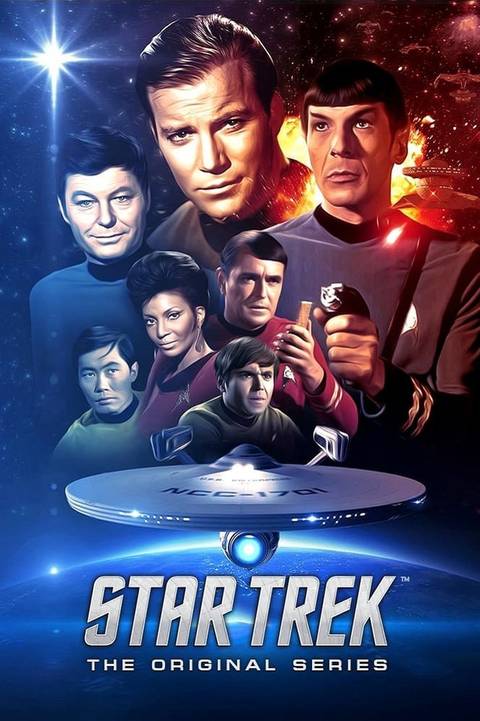
Release Date 1966 - 1969-00-00
Showrunner Gene Roddenberry
Directors Marc Daniels, Joseph Pevney, Ralph Senensky, Vincent McEveety, Herb Wallerstein, Jud Taylor, Marvin J. Chomsky, David Alexander, Gerd Oswald, Herschel Daugherty, James Goldstone, Robert Butler, Anton Leader, Gene Nelson, Harvey Hart, Herbert Kenwith, James Komack, John Erman, John Newland, Joseph Sargent, Lawrence Dobkin, Leo Penn, Michael O'Herlihy, Murray Golden
Writers D.C. Fontana, Jerome Bixby, Arthur Heinemann, David Gerrold, Jerry Sohl, Oliver Crawford, Robert Bloch, David P. Harmon, Don Ingalls, Paul Schneider, Shimon Wincelberg, Steven W. Carabatsos, Theodore Sturgeon, Jean Lisette Aroeste, Art Wallace, Adrian Spies, Barry Trivers, Don Mankiewicz, Edward J. Lakso, Fredric Brown, George Clayton Johnson, George F. Slavin, Gilbert Ralston, Harlan Ellison





 English (US) ·