

Published Feb 22, 2026, 7:00 AM EST
Ambrose Tardive is an editor on ScreenRant's Comics team. Over the past two years, he has developed into the internet's foremost authority on The Far Side. Outside of his work for ScreenRant, Ambrose works as an Adjunct English Instructor.
From M*A*S*H's most heartbreaking scene to the final seconds of HBO's The Sopranos, the entries below rank high among the most defining moments in TV history. The moments that left America collectively bawling their eyes out, or screaming in horror, or asking, "wait, that can't be it, can it?"
TV used to be defined by "water cooler moments," the scenes everyone was talking about at work the next day. These are five of the GOAT water cooler moments that stunned America, that everyone had to have an opinion about.
TV discourse might not work the same today, but these scenes still set the high bar every series wants to reach for.
M*A*S*H, The Death Of Henry Blake
Occurred In "Abyssinia, Henry"; M*A*S*H Season 3, Episode 24; First Aired March 18, 1975
M*A*S*H was a risk-taking sitcom from the start. After all, it was set in an active war zone. And it didn't shy away from satirizing America's involvement in two successive controversial overseas conflicts. This led directly to the show's most devastating moment, the death of Lieutenant Colonel Henry Blake.
M*A*S*H was set during the Korean War, but it was very much also a commentary on the war in Vietnam, which was winding down when the show premiered in 1972.
Blake was the beloved commanding officer of the 4077th Mobile Army Surgical Hospital through the show's first three seasons. That is, until actor McLean Stevenson decided to leave the show. This gave M*A*S*H's writers the chance to do something truly unprecedented. Kill off a sitcom's main character.
The scene where Radar announces Blake's death is genuinely moving. This gave rise to an urban legend that the M*A*S*H cast wasn't informed it was coming before the scene was shot. It was a turning point for M*A*S*H, and a pivotal moment in TV history that completely pushed the boundaries of what was possible on TV.
Dallas, JR Gets Shot
Occurred In "A House Divided"; Dallas Season 3, Episode 25; First Aired March 21, 1980

Dallas was a prime-time soap opera that aired for fourteen seasons from 1979 through 1991. Its third season finale spawned one of the earliest examples of America getting full-blown obsessed with something that happened on a TV show, when an unseen attacker shot the villainous character JR Ewing in the closing moments of the episode.
The result was an analog meme that dominated pop culture for an entire summer and fall: "Who shot JR?" Dallas' network, CBS, leaned into the question, plastering it on advertisements and spinning it off into merchandise. When Dallas returned for its fourth-season premiere in November, a staggering 90 million viewers tuned in to finally get the answer.
That number was eclipsed by the M*A*S*H series finale just a few years later, but it remains astronomical compared to viewership numbers in the television era. "Who shot JR?" proved that TV could completely dominate pop culture, and it is in the conversation for the greatest television event in history.
The X-Files, “Home” Redefines TV Horror
"Home", X-Files Season 4, Episode 2; First Aired October 11, 1996
The X-Files was a boundary-pushing show for the 1990s, helping to revitalize network TV horror and bring about its modern era. X-Files paved the way for Buffy, which led to Supernatural, each of which in turn helped make television horror what it is today. Occasionally, the show pushed the boundaries too far, most notoriously with "Home."
For a series that was usually spooky, creepy, or unnerving at best, "Home" was straight-up terrifying. Its stomach-turning story and imagery earned it a TV-MA rating, and it prevented Fox from airing it in reruns for several years after it first aired. It was an episode the show's critics could point to as an example of its worst impulses.
And by today's TV standards and practices it's likely to seem pretty tame. The X-Files might have opened the door to intense horror on TV, but plenty of subsequent shows have dynamited the wall surrounding the door. Still, in 1996, it captivated viewers, and stirred at lot of conversation the next day.
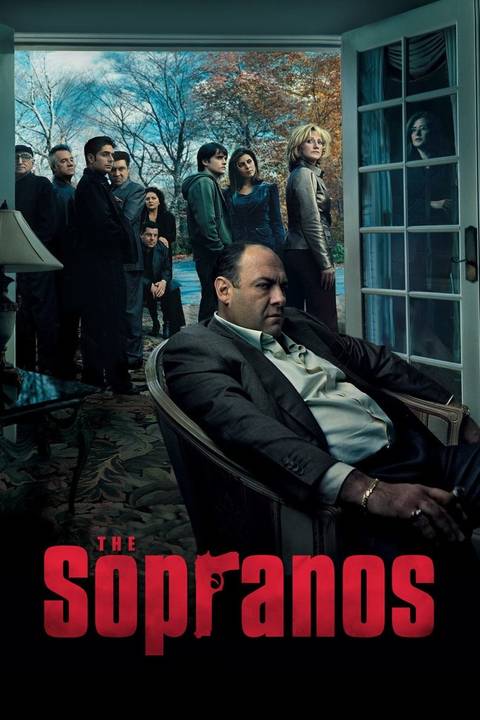
The Sopranos, The Infamous Cut To Black
Occurred In "Made In America"; The Sopranos Season 6, Episode 21; First Aired June 10, 2007

Nearly twenty years after the fact, it's hard to convey what it was like watching The Sopranos' finale in real time. The final cut-to-black gets all the attention now, but every second of the final scene at the diner, set to Journey's "Don't Stop Believin'," was edge-of-your-seat TV unlike anything that had come before.
The remarkable thing about "Made in America," the last episode of The Sopranos, is that it proceeds just like any other episode of the show. Fans wanted a big climactic ending, a closing note of resolution that would put the entire series in perspective. And creator David Chase said, "well, that was never what this show was."
So, the story just keeps going, until suddenly it stops. Mid-scene. The Sopranos' contemporary The Wire is more frequently compared to "the great American novel," but The Sopranos has the more novelistic ending. The Wire ends on a montage. The Sopranos ends mid-sentence, a great work of art abandoned, rather than finished.
Breaking Bad, The Death Of Hank Schrader
Occurred In "Ozymandias," Breaking Bad Season 5, Episode 14; First Aired September 15, 2013
Breaking Bad held off having Hank find out Walter White was Heisenberg for as long as it could. When he finally learned the truth, it was the beginning of the endgame for Vince Gilligan's breakout AMC series. And while some people believed Hank would be the ultimate hero of the show, just as many predicted his death.
The latter prognosticators turned out to be right. Yet no one was able to predict how it went down. Breaking Bad Season 5 kept viewers guessing in a way that few modern shows, at least those not made by Vince Gilligan, are able to replicate. Even when the destination proved obvious, the journey was always a rollercoaster ride.
"Ozymandias" is the most talked-about episode of Breaking Bad to this day, and the deaths of Hank Schrader and his partner Steve Gomez were the centerpiece of the episode. Breaking Bad was the last of a generation of shows that everyone was talking about at once, the last heir to The Sopranos, M*A*S*H, and more.
Release Date 1999 - 2007
Network HBO
Showrunner David Chase
Writers Michael Imperioli, Jason Cahill, Lawrence Konner, David Flebotte, James Manos, Jr., Salvatore Stabile, Toni Kalem, Mark Saraceni, Nick Santora
-
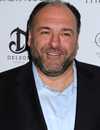
James Gandolfini
Tony Soprano
-






 English (US) ·