
 Image via Orion Pictures

Published May 8, 2026, 8:45 PM EDT
Liam Gaughan is a film and TV writer at Collider. He has been writing film reviews and news coverage for ten years. Between relentlessly adding new titles to his watchlist and attending as many screenings as he can, Liam is always watching new movies and television shows.
In addition to reviewing, writing, and commentating on both new and old releases, Liam has interviewed talent such as Mark Wahlberg, Jesse Plemons, Sam Mendes, Billy Eichner, Dylan O'Brien, Luke Wilson, and B.J. Novak. Liam aims to get his spec scripts produced and currently writes short films and stage plays. He lives in Allentown, PA.
1986 may feel like a lifetime ago in terms of movies because of how often it is referred to. Nostalgia for the ‘80s has amped up in the last few years thanks to It, Stranger Things, and Ready Player One, but it's easy to forget that the decade was far more unconventional than it is remembered as being. In retrospect, people tend to associate the ‘80s with commercialism, the birth of the franchise, and massive blockbusters, but in actuality there were a large amount of arthouse, foreign, and independent titles that also had a grasp on the industry.
1986 is a year that was filled with great films, as a list that was doubled in size still couldn’t capture all of the classics that were released within one of the most exciting twelve-month spans since the creation of the artform.
10 ‘Mona Lisa’ (1986)
 Image via Canon Street Entertainment
Mona Lisa was a groundbreaking film from Neil Jordan, the brilliant British director who would attain more fame in the following decade with his work on more celebrated commercial films like The Crying Game and Interview With the Vampire. Although Jordan has always centered on intimate, emotional character pieces, Mona Lisa was a particular breakthrough for Bob Hoskins, who earned the first (and surprisingly only) Academy Award nomination for Best Actor within his entire career.
Hoskins plays a reformed gangster recently released from prison trying to go straight when he falls in love, forcing him to put his conscience on the line. Although he is an actor who can be over-the-top if the part calls for it, Hoskins is very subtle and emotionally vulnerable in Mona Lisa, as Jordan’s decision to cast an unconventional lead for his neo-noir romance paid off brilliantly.
9 ‘Ferris Bueller’s Day Off’ (1986)
 Image via Paramount Pictures
Ferris Bueller’s Day Off is one of the definitive high school films ever made, and perhaps the most purely fun project that John Hughes was ever involved with. While Sixteen Candles and The Breakfast Club were both praised for offering realistic perspectives on the challenges that young people go through during what can be the most difficult period of their lives, Ferris Bueller’s Day Off is pure wish fulfillment for any high school student who has ever wanted to go on an adventure.
Chicago feels like a true character in Ferris Bueller’s Day Off, as Hughes was able to make each location and subplot feel like it was part of an expansive universe. Matthew Broderick’s performance as the titular character is what he will be best known for throughout the rest of his career, but it's actually Alan Ruck who is responsible for giving the film a tremendous amount of heart.
8 ‘Hannah and Her Sisters’ (1986)
 Image via Orion Pictures
Hannah and Her Sisters might just be the best film that Woody Allen has ever made, as it's a bit more mature than Annie Hall, less problematic than Manhattan, and more emotionally astute than Broadway Danny Rose or Radio Days. It’s one of the few films that actually understands how challenging of a holiday Thanksgiving can be, especially for those that don’t feel grateful for the world and have a hard time connecting with their families.
Hannah and Her Sisters features one of the greatest ensemble casts of the ‘80s, which included Mia Farrow, Michael Caine, Julie Kavner, Barbra Hershey, and even smaller roles for Star Wars alum Carrie Fisher and Max von Sydow. While there are certainly moments of humor (as there are in virtually all Allen films), Hannah and Her Sisters is a film that only grows more powerful with age.
7 ‘Aliens’ (1986)
 Image via 20th Century Studios
Aliens is quite simply one of the greatest sequels ever made, partially because it couldn’t have been more different than its predecessor. While Ridley Scott made the original Alien into a claustrophobic horror story that was literally pitched as being “Jaws in space,” James Cameron turned Aliens into an epic Vietnam allegory that saw Sigourney Weaver’s Ripley transforming from a survival girl into a true action hero taking a stand against a seemingly undefeatable enemy.
Weaver brought an unexpected level of emotion to the material that solidified its themes of motherhood, and even earned her an Academy Award nomination for Best Actress (a rarity for science fiction, horror, and sequels). It’s also a film that has visual effects that hold up better than ever, as nothing involving computer generated imagery can top the practical makeup and creature designs that felt so effective in 1986.
6 ‘The Color of Money’ (1986)
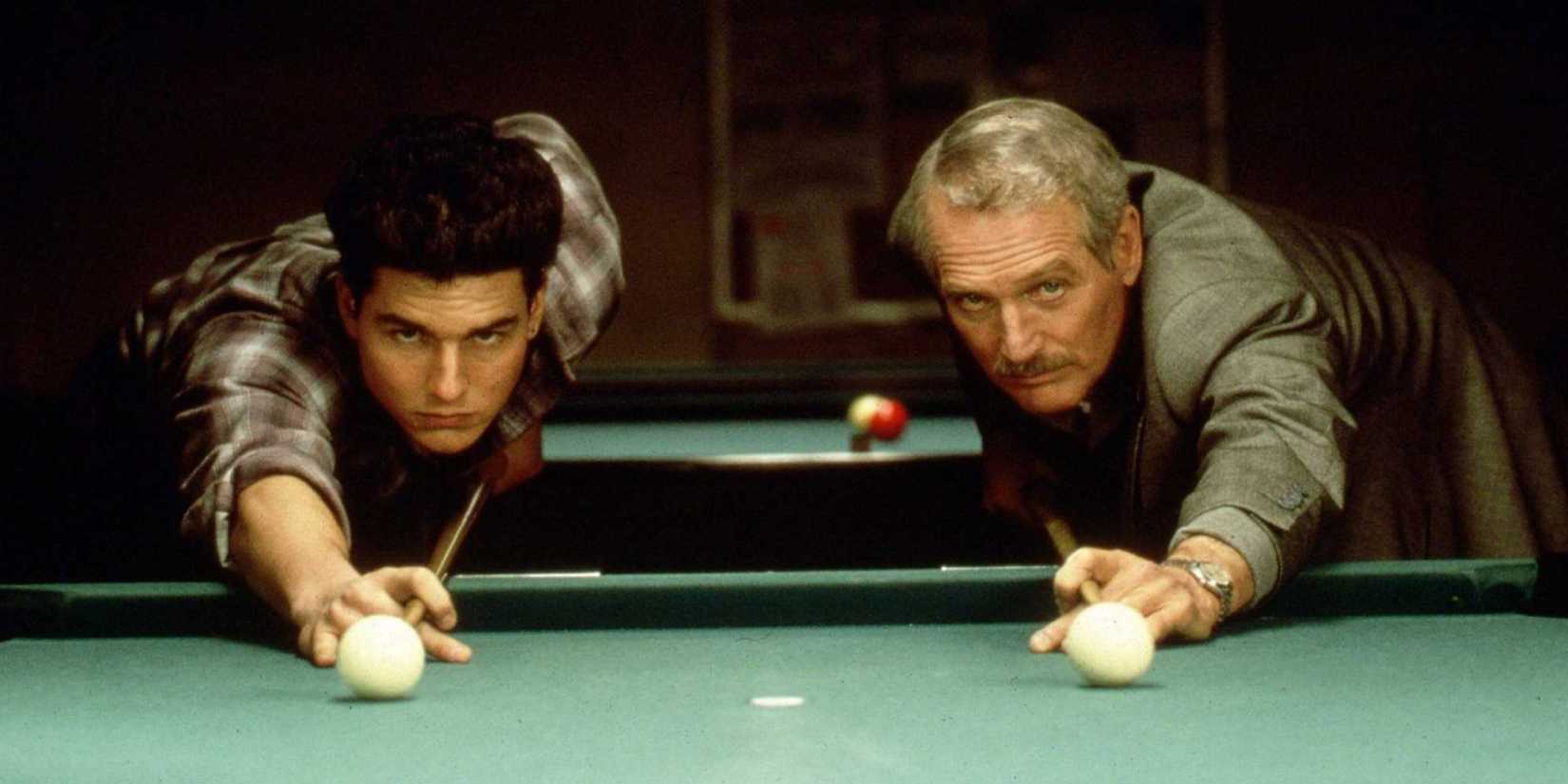 Image via Touchstone Pictures
The Color of Money is one of the most unconventional legacy sequels of all-time, as no one was expecting a continuation of The Hustler so many years later, especially since it was already agreed upon to be a timeless classic. However, Martin Scorsese made the first (and only) sequel of his career when he recruited Paul Newman to return to his role as “Fast Eddie” for a new adventure in which he teamed up with a hotshot young pool player, played by Tom Cruise in the same year that Top Gun turned him into perhaps the biggest movie star in the world.
Seeing Newman and Cruise work together felt like the passing of the torch from one generational great actor to another, but it was Scorsese who turned what could have been an easy cash grab into an Oscar-winning masterpiece.
5 ‘The Fly’ (1986)
 Image via 20th Century
The Fly is a film that reimagined a cult classic monster movie and turned it into an emotional tragedy about the collapse of human nature and its ambitions. David Cronenberg clearly knew his way around the “body horror” genre better than anyone else, but The Fly was successful in showing how its protagonist (played by Jeff Goldblum in his greatest performance ever) slowly loses his humanity and becomes the consequence of his own creation.
The Fly pioneered works of makeup and creature effects that weren’t just used for pure horror, even if the film had more than a few shocking jump scares. The more important effect was that it needed to tell the story of a normal man who becomes a monster, and it's thanks to the brilliance of Cronenberg’s approach that what could have been a B-movie became a sincere work of Shakespearean tragedy.
4 ‘Manhunter’ (1986)
 Image via De Laurentiis Entertainment Group
Manhunter was the first cinematic adaptation of Thomas Harris’ series of novels, and as surprising as it may seem, it is actually just as great as The Silence of the Lambs. While Jonathan Demme had made The Silence of the Lambs into a cat-and-mouse thriller, Michael Mann crafted a slow burn mystery that slowly descended into a tale of obsession and horror.
William Peterson is one of the most underrated actors of all-time, and delivered the definitive screen performance of Will Graham. Although Brian Cox is suitably creepy in his performance as a younger Dr. Hannibal Lector, it is the late great Tom Noonan’s amazing portrayal of the enigmatic serial killer known as “the Tooth Fairy” (later portrayed by Ralph Fiennes in Red Dragon) that made Manhunter into an unconventional thriller that was interested in what made these monsters tick.
3 ‘Stand by Me’ (1986)
 Image via Columbia Pictures
Stand by Me is one of the definitive films about childhood and one of the most perfect adaptations of any work by Stephen King, as it is actually the film that the author likes the most. The film offers a window into the time in a child’s life in which their friends feel closer and more important than ever before, even if they are just on the cusp of adulthood and about to experience what it is like to grow up in a much tougher, crueler world where death is permanent.
The late great Rob Reiner was an unparalleled director when it came to working in different genres, and it was his patience and kindness in working with the young child actors in Stand by Me that made the film feel so profound, as it offers something truthful to audience members of any age.
2 ‘Blue Velvet’ (1986)
 Image via De Laurentis Entertainment Group
Blue Velvet was the moment in which David Lynch truly unleashed his potential with a dark, suburban gothic thriller that hinted at the ugly subtext of America’s idealistic version of communal and family life that hadn’t aged past the ‘50s. Lynch created an intoxicating, surrealsit world that was as playful as it was terrifying, and pretty much defined the style that he would adopt into the next few decades of his work.
Blue Velvet featured amazing performances from some of Lynch’s most frequnt collaborators, most notably Kyle MacLachlan and Laura Dern, but it also offered a comeback role to Dennis Hopper in the amazing role of the villain Frank Boothe. Hopper was worthy of an Academy Award nomination for Best Supporting Actor for creating such a timeless character, and the only reason that he wasn’t nominated is that he was actually recognized for another great performance the same year in Hoosiers.
1 ‘Platoon’ (1986)
 Image via Orion Pictures
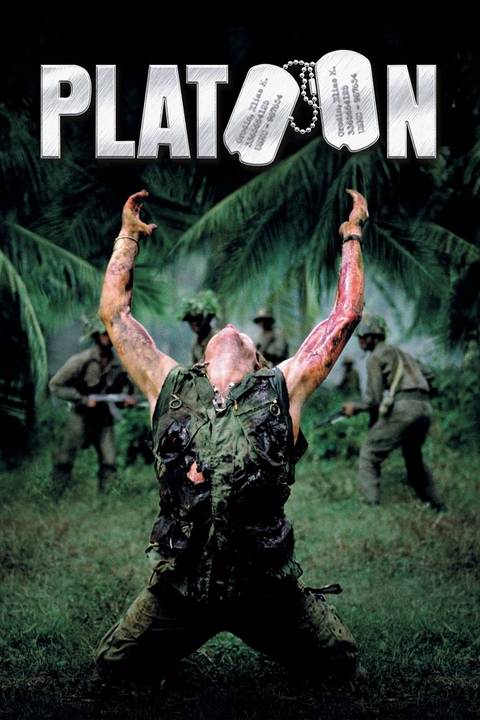
Platoon is the rare instance in which the best film of the year also ended up winning Best Picture at the Oscars, as Oliver Stone used his own experiences in Vietnam to capture a harrowing depiction of the unjust war and the atrocities that he witnessed. Stone fearlessly looked at the loss of humanity among American soldiers who were sent into enemy territory without a clear plan, and forced his cast to endure a real boot camp in order to properly prepare them to play a worn-down unit.
Platoon is a meticulously well-acted film that included terrific performances by Tom Berenger and Willem Dafoe as polar opposite sergeants who represented aggression and hope, respectively. It was part of an ongoing effort on Stone’s part to explore Vietnam, as he made Salvador that same year and would win another Best Director prize three years later for Born on the Fourth of July.
Platoon
Release Date December 19, 1986
Runtime 120 minutes
Director Oliver Stone
Writers Oliver Stone





 English (US) ·