
When it comes to media, Japan is one of the greatest exporters of creative content. Whether it's Japanese film, video games, anime, or novels, the country consistently delivers quality storytelling combined with its own unique sense of style.
In the realm of film, Japan has an abundance of great movies. Whether it's animated films that commentate on the triumphs and failures of humanity, or sweeping epics set in feudal times, the country is host to a legion of talented filmmakers. While there are more fantastic Japanese movies than one list can cover, it's easy to see the best Japanese movies according to IMDb. Japan's contribution to the IMDb Top 250 should be considered essential viewing for fans, not just of Asian cinema, but of film in general.
35 'Tampopo' (1985)
IMDb Score: 7.9/10
 Image via Toho
A classic comedy film, Tampopo follows two milk truck drivers, Goro and his sidekick, Gun, who stop by a roadside noodle shop, Lai Lai, where they decide to help the titular widowed shop owner. By teaching her how to improve the quality of her ramen, the two drivers set out to turn Lai Lai into a benchmark for noodle making and improve Tampopo’s emerging business. The film stars a young Ken Watanabe as Gun, alongside Tsutomu Yamazaki as Goro, and Nobuko Miyamoto as the titular ramen shop owner.
Tampopo hails from Juzo Itami, a Japanese filmmaker known for directing classic comedies of the 80s and 1980s, like The Funeral, The Last Dance, and Tales of a Golden Geisha. A comedic celebration of food and how it influences Japanese culture, Tampopo is often called a ramen Western as a pun on the then-popular Spaghetti Western genre. The classic comedy is a bemusing exploration of human nature with offbeat humor and sharp satire, a storytelling style which Itami is best known for. —Maddie P
IMDb Score: 8.0/10
 Image via Toho
Also known as The Three Villains of the Hidden Fortress, this jidaigeki (period drama) adventure film by Akira Kurosawa tells the story of two farmers who escort a general and a princess across the enemy lines in exchange for gold, unaware of the man and the woman’s real identities. Toshirō Mifune, a legendary Japanese actor known for his collaborations with Kurosawa, stars as General Makabe Roku Rokurōta, with Misa Uehara as Princess Yuki.
A classic thriller, The Hidden Fortress is considered one of the best samurai films of all time, and became Kurosawa’s most successful film at the time. The witty and fast-paced film is an intriguing, humorous portrait of medieval Japan, featuring captivating visuals and stunning camerawork. An epic journey of self-discovery and heroic adventure, The Hidden Fortress is often considered one of the best action-adventure films of all time, and is regarded for its significant influence on 1977's Star Wars, with major characters like C-3PO, R2-D2, and Princess Leia drawing parallels from the peasants and Princess Yuki in the film. —Maddie P
33 'Throne of Blood' (1957)
IMDb Score: 8.0/10
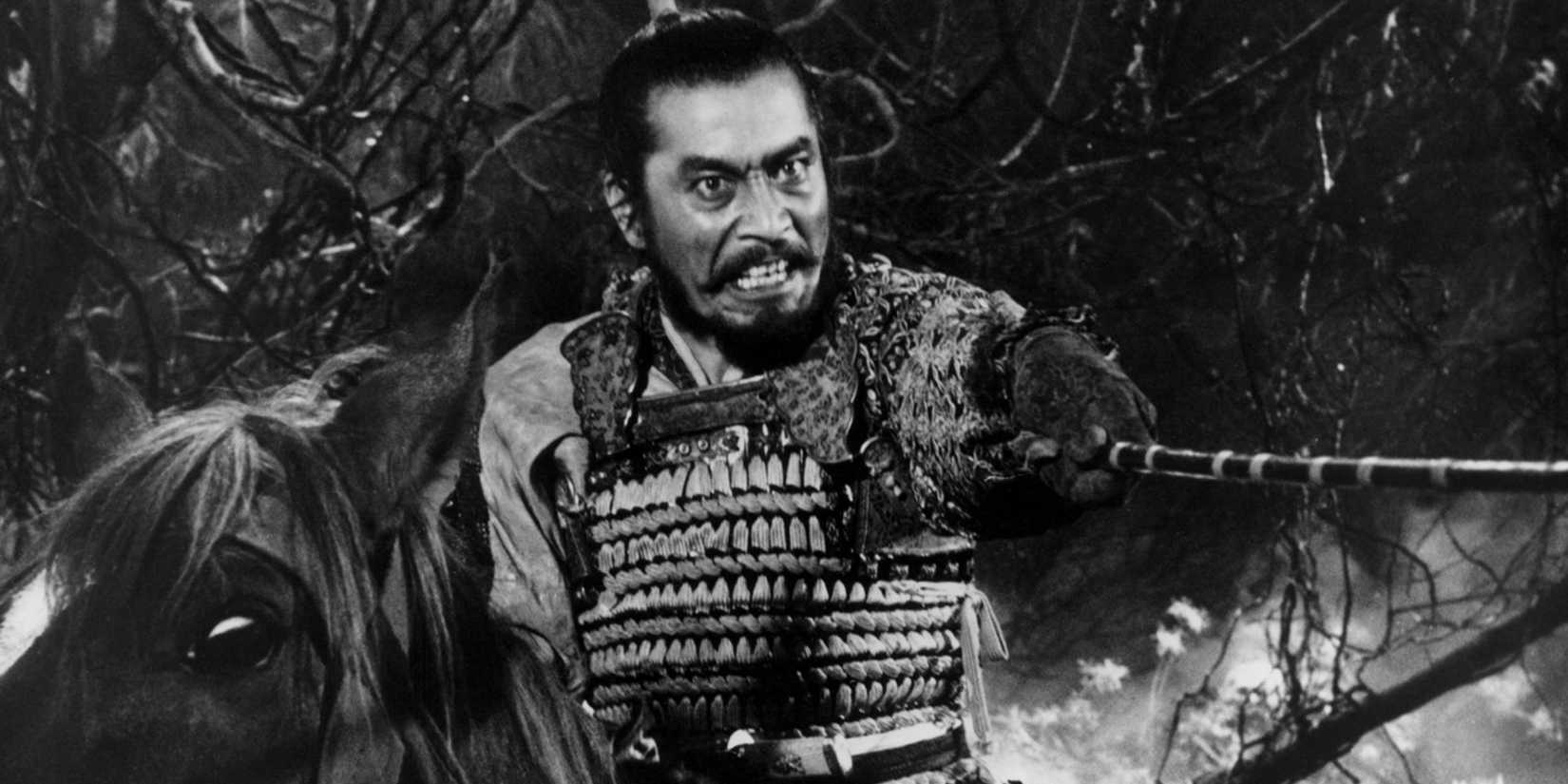 Image via Toho
A feudal Japan set take on Macbeth, Throne of Blood follows Washizu (Toshiro Mifune), a samurai who assassinates his sovereign at the behest of his wife. As Washizu becomes the new lord, he struggles with his guilt and the growing paranoia that his treachery is soon to be discovered.
Another samurai classic by Akira Kurosawa, Throne of Blood is one of the best adaptations of William Shakespeare's legendary tale and one of the top Japanese movies. The feudal Japan setting does wonders to elevate the themes of the story, with honor and loyalty to their liege often the most important traits of a samurai.
32 'Perfect Blue' (1997)
IMDb Score: 8.0/10
 Image via MadHouse
In this psychological horror thriller anime by Satoshi Kon, a young singer, Mima (Junko Iwao) of a popular J-pop group, is encouraged by her agent to retire from singing and pursue a career in acting, starting with a role in a murder mystery television series. But when one of her obsessive fans begins to stalk her, followed by gruesome murders, Mima starts to lose her grip on reality. The merging of one’s reality and fantasy as a core concept is also found in Kon’s other films, like Millennium Actress and Paprika.
Loosely taken from Yoshikazu Takeuchi’s novel Perfect Blue: Complete Metamorphosis, Perfect Blue is considered an avant-garde film that deals with themes of reality perceptions and the identity of female idols, voyeurism, and performance pressure. Considered one of the best anime films of the 1990s, Perfect Blue is often seen as a psychodramatic critique of the consumer culture in contemporary Japanese society. —Maddie P
31 'Nausicaä of the Valley of the Wind' (1984)
IMDb Score: 8.0/10
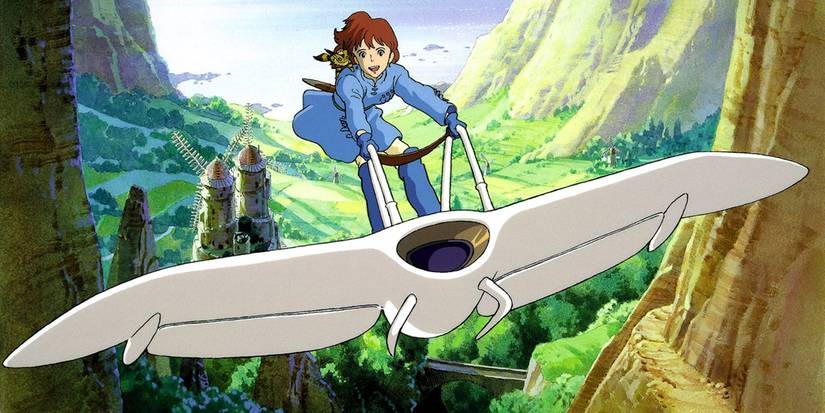 Image via Toei Company
Hayao Miyazaki writes and directs this post-apocalyptic fantasy animated film in his second feature directorial. Nausicaä of the Valley of the Wind follows Nausicaa (Sumi Shimamoto), a teenage princess of the titular valley who becomes involved in a battle with the Tolmekia empire, who are using an ancient weapon to wipe out a jungle housing giant mutant insects. To fulfill a prophecy, Nausicaa fights to stop the warring nations from destroying their habitat.
Set in a post-nuclear, futuristic world, the fantasy animation heavily features steampunk art and addresses themes of anti-war, environmental conservation, and our intrinsic need to coexist with nature, all of which remain relevant even today. From its concept to artwork, Nausicaä of the Valley of the Wind has influences from classic literature like Ursula K. Le Guin's Earthsea, J. R. R. Tolkien's The Lord of the Rings, and Isaac Asimov's Nightfall, with Nausicaa’s character drawing inspiration from the eponymous princess in Homer’s Odyssey. —Maddie P
30 'The Twilight Samurai' (2002)
IMDb Score: 8.1/10
 Image via Shochiku
Hiroyuki Sanada stars as the titular samurai in a performance that is often considered one of his career best. Set in mid-19th century Japan, The Twilight Samurai follows a low-ranking warrior, Seibei (Sanada), who manages a granary for the clan while looking after his motherless daughters and his old mother, who suffers from dementia. Though poor, Seibei and his family manage to live a content life, until a series of unfortunate events causes an upheaval in his and his family’s life.
The Twilight Samurai is the first film in Yoji Yamada’s Samurai Trilogy and is followed by The Hidden Blade and Love and Honor. The film is said to be inspired by Shuhei Fujisawa's short story "The Bamboo Sword" and depicts the turbulent social, political, and economic times of 19th-century Japan, portraying the struggles that the warriors and farmers at the time would have faced. The historical drama film has been critically acclaimed for its narrative and period aesthetics. —Maddie P
29 'Neon Genesis Evangelion: The End of Evangelion' (1997)
IMDb Score: 8.1/10
 Image via Toei Company
Pitched as an alternate ending to the original popular anime series, Neon Genesis Evangelion: The End of Evangelion follows Shinji, Rei, and Asuka as they continue to fight their enemies using mechas named Evangelions.
Neon Genesis Evangelion is one of the most acclaimed anime series of all time, with its theatrical counterpart earning a place on the list of Japanese best movies. The best of the Neon Genesis movies, The End of Evangelion serves as a fitting end to the original series as it showcases the power of animation to tell dark, adult stories.
28 'The Life of Oharu' (1952)
IMDb Score: 8.1/10
 Image via Shintoho
This Japanese classic historical drama, as the name suggests, tells the story of the titular female protagonist, the daughter of a samurai who is forced into prostitution. Set in feudal Japan, The Life of Oharu follows Oharu (Kinuyo Tanaka), the daughter of royal warrior Shinzaemon (Ichirō Sugai), who has a passionate and secret affair with the poor Katsunosuke (Toshirō Mifune). When her affair is discovered, the kingdom banishes her family, and disgraced by her reputation, Shinzaemon sells Oharu. A heartbreaking life story, The Life of Oharu is the protagonist’s odyssey of finding love and discovering her true self.
The Life of Oharu comes from Kenji Mizoguchi, a filmmaker from the “golden age” of Japanese cinema who was known for exploring themes of oppression and discrimination against women. A tragic drama, the film bears the hallmarks of Mizoguchi’s storytelling aesthetics, where the protagonists’ ordeal is touching and subtle without being melodramatic or moralizing. —Maddie P
27 'A Silent Voice' (2016)
IMDb Score: 8.1/10
 Image via Shochiku
Adapted from the manga of the same name, A Silent Voice follows Shoya Ishida, a former grade school bully who sets out to make amends with those he hurt. Top of his list is Shoko Nishimiya, a shy girl who was born deaf and who moved schools as a result of Shoya's bullying. As the pair reconnects, they learn more about each other and themselves.
Far removed from the fantasy and action that tends to dominate anime, A Silent Voice is a sweet story about two social outcasts finding a genuine connection with each other. While it may not be the best Japanese movie in everyone's eyes due to its low-key nature, it is still a lovely human story worth spending time with.
26 'Tokyo Story' (1953)
IMDb Score: 8.1/10
 Image via Shochiku
When an elderly couple decides to move from their small village to the bustling city of Tokyo, they plan to spend time with their adult children. But when they discover their kids are too busy with their own lives to entertain them, they instead find themselves being kept company by Noriko, the widow of their son who passed away.
An essential film by Yasujirō Ozu, Tokyo Story is a movie that could have easily been built on melodrama, but it is a subdued movie, operating quietly as it explores the dynamics of this family unit. It also gives a voice to elderly people, those who have been dismissed by their grown children as being merely nothing more than a nuisance to be ignored. The end result is the ultimate movie about a multigenerational family.



 English (US) ·