
 Image via Fox

Published Mar 26, 2026, 11:04 PM EDT
Jessica is a journalist, editor, TCA critic, and multimedia storyteller with a decade of experience covering pop culture, film, TV, women's sports, lifestyle, and more. She earned her degree in journalism from the University of North Carolina-Wilmington with a focus in creative writing before moving to N.Y.C. and getting her start at The Huffington Post. (She still misses those nap pods.) She's covered multiple film festivals, recapped some of your favorite series, worked too many red carpets to count, and even yapped on a podcast or two. When she’s not interviewing your favorite showrunner or ranking Ryan Gosling's best roles for places like UPROXX, Teen Vogue, Marie Claire, The Daily Beast, and Cosmopolitan, she’s busy being a full-time hype woman to her cat, Finn. You can find her on Bluesky and, sadly, Twitter.
Sign in to your Collider account
Nobody panic. The Firefly revival (at least, in animated form) is real. Well…real enough that Nathan Fillion announced it at Awesome Con last week, flanked by most of the show's original cast, which included Alan Tudyk, Gina Torres, Jewel Staite, Morena Baccarin, Sean Maher, and Summer Glau. The whole event appeared to be a very shiny reunion for people who cannot stop reliving the year 2002, and the response online was, predictably, enthusiastic. Like, to an unhinged degree, which makes sense because it came from a fanbase that has spent twenty-something years in a state of dignified grief, keeping a cancelled space-western alive through sheer willpower, convention panels, and matching tattoos. That kind of devotion might seem alien to anyone who hasn’t seen the show, but we understand. Firefly has always been a show that deserved more than it got.
Unfortunately, deserving better than and deserving this now are two different things, and the timing of the show’s return starts to feel a bit icky when the logistics of what and who’s involved come into play. Because you cannot talk about a Firefly revival without asking some genuinely puzzling questions. Why is this thing animated? Or, why is the show about a timeline we already know the ending to? And, most importantly, why in the hell are Adam Baldwin and Joss Whedon earning mentions?
The Problem with a 'Firefly' Animated Prequel: We Already Know How It Ends
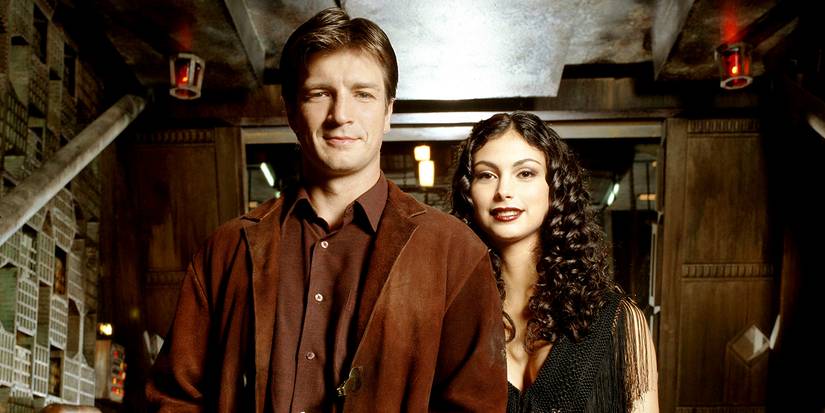 Image via 20th Century Fox
Here is the thing about Firefly that fans seem to have collectively agreed not to remember: we already got our movie. Fox cancelled the show after just eleven episodes, and the fans revolted with the kind of sustained, organized passion that would make political campaign managers green with envy. Then, in 2005, Universal bankrolled Serenity in what felt like an act of penance for network TV’s screw-up. The film took some big swings, killing off fan favorite characters like Wash and Shepherd Book (Ron Glass) while solving some of its biggest mysteries, like River’s arc and the origin of those terrifying Reavers. It ended with something that felt bittersweet and real with the crew, depleted and bruised, flying off into the verse, because...well, what else are you going to do?
That is the ending to this story. It's not perfect, because no ending involving Wash dying can be called that, but it is an ending, one with emotional stakes and the kind of consequences that can't be walked back without cheapening everything that came before it. The proposed animated series is set before all this, though, somewhere in between the TV show and film, which means it will unfold in a universe where we already know how things go wrong. Asking audiences to revisit that timeline isn't giving them more story; it's just making them watch a cartoonish funeral procession in slow motion. And who really asked for that?
A 'Firefly' Comeback Can’t Pretend Joss Whedon and Adam Baldwin Don’t Matter
 20th Century Fox Film Corp
You cannot talk about a Firefly revival without talking about Joss Whedon, even though this project is trying its hardest to do exactly that. Whedon isn't attached. He's been kept at a careful distance, receiving only a "Created By" credit while Tara Butters and Marc Guggenheim serve as showrunners. His absence is being presented as something that should ease fans’ concerns, but what it actually proves is that everyone involved knows his name now functions primarily as a liability. And the reasons are well-documented. Over the past several years, a collection of collaborators, from Charisma Carpenter, to Ray Fisher, Gal Gadot, and more, came forward with accounts of behavior described as abusive, cruel, and staggeringly hypocritical from a man who'd built his entire brand on being Hollywood's feminist ally. But keeping him out of the revival talks while simultaneously staying tight-lipped on the real reason why is both a frustrating cop out and a missed opportunity for the show to reclaim its legacy.
Collider Exclusive · Sci-Fi Survival Quiz
Which Sci-Fi World
Would You Survive?
The Matrix · Mad Max · Blade Runner · Dune · Star Wars
Five universes. Five completely different ways the future went wrong — or sideways, or up in flames. Only one of them is the world your instincts were built for. Ten questions will figure out which dystopia, galaxy, or desert wasteland you'd actually make it out of alive.
💊The Matrix
🔥Mad Max
🌧️Blade Runner
🏜️Dune
🚀Star Wars
TEST YOUR SURVIVAL →
01
You sense something is deeply wrong with the world around you. What do you do? The first instinct is often the truest one.
APull on every thread until I understand the system — then figure out how to break it. BStop asking questions and start stockpiling — food, fuel, weapons. Questions don't keep you alive. CKeep my head down, observe carefully, and trust no one until I know who's pulling the strings. DStudy the patterns. Every system has a rhythm — learn it, and you learn how to survive it. EFind the people fighting back and join them. You can't fix a broken galaxy alone.
NEXT QUESTION →
02
In a world of scarcity, what resource do you guard most fiercely? What we protect reveals what we believe survival actually requires.
AKnowledge. If you understand the system, you don't need resources — you can generate them. BFuel. Everything else — movement, power, escape — runs on it. CTrust. In a world of fakes and informants, a truly reliable ally is rarer than any commodity. DWater. And after water, information — the two things empires are truly built on. EShips and credits. The galaxy is big — you survive it by being able to move through it freely.
NEXT QUESTION →
03
What kind of threat keeps you up at night? Fear is useful data — if you're honest about what you're actually afraid of.
AThat reality itself is a lie — that everything I experience has been constructed to keep me compliant. BA raid. No warning, no mercy — just the roar of engines and then nothing left. CBeing identified. Once someone with power decides you're a problem, you're already out of time. DBeing outmanoeuvred — losing a political game I didn't even know I was playing. EThe Empire tightening its grip until there's nowhere left to run.
NEXT QUESTION →
04
Which of these comes most naturally to you? Your strongest skill is your best survival asset — use it accordingly.
AHacking, pattern recognition, finding the exploit in any system — digital or human. BMechanical skill — I can strip an engine, rig a weapon, or fix anything with whatever's around. CReading people — knowing when someone's lying, hiding something, or about to run. DDiscipline and endurance — mental and physical. I outlast things rather than overpower them. EPiloting, navigation, knowing how to get from A to B when every route is dangerous.
NEXT QUESTION →
05
How do you deal with authority you don't trust? Every dystopia has a power structure. Your approach to it determines everything.
ASubvert it from the inside — learn its rules well enough to weaponise them against it. BIgnore it and stay out of its reach. The further from any power structure, the better. CAppear to comply while doing exactly what I need to do. Visibility is the enemy. DManoeuvre within it carefully. You can't beat a system you refuse to understand. EResist openly when I have to. Some things are worth the risk of being seen.
NEXT QUESTION →
06
Which environment could you actually endure long-term? Survival isn't just tactical — it's physical, psychological, and very much about where you are.
AUnderground bunkers and server rooms — cramped, artificial, but with access to everything that matters. BOpen wasteland — brutal sun, no shelter, constant movement. At least the threat is honest. CA dense, rain-soaked city where you can disappear into the crowd and nobody asks questions. DMerciless desert — extreme heat, no water, and something enormous living beneath the sand. EThe fringe — backwater planets and busy spaceports where the Empire's attention rarely reaches.
NEXT QUESTION →
07
Who do you want in your corner when things fall apart? The company you keep is the clearest signal of who you actually are.
AA tight crew of believers who've seen behind the curtain and have nothing left to lose. BOne or two people I'd trust with my life. Any more than that and someone talks. CNobody, ideally. Alliances are liabilities. I work alone unless I have no choice. DA community bound by shared hardship and mutual survival — people who need each other to last. EA ragtag team with wildly different skills and total commitment when it counts.
NEXT QUESTION →
08
A comfortable lie or a devastating truth — which can you actually live with? Some worlds offer one. Some offer the other. Very few offer both.
AThe truth, no matter the cost. I'd rather live in a brutal reality than a beautiful cage. BNeither — truth and lies are luxuries. What matters is surviving the next hour. CI've learned to live with ambiguity. Some truths don't have clean answers. DThe truth — but deployed strategically. Knowing something others don't is power. EThe truth. Even when it means confronting something in yourself you'd rather leave buried.
NEXT QUESTION →
09
Where do you draw the line — if you draw one at all? Every survivor eventually faces a moment that tests what they're actually made of.
AI won't harm the innocent — even the ones who'd report me without hesitation. BI do what I have to to protect the people I've chosen. Everything else is negotiable. CThe line shifts depending on who's asking and what's at stake. DI draw a long-term line — nothing that compromises my people's future, even if it'd help now. ESome lines, once crossed, can't be uncrossed. I know which ones they are.
NEXT QUESTION →
10
What would actually make survival worth it? Staying alive is one thing. Having a reason to is another.
AWaking others up — dismantling the illusion so no one else has to live inside it. BFinding somewhere — or someone — worth protecting. A reason to keep moving. CAnswers. Understanding what I am, what any of this means, before time runs out. DLegacy — shaping the future in a way that outlasts me by generations. EFreedom — for myself, for others, for every world still living under someone else's boot.
REVEAL MY WORLD →
Your Fate Has Been Calculated You'd Survive In…
Your answers point to the world your instincts were built for. Read all five — your result is the one that resonates most deeply.
The Matrix
You took the red pill a long time ago — probably before anyone offered it to you. You're a systems thinker who can't help but notice the seams in things, the places where the official version doesn't quite line up. In the Matrix, that instinct is the difference between life and permanent digital sedation. You'd find the Resistance, or it would find you. The machines built an airtight prison. You'd be the one probing the walls for the door.
Mad Max
The wasteland doesn't reward the clever or the well-connected — it rewards those who are hard to kill and harder to break. That's you. You don't need comfort, community, or a cause larger than the next horizon. You need a vehicle, a clear threat, and enough fuel to outrun it. You are unsentimental enough to survive that world, and decent enough — just barely — to be something more than another raider.
Blade Runner
You'd survive here because you know how to exist in moral grey areas without losing yourself completely. You read people accurately, keep your circle small, and ask the questions others prefer not to answer. In a city where humanity is a legal designation rather than a feeling, you hold onto something that keeps you functional. You're not a hero. But you're not lost, either. In Blade Runner's world, that distinction is everything.
Dune
Arrakis is the most hostile environment in the known universe — and you are precisely the kind of person it rewards. Patience, discipline, pattern recognition, political awareness, and an understanding that the long game matters more than any single victory. Others come to Dune and are consumed by it. You'd learn its logic, earn its respect, and perhaps, in time, reshape it entirely.
Star Wars
The galaxy far, far away is vast, loud, and in a constant state of violent political upheaval — and you wouldn't have it any other way. You're someone who finds meaning in being part of something larger than yourself. You'd gravitate toward the Rebellion, or the fringes, or whatever pocket of the galaxy still believes the Empire's grip can be broken. Whatever you are, you fight. And in Star Wars, that willingness is what makes the difference.
↻ RETAKE THE QUIZ
Which Sci-Fi World Would You Survive?
Collider Exclusive · Sci-Fi Survival QuizWhich Sci-Fi WorldWould You Survive?The Matrix · Mad Max · Blade Runner · Dune · Star Wars
Five universes. Five completely different ways the future went wrong — or sideways, or up in flames. Only one of them is the world your instincts were built for. Ten questions will figure out which dystopia, galaxy, or desert wasteland you'd actually make it out of alive.
💊The Matrix
🔥Mad Max
🌧️Blade Runner
🏜️Dune
🚀Star Wars
Test Your Survival →
01
You sense something is deeply wrong with the world around you. What do you do?The first instinct is often the truest one.
APull on every thread until I understand the system — then figure out how to break it.BStop asking questions and start stockpiling — food, fuel, weapons. Questions don't keep you alive.CKeep my head down, observe carefully, and trust no one until I know who's pulling the strings.DStudy the patterns. Every system has a rhythm — learn it, and you learn how to survive it.EFind the people fighting back and join them. You can't fix a broken galaxy alone.
Next Question →
02
In a world of scarcity, what resource do you guard most fiercely?What we protect reveals what we believe survival actually requires.
AKnowledge. If you understand the system, you don't need resources — you can generate them.BFuel. Everything else — movement, power, escape — runs on it.CTrust. In a world of fakes and informants, a truly reliable ally is rarer than any commodity.DWater. And after water, information — the two things empires are truly built on.EShips and credits. The galaxy is big — you survive it by being able to move through it freely.
Next Question →
03
What kind of threat keeps you up at night?Fear is useful data — if you're honest about what you're actually afraid of.
AThat reality itself is a lie — that everything I experience has been constructed to keep me compliant.BA raid. No warning, no mercy — just the roar of engines and then nothing left.CBeing identified. Once someone with power decides you're a problem, you're already out of time.DBeing outmanoeuvred — losing a political game I didn't even know I was playing.EThe Empire tightening its grip until there's nowhere left to run.
Next Question →
04
Which of these comes most naturally to you?Your strongest skill is your best survival asset — use it accordingly.
AHacking, pattern recognition, finding the exploit in any system — digital or human.BMechanical skill — I can strip an engine, rig a weapon, or fix anything with whatever's around.CReading people — knowing when someone's lying, hiding something, or about to run.DDiscipline and endurance — mental and physical. I outlast things rather than overpower them.EPiloting, navigation, knowing how to get from A to B when every route is dangerous.
Next Question →
05
How do you deal with authority you don't trust?Every dystopia has a power structure. Your approach to it determines everything.
ASubvert it from the inside — learn its rules well enough to weaponise them against it.BIgnore it and stay out of its reach. The further from any power structure, the better.CAppear to comply while doing exactly what I need to do. Visibility is the enemy.DManoeuvre within it carefully. You can't beat a system you refuse to understand.EResist openly when I have to. Some things are worth the risk of being seen.
Next Question →
06
Which environment could you actually endure long-term?Survival isn't just tactical — it's physical, psychological, and very much about where you are.
AUnderground bunkers and server rooms — cramped, artificial, but with access to everything that matters.BOpen wasteland — brutal sun, no shelter, constant movement. At least the threat is honest.CA dense, rain-soaked city where you can disappear into the crowd and nobody asks questions.DMerciless desert — extreme heat, no water, and something enormous living beneath the sand.EThe fringe — backwater planets and busy spaceports where the Empire's attention rarely reaches.
Next Question →
07
Who do you want in your corner when things fall apart?The company you keep is the clearest signal of who you actually are.
AA tight crew of believers who've seen behind the curtain and have nothing left to lose.BOne or two people I'd trust with my life. Any more than that and someone talks.CNobody, ideally. Alliances are liabilities. I work alone unless I have no choice.DA community bound by shared hardship and mutual survival — people who need each other to last.EA ragtag team with wildly different skills and total commitment when it counts.
Next Question →
08
A comfortable lie or a devastating truth — which can you actually live with?Some worlds offer one. Some offer the other. Very few offer both.
AThe truth, no matter the cost. I'd rather live in a brutal reality than a beautiful cage.BNeither — truth and lies are luxuries. What matters is surviving the next hour.CI've learned to live with ambiguity. Some truths don't have clean answers.DThe truth — but deployed strategically. Knowing something others don't is power.EThe truth. Even when it means confronting something in yourself you'd rather leave buried.
Next Question →
09
Where do you draw the line — if you draw one at all?Every survivor eventually faces a moment that tests what they're actually made of.
AI won't harm the innocent — even the ones who'd report me without hesitation.BI do what I have to to protect the people I've chosen. Everything else is negotiable.CThe line shifts depending on who's asking and what's at stake.DI draw a long-term line — nothing that compromises my people's future, even if it'd help now.ESome lines, once crossed, can't be uncrossed. I know which ones they are.
Next Question →
10
What would actually make survival worth it?Staying alive is one thing. Having a reason to is another.
AWaking others up — dismantling the illusion so no one else has to live inside it.BFinding somewhere — or someone — worth protecting. A reason to keep moving.CAnswers. Understanding what I am, what any of this means, before time runs out.DLegacy — shaping the future in a way that outlasts me by generations.EFreedom — for myself, for others, for every world still living under someone else's boot.
Reveal My World →
Your Fate Has Been CalculatedYou'd Survive In… Your answers point to the world your instincts were built for.
💊 The Matrix You took the red pill a long time ago — probably before anyone offered it to you. You're a systems thinker who can't help but notice the seams in things, the places where the official version doesn't quite line up. In the Matrix, that instinct is the difference between life and permanent digital sedation. You'd find the Resistance, or it would find you. The machines built an airtight prison. You'd be the one probing the walls for the door.
🔥 Mad Max The wasteland doesn't reward the clever or the well-connected — it rewards those who are hard to kill and harder to break. That's you. You don't need comfort, community, or a cause larger than the next horizon. You need a vehicle, a clear threat, and enough fuel to outrun it. You are unsentimental enough to survive that world, and decent enough — just barely — to be something more than another raider.
🌧️ Blade Runner You'd survive here because you know how to exist in moral grey areas without losing yourself completely. You read people accurately, keep your circle small, and ask the questions others prefer not to answer. In a city where humanity is a legal designation rather than a feeling, you hold onto something that keeps you functional. You're not a hero. But you're not lost, either. In Blade Runner's world, that distinction is everything.
🏜️ Dune Arrakis is the most hostile environment in the known universe — and you are precisely the kind of person it rewards. Patience, discipline, pattern recognition, political awareness, and an understanding that the long game matters more than any single victory. Others come to Dune and are consumed by it. You'd learn its logic, earn its respect, and perhaps, in time, reshape it entirely.
🚀 Star Wars The galaxy far, far away is vast, loud, and in a constant state of violent political upheaval — and you wouldn't have it any other way. You're someone who finds meaning in being part of something larger than yourself. You'd gravitate toward the Rebellion, or the fringes, or whatever pocket of the galaxy still believes the Empire's grip can be broken. Whatever you are, you fight. And in Star Wars, that willingness is what makes the difference.
↩ Retake Quiz
Then there's Adam Baldwin, who allegedly helped coin the #GamerGate hashtag in 2014 — a campaign we now recognize as an organized harassment movement targeting women in gaming and one that would become a template for far-right online organizing. Baldwin maintains he was simply opposing political correctness. The women who received rape and death threats might have a different recollection. And yet Fillion showed up at Baldwin's house in a teaser video — knife, apple, knitted beanie, the whole bit — as if his antics throughout the intervening decade were just quirky missteps.
Firefly's fandom has always been unusually personal. This cast played these characters long before Hollywood came calling and superhero franchises offered starring roles and network TV shows made them household names. Fans supported, conventioned, ran Twitter accounts, petitioned, and more. They deserve better than to be let down by a revival that asks them to overlook two of the most uncomfortable names attached to it.
Why the 'Firefly' Animated Revival Faces an Uphill Battle
At Awesome Con, Fillion told the crowd that the fans' dedication had kept Firefly relevant for 25 years, and that a revival was something they deserved. It's a genuinely sweet thing to say, even if the show still doesn't have a network or streaming home and is currently seeking one via Instagram engagement metrics. (The Browncoats are, once again, being asked to save it. Some things never change.)
And then there's the animation question, which nobody in the reunion photos seems eager to address. A big part of Firefly's appeal was its scrappy, on-a-budget energy — those dusty, banged-up sets, practical effects, hair and makeup magic, and intimate camera work. Can animation deliver that same vibe? Will it even try? The hard truth is that Firefly was great…one of the greatest things ever made on television, actually. And it certainly deserved more seasons. Just, maybe, not like this.
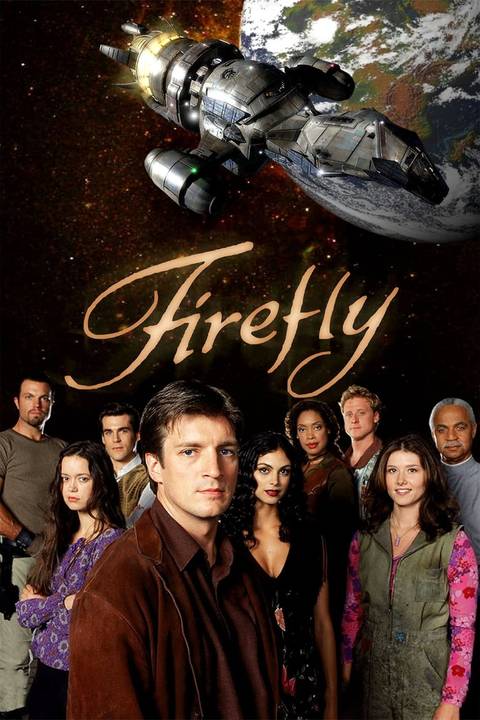
Firefly
Release Date 2002 - 2003-00-00




 English (US) ·