
 Image via Newmarket

Published Mar 19, 2026, 7:23 AM EDT
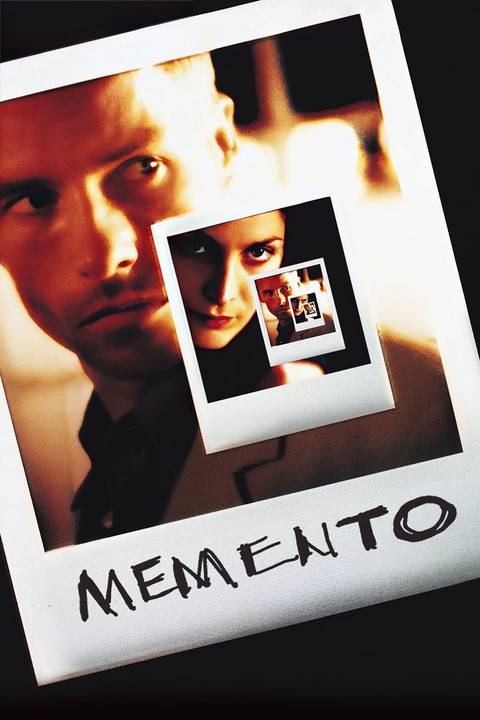
In the year 2000, Christopher Nolan didn’t just arrive on the filmmaking scene — he detonated it. Memento, the story of one man’s search through his memories for the truth, was a radical breakthrough that announced him as the next big thing, the type of singular visionary that would go on to reinvent the superhero genre with The Dark Knight trilogy, bend our minds with Inception, and make Oscar history with Oppenheimer.To revisit the film now is to see the foundations of greatness, as even at that early stage, the themes and ambitions of his later work would be evident here. As well as being a cinematic work of art, it was the manifesto of a movie genius.
Christopher Nolan's Breakthrough Was an Independent Classic
It’s the turn of the century, and a young British director named Christopher Nolan is making his first American movie. His 1998 noir thriller, Following, was a self-funded debut with the filmmaker serving as writer, director, producer, editor, and cinematographer, using natural lighting and the homes of friends and family to save costs.
Despite these humble beginnings, the film was a success at festivals, and Nolan proceeded with a new script, based on a short story by his brother Jonathan. The result would be Memento, a complex thriller told out of sync, following Leonard (Guy Pearce), a man unable to make new long-term memories. Searching for the person responsible for his wife's murder, the last thing he remembers at the beginning of each day, he uses notes and tattoos to aid his search. Nolan approaches his first American production with both the swagger of a disruptor and the assurance of a veteran. The film’s narrative, using parallel timelines (one moving forward, one in reverse), is no mere gimmick. It’s a means of exploring the story psychologically.
The Future Oscar Winner Saw the World Like No One Else
Whereas most crime films pursue an investigation by adding pieces of the puzzle as it moves along, Nolan tips every piece on the floor and goes from there. The scattered facts, the gray morality, and the shocking twist ending come together like a jagged symphony to present something that had rarely been seen before, or since.
Like Stanley Kubrick, who he has openly cited as an inspiration for his work, Nolan focuses not just on how a film tells you its story, but how it makes you feel. The disorientation, fragments of knowledge, and questionable truth of Leonard’s journey makes us think about our relationship with truth, blame, and grief.He also established himself as a director who doesn’t spoon-feed his audience. Putting trust in the viewer to work things out created greater investment in the movie, making for something that draws you in even if you know what’s about to happen.
'Memento' Showed Nolan's Grand Ambitions on a Small Scale

The name Christopher Nolan is associated with prestige nowadays. His movies are events, with devotees rushing to see them on the biggest screens possible, in the formats that he intends. It’s on this grand stage that he explores his regular themes of time, memory, identity, and the lies we tell ourselves to survive.
Except, with Memento, he didn’t have that grand canvas. A relatively low-budget endeavor compared to what was to come, he nonetheless set out the blueprint for the type of story he would be interested in telling. Leonard’s grief, and replaying his loss over and over, is a cycle that would be replayed by Inception’s Cobb (Leonardo DiCaprio); the off-kilter nature of time would be a decisive factor in 2014’s Interstellar; and the complex nature of identity would be a key factor in his Batman movies.

Related
In Memento, he gets to play with all these themes, with a fraction of the resources. It’s fascinating to see that, even with the limitations of his early career, he is still able to take us on the same mind-boggling adventures that became his trademark. There is connective tissue between Memento and the rest of his filmography, as Nolan makes clear the kind of storyteller he wants to be.
A quarter-century on from its release, Memento stands as one of the greatest independent movies ever made. Not only because it introduced us to a master of cinema, but because it inhabits everything an indie movie should be. Brave, confrontational, and thought-provoking, it was the platform that would propel Christopher Nolan to change Hollywood on a much larger scale.Memento is available to stream on Prime Video, HBO Max, and Peacock in the U.S.
Release Date October 11, 2000
Runtime 113 minutes
Producers Jennifer Todd, Suzanne Todd




 English (US) ·