
 Image via ©Universal/courtesy Everett Collection

Published Mar 26, 2026, 7:56 AM EDT
Rotten Tomatoes | Letterboxd | Metacritic
Carolyn Jenkins is a voracious consumer of film and television. She graduated from Long Island University with an MFA in Screenwriting and Producing where she learned the art of character, plot, and structure. The best teacher is absorbing media and she spends her time reading about different worlds from teen angst to the universe of Stephen King.
Sign in to your Collider account
Some of the best sci-fi movies are so pointed that they continue to be relevant decades after the fact. Social commentary has always been at the heart of good science fiction, and 20 years later, one of these classics still holds up. Immigration, fascism, and dread are all at the center of one of the best dystopian films of all time.
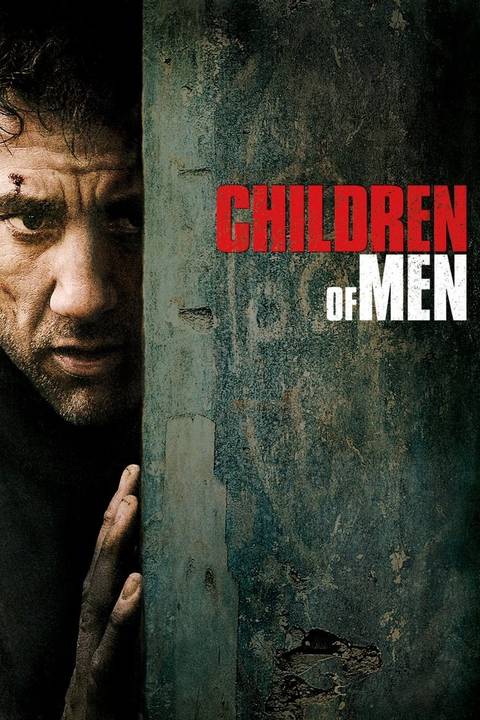
While the relevance of these themes is not exactly promising for the current state of affairs in real life, it does make Children of Men timeless. Premiering in 2006, the film was a beautifully directed adaptation of P.D. James' book. In a not-so-distant future, infertility has become a worldwide epidemic, and the human race is desperately trying to hold on. England is one of the last surviving nations and has caved to scapegoating refugees from other countries.
In the midst of it all is Theo, an alcoholic with nothing to live for, played with heart-wrenching emotion by Clive Owen. Children of Men is a masterful film, hinting at a bleak future that is frighteningly even more relevant now than it was when it premiered. Despite its darkness, it still strikes a chord because of the content and the final scene filled with hope.
‘Children of Men’ Earned Its R-Rating
Science fiction has gradually reached a point where these stories seem within reach; Children of Men most of all. Theo lives in a world where the last baby was born 18 years ago; and this world is brutal. Morale in the world is at an all-time low, and there seems to be no respite from the harrowing reality. The political landscape is accentuated by Alfonso Cuarón’s masterful filmmaking.
Collider Exclusive · Sci-Fi Survival Quiz
Which Sci-Fi World
Would You Survive?
The Matrix · Mad Max · Blade Runner · Dune · Star Wars
Five universes. Five completely different ways the future went wrong — or sideways, or up in flames. Only one of them is the world your instincts were built for. Ten questions will figure out which dystopia, galaxy, or desert wasteland you'd actually make it out of alive.
💊The Matrix
🔥Mad Max
🌧️Blade Runner
🏜️Dune
🚀Star Wars
Test Your Survival →
01
You sense something is deeply wrong with the world around you. What do you do? The first instinct is often the truest one.
APull on every thread until I understand the system — then figure out how to break it. BStop asking questions and start stockpiling — food, fuel, weapons. Questions don't keep you alive. CKeep my head down, observe carefully, and trust no one until I know who's pulling the strings. DStudy the patterns. Every system has a rhythm — learn it, and you learn how to survive it. EFind the people fighting back and join them. You can't fix a broken galaxy alone.
Next Question →
02
In a world of scarcity, what resource do you guard most fiercely? What we protect reveals what we believe survival actually requires.
AKnowledge. If you understand the system, you don't need resources — you can generate them. BFuel. Everything else — movement, power, escape — runs on it. CTrust. In a world of fakes and informants, a truly reliable ally is rarer than any commodity. DWater. And after water, information — the two things empires are truly built on. EShips and credits. The galaxy is big — you survive it by being able to move through it freely.
Next Question →
03
What kind of threat keeps you up at night? Fear is useful data — if you're honest about what you're actually afraid of.
AThat reality itself is a lie — that everything I experience has been constructed to keep me compliant. BA raid. No warning, no mercy — just the roar of engines and then nothing left. CBeing identified. Once someone with power decides you're a problem, you're already out of time. DBeing outmanoeuvred — losing a political game I didn't even know I was playing. EThe Empire tightening its grip until there's nowhere left to run.
Next Question →
04
Which of these comes most naturally to you? Your strongest skill is your best survival asset — use it accordingly.
AHacking, pattern recognition, finding the exploit in any system — digital or human. BMechanical skill — I can strip an engine, rig a weapon, or fix anything with whatever's around. CReading people — knowing when someone's lying, hiding something, or about to run. DDiscipline and endurance — mental and physical. I outlast things rather than overpower them. EPiloting, navigation, knowing how to get from A to B when every route is dangerous.
Next Question →
05
How do you deal with authority you don't trust? Every dystopia has a power structure. Your approach to it determines everything.
ASubvert it from the inside — learn its rules well enough to weaponise them against it. BIgnore it and stay out of its reach. The further from any power structure, the better. CAppear to comply while doing exactly what I need to do. Visibility is the enemy. DManoeuvre within it carefully. You can't beat a system you refuse to understand. EResist openly when I have to. Some things are worth the risk of being seen.
Next Question →
06
Which environment could you actually endure long-term? Survival isn't just tactical — it's physical, psychological, and very much about where you are.
AUnderground bunkers and server rooms — cramped, artificial, but with access to everything that matters. BOpen wasteland — brutal sun, no shelter, constant movement. At least the threat is honest. CA dense, rain-soaked city where you can disappear into the crowd and nobody asks questions. DMerciless desert — extreme heat, no water, and something enormous living beneath the sand. EThe fringe — backwater planets and busy spaceports where the Empire's attention rarely reaches.
Next Question →
07
Who do you want in your corner when things fall apart? The company you keep is the clearest signal of who you actually are.
AA tight crew of believers who've seen behind the curtain and have nothing left to lose. BOne or two people I'd trust with my life. Any more than that and someone talks. CNobody, ideally. Alliances are liabilities. I work alone unless I have no choice. DA community bound by shared hardship and mutual survival — people who need each other to last. EA ragtag team with wildly different skills and total commitment when it counts.
Next Question →
08
A comfortable lie or a devastating truth — which can you actually live with? Some worlds offer one. Some offer the other. Very few offer both.
AThe truth, no matter the cost. I'd rather live in a brutal reality than a beautiful cage. BNeither — truth and lies are luxuries. What matters is surviving the next hour. CI've learned to live with ambiguity. Some truths don't have clean answers. DThe truth — but deployed strategically. Knowing something others don't is power. EThe truth. Even when it means confronting something in yourself you'd rather leave buried.
Next Question →
09
Where do you draw the line — if you draw one at all? Every survivor eventually faces a moment that tests what they're actually made of.
AI won't harm the innocent — even the ones who'd report me without hesitation. BI do what I have to to protect the people I've chosen. Everything else is negotiable. CThe line shifts depending on who's asking and what's at stake. DI draw a long-term line — nothing that compromises my people's future, even if it'd help now. ESome lines, once crossed, can't be uncrossed. I know which ones they are.
Next Question →
10
What would actually make survival worth it? Staying alive is one thing. Having a reason to is another.
AWaking others up — dismantling the illusion so no one else has to live inside it. BFinding somewhere — or someone — worth protecting. A reason to keep moving. CAnswers. Understanding what I am, what any of this means, before time runs out. DLegacy — shaping the future in a way that outlasts me by generations. EFreedom — for myself, for others, for every world still living under someone else's boot.
Reveal My World →
Your Fate Has Been Calculated You'd Survive In…
Your answers point to the world your instincts were built for.
💊 The Matrix
You took the red pill a long time ago — probably before anyone offered it to you. You're a systems thinker who can't help but notice the seams in things, the places where the official version doesn't quite line up. In the Matrix, that instinct is the difference between life and permanent digital sedation. You'd find the Resistance, or it would find you. The machines built an airtight prison. You'd be the one probing the walls for the door.
🔥 Mad Max
The wasteland doesn't reward the clever or the well-connected — it rewards those who are hard to kill and harder to break. That's you. You don't need comfort, community, or a cause larger than the next horizon. You need a vehicle, a clear threat, and enough fuel to outrun it. You are unsentimental enough to survive that world, and decent enough — just barely — to be something more than another raider.
🌧️ Blade Runner
You'd survive here because you know how to exist in moral grey areas without losing yourself completely. You read people accurately, keep your circle small, and ask the questions others prefer not to answer. In a city where humanity is a legal designation rather than a feeling, you hold onto something that keeps you functional. You're not a hero. But you're not lost, either. In Blade Runner's world, that distinction is everything.
🏜️ Dune
Arrakis is the most hostile environment in the known universe — and you are precisely the kind of person it rewards. Patience, discipline, pattern recognition, political awareness, and an understanding that the long game matters more than any single victory. Others come to Dune and are consumed by it. You'd learn its logic, earn its respect, and perhaps, in time, reshape it entirely.
🚀 Star Wars
The galaxy far, far away is vast, loud, and in a constant state of violent political upheaval — and you wouldn't have it any other way. You're someone who finds meaning in being part of something larger than yourself. You'd gravitate toward the Rebellion, or the fringes, or whatever pocket of the galaxy still believes the Empire's grip can be broken. Whatever you are, you fight. And in Star Wars, that willingness is what makes the difference.
↩ Retake Quiz
Before the best space film, Gravity, Cuarón proved he could convey an upsetting world with beautiful filmmaking techniques. One of the most famous sequences in the film is a one-shot inside a moving vehicle that captures some of the most tragic moments of the film. Cuarón and his cinematographer rejected the use of CGI and shot the scene with full 360-degree coverage. This practical effect is a standout in the film and contributes to Children of Men not feeling dated.
After Theo’s ex Julian (Julianne Moore) recruits him to help a "fugee" escape, their car is attacked by marauders. While her role is short-lived, the brutality of her death and how it was captured on film elevated the stakes of the scene. Though the scene didn't glamorize the violence of her death, it was still evocative and painful. This scene ensures that viewers understand how difficult this world is and what is required to achieve the hopeful ending that Children of Men concludes with.
Theo finds this hope when he learns why the refugee Kee (Clare-Hope Ashitey) is so important and this spurs him to action after so many years of giving up. Children of Men makes it clear that there is nothing more important than striving for a better world, and Kee’s role as the first person to give birth in almost two decades represents that. Though the film doesn’t shy away from its bleakness, it also shows a light at the end of the tunnel.
Even in the war-torn streets, everyone puts down their arms when they realize Kee is holding the first baby in decades. Children of Men is a fully engrossing film that doesn’t just work on a thematic level, but is a masterclass in filmmaking. Cuarón’s work is a beautiful meditation on the human condition that is realistic but also maintains the idea that one person can make a difference.
Release Date January 5, 2007
Runtime 109 minutes
Director Alfonso Cuarón
Writers Alfonso Cuarón, David Arata, Timothy J. Sexton, Hawk Ostby, Mark Fergus, P. D. James
Producers Eric Newman, Hilary Shor, Iain Smith, Marc Abraham, Tony Smith






 English (US) ·