
Some remakes die loudly. These are worse. These die with the lights on. That is what makes bad remakes of beloved ’80s movies so weirdly depressing. The ’80s were not subtle, but they were specific. Even the corniest hits had a pulse you could point to. A star persona. A synthetic ache. A little vulgarity. A little innocence. A little swagger. So when the remakes keep bringing back only the title, plot skeleton, and the famous costume pieces, and then act confused when the movie still feels empty. It is weird. Of course it feels empty. You copied the furniture and threw out the nice warm lighting.
And the ’80s especially needed electricity. Those movies lived on movie-star confidence, giant emotional gestures, shameless sentiment, odd tonal sincerity, and that half-embarrassing, half-beautiful belief that a premise could actually become a whole emotional universe. The remakes below keep sanding that down. They get tidier where they should get messier. They get safer where they should get stranger. They get louder where they should get more alive.
10 'Arthur' (2011)
 Image via Warner Bros. Pictures
The original Arthur knew that drunkenness, childishness, grief, wealth, and loneliness can all sit inside the same human being at once. Arthur Bach (Dudley Moore) there was not just doing cute rich-man misbehavior. He felt spiritually stunted, charming in a self-destructive way, and faintly tragic because the movie understands that limitless money can preserve immaturity the way formaldehyde preserves tissue. You laugh at Arthur, though the movie also knows he is one emotional collapse away from being unbearable.
The remake turns him into something much softer and much less dangerous. Arthur Bach (Russell Brand) is still immature, still erratic, still drifting through inherited luxury, though the writing keeps protecting him from the bitterness and sadness that made the original character worth watching. That is the recurring failure here: the film wants the eccentricity without the rot. Helen Hobson (Helen Mirren) does fine work as Hobson, but even that relationship lands differently because the whole movie is gentler than it should be. Arthur should feel like a spoiled man’s last possible chance to become emotionally real. This one mostly feels like whimsical rehab by rom-com.
9 'Fame' (2009)
 Image via MGM Distribution Co.
A movie like Fame only works if ambition feels dangerous. Not merely inspiring. The original is rough-edged and sprawling and not always neat, though it understands what performance schools actually do to young people. They inflate dreams, sharpen talent, feed ego, expose mediocrity, create obsession, sexual confusion, class anxiety, artistic self-invention, humiliation. The kids want to be seen so badly it starts eating through the rest of their personalities. That tension is the whole movie.
The remake wants uplift much more than hunger. That is fatal. It smooths the atmosphere into generic arts-school aspiration and starts playing like a talent-show movie with higher production values. Everyone is striving, yes, but striving in the wrong register. Too presentable. Too cleanly arranged. Fame should be sweaty with insecurity. It should feel like every hallway contains one person close to breakthrough and another close to psychic collapse. Here, the school becomes a content-delivery machine for nice-looking numbers and familiar emotional beats. It has movement. It does not have desperation.
8 'Overboard' (2018)
 Image via MGM
This is one of those remakes where you can see the logic and still feel the blood draining out of the room. Yes, the original premise is morally bizarre. Yes, changing the gender setup sounds like a sensible update. But a premise as warped as Overboard’s only works when the movie understands how unstable its own fantasy really is. It needs prickliness. It needs resentment and attraction and class humiliation all grinding against each other at once. You need to feel the bad idea under the comedy.
The remake gets nicer and dies from that niceness. And that’s tragic. Kate Sullivan (Anna Faris) has a pleasant frazzled energy, and Leonardo Montenegro (Eugenio Derbez) brings enough vanity to suggest a sharper movie somewhere nearby, but the script keeps rushing to soften the edges before they can spark. The result is less offensive than the original in some obvious ways and far less memorable in every other way. It is the kind of remake that mistakes moral cleanup for dramatic improvement. All it really does is remove the voltage. A weird romantic premise without danger just becomes paperwork with flirtation.
 Image via Paramount Pictures
The problem with remaking Footloose is that people keep thinking it was about dancing as an abstract symbol of youthful freedom. But it was not that vague. It was about a town choking on grief and control. Ren arriving there matters because he is a live wire entering a culture that has turned mourning into policy. The dancing, the music, the rebellion, all of that works because the adults are spiritually rigid enough to make joy feel subversive. That emotional arrangement is what gives the movie lift.
The remake understands the setup and somehow keeps missing the fever. Ren McCormack (Kenny Wormald) is fine on a functional level, but the movie rarely catches that wonderful old feeling of a teenager pushing back against a social order that is both ridiculous and genuinely oppressive. It is competent. That is the problem. Footloose should not just be competent. It should feel overheated, impulsive, a little corny in a way that becomes emotionally persuasive through sheer conviction. This version is too aware of itself, too measured, too polished to really kick free of its own update strategy.
6 'The Hitcher' (2007)
 Image via TriStar Pictures
The original The Hitcher is one of those road nightmares that feels like it has stepped out of ordinary narrative reality and onto a mythic shoulder of the highway. John Ryder (Rutger Hauer) does not just threaten Jim Halsey. He invades his moral space. He turns the open road into a corridor where logic starts breaking down and evil begins behaving less like a criminal motive and more like a cosmic taunt. That is why the movie sticks. It is not merely violent. It is metaphysically rude.
The remake turns that into a more conventional pursuit film. John Ryder (Sean Bean) has menace, sure, but the writing does not let Ryder become sufficiently uncanny. He is dangerous in a recognizable, movie-villain way. The original needed him to feel wrong in a less containable sense. And once that is lost, the whole film starts shrinking. Even adding Grace Andrews (Sophia Bush) into the core movement does not help much, because the story keeps steering toward slicker danger instead of deeper spiritual unease. The Hitcher should make the road feel morally empty and personally cursed. This one just chases.
5 'Conan the Barbarian' (2011)
 Image via Lionsgate Films
Conan should feel older than civilization and younger than thought. That is the ideal. It should feel like somebody found a bloodstained legend carved into a ruined wall and filmed the memory of reading it. The 1982 movie gets there through score, silence, stone-faced grandeur, barbaric mood, and the strange gift Arnold Schwarzenegger had for seeming less like an actor than a piece of myth dragged into motion.
The remake is busier, louder, more visibly active, and much less mythic. Jason Momoa had enough raw presence to make this work in theory. He can snarl, move, and dominate a frame. But the writing keeps feeding Conan (Jason Momoa) ordinary revenge-fantasy fuel instead of true sword-and-sorcery atmosphere. He should feel shaped by a brutal world that has gods, rituals, cruelty, lust, and old iron in the ground. Instead he often feels like a modern action protagonist sprinting through a genre skin. That is what this movie never understands: sword-and-sorcery is not just action with axes. It needs ritual heat. It needs pagan weather. This version has props.
4 'Red Dawn' (2012)
 Image via FilmDistrict
The original is ridiculous, absolutely, but it is ridiculous in a hot-blooded way that still gives it life. It understands teenage war fantasy with a disturbing amount of clarity. Kids become guerrillas. American landscape becomes invasion map. Brotherhood, panic, patriotism, fear, and adolescent identity all fuse inside one giant Cold War adrenaline dream. You do not watch it for realism. Well, not necessarily. You watch it because it turns youth into desperate mythology.
The Red Dawn remake, though, feels like it was built after too many meetings. The Wolverines are there. The occupation is there. The resistance beats are there. The whole thing is structurally present and emotionally half-asleep. Jed Eckert (Chris Hemsworth) should feel like the kind of older-brother-warrior figure teenagers would mythologize instantly under pressure. Instead the movie keeps flattening its own rebellion fantasy into bland modern combat drama. The old one ran on fever and fear. This one runs on tactical usefulness. That is a horrible trade for a movie that needed to feel like kids were trying to write themselves into national legend before terror could catch up.
3 'RoboCop' (2014)
 Image via Sony Pictures Releasing
This is one of those remakes where the craftsmanship almost tricks people into being forgiving. It is handsomely mounted. It is not stupid in the obvious way. It has ideas it can articulate. But the original RoboCop is not beloved because it is a cleanly mounted idea machine. It is beloved because it is savage. It is corporate satire soaked in body horror and media poison. It is funny, sick, sad, and furious all at once. Murphy becomes a product, and the film knows exactly how obscene that is.
The remake shifts the center of gravity in a subtler but still fatal way. Alex Murphy (Joel Kinnaman) becomes more emotionally continuous with his family, more self-aware, more conventionally dramatic as a suffering husband and father. That sounds richer until you realize the movie is quietly shrinking the larger social nightmare to make room for cleaner personal feeling. OmniCorp still exists, yes, though it never feels as spiritually monstrous as OCP. And RoboCop needs monstrous systems. It is not just a man-machine tragedy. It is a world where markets, media, policing, and death all got into bed together and had a chrome child. Once that ugliness gets tidied up, the whole thing becomes respectable in the worst sense.
2 'Poltergeist' (2015)
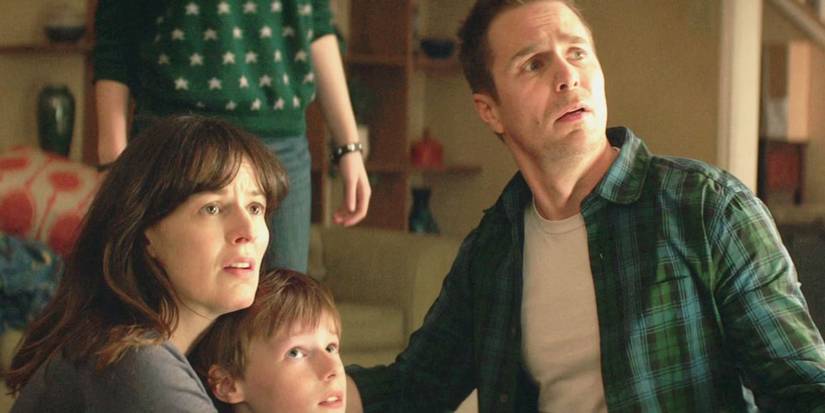 Image via 20th Century Studios
A haunted-house movie fails the second it stops understanding the sanctity of ordinary family space. That is the whole pressure point. Poltergeist works because the suburban home starts as recognizable warmth, television hum, toys, bedtime, siblings, mild parental chaos, the soft clutter of being alive together. Then that warmth gets rewritten into something spiritually invasive. The horror lands because comfort was there first.
The remake rushes the contamination. That is its biggest sin. The family never becomes fully lived-in before the movie starts reaching for effect beats and lore mechanisms. Eric Bowen (Sam Rockwell) and Amy Bowen (Rosemarie DeWitt) try to create enough household looseness to give the supernatural something to violate, but the script keeps moving too fast and too mechanically. A house like this should feel as if it is learning the family, studying the weak corners, finding out where love lives so it can strike there. This one mostly behaves like a haunted-house attraction that knows when to trigger itself. It is not enough to have closets and clowns and flickering dimensions. The house must feel hateful. This one feels programmed.
1 'The Fog' (2005)
 Image via Sony Pictures Releasing
This is the worst one because it commits the laziest, saddest, most terminal remake mistake: it takes atmosphere and replaces it with explanation. John Carpenter’s The Fog is not about ghosts attacking a town but about weather carrying guilt. It is about old coastal sin rolling back in on the night air. The fog itself is the menace because it feels ancient, patient, almost liturgical. The town’s history is not just backstory. It is the reason the whole place feels spiritually exposed. You can smell the salt and the secret together.
The remake keeps trying to make the haunting more explicit, more romanticized, more narratively connected in an ordinary screenplay way, and every one of those choices hurts it. Once the ghosts become more legible and the story becomes more explanatory, the fog stops being a presence and becomes transportation. That is death for this material. A movie called The Fog should understand that the title itself is the promise. It should be about formlessness moving with purpose. About uncertainty becoming dread. About visibility being morally compromised. This version gives you polished supernatural bookkeeping where there should have been a curse. And that is why it ends up at the bottom. The original drifts. The remake just arrives.
Collider Exclusive · Oscar Best Picture Quiz
Which Oscar Best Picture
Is Your Perfect Movie?
Parasite · Everything Everywhere · Oppenheimer · Birdman · No Country
Five Oscar Best Picture winners. Five completely different visions of what cinema can be — and what it can do to you. One of them is the film that was made for the way your mind works. Ten questions will figure out which one.
🪜Parasite
🌀Everything Everywhere
☢️Oppenheimer
🐦Birdman
🪙No Country for Old Men
FIND YOUR FILM →
01
What kind of film experience do you actually want? The best movies don't just entertain — they leave something behind.
ASomething that pulls the rug out — that makes me think I'm watching one kind of film and then reveals I'm watching another entirely. BSomething overwhelming — funny, sad, absurd, and genuinely moving, all at once. CSomething grand and weighty — a film that makes me feel the full scale of what I'm watching. DSomething formally daring — a film that pushes what cinema can even do. ESomething lean and relentless — pure tension with no wasted frame.
NEXT QUESTION →
02
Which idea grabs you most in a film? Great films are driven by a central obsession. What's yours?
AClass, inequality, and what people are willing to do when desperation meets opportunity. BIdentity, family, and the chaos of trying to hold your life together when everything is falling apart. CGenius, moral responsibility, and the catastrophic weight of a decision you can never take back. DEgo, legacy, and the terror of becoming irrelevant while you're still alive to watch it happen. EEvil, chance, and whether moral order actually exists or if we just tell ourselves it does.
NEXT QUESTION →
03
How do you like your story told? Form is content. The way a story is shaped changes what it means.
AGenre-twisting — I want it to start in one lane and migrate into something completely different. BMaximalist and genre-blending — comedy, action, drama, sci-fi, all in one ride. CEpic and non-linear — cutting between timelines, building a mosaic of cause and consequence. DA single unbroken flow — I want to feel like I'm living it in real time, no cuts to safety. ESpare and precise — every scene doing exactly what it needs to do and nothing more.
NEXT QUESTION →
04
What makes a truly great antagonist? The opposition defines the protagonist. What kind of opposition fascinates you?
AA system — invisible, structural, and almost impossible to fight because it has no single face. BThe self — the ways we sabotage, abandon, and fail the people we love most. CHistory — the unstoppable momentum of events that no single person can stop or redirect. DThe industry — the machinery of culture that chews up talent and spits out irrelevance. EPure, implacable evil — a force so certain of itself it becomes almost philosophical.
NEXT QUESTION →
05
What do you want from a film's ending? The final note is the one that lingers. What do you want it to sound like?
AShock and inevitability — a conclusion that recontextualises everything that came before it. BEarned emotion — I want to cry, laugh, and feel genuinely hopeful, even if the world is a mess. CDevastation and grandeur — an ending that makes me sit in silence for a few minutes after. DAmbiguity — something that leaves enough open that I'm still thinking about it days later. EBleakness — an honest refusal to pretend the world is tidier than it actually is.
NEXT QUESTION →
06
Which setting pulls you in most? Where a film takes place shapes everything — mood, stakes, what's even possible.
AA gleaming modern city with a hidden underside — beauty masking rot, wealth masking desperation. BA collapsing suburban life that opens onto something infinite — the multiverse of a single ordinary person. CThe corridors of power and science at a world-historical turning point — where decisions echo for decades. DThe grimy, alive chaos of New York and Hollywood — fame as both destination and trap. EVast, indifferent landscape — desert and highway where violence arrives without warning or reason.
NEXT QUESTION →
07
What cinematic craft impresses you most? Every great film has a signature — a technical or artistic element that makes it unmistakable.
AProduction design and mise-en-scène — every frame composed to carry meaning beneath the surface. BEditing and tonal control — the ability to move between registers without losing the audience. CScore and sound design — music that becomes inseparable from the dread and awe of what you're watching. DCinematography as performance — the camera not recording events but participating in them. ESilence and restraint — what's left unsaid and unshown doing more work than any dialogue could.
NEXT QUESTION →
08
What kind of main character do you root for? The protagonist is the lens. Who you choose to follow says something about you.
ASomeone smart and resourceful who makes increasingly dangerous decisions under pressure. BSomeone overwhelmed and ordinary who turns out to be capable of something extraordinary. CA brilliant, tortured figure whose gifts and flaws are inseparable from each other. DA self-destructive artist whose ego is both their superpower and their undoing. EA quiet, principled person trying to make sense of a world that has stopped making sense.
NEXT QUESTION →
09
How do you feel about a film that takes its time? Pace is a choice. Some films sprint; others let tension accumulate slowly, deliberately.
AI love a slow build when I know the payoff is going to be seismic — patience for a devastating reveal. BGive me relentless momentum — I want to feel breathless and emotionally spent by the end. CEpic runtime doesn't scare me — if the material demands three hours, give me three hours. DI want it to feel propulsive even when nothing is technically happening — restless energy throughout. EDeliberate and unhurried — I want dread to accumulate in the spaces between the action.
NEXT QUESTION →
10
What do you want to feel walking out of the cinema? The best films leave a mark. What kind of mark do you want?
AUnsettled — like I've just seen something I can't fully explain but can't stop thinking about. BMoved and energised — like the film reminded me what actually matters and gave me something to hold onto. CHumbled — like I've been in the presence of something genuinely important and overwhelming. DExhilarated — like I've just seen cinema doing something it's never quite done before. EHaunted — like a cold, quiet dread that stays with me for days.
REVEAL MY FILM →
The Academy Has Decided Your Perfect Film Is…
Your answers have pointed to one Oscar Best Picture winner above all others. This is the film that was made for the way your mind works.
Parasite
You are drawn to films that operate on multiple levels simultaneously — that begin in one genre and quietly, brilliantly migrate into another. Bong Joon-ho's Parasite is a film about class, desire, and the architecture of inequality that manages to be darkly funny, deeply suspenseful, and genuinely shocking across a single extraordinary running time. Your instinct is for cinema that hides its true intentions until the moment it's ready to reveal them. Parasite is exactly that — a film that rewards close attention and punishes assumptions, right up to its devastating final image.
Everything Everywhere All at Once
You want it all — and this film gives you all of it. The Daniels' Everything Everywhere All at Once is one of the most maximalist films ever made: action comedy, multiverse sci-fi, family drama, existential crisis, and a genuinely earned emotional core that sneaks up on you amid the chaos. You are someone who responds to ambition, who doesn't want cinema to choose between being entertaining and being meaningful. This film refuses that choice entirely. It is overwhelming by design, and its overwhelming nature is precisely the point — because the feeling of being crushed by infinite possibility is exactly what it's about.
Oppenheimer
You are drawn to cinema on a grand scale — films that understand history not as a backdrop but as a force, and that place their characters inside that force and watch what happens. Christopher Nolan's Oppenheimer is a film about the terrifying gap between what we can do and what we should do, told with the full weight of one of the most consequential moments in human history behind it. You want your films to feel important without feeling self-important — to earn their ambition through sheer craft and the gravity of their subject. Oppenheimer does exactly that. It is enormous, complicated, and refuses easy comfort.
Birdman
You are drawn to films that foreground their own construction — that make the how of the filmmaking part of the what it's about. Alejandro González Iñárritu's Birdman, shot to appear as a single continuous take, is cinema examining itself through the cracked mirror of a fading actor's ego. You respond to formal daring, to the feeling that a film is doing something that probably shouldn't be possible. Michael Keaton's performance and Emmanuel Lubezki's restless camera create something genuinely unlike anything else — a film that is simultaneously about creativity, relevance, self-destruction, and the impossibility of ever truly knowing if your work means anything at all.
No Country for Old Men
You are drawn to cinema that trusts silence, that refuses to explain itself, and that treats dread as a form of meaning. The Coen Brothers' No Country for Old Men is a film about the arrival of a new kind of evil — implacable, arbitrary, and utterly indifferent to the moral frameworks we use to make sense of the world. It is one of the most formally controlled films ever made, and its controlled restraint is what makes it so terrifying. You want your films to haunt you, not comfort you. You are not interested in resolution if resolution would be dishonest. No Country for Old Men is honest in a way that most cinema never dares to be.
↻ RETAKE THE QUIZ

The Fog
Release Date October 14, 2005
Runtime 100 Minutes
Director Rupert Wainwright
Writers Cooper Layne






 English (US) ·