
Everyone remembers John Wayne and James Stewart from The Man Who Shot Liberty Valance, but they wouldn't have been as great if not for the great Western villain they had to face. In almost every genre, from superhero movies to horror flicks, a hero is only as good as their best villain. That is especially true in the Western genre.
Westerns have been part of the Hollywood landscape since the early days of silent films, with The Great Train Robbery as one of the first narrative films ever made. The genre then became the most popular alongside crime films and horror for movie fans. This lasted for decades, with names like John Wayne, Clint Eastwood, and more keeping it on top.
That all ended in the 1970s, when the genre finally fell out of favor. The good news is that there are still great Western movies made, with a resurgence starting in the 1990s thanks to names like Clint Eastwood and Kurt Russell. While the genre is nowhere near as plentiful as before, there are still incredible Western films released.
Each of these modern Westerns has recognizable heroes and some brilliantly written villains. These bad guys range from the murderous to the deceitful and dishonest. They also include much more nuanced characters, unlike the early days of Westerns where one of the downfalls of the genre was making the Native American tribes generic villains in many films.
In today's world of Western movies, the villains are even strong enough characters to help the actors earn Oscar nominations, and even win some, as No Country For Old Men showed so well. However, it is wrong to think this is a new thing, because classic Westerns also have some great villains throughout the years.
Bruce Dern in The Cowboys

Bruce Dern plays Asa Watts, the outlaw in The Cowboys who actually kills John Wayne's Wil Anderson, one of the only actors in Hollywood history to kill a John Wayne hero character in a Western movie.
Based on the novel by William Dale Jennings, John Wayne is Wil Anderson, a rancher who hires schoolboys to help on his cattle drive. He then teaches the boys lessons about life, only to find them all in danger from the evil villain, Asa Watts. What is even worse is that Asa shot and killed an unarmed Wil Anderson in the movie.
It is even notable because fans were so angered at the idea that Wayne was unarmed when he was killed that actor Bruce Dern said he received death threats after the movie's release. However, Wayne requested Dern for the role because he felt only he could make it work. When the schoolboys get revenge, it was a crowd-pleasing moment.
Lee Marvin in The Man Who Shot Liberty Valance

The Man Who Shot Liberty Valance is best known for its two main stars, with James Stewart playing Ranse Stoddard, a lawyer and political hopeful, and John Wayne as a hard-working rancher named Tom Doniphon, who tries to teach Ranse how to defend himself when an outlaw named Liberty Valance targets him.
While Stewart and Wayne were the clear stars, it was Lee Marvin's Liberty Valance who really stole the show. This was a breakthrough role for Marvin, who previously played a lot of supporting villain roles, and director John Ford gave Marvin a chance to shine. Marvin made Liberty Valance so dangerous, it was clear Tom had to do something in the big movie's twist.
The Man Who Shot Liberty Valance remains one of Ford's best films, and Marvin's Liberty Valance is considered the model for the genre's modern-day villain: a man whose claim to fame is the idea that violence is needed to survive in the American West.
Jack Palance in Shane
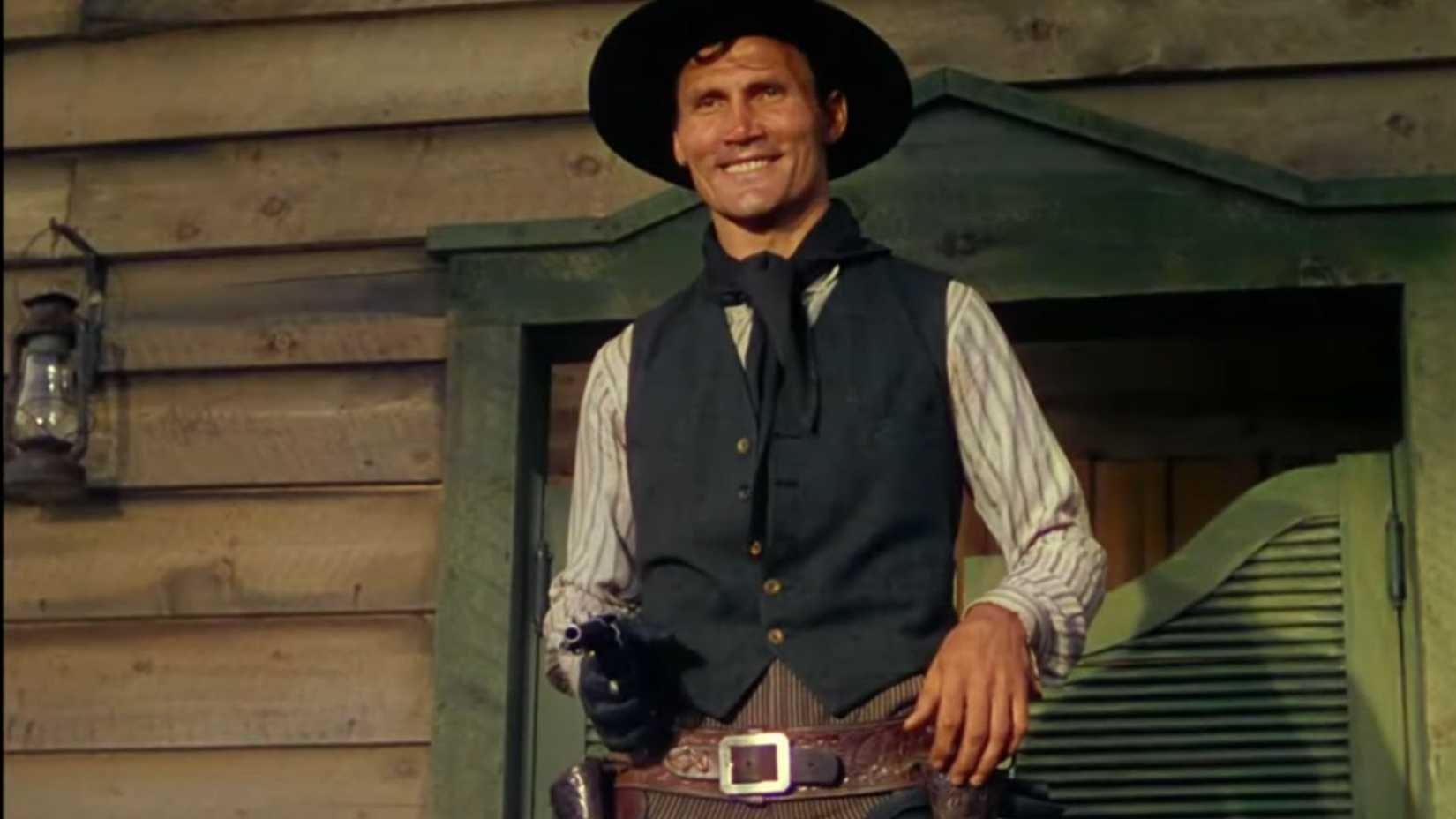
The movie Shane remains one of Western cinema's true masterpieces, with Alan Ladd starring as the titular character, a mysterious man who comes into a small valley in the Wyoming Territory where he gets a job as a farmhand by a hard-working rancher. However, he soon learns there is a man trying to force people to move so he can buy up the property.
This is where Jack Palance comes into play, as he is a gunslinger hired to terrorize the homesteaders and try to force them all out. He was so terrifying and menacing in his role, that Palance earned Oscar recognition, picking up his first-ever Academy Award nomination for Best Supporting Actor.
While Emile Meyer was the main antagonist as Rufus Ryker, and Western icon Ben Johnson played one of his main henchmen, it was Jack Palance as Jack Wilson who stole every scene he was in.
Daniel Day Lewis in There Will Be Blood

One of the strangest modern Westerns is also one of the best of the 21st century, with Paul Thomas Anderson's There Will Be Blood in 2007. This was a drama, a Western, and a horror movie all rolled into one. Based on Upton Sinclair's Oil!, There Will Be Blood starred Daniel Day-Lewis as Daniel Plainview.
At first, it seemed that Plainview was the star, and he was the protagonist of the film in the simplest terms. However, in reality, Daniel Plainview was a Western version of Dracula, a monster who comes into a new town and bleeds it dry of its oil until nothing is left, and then he leaves that community dead.
Day-Lewis won the Oscar for Best Actor for his performance, and the final scenes with him alongside his nemesis, Eli Sunday (Paul Dano), remain one of the most iconic scenes in any modern Western. Plainview was terrifying, and a villain no one will ever forget.
Henry Fonda in Once Upon a Time in the West
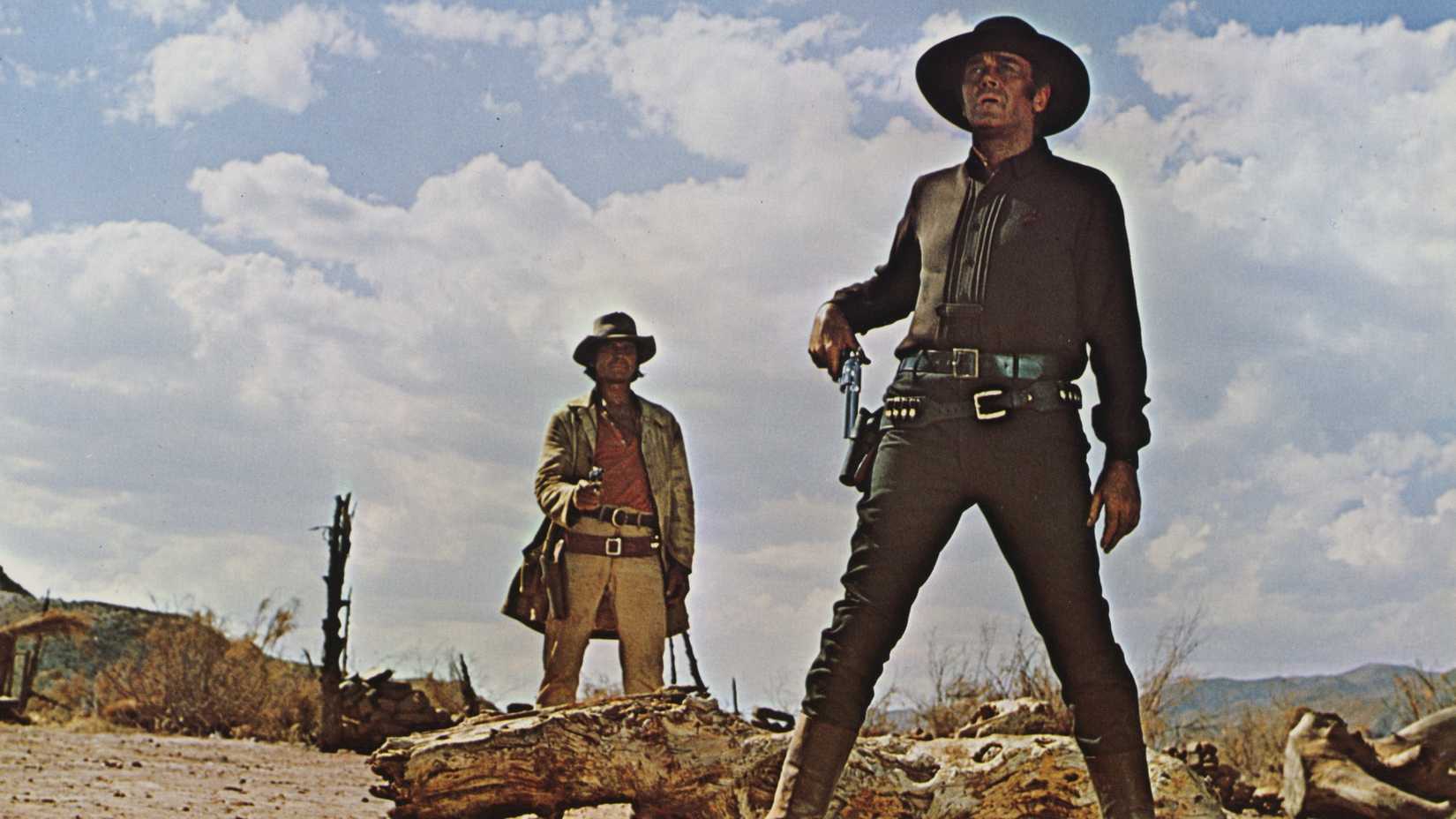
Once Upon a Time in the West brought in Henry Fonda to play the movie's villain, Frank, and this was not only against type, but it was also a brilliant casting choice where Fonda proved he could be as evil as any other villain. The actor previously played morally heroic men in movies like The Grapes of Wrath and 12 Angry Men.
Instead, Frank was a cold-blooded, sadistic killer, a man who took pleasure in hurting people and also had no problem killing children. It was a surprising turn for the veteran actor, and it made his confrontation with Harmonica (Charles Bronson) one of Western cinema's greatest ever final showdowns.
While everyone talks about his trilogy with the Man with No Name, Once Upon a Time in the West might be Sergio Leone's greatest accomplishment. A lot of that has to do with Henry Fonda's surprising performance as the Western villain.
Powers Boothe in Tombstone

While there are countless terrifying and murderous Western villains in movie history, there are also some that stand out because they are so over-the-top and fun. That is why Powers Boothe remains one of the best actors to ever play a villain in a Western with his performance as Curly Bill Brocius in Tombstone.
While the most dangerous villain in the movie is Michael Biehn's Johnny Ringo, it is Curly Bill who steals the show with his over-the-top, manic performance as the leader of the Cowboys. He is the leader, he loves to kill people, and he does it both with a menacing and unpredictable nature as well as theatrically.
Val Kilmer and Michael Biehn's showdown was the best of the movie, but seeing Kurt Russell and the laughing, hyperactive Powers Boothe in their final confrontation was the most fun. When Curly Bill just says, "Well... bye" before he dies, it solidifies it as one of Tombstone's best quotes.
Lee Van Cleef in The Good, the Bad and the Ugly

Sergio Leone's The Good, the Bad and the Ugly remains one of the best spaghetti Westerns of all time, and the entire Dollars Trilogy are highlights of the Western genre in the 1960s. These films made Clint Eastwood a star as The Man with No Name, but he wasn't the only major star in these three films.
One of these actors was the villain Angel Eyes in The Good, the Bad and the Ugly. While Eastwood was the "Good" in the title, it was Angel Eyes who was the "Bad." While the three men (Eli Wallach was the "Ugly") were working together to find the Confederate gold, they turned on each other when the time came.
This movie helped make Van Cleef a Western star, and the stand-off at the end remains one of the most tension-filled confrontations in movie history. If anything, Van Cleef created the definitive spaghetti Western movie villain.
Russell Crowe in 3:10 to Yuma
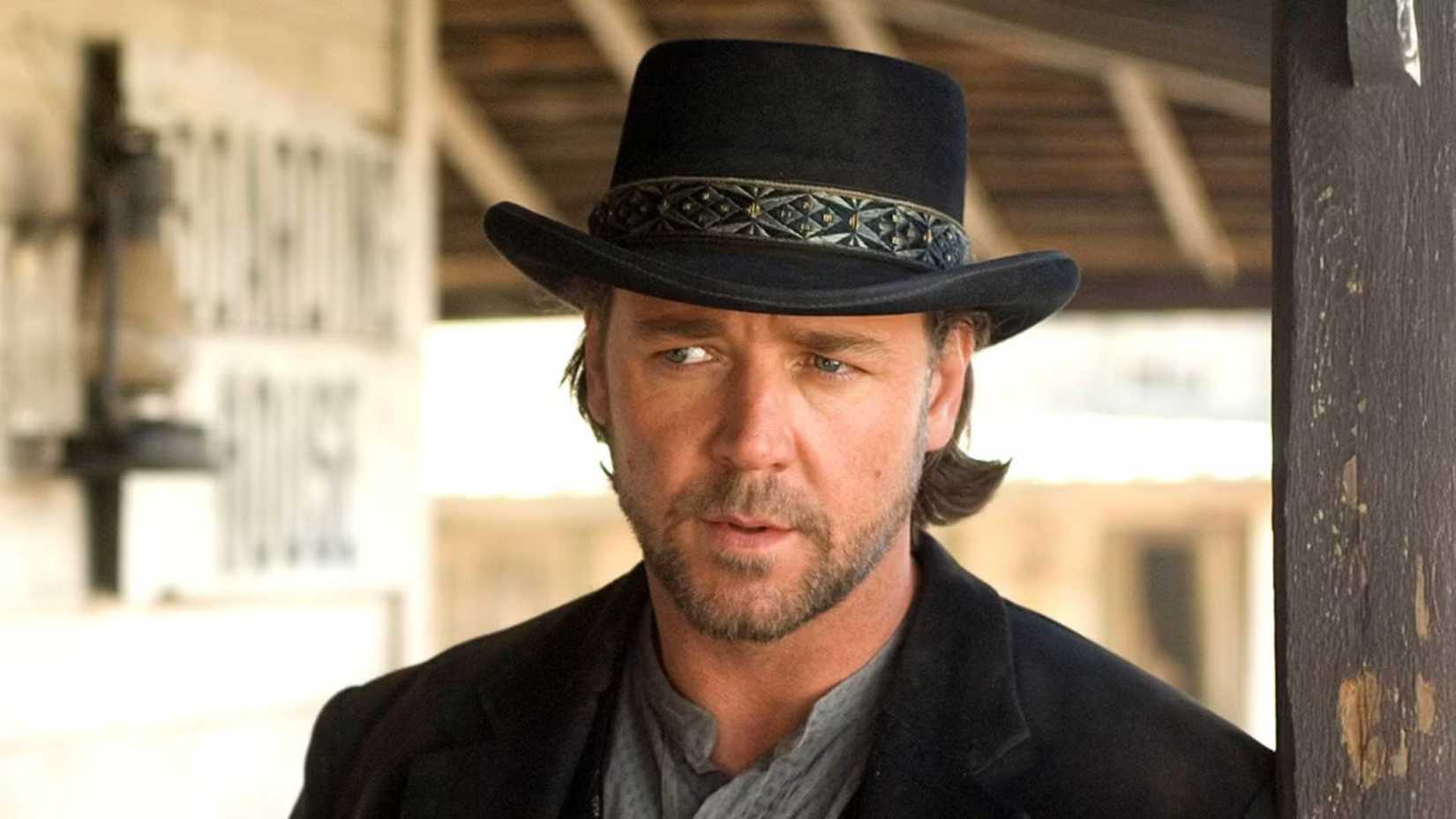
Russell Crowe stars in 3:10 to Yuma as Ben Wade, a role previously made famous by Glenn Ford in the 1957 version. However, while he is a villain in the movie, in the end, he ends up as a co-protagonist, and his role here was even better than in the original Western classic. In both, he is a notorious outlaw who was already arrested.
The story sees Ben Wade needing to be transported to a train station to get on the train to the Yuma Penitentiary, but Wade's gang wants to help free him. A struggling rancher is hired to lead the transport. In this version of the movie, Christian Bale played the rancher, Dan, and he dedicated himself to getting Wade to prison.
What makes Wade great is that he is one of the most complex villains in any Western movie. This is because, in the end, he chose to save Dan and turn on his own gang to do the right thing. This conflict of his morals is what makes him such a well-written character.
Gene Hackman in Unforgiven
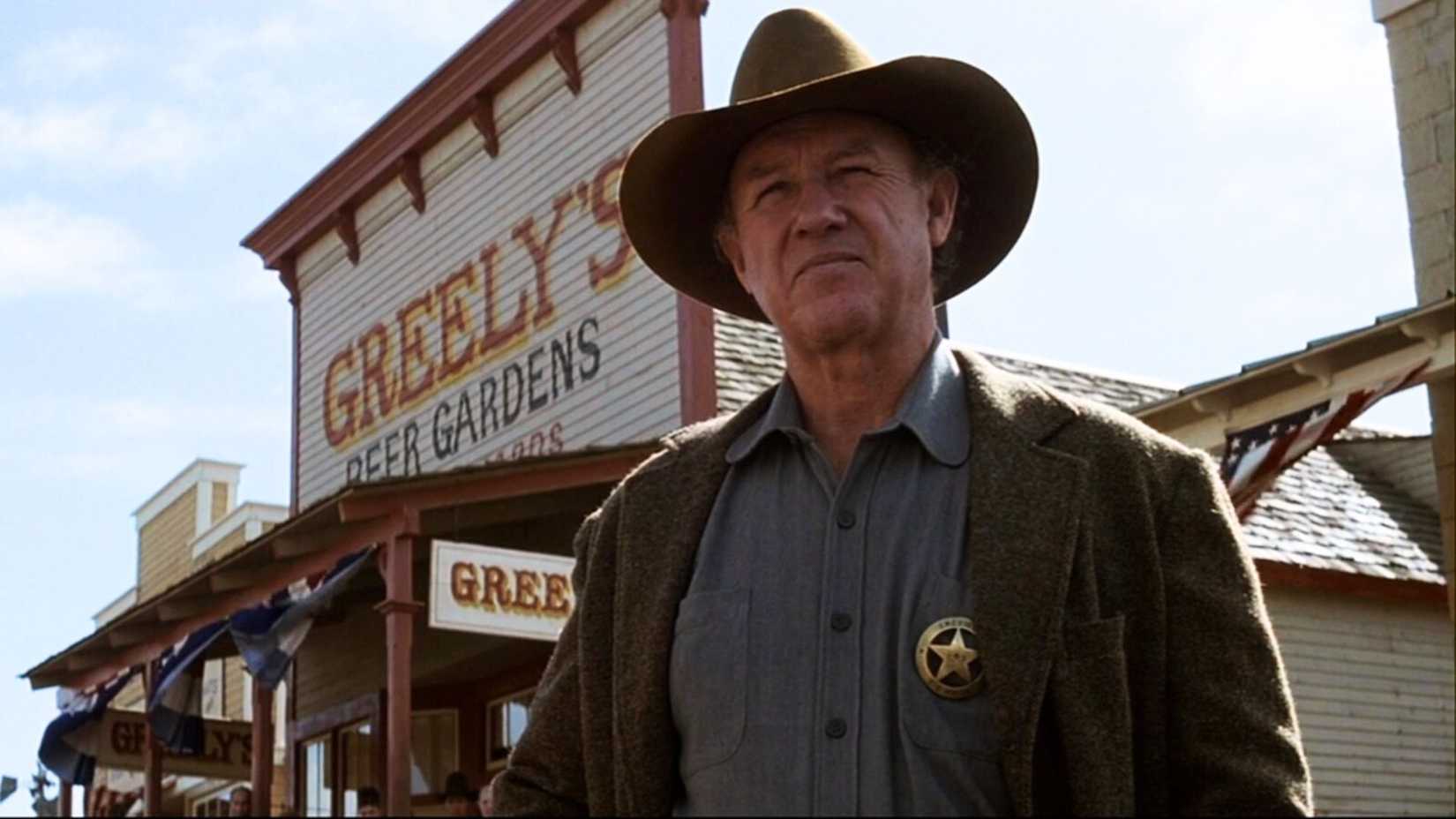
Unforgiven is a movie that remains morally ambiguous, since the protagonist is the outlaw and the villain in this specific story is the law enforcement officer. Clint Eastwood directed and starred in the film as William Munny, and he has retired and is living out his final days after his wife's death.
However, when a local sheriff named Little Bill Daggett (Gene Hackman) tortures one of William's closest friends, leading to his death, Munny comes out of retirement to seek revenge. While Little Bill was doing things to protect his town, he was brutal and violent and was worse than any outlaw he crossed.
Hackman turned in a masterful performance as Little Bill, and he went on to win the Oscar for Best Supporting Actor, while the movie won the Best Picture Oscar, something rare in the Western genre.
Javier Bardem in No Country For Old Men
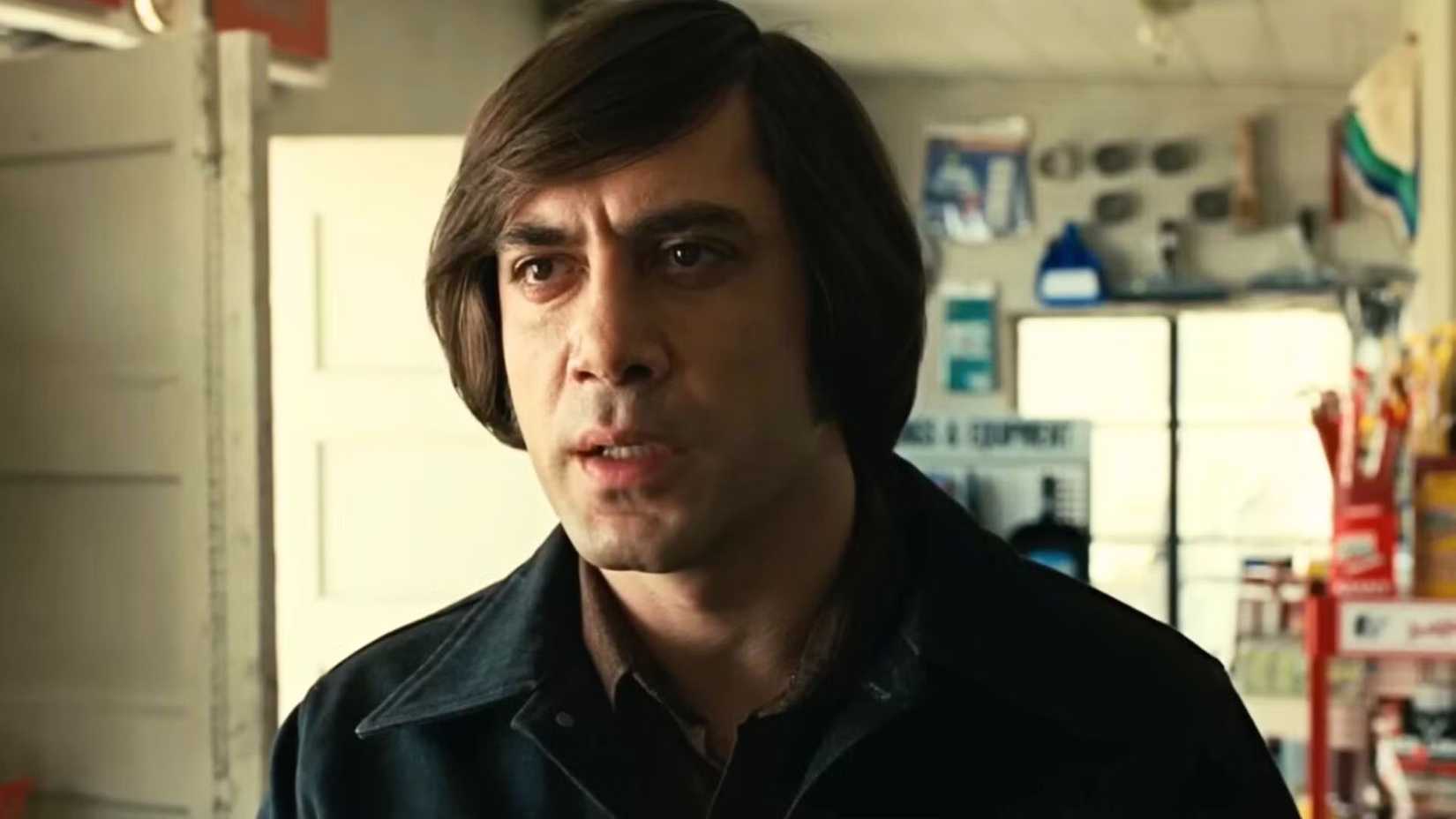
The same year that P.T. Anderson released There Will Be Blood, the Coen Brothers released their own revisionist Western. While Daniel Day-Lewis won an Oscar for the Anderson Western, it was the Coen Brothers who cleaned up that year at the Oscars for their release.
No Country For Old Men won Best Picture, Best Director, and Javier Bardem won Best Supporting Actor for his performance as Anton Chigurh. He was a methodical killer sent to retrieve money for the mob and he killed anyone he crossed, allowing their fate to be based on a coin flip.
Based on the idea of Death itself, Javier Bardem was an unstoppable villain, and he was a terrifying force of nature that roared his way across the American West until he finally reached his goal, and this Western movie's protagonist never stood a chance against one of the best Western movie villains of all time.




 English (US) ·