
 Image via New Line/courtesy Everett Collection
Published Jun 14, 2026, 8:28 AM EDT
Sign in to your Collider account
Fantasy is probably the hardest genre to pull off without looking ridiculous. A detective only needs a crime. A thriller needs a strong hook. But fantasy asks the audience to accept dragons, spirits, magic, talking creatures, impossible landscapes, and entire civilizations that do not exist, and everything else that other movies require anyway. The moment any of those things feel fake, the illusion starts falling apart.
That is why the finest fantasy films out there usually come from directors who understand that audiences will believe almost anything if the details feel real. The 10 films on this list create places that feel complete even when the audience only sees a small corner of them. That sense of conviction, I believe, is what separates great fantasy from expensive fantasy.
10 ‘The Adventures of Baron Munchausen’ (1988)
 Image via Columbia Pictures
The film begins with Baron Munchausen (John Neville) interrupting a stage performance that is supposedly telling the story of his life. According to the Baron, almost everything in the play is wrong. He then launches into a series of increasingly unbelievable stories involving a trip to the Moon, a journey inside a giant sea creature, and encounters with figures who seem to belong in dreams rather than reality. The film keeps moving from one impossible situation to another, though it never pauses to explain how any of it works.
What makes the experience so memorable is the sheer amount of invention on screen. Giant sets, elaborate costumes, strange machines, and bizarre creatures appear one after another without feeling repetitive. Director Terry Gilliam approaches fantasy with the enthusiasm of somebody trying to fit every idea he has ever loved into a single movie. The result is chaotic at times, though there is always something fascinating to look at.
9 ‘The Dark Crystal’ (1982)
 Image via Universal Pictures
Jen (Stephen Garlick) has spent most of his life hidden away from the world until he learns that the Dark Crystal must be repaired before a rare celestial event takes place. To accomplish that task, he leaves home and begins a journey across a land populated by strange creatures, ancient ruins, and powerful enemies. Along the way, he meets Kira (Lisa Maxwell), who becomes just as important to the quest as Jen himself.
One of the most remarkable things about the film is that nearly every character is a puppet. The Skeksis, Mystics, and countless other creatures feel fully alive despite never being human performers. Instead of relying on familiar fantasy imagery, the movie creates an entirely original environment with its own appearance, history, and wildlife. Even decades later, very few fantasy films look remotely similar to it. Every frame feels handcrafted in a way that has become increasingly rare.
8 ‘Beauty and the Beast’ (1946)
 Image via DisCina
After her father unknowingly takes a rose from a mysterious castle, Belle (Josette Day) agrees to take his place and live with the Beast (Jean Marais). At first, the castle feels threatening and unfamiliar. Hands emerge from walls holding candles, doors open by themselves, and strange voices seem to echo through empty corridors. Belle expects a monster. Instead, she finds somebody carrying deep sadness beneath a frightening appearance.
Director Jean Cocteau turns a familiar fairy tale into something that often feels closer to a dream. Many scenes unfold with a quiet elegance that makes ordinary actions seem magical. Belle gliding through hallways or walking through the castle gardens becomes just as memorable as any major plot development. The film was released in 1946, yet many of its images still look more imaginative than fantasy movies made generations later.
7 ‘Pan’s Labyrinth’ (2006)
 Image via Warner Bros. Pictures
While Spain recovers from the Civil war, Ofelia (Ivana Baquero) moves into a remote military outpost with her pregnant mother. Her new home is controlled by Captain Vidal (Sergi López), a brutal officer focused on hunting rebels hiding in the surrounding forests. Away from the adults, Ofelia discovers an ancient labyrinth where a faun tells her that she may be connected to a forgotten kingdom and must complete a series of tasks to prove it.
The fantasy elements become more powerful because they exist alongside such a harsh reality. One scene may involve magical creatures and hidden worlds, while the next shows the cruelty of Vidal's campaign against resistance fighters. The two parts of the story constantly reflect one another. By the end, it becomes difficult to separate Ofelia's imagination from the circumstances surrounding her life.
6 ‘Princess Mononoke’ (1997)
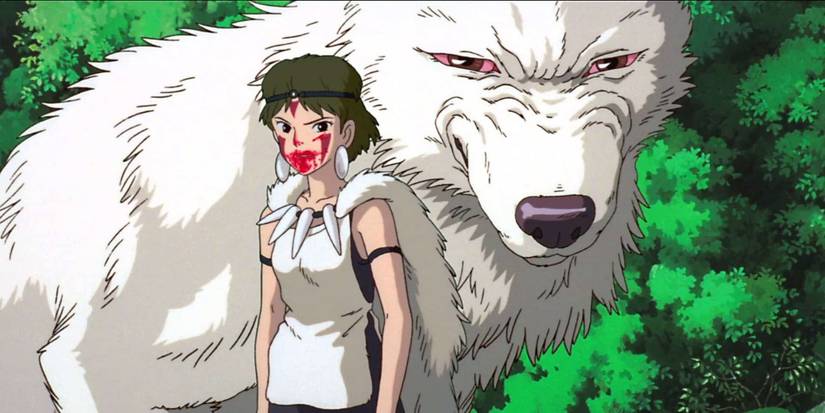 Image via Toho
Everything begins when Ashitaka (Yōji Matsuda) is cursed after defending his village from a demon-like boar. The only hope of understanding the curse lies far from home, so he travels west and finds himself caught between Lady Eboshi (Yūko Tanaka) and the people of Iron Town on one side and the forest gods on the other. Among those defending the forest is San (Yuriko Ishida), a young woman raised by wolves who sees humans as enemies.
Many fantasy films divide characters into obvious heroes and villains. Princess Mononoke rarely does that. Lady Eboshi destroys forests, yet she also protects people who have nowhere else to go. San fights to save nature, though her hatred often pushes her toward violence. Ashitaka spends much of the film trying to understand both sides rather than choosing one. That complexity gives the story unusual depth, and Hayao Miyazaki fills every part of it with breathtaking animation that still looks extraordinary today.
5 ‘The Wizard of Oz’ (1939)
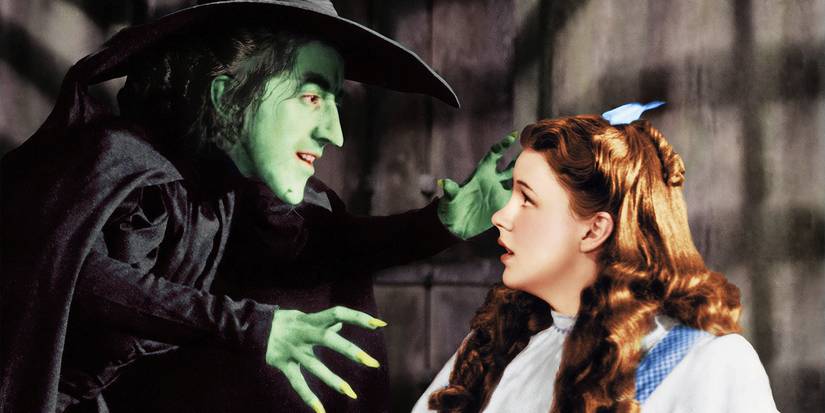 Image via Warner Bros.
Dorothy (Judy Garland) is a farm girl from Kansas who dreams about somewhere beyond her ordinary life. That wish unexpectedly comes true when a tornado carries her house into the magical land of Oz. Suddenly she finds herself surrounded by witches, talking scarecrows, flying monkeys, and places unlike anything she has ever seen. Her only goal is getting home, though the road there becomes much longer than she expected.
Part of the film's lasting appeal comes from how simple the story really is. Dorothy spends most of her journey meeting people who believe they are missing something important. The Scarecrow (Ray Bolger) wants a brain, the Tin Man (Jack Haley) wants a heart, and the Cowardly Lion (Bert Lahr) wants courage. Even after nearly a century, the transition from Kansas to Oz remains one of cinema's most famous moments, and the film's sense of wonder still feels completely intact.
4 ‘Spirited Away’ (2001)
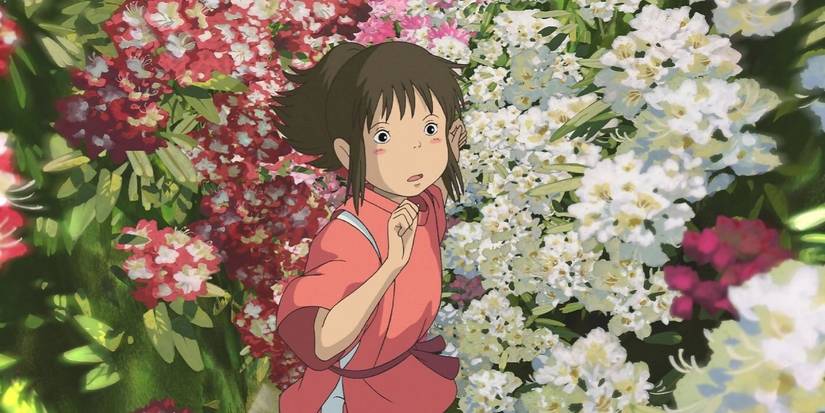 Image via Studio Ghibli
Chihiro (Rumi Hiiragi) is already unhappy about moving to a new town when her parents take a wrong turn and stumble into what appears to be an abandoned amusement area. Everything changes after they begin eating food that does not belong to them and are transformed into pigs. Left alone, Chihiro enters a strange bathhouse filled with spirits, gods, and creatures she cannot even begin to understand. If she wants to save her parents, she has to survive there on her own.
Chihiro rarely understands what is happening around her, and the audience often shares that feeling. A spirit arrives covered in sludge, a giant baby appears without warning, and a masked figure quietly follows her through the bathhouse. The film never stops to explain every strange detail because the confusion is part of the experience.
3 ‘The Seventh Seal’ (1957)
 Image via AB Svensk Filmindustri
After years away fighting in the Crusades, knight Antonius Block (Max von Sydow) returns home to find a country devastated by plague. Death seems to be everywhere. Villages are empty, people are terrified, and nobody appears capable of offering clear answers about what comes next. During his journey, Block encounters Death itself, portrayed by Bengt Ekerot, and challenges him to a chess match in hopes of delaying the inevitable.
The film spends much of its time following Block as he searches for meaning in a world that increasingly feels uncertain. He meets traveling performers, religious fanatics, grieving families, and ordinary people trying to survive difficult circumstances. The image of a knight sitting across from Death has become iconic, though the film remains powerful because of the deeply human conversations surrounding that famous scene.
2 ‘The Lord of the Rings: The Fellowship of the Ring’ (2001)
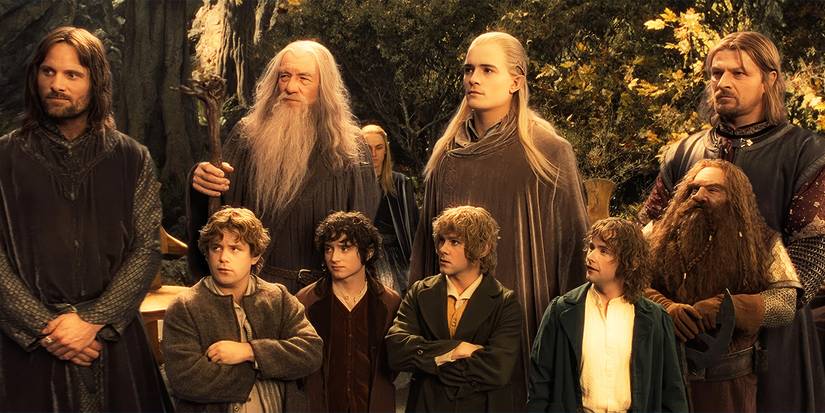 Image via New Line Cinema
Everything begins in the quiet countryside of the Shire, where Frodo Baggins (Elijah Wood) inherits a ring that turns out to be one of the most dangerous objects in existence. Gandalf (Ian McKellen) soon discovers its true nature, forcing Frodo to leave home and begin a journey that will eventually involve elves, dwarves, kings, and entire armies. Before long, a fellowship forms around him, each member accepting the risk of helping carry the ring toward Mordor.
The film never rushes into its larger conflicts. It spends time in the Shire, lets the audience understand why Frodo loves home, and slowly expands outward from there. By the time places like Rivendell and Moria appear, they feel like discoveries rather than locations being checked off a map.
1 ‘The Lord of the Rings: The Return of the King’ (2003)
 Image via New Line Cinema
The final chapter follows several storylines moving toward the same goal. Frodo (Elijah Wood) and Sam (Sean Astin) continue their exhausting trek toward Mount Doom while Aragorn (Viggo Mortensen) prepares to embrace the responsibility he has avoided for years. Across Middle-earth, alliances are tested as armies gather for battles that will decide the future of entire kingdoms. Every major storyline built across the trilogy finally begins converging.
Sam's loyalty to Frodo becomes just as important as any battle. Aragorn's growth matters as much as military victory. Even smaller characters are given moments that feel meaningful because the audience has spent so much time with them. The film contains some of the largest fantasy sequences ever put on screen, though its most memorable moments often come from friendship, sacrifice, and perseverance. Few fantasy movies have managed to end such an enormous story with this much confidence and emotional weight.
Collider Exclusive · Middle-earth Quiz
Which Lord of the Rings
Race Do You Belong To?
Hobbit · Elf · Dwarf · Man · Orc
Middle-earth is home to many peoples — the courageous, the ancient, the stubborn, the ambitious, and the wretched. Ten questions will determine which race truly claims your soul. The answer may surprise you. Or it may confirm what you already suspected.
🌿Hobbit
🌟Elf
⚒️Dwarf
⚔️Man
💀Orc
01
What does your ideal day look like? How we rest reveals as much as how we fight.
02
How do you feel about the passing of time? Our relationship with mortality shapes everything we value.
03
Danger is approaching. Your first instinct is to: Fight, flight, or something in between — it's more revealing than you'd think.
04
You stumble upon a great treasure. What do you feel? What we desire — and what we do about it — is the true test.
05
How important is community and belonging to you? No race of Middle-earth is truly alone — but some prefer it that way.
06
How ambitious are you, honestly? Ambition is neither virtue nor vice — it depends entirely on what you want.
07
Where do you feel most at home in the natural world? Middle-earth is vast — and every race has its place within it.
08
What kind of strength do you most respect? Every race defines strength differently — and they're all at least a little right.
09
What do you want to leave behind when you're gone? Legacy is the story we tell ourselves about why any of this matters.
10
Be honest — what do you actually want most out of life? The truest question always comes last.
Middle-earth Has Spoken You Belong To…
The race that claimed the most of your answers is your true kin. If two tied, both are shown — you walk between worlds.
◆ A TIE — YOU WALK BETWEEN TWO RACES ◆
🌿
Your Race
The Hobbits
You are, at your core, a creature of comfort, community, and quiet joy — and there is nothing small about that. Hobbits are proof that heroism does not require ambition, that the bravest heart can beat inside the most unassuming chest. You value good food, warm hearths, close friends, and a world that stays largely untroubled by dark lords and quests. When adventure does find you — and it will — you rise to it not because you sought it, but because the people you love needed you to. That is not ordinary. That is the rarest kind of courage in all of Middle-earth.
🌟
Your Race
The Elves
Ancient, graceful, and carrying a weight of memory most mortals cannot fathom, you are one of the Elves. You see the world in its fullness — its beauty, its impermanence, the unbearable ache of watching everything you love eventually fade. You pursue perfection not from pride, but because excellence is how you honour the time you have been given. Others may see you as remote or melancholy. They are not wrong, exactly. But they mistake depth for distance. You feel everything — which is precisely why you have learned to carry it so quietly.
⚒️
Your Race
The Dwarves
Stubborn, proud, fiercely loyal, and possessed of a work ethic that would exhaust most other races before breakfast — you are Dwarf-kind through and through. You do not ask for approval and you do not offer it cheaply. Your loyalty, once given, is given for life. Your grudges last longer. You love deeply and defend ferociously, and the things you build — with your hands, with your sweat, with generations of accumulated craft — are made to last. Not for glory. Because anything worth doing is worth doing properly, and you have never once done anything by half measures.
⚔️
Your Race
The Race of Men
Mortal, ambitious, flawed, and magnificent — you belong to the most complicated race in Middle-earth, and that complexity is your greatest strength. Men are capable of cowardice and extraordinary bravery, of cruelty and breathtaking sacrifice, sometimes within the same breath. You feel the urgency of your finite years, and it drives you. You want to matter. You want to leave something behind. You fall, and you rise, and the rising is what defines you. Tolkien called mortality the Gift of Men — not a curse, but a fire that burns bright precisely because it does not burn forever. That fire is you.
💀
Your Race
The Orcs
Brutal, survivalist, and contemptuous of anything that can't defend itself — you answered with the instincts of an Orc, and there is a certain savage honesty in that. You do not dress up your desires in polite language or pretend you want things you don't. You want power, survival, and to never be at the bottom of any hierarchy ever again. Orcs are not evil by nature — they were made from something that was once good, and broken into this shape by forces they did not choose. What remains is fierce, territorial, and deeply aware that the world is not kind. You've made your peace with that. The question is what you do with it.


 English (US) ·