
 Image via HBO
Published May 17, 2026, 8:21 AM EDT
Ryan Heffernan is a Senior Writer at Collider. Storytelling has been one of his interests since an early age, with his appreciation for film and television becoming a particular interest of his during his teenage years.
This passion saw Ryan graduate from the University of Canberra in 2020 with an Honours Degree in Film Production. In the years since, he has found freelance work as a videographer and editor in the Canberra region while also becoming entrenched in the city's film-making community.
In addition to cinema and writing, Ryan's other major interest is sport, with him having a particular love for Australian Rules football, Formula 1, and cricket. He also has casual interests in reading, gaming, and history.
Sign in to your Collider account
There has been no bigger brand in prestige television over the last 30 years than HBO. The premium network channel has been a defining pillar of the modern golden age of television, with its finest and most celebrated achievements spanning from gritty crime series like The Wire and The Sopranos to fantasy epics like Game of Thrones, dramatic gems like The Leftovers, and even iconic comedies like Curb Your Enthusiasm.
However, beneath all these record-breaking triumphs of television, HBO has also produced a plethora of masterpieces over the years that have come to be forgotten in time. From mesmerizing miniseries that came and went largely unnoticed to commercial misfires that were prematurely canceled, and even to long-forgotten gems that predate the network’s era of acclaim, these series have come to be overlooked by the masses today, but that doesn’t make them any less exceptional.
10 'Carnivále' (2003–2005)
 Image via HBO
It is easy to imagine an alternative world where Carnivále enjoyed a prolonged run on television and became one of the defining hit series of the medium throughout the 2000s. Sadly, in this world, Daniel Knauf’s compelling series of period allure and spirituality was cut short after just two seasons. While it means the series does have a frustratingly compromised ending, it remains a hidden and sorely forgotten gem of genre-driven television that holds up to this day.
Set in the Depression-era Dust Bowl, it unfolds as a proxy war between Heaven and Hell transpires through two men, one blessed with healing powers who joins a traveling circus, and the other imbued with the ability to bend people to his will, who devotes himself to religion as he believes himself to be doing God’s work. Beautiful yet bleak with its atmospheric might, while also using great characters to explore themes of free will and destiny, Carnivále is a lost opportunity for HBO that could have become one of TV’s great triumphs had its planned six-season run come to fruition.
9 'Station Eleven' (2021)
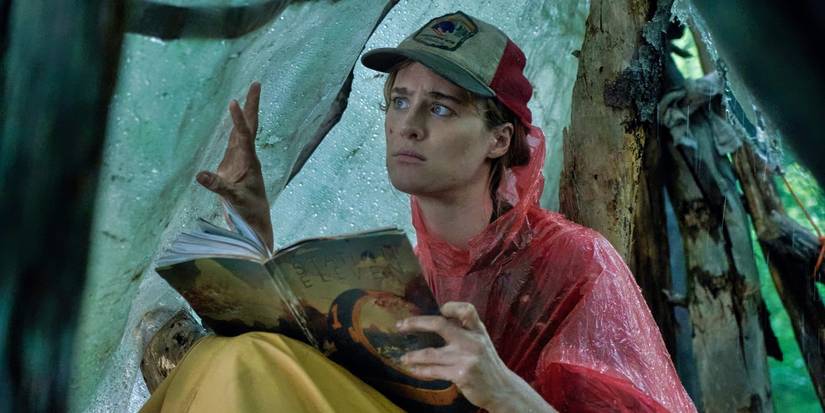 Image via HBO Max
A defining trend in pop culture throughout much of the 21st century so far has been a noteworthy interest in post-apocalyptic stories, dystopian dramas that balance the cruelty of mankind with the importance of humanity to deliver compelling tales of high-stakes suspense and morality. Given that this niche has been prevalent in television, it is perplexing that Station Eleven wasn’t a huge hit. Based on Emily St. John Mandel’s novel, the miniseries follows an acting troupe in a world where civilization has collapsed due to a devastating flu pandemic.
Basking in the gentle beauty of its cinematography, Station Eleven flaunts a melancholic optimism, even as it grapples with issues of violence and grief. It champions art as a necessity for life, delving beyond mere survival to explore the qualities of human connection and sentimental meaning that make life worth living. Buoyed by its rich character drama and a litany of touching performances, it is a hidden gem of 2020s television, and it is a shame that it came and went without being noticed by the masses.
8 'Generation Kill' (2007)
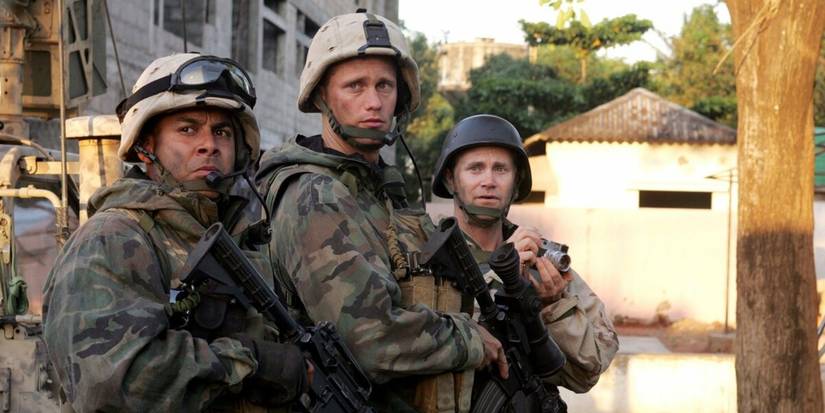 Image via HBO
HBO established itself as a master of war television through the early part of the century, with the triumph of miniseries like Band of Brothers and The Pacific defining its ability to tackle the genre with gravitas, grace, and grandiosity. A forgotten gem of this era of war television is the seven-part limited series Generation Kill, which thrives off David Simon’s—co-creator of The Wire—appetite for grounded authenticity and his ability to extract piercing drama from the mundane details of reality.
Based on Evan Wright’s experiences as an embedded reporter with the U.S. Marine Corps’ 1st Reconnaissance Battalion, it delivers a brilliant examination of modern warfare as it covers the 2003 invasion of Iraq. As much as it is an analysis of the impact of combat and the intensity of battle, it is also a striking immersion in the operational issues the soldiers face concerning bureaucratic process, breakdowns in communication, and the mismanagement of military resources. Laced with unflinching realism and an abundance of note-perfect performances, Generation Kill stands as one of HBO’s most underrated titles as well as possibly the greatest depiction of modern warfare that has been put to screen.
7 'Jim Henson's The Storyteller' (1988)
 Image via NBC
Offbeat, intriguing, and delightfully unique, Jim Henson’s The Storyteller is emblematic of the brand of experimental and tonally daring television entertainment that defined cult success in the medium prior to its golden era. Originally airing as a nine-part miniseries before presenting a four-part follow-up of Greek mythology, each episode depicts a different tale from folklore, making exceptional use of puppetry, make-up, and John Hurt’s spectacular turn in the eponymous role to capture a distinctly eerie tone that replicates the true tone of the twisted tales it depicts.
Those who were fans of '80s fantasy gems like The Dark Crystal and Labyrinth would be encouraged to seek the series out, not only because it leans on Henson’s expertise with puppetry in storytelling, but because it exudes that similar mood of family entertainment mixed with quiet discernment. With episodes also leaning on the talent of many of Britain’s finest actors, Jim Henson’s The Storyteller is an underrated gem of fantasy fun.
6 'The Night Of' (2016)
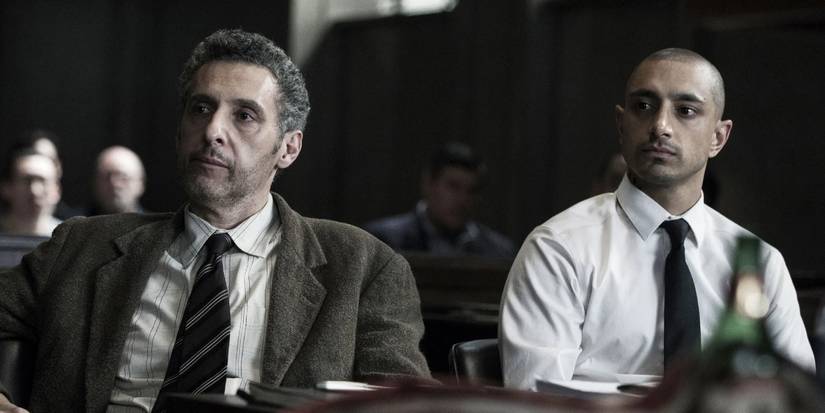 Image via HBO
One of the most underrated television triumphs of any production house from the 2010s, The Night Of soars as a psychologically gripping and thematically commanding crime thriller defined by its atmospheric darkness. It focuses on Nasir Khan (Riz Ahmed), a young Pakistani-American who is arrested for the murder of a young woman when he wakes up next to her stabbed corpse after a night of partying with her. While the case appears clear-cut, low-level public defense attorney John Stone (John Turturro) believes there is much more to it than first appears.
While The Night Of excels as a gripping and suspenseful murder mystery, it is arguably even more impactful as a seething critique of the criminal justice system in America. Through Khan’s arrest and trial, every component of the legal system is shown to prioritize procedural efficiency over the truth and the prevalence of true justice. Bolstered by rich cinematic visuals and two outstanding lead performances from Ahmed and Turturro, The Night Of is perhaps HBO’s most underrated series of the past decade.
Collider Exclusive · Taylor Sheridan Universe Quiz
Which Taylor Sheridan
Show Do You Belong In?
Yellowstone · Landman · Tulsa King · Mayor of Kingstown
Four worlds. All of them brutal, complicated, and built on power, loyalty, and the price of survival. Taylor Sheridan doesn't write heroes — he writes people who do what they have to do and live with the cost. Ten questions will reveal which one of his worlds you were made for.
🤠Yellowstone
🛢️Landman
👑Tulsa King
⚖️Mayor of Kingstown
FIND YOUR WORLD →
01
Where does your power come from? In Sheridan's world, everyone has leverage. The question is what kind.
ALand, legacy, and a name that's been feared and respected for generations. BKnowing the deal better than anyone else in the room — and being willing to walk away first. CReputation. I've earned it the hard way, and everyone in the room knows it. DBeing the only person both sides will talk to. That makes me indispensable — and dangerous.
NEXT QUESTION →
02
Who do you put first, no matter what? Loyalty in Sheridan's universe is always absolute — and always costly.
AFamily — blood or chosen. The ranch, the name, the people who carry it with me. BThe company — or whoever's signing the cheques. Loyalty follows the contract. CMy crew. The men who stood with me when it counted — I don't abandon them for anything. DMy community — even when my community is a powder keg and I'm the only thing stopping it from blowing.
NEXT QUESTION →
03
Someone crosses a line. How do you respond? Every Sheridan protagonist has a line. What matters is what happens after it's crossed.
AQuietly, decisively, and in a way that sends a message to everyone watching. BI outmanoeuvre them legally, financially, and politically before they even know I've moved. CDirectly. Old school. You cross me, you hear about it to your face — and then you deal with the consequences. DI absorb it, calculate the fallout, and find the move that keeps the whole system from collapsing.
NEXT QUESTION →
04
Where do you feel most in your element? Sheridan's worlds are as much about place as they are about people.
AWide open land — mountains, sky, silence. Somewhere you can see trouble coming from a mile away. BThe oil fields of West Texas — brutal, lucrative, and indifferent to whoever happens to be standing on top of them. CA mid-size city where the rules haven't quite caught up yet — fertile ground for someone with vision and nerve. DA rust-belt town built around a prison — where everyone's life is shaped by what's inside those walls.
NEXT QUESTION →
05
How do you feel about operating in the grey? Nobody in a Sheridan show has clean hands. The question is how they carry the dirt.
AI do what has to be done to protect what's mine. I'll answer for it eventually — but not today. BGrey is just business. The line moves depending on what's at stake, and I move with it. CI have a code — it's not the law's code, but it's mine, and I don't break it. DI've made peace with it. Keeping the peace requires compromises most people don't have the stomach for.
NEXT QUESTION →
06
What are you actually fighting to hold onto? Every Sheridan character is fighting a war. The real question is what they're defending.
AA way of life that the modern world is doing everything it can to erase. BMy position — and the leverage that comes with being the person everyone needs to close a deal. CRelevance. I've been away, I've been written off — and I'm proving that was a mistake. DWhatever fragile order I've managed to build — because without it, everything burns.
NEXT QUESTION →
07
How do you lead? Authority in Sheridan's world is never given — it's established, maintained, and constantly tested.
ABy example and force of will. People follow me because they believe in what I'm protecting — and because they know what happens if they don't. BThrough negotiation and leverage. I don't need people to like me — I need them to need me. CBy being the smartest, most experienced person in the room and making sure everyone quietly knows it. DBy being the calm centre of a situation that would spiral without me — and accepting that nobody thanks you for it.
NEXT QUESTION →
08
Someone new arrives and tries to change how things work. Your reaction? Every Sheridan show has an outsider disrupting an established order. Sometimes that outsider is you.
AThey'll learn. Or they won't. Either way, the land was here before them and it'll be here after. BI figure out what they want, what they're worth, and whether they're an asset or a problem — fast. CI was the outsider once. I give them a chance — one — to show they understand respect. DNew players destabilise everything I've built. I assess the threat and manage it before it manages me.
NEXT QUESTION →
09
What has your position cost you? Nobody gets to where these characters are without paying for it. The bill is always personal.
AMy family's peace — maybe their innocence. The ranch demands everything, and I've let it take too much. BRelationships, time, any version of a normal life. The job eats everything that isn't nailed down. CYears. Decades in some cases. Time I can't get back — but I'm not done yet. DMy conscience, mostly. And the ability to ever fully trust anyone on either side of the wall.
NEXT QUESTION →
10
When it's over, what do you want people to say? Sheridan's characters all know the ending is coming. The question is what they leave behind.
AThat I held the line. That the land is still ours and everything I did was worth it. BThat I was the best at what I did and that no deal ever got closed without me at the table. CThat I built something real, somewhere nobody expected it, and I did it on my own terms. DThat I kept the peace when nobody else could — and that the town is still standing because of it.
REVEAL MY SHOW →
Sheridan Has Spoken You Belong In…
The show that claimed the most of your answers is the world you were built for. If two tied, both are shown — you're complicated enough to straddle two Sheridan universes.
🤠 Yellowstone
🛢️ Landman
👑 Tulsa King
⚖️ Mayor of Kingstown
You are a Dutton — or you might as well be. You understand that some things are worth protecting at any cost, and that the modern world's indifference to history, to land, to legacy, is not something you're willing to accept quietly. You lead from the front, you carry your family's weight without complaint, and when someone threatens what's yours, you don't escalate — you finish it. You're not cruel. But you are absolute. In Yellowstone's world, that combination of ferocity and loyalty doesn't make you a villain. It makes you the only thing standing between everything that matters and everyone who wants to take it.
You thrive in the chaos of high-stakes negotiation, where the money is enormous, the margins are thin, and the wrong word in the wrong room can cost everyone everything. You're a fixer — the person called when a situation is already on fire and needs someone with the nerve to walk into it. West Texas oil country rewards exactly what you are: sharp, adaptable, unsentimental, and absolutely clear-eyed about what people want and what they'll do to get it. You're not naive enough to think this world is fair. You're smart enough to be the one deciding who it's fair to.
You are a Dwight Manfredi — someone who has served their time, paid their dues, and arrived somewhere unexpected with nothing but their reputation and their wits. You adapt without losing yourself. You build loyalty through respect rather than fear, though you're not above reminding people that the two aren't mutually exclusive. Tulsa King is for people who are still standing when everyone assumed they'd be finished — who find, in an unfamiliar place, that they're more capable than the world gave them credit for. You don't need a throne. You build one, wherever you happen to land.
You carry the weight of a system that is broken by design, and you do it anyway — because someone has to, and because you're the only one positioned to do it without the whole thing collapsing. Mike McLusky's world is for people who are comfortable operating where there are no good options, only less catastrophic ones. You speak every language: law enforcement, criminal, political, human. That fluency makes you invaluable and it makes you a target. You've made your peace with both. Mayor of Kingstown belongs to people who understand that keeping the peace is not the same as being at peace — and who do the job regardless.
↻ RETAKE THE QUIZ
5 'Treme' (2010–2013)
 Image via HBO
Another series born from the mind of accomplished television creator David Simon, Treme applies the former journalist’s eye for detailed realism and authentic drama to the aftermath of Hurricane Katrina in 2005. Running for four seasons, the series—named after a neighborhood in New Orleans—begins three months after the devastating disaster, addressing the perils residents of all walks of life face as they try to rebuild their lives and re-establish their city’s vibrant culture.
More than just an emotional immersion into the hardships faced by so many following the storm, Treme is also an agonizing examination of how both the state and federal government failed the city’s residents. It wisely treats the city itself as a developing and nuanced character, with its distinct culture and history being at the forefront of the series, with every major character being an extension of it. Also strengthened by its slow-burning character development and its ability to portray both personal struggles with political and societal grievances, Treme is an urgent masterpiece of television drama that, sadly, many ignored and swiftly forgot.
4 'Tanner '88' (1988)
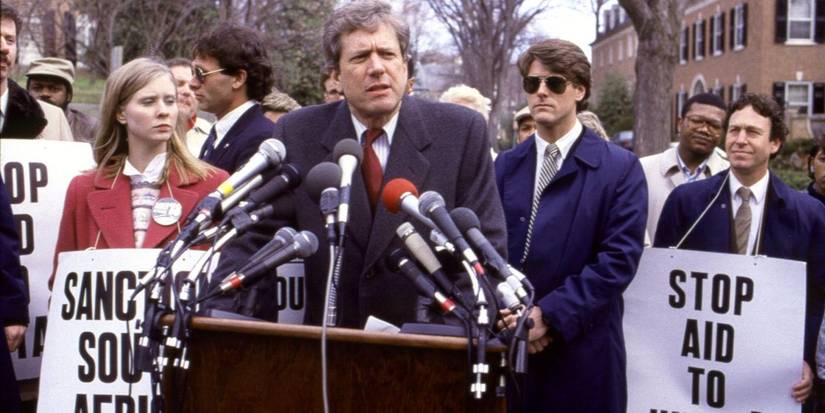 Image via HBO
Directed by esteemed American filmmaker Robert Altman, Tanner ’88 is a brilliantly scorching satire of political campaigning that, despite being almost 40 years old, has aged phenomenally over the years to be one of HBO's essential comedies. Presented as a mockumentary, it follows Jack Tanner (Michael Murphy), a former congressman hopeful of winning the Democratic nomination, on his tumultuous campaign as he tries to make the leap from a relative unknown to a presidential front-runner, all while doing as little damage to his public image as possible.
Unfurling over the course of eleven 30-minute episodes, Tanner ’88 isn’t just an uproarious lampooning of political chaos and the pitfalls of ambition; it also brilliantly predicted the rise of an electoral landscape where campaigning and cultivating a public persona is more important than policy decisions. This prophetic sharpness combines with its acidic wit, hilarious intensity, and its grounded, gritty style to make for an enduring gem of comedy television that has proven itself to be a timeless skewering of American politics, even if it has been somewhat forgotten over the years.
3 'John Adams' (2008)
 Image via HBO
Another astonishing miniseries from HBO that revolves around American politics, John Adams is a compelling biographical drama that soars with its historical scope, the might of its performances, and its intimate look at the life of one of the more forgotten Found Fathers. Paul Giamatti is exceptional as John Adams, with the series opening with him as an idealistic lawyer in 1770 before covering his pivotal involvement in America’s fight for independence, the controversy of his tenure as the nation’s second president, and his eventual retirement.
While the intense camera work is sometimes more distracting than resonant, John Adams still thrives off the back of its adherence to historical accuracy, the incredible ensemble cast, and its desire to emphasize the political process of America’s early years rather than just depicting the battle that secured the U.S. its independence. Based on David McCullough’s biographical novel, the miniseries is a fascinating exploration of the American Revolution through the eyes of one of its most integral yet underappreciated pioneers.
2 'Six Feet Under' (2001–2005)
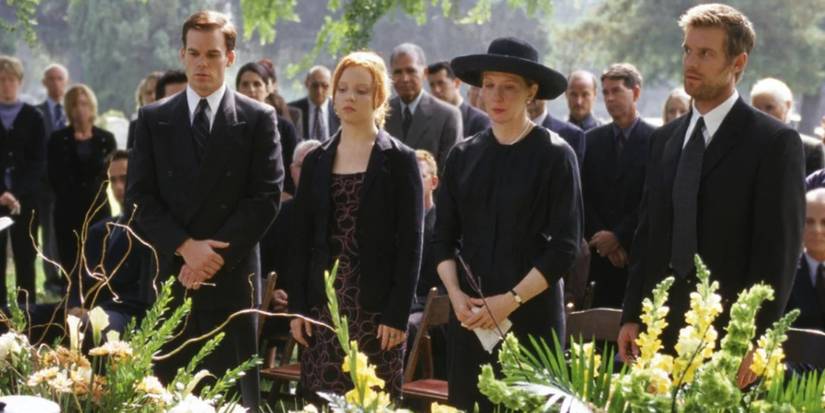 Image via HBO
Truly a television masterpiece from beginning to end, Six Feet Under delivers five seasons of scintillating brilliance as it juggles elements of ghastly dark comedy, dysfunctional family drama, and surrealist existentialism. It follows the shambolic Fisher family, who, after the death of their patriarch, inherit his funeral home and attempt to run it as a family business. While conflicts between them constantly arise, each character embarks on their own unique journey of self-discovery and acceptance as the grimness of mortality becomes a daily occurrence for them.
Its ability to explore issues of life and death with poignant depth, biting humor, and fresh ideas is astounding, as is the nuance and complexity poured into every single one of the major characters. Complemented by the strength of its exemplary finale, Six Feet Under may have a passionate cult following of fans, but it remains criminally underrated to the masses, given its piercing drama, ferocious comedy, and timelessness.
1 'The Corner' (2000)
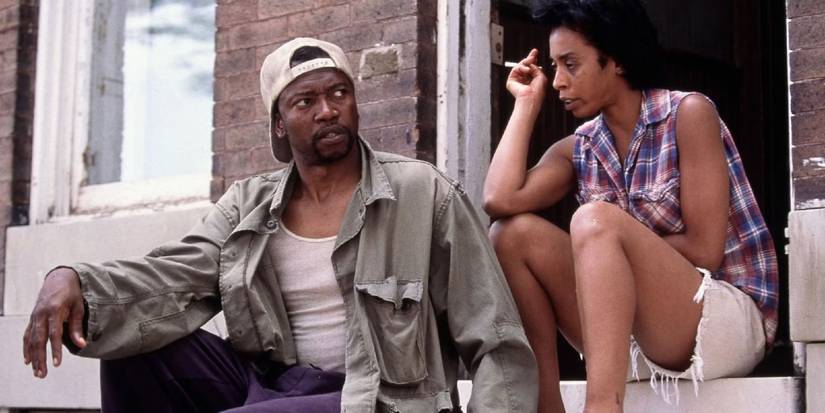 Image via HBO
The first collaboration between David Simon and HBO, The Corner marks the beginning of an era of grounded crime drama and social commentary that has been on display through such series as The Wire, The Deuce, Show Me a Hero, and We Own This City. Based on Simon’s own non-fiction book, The Corner is a heartbreaking story of addiction and poverty in Baltimore that revolves around the McCullough family, with their intricate battle with substance abuse and financial hardship only hindered by the raging drug war transpiring on the streets they live on.
Like many of David Simon’s series, The Corner has a beautiful and powerful ability to combine the gravitas of its unflinching realism with a profound sense of humanity that is earnest and non-judgmental, even as it addresses the characters’ most devastating flaws. It is a harrowing call for empathy that recognizes the humanity within those struggling with addiction, treating the issue with nuance and tragedy. In many respects, it remains one of HBO’s most emotionally arresting and urgent miniseries of all time, and it is a travesty that it has become so forgotten, given so little has changed in the 26 years since it aired.




 English (US) ·