

Published Feb 6, 2026, 3:03 PM EST
Daniela is a freelance writer with two years of experience covering entertainment. She is a senior writer on Collider’s freelance team and has also been published in other platforms, such as Elite Daily. When she’s not writing, she's diving into thought-provoking, existentialist films and classic literature.
Although romance films are naturally the go-to experts on love, its consequences, and what makes it so powerful, plenty of great non-romantic films handle the job just as convincingly, exploring its twists and transformations without the usual clichés.
Here, we turn our attention to films — from family dramedies like Little Miss Sunshine to friendship classics such as Stand by Me — that explore relationships beyond romance: friendship, mentorship, and family. These films manage to explore love without getting too syrupy about it, showing love's power through loyalty, hard-won endurance, and the occasional sacrifice.
10 'Big Fish' (2003)
 Image via Sony Pictures Motion Picture Group
This Tim Burton father-son adventure epic starring Ewan McGregor and Albert Finney as Ed Bloom and Billy Crudup as his son Will illustrates the frustrating journey of a son trying to determine fact from fiction in his dying storyteller father's life.
Big Fish, a surrealist tale with stunning visuals (you'd expect nothing less from Burton's signature whimsical vision) and a captivating narrative, celebrates love not through affection or even as a simple bond but through the persistent difficulty of loving someone despite incomprehensibility. Ultimately, though, Big Fish reminds us that cinema doesn't need romance to probe the deepest connection, reflecting on the otherness of those we love and the very different worlds they inhabit.
9 'Little Miss Sunshine' (2006)
 Image via Searchlight Pictures
Little Miss Sunshine has slipped into the collective heart as a true comfort film, and it's not difficult to grasp why. This wholesome road trip comedy follows an ordinary family (Steve Carell, Paul Dano, and Toni Collette in three of the lead roles) as they take a cross-country trip in a yellow Volkswagen, determined to get their young daughter — a charming acting effort by Abigail Breslin — into the finals of a beauty pageant.
The genuine beauty of this fan-favorite is essentially the way it highlights the power of community, family, and human connection. It is a truly beautiful and moving feature because it celebrates what it means to remain present for those you love, committing repeatedly as a family instead of letting go in the face of adversity.
8 'Thelma & Louise' (1991)
 Image via MGM-Pathé Communications
Ridley Scott's tale of friendship remains one of the most iconic in cinema for both its illustration of the open road's freedom and female friendship. The plot centers around two best friends who, after a justified, reckless crime, find themselves on the run from a police hunt. Along the way, they learn the true purpose of their lives.
Anchored by amazing direction and equally great acting to match by Geena Davis and Susan Sarandon, Thelma & Louise has become an American epic and a must-see across all genres it touches. Whether it's the escapism from the confines of "feminine" norms or the turning of a male-centered world on its head, Thelma & Louise defines love primarily through the unbreakable female bond between the two heroines, finding intimacy and self-awakening in friendship.
7 'Aftersun' (2022)
 Image via A24
For those moved by well-written father-daughter relationships in cinema, Charlotte Wells' debut Aftersun is worth a look. The film follows Scottish 11-year-old Sophie Patterson (Frankie Corio), who travels to a Turkish holiday resort with her 30-year-old father, Calum (Paul Mescal in an incredible dramatic performance that earned him a Best Actor Oscar nomination).
At the film's heart is love at its most essential dimension: selfless commitment. Aftersun depicts familial love in its purest form, showing a father's efforts to shield his daughter from his own suffering and a daughter's yearning to understand and reconnect with him. The final sequences are particularly moving in their accuracy: an illustration of grief as an echo of love and shed light on the widening gap between how we see the world as children and how we understand it as adults.
6 'Shoplifters' (2018)
 Image via Gaga Corporation
Reportedly inspired by poverty and shoplifting in Japan, this found-family essential by Hirokazu Koreeda is an understated but deeply moving film about a family — Andô Sakura, Kirin Kiki, Mayu Matusoka, Lily Franky, and Jyo Kairi among other talents — that relies on stealing to navigate a life of poverty.
In Shoplifters, family isn't stamped on your birth certificate but rather what you choose to make of it. Koreeda suggests that love isn't measured in DNA but in everyday gestures, whether that's a word of guidance, a soft hug, or even an orchestrated theft, as is the case for this particular story. In fact, Shoplifters charms all the more thanks to its murky undertones: the family's thefts are not just crimes but woven into the fabric of their connection. And instead of excusing or offering moral lectures, Koreeda lets these two equally tender and illicit truths coexist.
5 'It's a Wonderful Life' (1946)
 Image via RKO Radio Pictures
Often celebrated for its themes of self-sacrifice and community spirit, It's a Wonderful Life centers around a man who has given up his personal dreams to help others in his community. When George (James Stewart) contemplates taking his own life, his guardian angel Clarence — a direct result of all his friends and family's prayers on Christmas Eve — intervenes to show him the profound impact his life has had on the community.
Frank Capra's movie is a moving meditation on despair and self-worth, with George's struggles serving as a timeless reminder that feeling lost is perhaps more common than we imagine. On top of that, the Best Picture nominee is a beautiful showcase of love, essentially community love, and the power of people coming together for the goodness of each other. Small wonder, then, that it's a frequent name-drop when kindness on film is discussed.
4 'Bicycle Thieves' (1948)

De Sica's iconic film has become a staple in Italian Neorealism cinema, cementing its place among the most influential works of all time. Set in post-war Italy, this moving tale follows an unemployed, working-class man (Lamberto Maggiorani) whose bike is stolen. Along with his son Enzo (Enzo Staiola), he searches for it. However, when Antonio finally locates the thief, he finds himself forced to abandon his cause.
Bicycle Thieves stands as one of cinema's most profound explorations of love: it proves that it needn't be romantic to be profound, finding its power in the quiet commitments of family life instead. Nowhere is this clearer than in the bond between Antonio Ricci and his son Bruno, which elevates what might have been a straightforward tale of hardship into something richer: a meditation on what truly binds us together.
3 'Dead Poets Society' (1989)
 Image via Buena Vista Pictures
The quintessential mentorship film, Dead Poets Society, operates a bit differently from all these pictures, offering a compelling outlook on mentor-mentee relationships instead. Starring Robin Williams in the lead role, the coming-of-age picture follows Maverick teacher John Keating as he returns in 1959 to the prestigious New England boys' boarding school where he was once a star student, using poetry to embolden his pupils.
This 1989 fan-favorite continues to charm all these years later with the deep bond between Keating and his students, particularly Todd (Ethan Hawke) and Neil (Robert Sean Leonard). Keating's bond with his pupils does not rely on grand gestures but rather encouragement; he is a key figure in their lives because he urges the boys to trust their own voices and discover poetry as a surprisingly effective roadmap to genuine selfhood.
2 'Stand by Me' (1986)
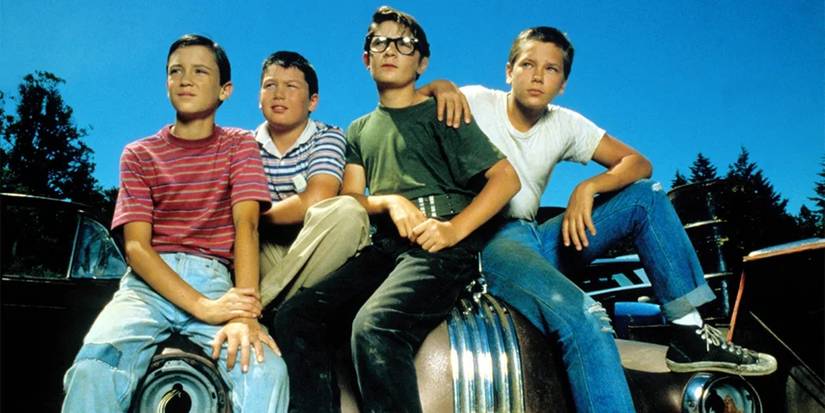 Image via Columbia Pictures
Platonic love cinema has never looked as pure as it did in Stand by Me. Easily one of the most tender explorations of love in a non-romantic context, Rob Reiner's classic distills affection to its most essential form, which often looks like unconditional loyalty, the kind forged in the trenches of childhood. The psychological coming-of-age drama follows a writer who recounts a childhood journey with his friends to find the body of a missing boy.
What Stand by Me arguably does best is celebrate love in all its delicate, easily shattered glory. In Reiner's film, the act of remembering is in itself an act of love. Despite its tragic realism, this is a great fit, particularly in how its honesty reveals male love not as a tally of conquests or accomplishments but as something that hovers somewhere between just showing up and really being there.
1 'Cinema Paradiso' (1988)
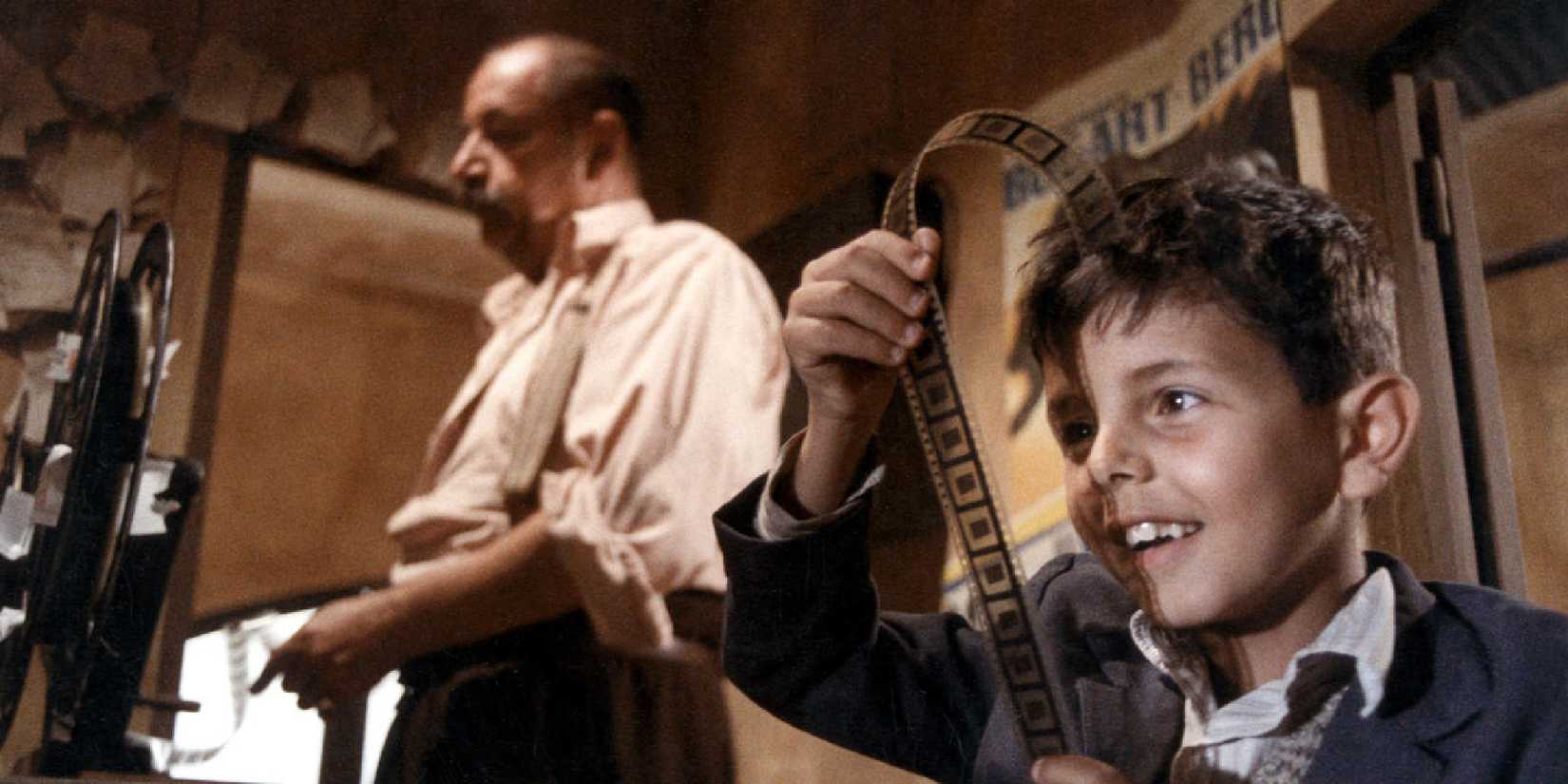 Image via Titanus
Giuseppe Tornatore's Cinema Paradiso observes the tug-of-war between personal fulfillment and loyalty, following young Salvatore (Salvatore Cascio) and Alfredo (Philippe Noiret), the cinema projectionist who becomes the father Toto never had, teaching him cinema's language and sharing a profound bond that's both intellectual and emotional.
Tornatore's movie is more complicated — and arguably even more moving — than many others here because it portrays love not as a simple swoon but as a careful negotiation between goods that refuse to coexist. Alfredo's affection for Toto comes wrapped in paternalistic decision-making: a gentle, if occasionally bossy (yet always selfless) nudge towards big dreams. At its heart, Cinema Paradiso remains a standout film about love that is unfraid to wrestle with morally gray zones, anchored by an authentic, moving bond between fully-realized characters.

Cinema Paradiso
Release Date February 23, 1990
Runtime 174 Minutes
Director Giuseppe Tornatore
Writers Giuseppe Tornatore, Vanna Paoli
-

-
Enzo Cannavale
Spaccafico
-
Antonella Attili
Maria Di Vita - Younger
-






 English (US) ·