
1954 was a great year for the movies. Legends like Alfred Hitchcock, Akira Kurosawa, and Federico Fellini were all hard at work, redefining the art form in unique ways. Likewise, some of the most iconic movie stars in history were at the height of their powers, like James Stewart, Audrey Hepburn, and Humphrey Bogart.
The result was a diverse collection of classics. From tightly constructed thrillers and sweeping epics to intimate character studies and groundbreaking world cinema, the best films of 1954 showcase a medium operating at full creative strength.
10 'Sabrina' (1954)
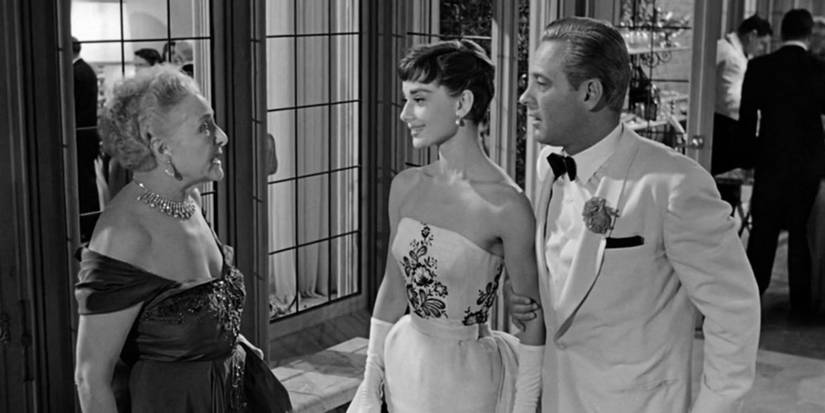 Image via Paramount Pictures
"I have learned how to live… how to be in the world." Long before Sabrina the Teenage Witch or Sabrina Carpenter, there was this romantic comedy-drama starring Audrey Hepburn. She plays the daughter of a chauffeur who returns from Paris transformed into a sophisticated young woman, catching the attention of two wealthy brothers (William Holden and Humphrey Bogart) with very different personalities. Amid class differences and conflicting expectations, Sabrina must work out her own sense of identity.
The star power here is off the charts, representing some of the biggest names of the era. The sharp, witty screenplay gives them a lot to work with, and they all knock it out of the park. Their abundant charm is the main reason this film holds up. Another big strength of the movie is its visual elegance. Billy Wilder's direction is stylish and confident throughout, particularly in the Paris sequences and the refined world of the Larrabee estate.
9 'A Star is Born' (1954)
 Image via Warner Bros. Pictures
"Hello, everybody. This is Mrs. Norman Maine." There have been four official movie versions of A Star is Born, and this is the strongest. It tells the story of aspiring singer Esther Blodgett (Judy Garland), whose rise to fame is intertwined with the decline of her mentor and husband, Norman Maine (James Mason), a once-celebrated actor struggling with alcoholism. As Esther’s career flourishes, the couple must confront the emotional toll of success and personal demons.
Garland is fantastic in her part. Drawing on her own experiences in Hollywood, she plays Esther with raw emotion and authenticity. While her musical numbers are electrifying, covering an impressive range of styles, it's the dramatic scenes that stay with the viewer. It's possibly Garland's greatest work. On the aesthetic side, director George Cukor stages everything with maximalist flair and vibrant Technicolor, a fitting showcase for his wonderful star. Not for nothing, this movie is frequently ranked among the greatest musicals ever made.
8 'Creature from the Black Lagoon' (1954)
 Image via Universal-International
"Stay out of the water!" Although very dated and rough around the edges, Creature from the Black Lagoon was bold stuff for the time and remains one of the definitive monster movies. The premise is pure '50s pulpy fun: a scientific expedition travels deep into the Amazon in search of a prehistoric fossil that could link land and sea life. Instead, they discover the Gill-man, a strange amphibious creature that has survived in isolation for centuries. The creature begins to stalk the group, particularly developing an eerie fascination with one of the scientists (Julia Adams).
From here, the flick serves up a ton of adventure, mystery, solid stunts, iconic monster design, and some genuinely innovative underwater cinematography. All this helped define the era's fascination with mysterious monsters and unexplored worlds. Indeed, the plot established a basic template that countless movies would riff on in the decades to follow.
7 '20,000 Leagues Under the Sea' (1954)
 Image via Buena Vista Distribution
"The sea is everything." Jules Verne's novel is one of the foundational texts of the adventure and sci-fi genres, and director Richard Fleischer gives it a fittingly entertaining treatment in this movie version. It focuses on Professor Aronnax (Paul Lukas) and his companions, including the lively Ned Land (Kirk Douglas), as they encounter the enigmatic Captain Nemo (James Mason) aboard the submarine Nautilus. They journey deep beneath the ocean’s surface, witnessing wonders and dangers that challenge their understanding of the world.
While the technical limits of the time constrain the full grandeur of Verne's vision, this movie is still compelling and imaginative. The production design is impressive, particularly the submarine itself. It's an iconic creation, filled with intricate details that make it feel like a believable piece of advanced technology, even decades later. Likewise, the special effects were groundbreaking, particularly the famous giant squid attack. Back in 1954, this would have made for an awe-inspiring spectacle.
6 'The Caine Mutiny' (1954)

"I'm a lot drunker than you are, so it'll be a fair fight." Set aboard a U.S. Navy minesweeper during World War II, this military drama centers on Ensign Willie Keith (Robert Francis), a young officer who comes under the command of the increasingly unstable Captain Queeg (a twitchily intense Humphrey Bogart). What initially seems like strict, by-the-book leadership gradually curdles into paranoia, with Queeg obsessing over imagined infractions and losing the trust of his crew. A violent storm hits, Queeg is ousted from his command, and the second half pivots into a tense court-martial.
The Caine Mutiny stands out by being psychologically complex and morally ambiguous. It uses its premise to raise tough questions: when does leadership become dangerous, and when is it justified to challenge authority? Much of its success is thanks to Bogart's performance. He manages to make Queeg both unsettling and sympathetic, a man whose authority masks deep insecurity.
5 'La Strada' (1954)
 Image via Paramount Pictures
"The fool is not so foolish." La Strada is one of the very best movies by Italian master Federico Fellini. Giulietta Masina leads the cast as Gelsomina, a gentle and childlike young woman sold by her impoverished mother to Zampanò (Anthony Quinn), a brutish traveling strongman. As they journey through rural Italy performing their act, Gelsomina endures Zampanò’s harsh treatment while struggling to understand her place in the world.
Fellini spins this setup into a truly poetic story, almost more like a fable. At heart, it's a poignant exploration of human connection. At the time, this approach marked a definitive break from the neorealism with which he was associated. The director is assisted by wonderful leads, particularly Masina. She gives the movie its emotional core. With minimal dialogue, she conveys a wide range of emotions, from joy and confusion to deep sorrow, through expressive gestures and subtle facial expressions.
4 'Seven Samurai' (1954)
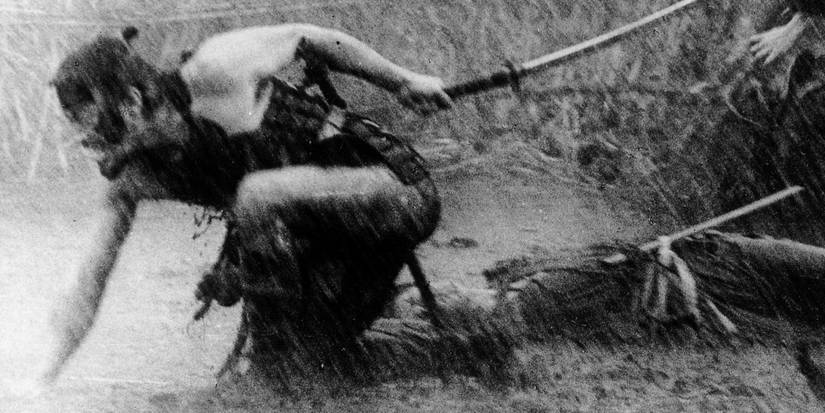 Image via Toho
"Again we are defeated. The farmers have won, not us." In Seven Samurai, a group of masterless samurai is hired by a poor farming village to defend against recurring bandit raids. The warriors train the villagers and prepare for an inevitable attack, forming bonds across class lines, and raising questions of honor, sacrifice, and survival. Crucially, each of these characters is three-dimensional and distinct, with their own personality, motivations, and arc.
The plot builds patiently toward a climactic battle, one of the most powerful in all of cinema. Visually, the film was groundbreaking. Kurosawa’s use of camera movement, editing, and weather, especially the rain-soaked final battle, adds intensity and realism to the action. These techniques would inspire many action movies to follow, as did the narrative itself. The Magnificent Seven is the most obvious descendant of Seven Samurai, but countless movies have borrowed from its themes, ideas, and narrative beats.
3 'On the Waterfront' (1954)
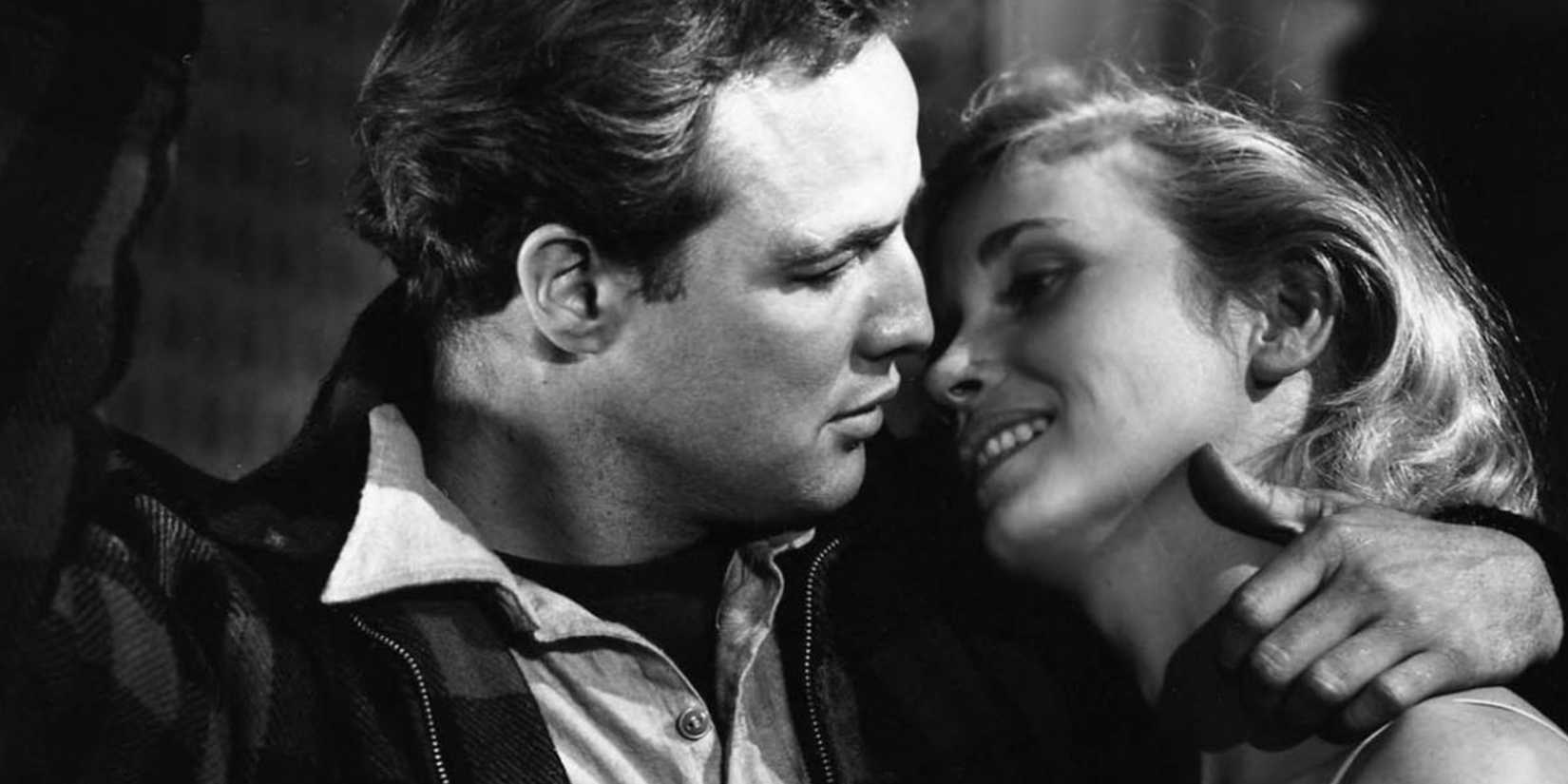 Image via Columbia Pictures Corporation
"I coulda been a contender." Marlon Brando has top billing here as Terry Malloy, a former boxer working on the docks who becomes entangled in a struggle against corruption within his union. Encouraged by a priest (Karl Malden) and the sister (Eva Marie Saint) of a murdered worker, Terry wrestles with his conscience as he decides whether to testify against powerful figures who control the waterfront. Brando's performance is fittingly intense and conflicted. It's subtle, naturalistic, and emotionally complex. More than simply being compelling, it went on to redefine screen acting altogether. The method acting boom begins here.
Director Eliza Kazan helps the emotions hit even harder by grounding the film in immersive realism. The gritty dockside setting and use of real locations make the story feel more authentic. Taken together, this makes for one of the most powerful moral dramas of the 1950s, one that continues to ring true today.
2 'Rear Window' (1954)
 Image via Paramount Pictures
"We’ve become a race of Peeping Toms." Rear Window features James Stewart as a photographer confined to his apartment with a broken leg, who passes the time observing his neighbors through their windows. When he begins to suspect that one of them has committed murder, he enlists his girlfriend (Grace Kelly) and a nurse (Thelma Ritter) to help investigate. What starts out as bored voyeurism becomes a dangerous game.
Alfred Hitchcock's mastery of suspense is very much on display here, building tension through observation and inference rather than overt action. His use of perspective here was especially innovative. The story is told almost entirely from Jeff’s point of view, with the audience seeing only what he sees. This forces the viewer to piece together clues alongside him. It's an effective technique that also helps bring out the movie's themes around curiosity, privacy, and the ethics of watching others, almost making the audience complicit in the act of surveillance.
1 'Dial M for Murder' (1954)

"I’m afraid I’m not quite ready to be murdered." Hitchcock released not one but two bangers in 1954. In Dial M for Murder, a former tennis player (Ray Milland) plots to kill his wealthy wife (Grace Kelly) in order to secure her inheritance, hiring a criminal (Anthony Dawson) to carry out the plan. When the scheme goes awry, a complex web of deception unfolds, leading to a tense battle of wits between husband, wife, and investigators. It's a juicy premise executed with impressive technical skill.
The screenplay is meticulously plotted and loaded with delectable twists, while also creating suspense organically through dialogue. The confined setting amplifies things further. Although the drama takes place within one apartment, Hitchcock never lets it feel static. Instead, he carefully blocks actors and positions the camera so that the room becomes a kind of chessboard. Every movement, glance, and object carries meaning. He frequently shows us important details, like the placement of a key or the position of a telephone, without over-explaining them. Top-notch visual storytelling.

Dial M for Murder
Release Date May 29, 1954
Runtime 105 minutes
Writers Frederick Knott
-

Grace Kelly
Margot Wendice
-







 English (US) ·