
 Image via Sony Pictures Releasing

Published May 17, 2026, 5:43 PM EDT
Liam Gaughan is a film and TV writer at Collider. He has been writing film reviews and news coverage for ten years. Between relentlessly adding new titles to his watchlist and attending as many screenings as he can, Liam is always watching new movies and television shows.
In addition to reviewing, writing, and commentating on both new and old releases, Liam has interviewed talent such as Mark Wahlberg, Jesse Plemons, Sam Mendes, Billy Eichner, Dylan O'Brien, Luke Wilson, and B.J. Novak. Liam aims to get his spec scripts produced and currently writes short films and stage plays. He lives in Allentown, PA.
Sign in to your Collider account
There’s only so much leniency awarded to bad movies, when considering how difficult the filmmaking process is. Financing, writing, directing, casting, and distributing a film is an achievement in its own right, and simply having something to include on a filmography is reason enough to be fulfilled. However, the dearth of opportunities that are given to the many aspiring artists who have an interest in cinema makes it all the more frustrating when their work ends up being poor in quality.
There’s something to be said about a film that is universally panned, as most releases will end up having some sort of defenders, even if they enjoyed it only for ironic purposes. While all of these films are fascinating in their own right because of the ego and clout it took to produce them, the only legacy they leave behind is how baffling and embarrassing they ended up being.
10 ‘Battlefield Earth’ (2000)
 Image via Warner Bros. Pictures
Battlefield Earth is one of the worst attempts to make a science fiction epic imaginable, despite its high budget and massive expectations. Although the film attracted controversy because it was based on sci-fi novels by Ron Hubbard, the founder of the Church of Scientology, Battlefield Earth ended up being mocked because of how ridiculous its story was.
Battlefield Earth was a particularly memorable flop because it was conceived as a film that could potentially start a franchise, which obviously was cancelled as soon as the reviews hit. The film unfortunately marked the beginning of the end for John Travolta, who had been on a hot streak ever since his comeback in Pulp Fiction; Travolta is an unquestionably amazing actor (just watch Saturday Night Fever), but his choice of projects to attach himself to is often questionable, to say the least.
9 ‘Gotti’ (2018)
 Image via Paamount Pictures
Gotti is another baffling misfire from Travolta that seemed like it would be a slam-dunk because it was based on a true story about one of the most infamous mob figures in American history. However, it should have been evident when the credits revealed that the film was directed by Kevin Connolly (yes, from Entourage) that Gotti was not exactly going to be the heir-apparent to The Godfather.
Gotti is a film that has seemingly only been inspired by the way that gangsters are portrayed in other movies, yet never feels realistic or intense. Although the film’s marketing campaign rather infamously attempted to lash out at critics by claiming that they were “biased” against it, it became clear to anyone that managed to see Gotti that it was a total embarrassment. Travolta deserves to have a comeback, but Gotti didn't doit for him.
8 ‘Catwoman’ (2004)
 Image via Warner Bros. Pictures
Catwoman is the single worst film ever based on DC comic books, which is saying a lot considering how many disasters the label has inspired. While a film like Batman & Robin is at least somewhat entertaining in the sense that “it’s so bad that it’s good,” Catwoman is just a miserable experience that doesn’t have anything to do with the character that it's based on.
There was a ton of anticipation for a Catwoman film, given that it is a role that has been portrayed by many great actresses. However, the film itself is a jumbled mess that presented a confusing origin story and contained the worst of early 2000s stylization and music. DC comic book fans tend to get defensive when defending their films, even the ones that were obvious failures, but there has yet to be a cult audience that’s formed in support of Catwoman.
7 ‘Freddy Got Fingered’ (2001)
 Image via 20th Century Studios
Freddy Got Fingered is a defiant work of anti-comedy, and it would be hard to claim that Tom Green didn’t execute exactly what he intended. The gross, disturbing, and incomprehensible comedy of Freddy Got Fingered was clearly designed by Green to be as alienating as possible to as much of the audience as was possible; although Green had appealed to a punk rock audience with his own show, Freddy Got Fingered was so intolerably obnoxious that it was hard to mount a defense for a film so vile.
Freddy Got Fingered is unabashedly avant garde, and while there’s some reason to respect Green for his ambitious intentions, it’s a film made for an audience of one, which is Green himself. As a comic force, Green is generally better when he is given a supporting role where he only occupies a small portion of screen time.
6 ‘Jack and Jill’ (2011)
 Image via Sony Pictures Releasing
Jack and Jill is the single worst film that Adam Sandler has ever made, which is a fairly impressive achievement when considering that a vast majority of his work in the last 25 years has been complete garbage. Sandler has found a way with his Happy Madison company to produce cheap-looking comedies where he casts all of his friends in supporting roles, and they all end up feeling like inside jokes that the audience is left out of.
Jack and Jill faces an issue with its characters because Jill is high-strung and unbelievably obnoxious, and Jack is an unlikable protagonist and a terrible family man. To make matters even worse, Sandler managed to rope Al Pacino in for a supporting role (playing a version of himself) that is embarrassing enough to tarnish the legacy of one of the greatest actors of all time.
5 ‘Cats’ (2019)
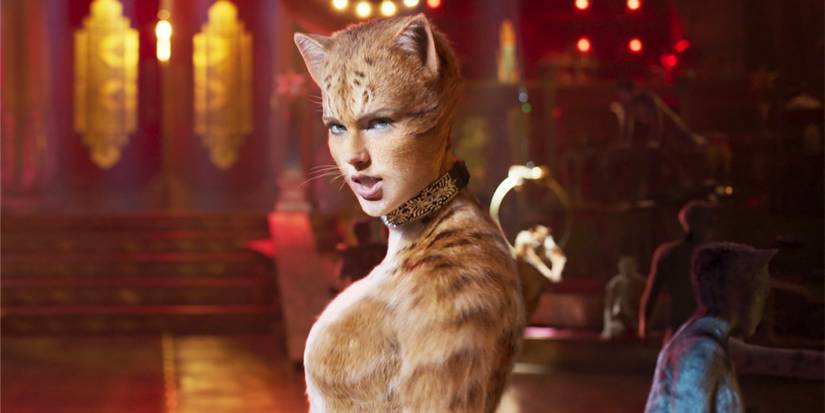 Image via Universal Pictures
Cats was already at a disadvantage when it was announced because the musical it is based on is simply not very good, and definitely the weakest of the work of the great Andrew Lloyd Webber. However, the most defining choice made in Cats was to depict all the characters as garish, anthropomorphic hybrids between humans and cats that simply looked creepy; Tom Hooper had no idea how to light and shoot a musical, and the result is jarring and disturbing.
The musical Cats doesn’t have much of a plot beyond the characters just introducing themselves, which makes it all the more frustrating when the film adaptation does little to add to that. It’s also a film that’s filled with both singers that can’t act (Taylor Swift) and great actors who can’t sing (Judi Dench), resulting in a catastrophe where everyone ends up embarrassing themselves.
4 ‘Movie 43’ (2013)
 Image via Relativity Media
Movie 43 isn’t just one of the unfunniest films ever made, but a genuinely sinister scheme in which A-listers were tricked into signing on. There was never a clear sense of what the end product was supposed to be, but the film’s producers and directors were able to con everyone into thinking that there was a meaning to their sketch compilation; the framing device that unites them is virtually non-existent, and is ultimately discarded by the end.
Movie 43 is almost impressive in that it's a sketch-based film in which not a single segment is funny, as most films of this sort would have at least a few standout sections. It’s hard to blame any of the stars who were deceived into making Movie 43, but it's hackjobs like this that are responsible for the decline of comedies on the big screen.
3 ‘Gigli’ (2003)
 Image via Sony Pictures Releasing
Gigli is the type of rare disaster that happens only once in a generation, and it proves Roger Ebert’s theory that it takes a truly talented group of people to make a film so completely terrible. Martin Brest is an accomplished director behind classics like Midnight Run and Beverly Hills Cop, but his idea for a crime film was corrupted when the studio pressured him to make a romantic comedy in order to take advantage of the hot celebrity couple of Ben Affleck and Jennifer Lopez.
Gigli has perhaps the worst dialogue ever included in a film, and includes a performance by Justin Bartha that is straight-up offensive, even with the excuse that “it was from a different time.” Although Affleck thankfully managed to salvage his career by getting into directing, Gigli sadly put Brest in “director’s jail,” and he hasn’t made a new film since.
2 ‘The Last Airbender’ (2010)
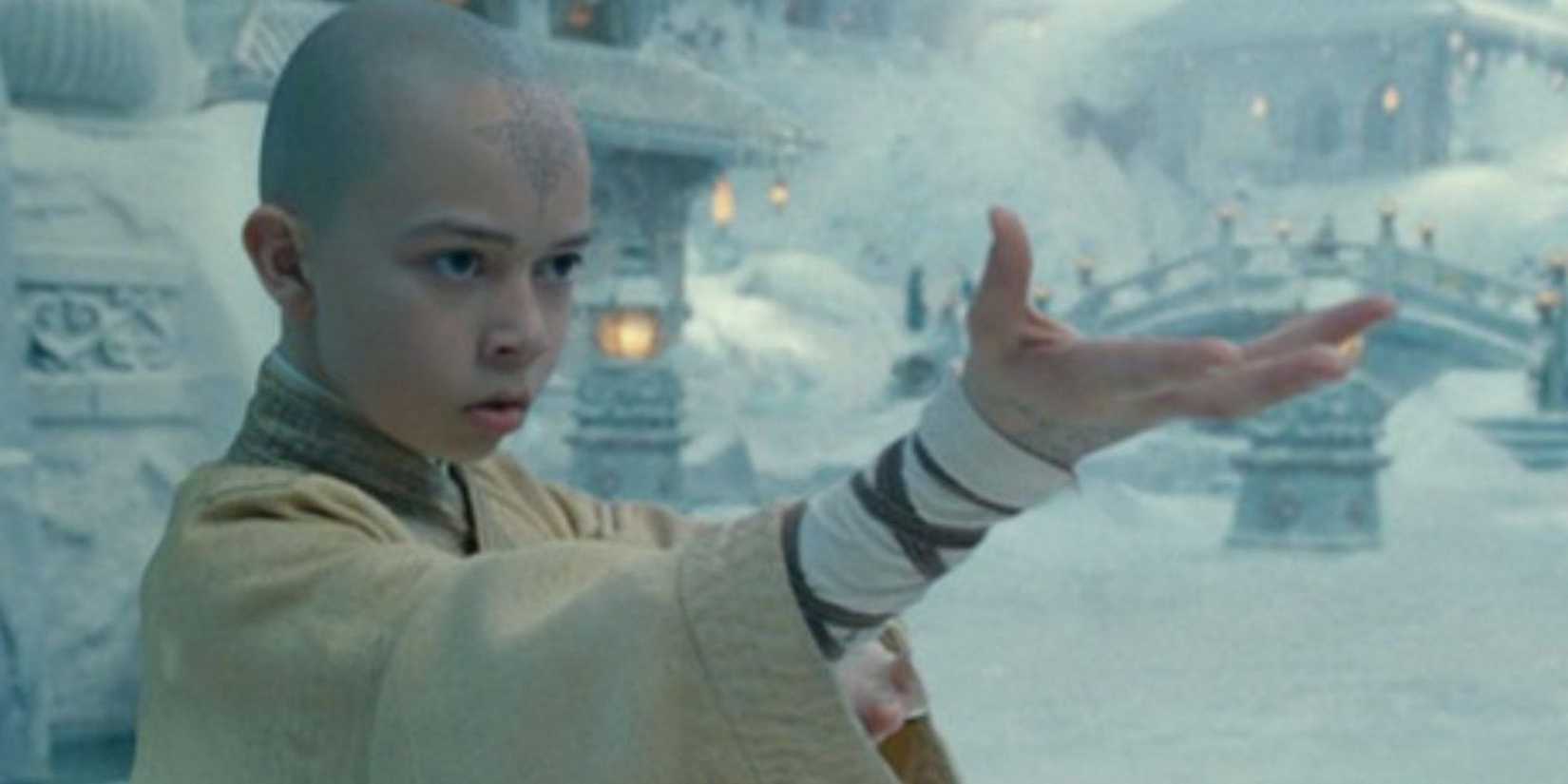 Image via Paramount Pictures
The Last Airbender is the rare film that managed to please no one, and it’s still rather impressive how thoroughly it was screwed up. Those that had loved the Avatar: The Last Airbender television series were furious because the film didn’t follow the source material and attempted to condense multiple seasons into a rushed story, and those that were being introduced to the universe for the first time couldn’t latch on to anything because of the confused direction.
The Last Airbender confirmed that M. Night Shyamalan had fallen from grace, as the director who was once tipped as “the next Steven Spielberg” had been on a losing streak. Shyamalan has managed to somewhat salvage his career thanks to the success of some of his recent films, such as Split and Trap, but he will never completely live down The Last Airbender.
1 ‘United Passions’ (2014)

United Passions isn’t as famous as some of the other well-known cinematic disasters, but it’s one of the few films that can be considered to be completely sinister in its intentions. The film is based on the formation of FIFA, and was nearly entirely financed by the organization, which was in the midst of a corruption scandal at the time.
United Passions is a work of propaganda that feels like it was made for a corporation to save face, and was nearly impressive in how much money it lost; despite a budget of approximately $32 million, United Passions grossed less than $200,000 globally. To his credit, Tim Roth actually ended up apologizing for his role in the film, and claimed that he hadn’t questioned the script presented to him, and had decided that he would never actually watch it all the way through.
Collider Exclusive · Oscar Best Picture Quiz
Which Oscar Best Picture
Is Your Perfect Movie?
Parasite · Everything Everywhere · Oppenheimer · Birdman · No Country
Five Oscar Best Picture winners. Five completely different visions of what cinema can be — and what it can do to you. One of them is the film that was made for the way your mind works. Ten questions will figure out which one.
🪜Parasite
🌀Everything Everywhere
☢️Oppenheimer
🐦Birdman
🪙No Country for Old Men
FIND YOUR FILM →
01
What kind of film experience do you actually want? The best movies don't just entertain — they leave something behind.
ASomething that pulls the rug out — that makes me think I'm watching one kind of film and then reveals I'm watching another entirely. BSomething overwhelming — funny, sad, absurd, and genuinely moving, all at once. CSomething grand and weighty — a film that makes me feel the full scale of what I'm watching. DSomething formally daring — a film that pushes what cinema can even do. ESomething lean and relentless — pure tension with no wasted frame.
NEXT QUESTION →
02
Which idea grabs you most in a film? Great films are driven by a central obsession. What's yours?
AClass, inequality, and what people are willing to do when desperation meets opportunity. BIdentity, family, and the chaos of trying to hold your life together when everything is falling apart. CGenius, moral responsibility, and the catastrophic weight of a decision you can never take back. DEgo, legacy, and the terror of becoming irrelevant while you're still alive to watch it happen. EEvil, chance, and whether moral order actually exists or if we just tell ourselves it does.
NEXT QUESTION →
03
How do you like your story told? Form is content. The way a story is shaped changes what it means.
AGenre-twisting — I want it to start in one lane and migrate into something completely different. BMaximalist and genre-blending — comedy, action, drama, sci-fi, all in one ride. CEpic and non-linear — cutting between timelines, building a mosaic of cause and consequence. DA single unbroken flow — I want to feel like I'm living it in real time, no cuts to safety. ESpare and precise — every scene doing exactly what it needs to do and nothing more.
NEXT QUESTION →
04
What makes a truly great antagonist? The opposition defines the protagonist. What kind of opposition fascinates you?
AA system — invisible, structural, and almost impossible to fight because it has no single face. BThe self — the ways we sabotage, abandon, and fail the people we love most. CHistory — the unstoppable momentum of events that no single person can stop or redirect. DThe industry — the machinery of culture that chews up talent and spits out irrelevance. EPure, implacable evil — a force so certain of itself it becomes almost philosophical.
NEXT QUESTION →
05
What do you want from a film's ending? The final note is the one that lingers. What do you want it to sound like?
AShock and inevitability — a conclusion that recontextualises everything that came before it. BEarned emotion — I want to cry, laugh, and feel genuinely hopeful, even if the world is a mess. CDevastation and grandeur — an ending that makes me sit in silence for a few minutes after. DAmbiguity — something that leaves enough open that I'm still thinking about it days later. EBleakness — an honest refusal to pretend the world is tidier than it actually is.
NEXT QUESTION →
06
Which setting pulls you in most? Where a film takes place shapes everything — mood, stakes, what's even possible.
AA gleaming modern city with a hidden underside — beauty masking rot, wealth masking desperation. BA collapsing suburban life that opens onto something infinite — the multiverse of a single ordinary person. CThe corridors of power and science at a world-historical turning point — where decisions echo for decades. DThe grimy, alive chaos of New York and Hollywood — fame as both destination and trap. EVast, indifferent landscape — desert and highway where violence arrives without warning or reason.
NEXT QUESTION →
07
What cinematic craft impresses you most? Every great film has a signature — a technical or artistic element that makes it unmistakable.
AProduction design and mise-en-scène — every frame composed to carry meaning beneath the surface. BEditing and tonal control — the ability to move between registers without losing the audience. CScore and sound design — music that becomes inseparable from the dread and awe of what you're watching. DCinematography as performance — the camera not recording events but participating in them. ESilence and restraint — what's left unsaid and unshown doing more work than any dialogue could.
NEXT QUESTION →
08
What kind of main character do you root for? The protagonist is the lens. Who you choose to follow says something about you.
ASomeone smart and resourceful who makes increasingly dangerous decisions under pressure. BSomeone overwhelmed and ordinary who turns out to be capable of something extraordinary. CA brilliant, tortured figure whose gifts and flaws are inseparable from each other. DA self-destructive artist whose ego is both their superpower and their undoing. EA quiet, principled person trying to make sense of a world that has stopped making sense.
NEXT QUESTION →
09
How do you feel about a film that takes its time? Pace is a choice. Some films sprint; others let tension accumulate slowly, deliberately.
AI love a slow build when I know the payoff is going to be seismic — patience for a devastating reveal. BGive me relentless momentum — I want to feel breathless and emotionally spent by the end. CEpic runtime doesn't scare me — if the material demands three hours, give me three hours. DI want it to feel propulsive even when nothing is technically happening — restless energy throughout. EDeliberate and unhurried — I want dread to accumulate in the spaces between the action.
NEXT QUESTION →
10
What do you want to feel walking out of the cinema? The best films leave a mark. What kind of mark do you want?
AUnsettled — like I've just seen something I can't fully explain but can't stop thinking about. BMoved and energised — like the film reminded me what actually matters and gave me something to hold onto. CHumbled — like I've been in the presence of something genuinely important and overwhelming. DExhilarated — like I've just seen cinema doing something it's never quite done before. EHaunted — like a cold, quiet dread that stays with me for days.
REVEAL MY FILM →
The Academy Has Decided Your Perfect Film Is…
Your answers have pointed to one Oscar Best Picture winner above all others. This is the film that was made for the way your mind works.
Parasite
You are drawn to films that operate on multiple levels simultaneously — that begin in one genre and quietly, brilliantly migrate into another. Bong Joon-ho's Parasite is a film about class, desire, and the architecture of inequality that manages to be darkly funny, deeply suspenseful, and genuinely shocking across a single extraordinary running time. Your instinct is for cinema that hides its true intentions until the moment it's ready to reveal them. Parasite is exactly that — a film that rewards close attention and punishes assumptions, right up to its devastating final image.
Everything Everywhere All at Once
You want it all — and this film gives you all of it. The Daniels' Everything Everywhere All at Once is one of the most maximalist films ever made: action comedy, multiverse sci-fi, family drama, existential crisis, and a genuinely earned emotional core that sneaks up on you amid the chaos. You are someone who responds to ambition, who doesn't want cinema to choose between being entertaining and being meaningful. This film refuses that choice entirely. It is overwhelming by design, and its overwhelming nature is precisely the point — because the feeling of being crushed by infinite possibility is exactly what it's about.
Oppenheimer
You are drawn to cinema on a grand scale — films that understand history not as a backdrop but as a force, and that place their characters inside that force and watch what happens. Christopher Nolan's Oppenheimer is a film about the terrifying gap between what we can do and what we should do, told with the full weight of one of the most consequential moments in human history behind it. You want your films to feel important without feeling self-important — to earn their ambition through sheer craft and the gravity of their subject. Oppenheimer does exactly that. It is enormous, complicated, and refuses easy comfort.
Birdman
You are drawn to films that foreground their own construction — that make the how of the filmmaking part of the what it's about. Alejandro González Iñárritu's Birdman, shot to appear as a single continuous take, is cinema examining itself through the cracked mirror of a fading actor's ego. You respond to formal daring, to the feeling that a film is doing something that probably shouldn't be possible. Michael Keaton's performance and Emmanuel Lubezki's restless camera create something genuinely unlike anything else — a film that is simultaneously about creativity, relevance, self-destruction, and the impossibility of ever truly knowing if your work means anything at all.
No Country for Old Men
You are drawn to cinema that trusts silence, that refuses to explain itself, and that treats dread as a form of meaning. The Coen Brothers' No Country for Old Men is a film about the arrival of a new kind of evil — implacable, arbitrary, and utterly indifferent to the moral frameworks we use to make sense of the world. It is one of the most formally controlled films ever made, and its controlled restraint is what makes it so terrifying. You want your films to haunt you, not comfort you. You are not interested in resolution if resolution would be dishonest. No Country for Old Men is honest in a way that most cinema never dares to be.
↻ RETAKE THE QUIZ

United Passions
Release Date June 19, 2014
Runtime 110 minutes
Writers Frédéric Auburtin
Producers Tahir Maradov, Louisa Maurin






 English (US) ·