
Stephen King is best known for writing horror stories, and horror stories are often suspenseful. And then thrillers and stories that fit more within the mystery genre are also often suspenseful, and King’s certainly written more than a few thrillers in his time… mystery novels, not so much, as King seems more in his wheelhouse when the villain’s known to the reader from early on, like in Mr. Mercedes.
King’s not great at writing plot twists, in other words, but he can do suspense well, largely thanks to his willingness to have anything happen at any point in the story, including genuinely terrible (or even deadly) things happening to prominent/likable characters. He could well be even better at suspense than horror, or maybe it’s more accurate to say that he often does both at the same time, and both very well. His most suspenseful novels are ranked below, and there’s certainly some crossover here with any ranking that aims to outline his scariest novels.
10 'Rose Madder' (1994)
 Image via Viking/Stephen King
Rose Madder is probably a bit obscure, by Stephen King standards, since it doesn’t have a movie or TV adaptation (and all those adaptations are part of the reason why some King novels are so well-known). It works well on the page, for now at least, and is about a woman in an abusive marriage who decides to actively flee from her husband, which sends him into a further rage, causing him to actively pursue her.
Rose Madder cuts back and forth between the pursuer and the pursued really effectively, with that structure being the key reason why the novel ends up being so suspenseful.
Things do get a bit fantastical near the story’s end, but Rose Madder never abandons that sense of realistic horror the antagonist here (one of King’s most brutal and irredeemable) brings to the story. Rose Madder cuts back and forth between the pursuer and the pursued really effectively, with that structure being the key reason why so much of the novel ends up being an effectively suspenseful and uneasy read.
9 ''Salem's Lot' (1975)
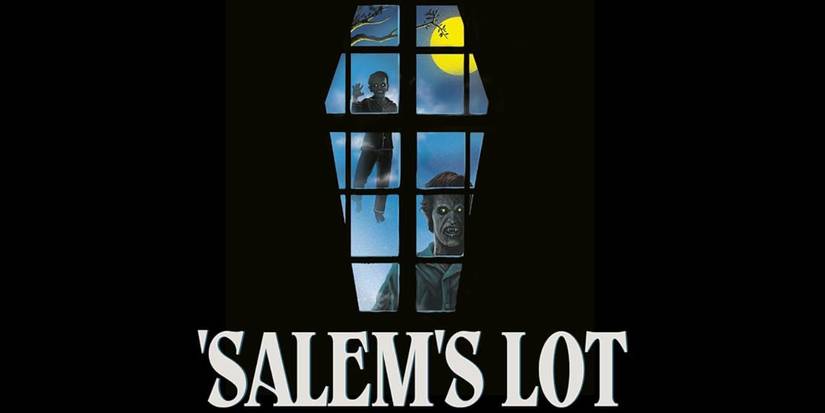 Image via Doubleday
Forget about the movie, and just read ‘Salem’s Lot, the book. It was only the second one Stephen King ever got published, and it still feels up there among his best overall. It’s King doing vampires, and he tackles that particular horror sub-genre well. Some of them slowly take over the town of Jerusalem's Lot, and the people living there have to deal with it all. To the surprise of no one familiar with King’s work, Jerusalem's Lot is located in Maine.
Things happen gradually but the important thing is they're always happening. You never feel like ‘Salem’s Lot is wasting your time or going nowhere, and that approach means the level of dread throughout remains quite high. If feeling dread and suspense are similar, then yes, ‘Salem’s Lot can be counted among one of King’s most suspenseful, and one of his furthest from dreadful, too.
8 'Under the Dome' (2009)
 Image via Charles Scribner's Sons
Honorable mention here to Needful Things, which can be compared, to some extent, to Under the Dome. Both are about a town being torn apart from the inside. And, well, that also happens a bit in ‘Salem’s Lot, but that one is more outwardly a story with supernatural monsters and stuff. There’s a supernatural element to Needful Things, though much of the death and destruction is of a more mundane nature, and then with Under the Dome, science fiction elements are present, while the drama is often of a surprisingly everyday nature.
The town in Under the Dome was always doomed, and the whole story is really just about the dome trapping everyone and speeding all that destruction and devastation up. The dome leads to more doom, to put it more succinctly. It begins with tons of bad things happening almost straight away, with the villainous characters becoming steadily more villainous as things progress, and then the final 100 to 200 pages escalating the intensity of it all further. It’s a relentless and continually engrossing read, which is extra impressive, considering the immense length of this one.
7 'The Shining' (1977)
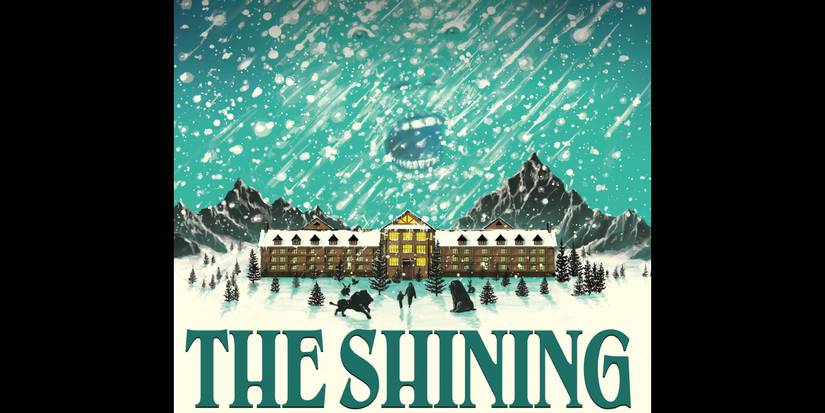 Image via Doubleday
Stephen King went from Carrie to ‘Salem’s Lot and then to The Shining, all within the first few years of his career as a published novelist, and each was a little stronger than the last, in terms of suspense/horror and overall quality. The Shining is a good deal more intimate and personal than ‘Salem’s Lot, though, with far fewer central characters, and a setting that’s largely confined to a single hotel, rather than a whole town.
That hotel sure has a lot of history, though, and there’s complexity here when it comes to how it impacts a troubled father, his wife, and his son while they all stay there during the off-season (the father working as a caretaker, all the while also trying to overcome his writer’s block). The Shining’s got a well-earned reputation for being one of King’s most engrossing and frightening books, and has similarly deserved all the praise it’s gotten as one of the best horror novels of the 20th century, and maybe even of all time.
6 'The Dead Zone' (1979)
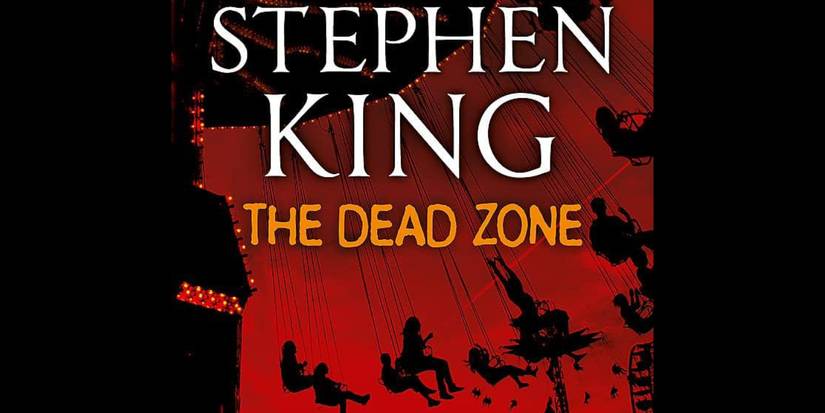 Image via Viking Press
There’s a high-concept premise to The Dead Zone, but it still avoids feeling like one of the weirder Stephen King novels… or, if it’s weird, then it’s certainly not weird in a bad way. It revolves around a man who can see flashes of the future if he comes into contact with certain people or objects, and then he starts fearing the potential end of the world after meeting a ruthless politician who has aspirations of becoming president.
The whole battle over preventing a bad future is undeniably exciting, and then there’s also a certain grimness and unease here with the exploration of these powers and how they could be detrimental to a person who wields them. That element of The Dead Zone grounds it quite nicely, in a way, even if that premise, as mentioned before, might sound far-fetched on paper.
5 'The Stand' (1978)
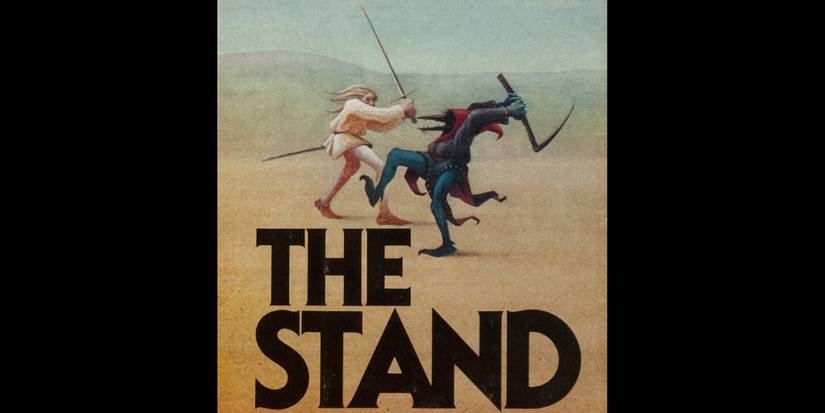 Image via Doubleday
The Stand goes to some uncomfortable places throughout, and that’s one reason why it’s a pretty intense read overall. King doesn’t hold back in any regard here, since there’s a whole lot of devastation that happens early on, with the outbreak of a very deadly flu that kills off most of humanity, and then out of those who remain, some follow a force of evil, and others follow a force of good.
And The Stand slowly builds to a showdown or battle of sorts, all the while making it uncomfortably clear just how terrible the bad guys are every step of the way. Also, Stephen King shakes up the story with some of the most surprising scenes he’s ever written, one successfully to break the heroic characters out of their routine (thus re-energizing the story), and on at least one occasion, doing so divisively, with some aspects of that whole gonzo ending.
4 'The Long Walk' (1979)
 Image via Signet Books
While The Stand is post-apocalyptic, The Long Walk (published one year after The Stand under King’s pseudonym, Richard Bachman) is dystopian. The premise involves an annual competition that sees teenage boys walking non-stop, over a great length of time, all as part of an endurance test that only ends when there’s just a single boy left standing.
It’s also a deadly competition, for those who can’t walk anymore and have to drop out. So, to call The Long Walk high stakes would be one hell of an understatement. Once the deadliness of the competition is made clear, and it dawns on the competitors just how dire their situation is, The Long Walk never really lets you catch a break or feel any sort of relief, and the same can be said for the film adaptation that was one of several Stephen King movies to get a wide release in 2025.
3 'Cujo' (1981)
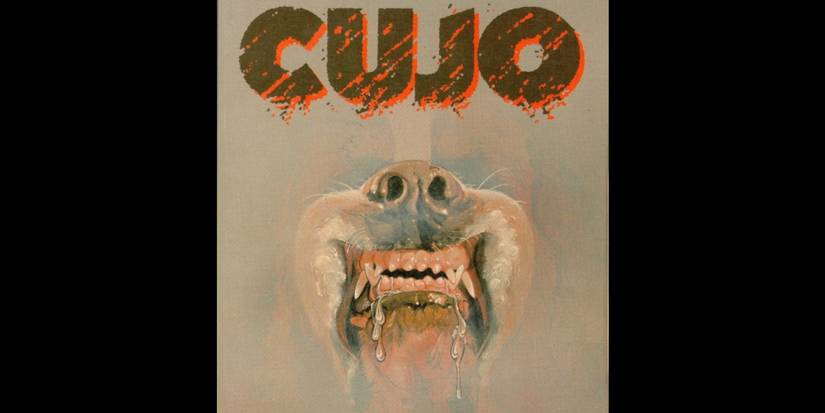 Image via Viking Press
It’s interesting and more than a little alarming to learn about the writing of Cujo (click here, for context), but it does explain, to some extent, why the book turned out the way it did. It’s relentless, to put it one way. It’s about a dog that gets rabies and then terrorizes a handful of people in the town of Castle Rock (not nearly as disastrous an event as the one alluded to before, in Needful Things).
Cujo is great and particularly intense because it feels super grounded, by King’s standards. A rabid animal attacking people is something pretty mundane, compared to the supernatural threats in many of his stories. And, sure, those supernatural threats are often scarier because they bring out the worst in people, seen best in something like It, but here, the big threat also makes some people worse, and that threat is not fantastical or sci-fi in nature. Cujo unfolds so fast, and without proper chapters, too, so it’s up there with The Long Walk in terms of Stephen King novels that are successfully able to make you feel out of breath, while reading.
2 '11/22/63' (2011)
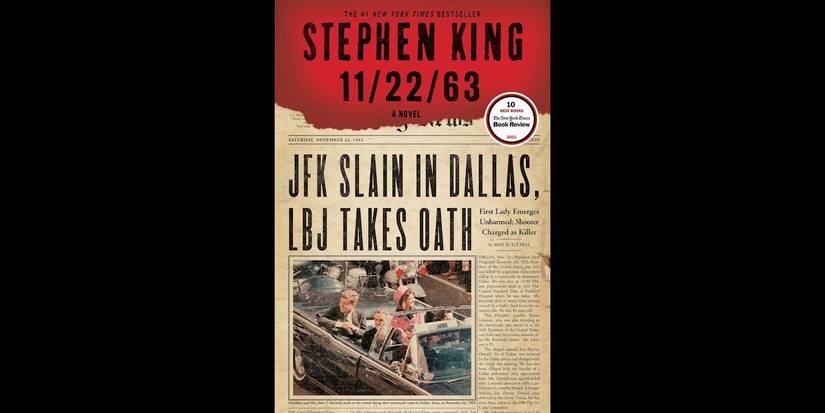 Image via Scribner
Like with The Dead Zone, you kind of have to roll with a wild premise when it comes to appreciating 11/22/63, since it’s about traveling back to a specific point in time and trying to prevent one of the most historically/culturally significant assassinations of the 20th century: that of John F. Kennedy, which happens on the titular date. The protagonist can only go to 1958, and then that date is always approaching, and naturally, that leads to a lot of suspense.
There are further complications and lives he gets wrapped up in while back in time, so the stakes end up being personal and even higher than the premise might ordinarily imply. It’s all really compelling and easy to enjoy, even if you don’t usually consider yourself much of a Stephen King fan (it’s very approachable, even with the page count that’s on the higher end of things, which is saying a lot, considering how long the average Stephen King book is).
1 'Misery' (1987)
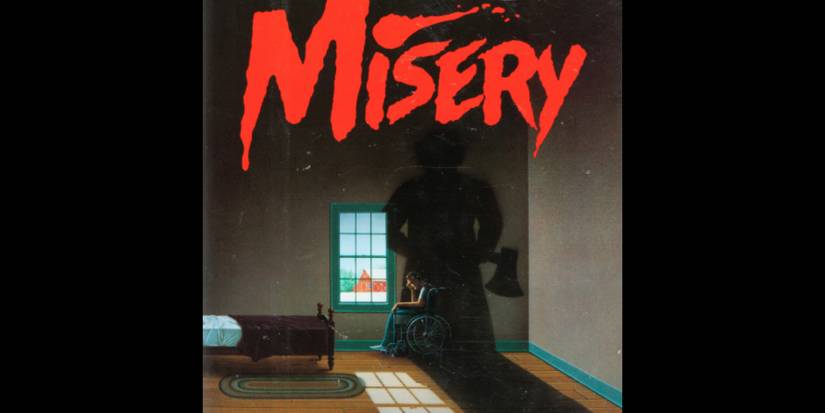 Image via Viking Press
The horror in Misery is comparable to the horror found in Cujo, as the central antagonist here is a human being without any genuine supernatural powers, as she’s instead just incredibly troubled, aggressive, and capable of violence. She’s Annie Wilkes, and she considers herself the ultimate fan of writer Paul Sheldon, ultimately making him her prisoner and forcing him to continue a series she loves (and he doesn’t).
It’s a situation that’s less likely to happen than the inciting incident in Cujo, sure, but it still could conceivably happen in real life, so the sense of terror here is particularly visceral. And it’s also a remarkably compelling read for something that is so confined in scope, all the while also being a novel with, effectively, just two main characters. The movie adaptation’s one of the best and most intense out there, too, and an understandable personal favorite of King’s.

Misery
Release Date November 30, 1990
Runtime 107 minutes







 English (US) ·