
 Image via Newmarket

Published Apr 19, 2026, 5:55 PM EDT
Luc Haasbroek is a writer and videographer from Durban, South Africa. He has been writing professionally about pop culture for eight years. Luc's areas of interest are broad: he's just as passionate about psychology and history as he is about movies and TV. He's especially drawn to the places where these topics overlap.
Luc is also an avid producer of video essays and looks forward to expanding his writing career. When not writing, he can be found hiking, playing Dungeons & Dragons, hanging out with his cats, and doing deep dives on whatever topic happens to have captured his interest that week.
Sign in to your Collider account
Back in 2000, Memento represented a bold fusion of thriller storytelling and mind-bending plot devices, very much putting Christopher Nolan on the map. Since then, a wave of mind-bending cinema has emerged, movies that fracture time, blur identity, and leave viewers questioning what they’ve seen.
Instead of being straightforward stories, these movies are more like puzzles, dreams, or philosophical experiments. The titles below are all mind-bending in their own way, whether that's through time travel, unreliable realities, or surreal symbolism.
10 'Predestination' (2014)
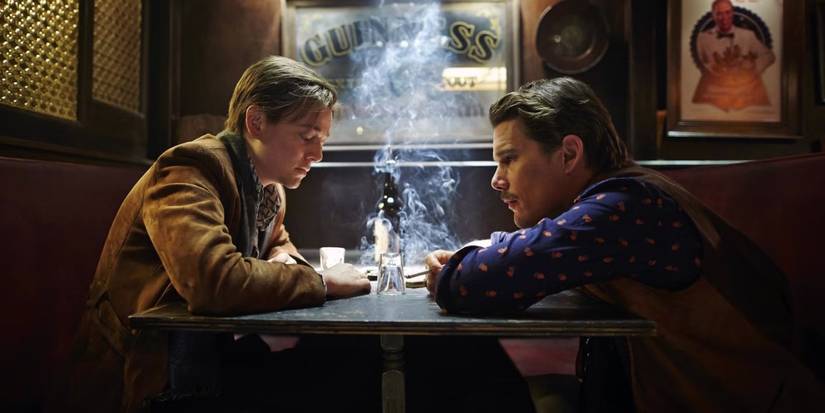 Image via Pinnacle Films
"The man who ruined my life is a ghost, and so is my daughter." This sci-fi thriller adapts a Robert Heinlein short story into a time-twisting brainteaser. Ethan Hawke leads the cast as Agent Doe, a temporal agent who travels through time to stop a mysterious bomber, while recruiting a young writer (Sarah Snook) into a life of time-travel missions. Time travel movies tend to be trippy, but Predestination pushes it to its absolute limit.
The structure is deceptively simple at first, gradually layering revelation upon revelation until the full implications become clear. Early details become crucial later and subtly visual cues foreshadow impending revelations. Eventually, identities and timelines collapse into one another in increasingly paradoxical ways. Cause and effect melt in closed loops. It's all pretty 'high concept' and convoluted, but the strong performances keep it grounded.
9 'Mother!' (2017)
 Image via Paramount Pictures
"What hurts me the most is that I wasn't enough." Mother! is Darren Aronofsky's symbolic, philosophical, psychological horror. In it, a young woman (Jennifer Lawrence) lives in a secluded house with her poet husband (Javier Bardem), only for a series of increasingly intrusive guests to arrive, turning their home into a site of chaos and destruction. What begins as a domestic drama spirals into something far more allegorical and overwhelming.
This is a movie that operates almost entirely on metaphor. Everything is unstable, escalating from subtle discomfort to outright nightmare. The imagery is frequently surreal and striking, loaded with meaning and historical allusions, inviting the viewer to analyze it. In particular, the film leans hard into religious symbolism and references to creation and destruction. Not everybody liked this more arthouse approach, but for those who get on its wavelength, Mother! offers a lot of food for thought.
8 'Waking Life' (2001)
 Image via Searchlight Pictures
“Dream is destiny.” Waking Life feels like a stoned dorm-room conversation with smart philosophy undergrads — in a good way. We follow a young man (Wiley Wiggins) as he drifts through a series of dreamlike encounters, engaging in conversations about free will, consciousness, and the nature of reality. The movie is a loose chain of ideas rather than a traditional narrative. Each conversation introduces a new perspective, creating a mosaic of thought rather than a single argument.
Waking Life was directed by the great Richard Linklater, who is one of the few filmmakers to pull off a concept like this. Rather than being dull or navel-gazing, Waking Life is energetic and intriguing, jam-packed with exciting ideas. Finally, on the aesthetic side, the rotoscope animation gives it a constantly shifting visual texture, reinforcing the sense that nothing is entirely stable.
7 'Primer' (2004)
 Image via THINKFilm
“What if we’re already inside it?” This low-budget gem (it cost $7,000!) is one of the smartest time-travel movies ever made. Primer tells the story of two engineers (David Sullivan and Shane Carruth, who also writes and directs) who accidentally invent a device that allows them to travel back in time. They begin to experiment with it, and the consequences quickly become complex, leading to overlapping timelines and fractured relationships.
This is very much a film that demands active engagement. Carruth refuses to simplify the mechanics of time travel, presenting them in a way that feels almost deliberately opaque. As a result, some fans joke that it's impossible to fully understand Primer on the first viewing. However, this refusal to explain is part of what makes the film so compelling. Primer trusts the audience to grapple with its complexity.
6 'Paprika' (2006)
 Image via Sony Pictures Entertainment Japan
"Dreams are windows into the psyche." This masterpiece by Satoshi Kon is frequently cited as a major inspiration for Inception. In some ways, it's even bolder in its exploration of dreamscapes. In Paprika, a device that allows therapists to enter patients’ dreams is stolen, leading to a series of increasingly chaotic dream invasions that begin to spill into the real world. A detective (Akio Otsuka) and a scientist (Megumi Hayashibara) must navigate this collapsing boundary to stop the perpetrator.
In executing that premise, Paprika embraces the full potential of animation. Kon creates dream sequences that are fluid, imaginative, and often overwhelming, shifting seamlessly from one image to another. The narrative mirrors this fluidity, blurring the distinction between dream and reality until the two become indistinguishable. This comes through most powerfully in the famous dream parade, a carnival of objects, creatures, and cultural symbols.
5 'Triangle' (2009)
 Image via Icon Film Distribution
“It’s already happened… It’s going to happen again.” This is another lean, punchy, time-loop horror. In Triangle, a group of friends set sail on a yacht trip that goes disastrously wrong when they encounter a mysterious ocean liner. Once aboard, events begin to repeat in unsettling ways, trapping them in a loop that grows increasingly violent and disorienting. The protagonist’s (Melissa George) journey is both physical and psychological, as she begins to realize her role within the cycle.
The film weaponizes repetition. At first, the structure seems confusing, even chaotic, but gradually a pattern emerges, one that becomes more disturbing the more clearly it’s understood. Each rerun of the same events adds new context, new understanding, and, indeed, new dread. In the process, a time-loop puzzle becomes a survival horror. In this regard, Triangle draws on inspirations like Dead of Night and Jacob's Ladder.
4 'Enemy' (2013)
 Image via A24
“Chaos is order yet undeciphered.” Enemy is a provocative, divisive movie, but one that's incredibly thematically rich. It stars Jake Gyllenhaal in a dual role, playing both a quiet history professor and an actor who looks exactly like him. He becomes obsessed with tracking down his doppelgänger, and his life begins to unravel, leading to a series of increasingly strange and symbolic encounters. This eventually culminates in one of the weirdest, most shocking final shots of the 2010s.
The dual performances create a sense of instability, as identity itself becomes uncertain. The dialogue is similarly cryptic, leaving much of the film’s meaning to be inferred rather than explained. Events can be read literally or metaphorically, and the philosophical undercurrents lend themselves to endless interpretation. Enemy is about the fear of commitment and the fear of losing control of oneself, and the double becomes a manifestation of everything the protagonist is trying to avoid.
3 'The Fountain' (2006)
 Image via Warner Bros. Pictures
“Together we will live forever.” Another Aronofsky project, one that's been trippier than Mother! The Fountain interweaves three stories spanning multiple centuries, following a man’s (Hugh Jackman) quest to overcome death, whether through science, faith, or myth. Each timeline reflects a different aspect of his obsession, converging into a single emotional arc. The movie very much prioritizes thematic resonance over clarity, allowing the timelines to echo and overlap.
For this reason, it was controversial and a box office bomb, bringing in just $16.5m against a budget of $35m. Still, The Fountain's ambition is commendable, as is its aesthetic boldness. The visual style is lush and often surreal, reinforcing the sense that these stories exist outside conventional time. It serves up powerful recurring symbols, like circles and cycles, water and light, and, of course, the Tree of Life.
2 'Synecdoche, New York' (2008)
 Image via Sony Pictures Classics
“I’m thinking maybe this is my life… and it’s already over.” Charlie Kaufman specializes in strange stories, and Synecdoche, New York (his directorial debut) is one of his most intriguing. Philip Seymour Hoffman delivers a phenomenal performance as Caden Cotard, a theater director, who begins creating an ever-expanding stage production that mirrors his own life. Along the way, the line between reality and performance begins blurring as years pass and identities shift.
The film is deeply postmodern and self-reflexive. The narrative folds in on itself, with layers of representation that become increasingly difficult to separate. The dialogue is complex and introspective as well, touching on themes of mortality, regret, and the search for meaning. All in all, Synecdoche, New York is a film that can feel overwhelming, but also profoundly moving. It's a great, challenging film.
1 'Mulholland Drive' (2001)
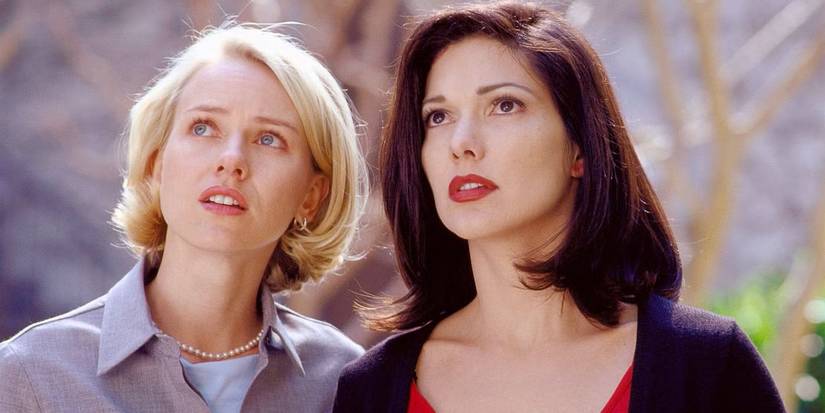 Image via Universal Pictures
“No hay banda… there is no band.” Speaking of great, challenging films, no movie fits that description better than David Lynch's opaque magnum opus. Mulholland Drive features Naomi Watts as a woman suffering from amnesia. The story kicks into gear after she teams up with an aspiring actress to uncover her identity in Los Angeles. But as the mystery unfolds, the narrative fractures, revealing a darker and more ambiguous reality beneath the surface.
Lynch structures the movie like a dream (or nightmare) where logic is fluid and meaning is elusive. The plot is deliberately disjointed, with scenes that seem to contradict or reinterpret one another. Conversations pivot from naturalistic and mundane to surreal and phantasmagoric. In this world, identity is an illusion, Hollywood is a dark fantasy, and two contradictory versions of reality overlap. All of this is either intricate and masterful or frustrating and senseless, depending on your point of view.
Collider Exclusive · Oscar Best Picture Quiz
Which Oscar Best Picture
Is Your Perfect Movie?
Parasite · Everything Everywhere · Oppenheimer · Birdman · No Country
Five Oscar Best Picture winners. Five completely different visions of what cinema can be — and what it can do to you. One of them is the film that was made for the way your mind works. Ten questions will figure out which one.
🪜Parasite
🌀Everything Everywhere
☢️Oppenheimer
🐦Birdman
🪙No Country for Old Men
FIND YOUR FILM →
01
What kind of film experience do you actually want? The best movies don't just entertain — they leave something behind.
ASomething that pulls the rug out — that makes me think I'm watching one kind of film and then reveals I'm watching another entirely. BSomething overwhelming — funny, sad, absurd, and genuinely moving, all at once. CSomething grand and weighty — a film that makes me feel the full scale of what I'm watching. DSomething formally daring — a film that pushes what cinema can even do. ESomething lean and relentless — pure tension with no wasted frame.
NEXT QUESTION →
02
Which idea grabs you most in a film? Great films are driven by a central obsession. What's yours?
AClass, inequality, and what people are willing to do when desperation meets opportunity. BIdentity, family, and the chaos of trying to hold your life together when everything is falling apart. CGenius, moral responsibility, and the catastrophic weight of a decision you can never take back. DEgo, legacy, and the terror of becoming irrelevant while you're still alive to watch it happen. EEvil, chance, and whether moral order actually exists or if we just tell ourselves it does.
NEXT QUESTION →
03
How do you like your story told? Form is content. The way a story is shaped changes what it means.
AGenre-twisting — I want it to start in one lane and migrate into something completely different. BMaximalist and genre-blending — comedy, action, drama, sci-fi, all in one ride. CEpic and non-linear — cutting between timelines, building a mosaic of cause and consequence. DA single unbroken flow — I want to feel like I'm living it in real time, no cuts to safety. ESpare and precise — every scene doing exactly what it needs to do and nothing more.
NEXT QUESTION →
04
What makes a truly great antagonist? The opposition defines the protagonist. What kind of opposition fascinates you?
AA system — invisible, structural, and almost impossible to fight because it has no single face. BThe self — the ways we sabotage, abandon, and fail the people we love most. CHistory — the unstoppable momentum of events that no single person can stop or redirect. DThe industry — the machinery of culture that chews up talent and spits out irrelevance. EPure, implacable evil — a force so certain of itself it becomes almost philosophical.
NEXT QUESTION →
05
What do you want from a film's ending? The final note is the one that lingers. What do you want it to sound like?
AShock and inevitability — a conclusion that recontextualises everything that came before it. BEarned emotion — I want to cry, laugh, and feel genuinely hopeful, even if the world is a mess. CDevastation and grandeur — an ending that makes me sit in silence for a few minutes after. DAmbiguity — something that leaves enough open that I'm still thinking about it days later. EBleakness — an honest refusal to pretend the world is tidier than it actually is.
NEXT QUESTION →
06
Which setting pulls you in most? Where a film takes place shapes everything — mood, stakes, what's even possible.
AA gleaming modern city with a hidden underside — beauty masking rot, wealth masking desperation. BA collapsing suburban life that opens onto something infinite — the multiverse of a single ordinary person. CThe corridors of power and science at a world-historical turning point — where decisions echo for decades. DThe grimy, alive chaos of New York and Hollywood — fame as both destination and trap. EVast, indifferent landscape — desert and highway where violence arrives without warning or reason.
NEXT QUESTION →
07
What cinematic craft impresses you most? Every great film has a signature — a technical or artistic element that makes it unmistakable.
AProduction design and mise-en-scène — every frame composed to carry meaning beneath the surface. BEditing and tonal control — the ability to move between registers without losing the audience. CScore and sound design — music that becomes inseparable from the dread and awe of what you're watching. DCinematography as performance — the camera not recording events but participating in them. ESilence and restraint — what's left unsaid and unshown doing more work than any dialogue could.
NEXT QUESTION →
08
What kind of main character do you root for? The protagonist is the lens. Who you choose to follow says something about you.
ASomeone smart and resourceful who makes increasingly dangerous decisions under pressure. BSomeone overwhelmed and ordinary who turns out to be capable of something extraordinary. CA brilliant, tortured figure whose gifts and flaws are inseparable from each other. DA self-destructive artist whose ego is both their superpower and their undoing. EA quiet, principled person trying to make sense of a world that has stopped making sense.
NEXT QUESTION →
09
How do you feel about a film that takes its time? Pace is a choice. Some films sprint; others let tension accumulate slowly, deliberately.
AI love a slow build when I know the payoff is going to be seismic — patience for a devastating reveal. BGive me relentless momentum — I want to feel breathless and emotionally spent by the end. CEpic runtime doesn't scare me — if the material demands three hours, give me three hours. DI want it to feel propulsive even when nothing is technically happening — restless energy throughout. EDeliberate and unhurried — I want dread to accumulate in the spaces between the action.
NEXT QUESTION →
10
What do you want to feel walking out of the cinema? The best films leave a mark. What kind of mark do you want?
AUnsettled — like I've just seen something I can't fully explain but can't stop thinking about. BMoved and energised — like the film reminded me what actually matters and gave me something to hold onto. CHumbled — like I've been in the presence of something genuinely important and overwhelming. DExhilarated — like I've just seen cinema doing something it's never quite done before. EHaunted — like a cold, quiet dread that stays with me for days.
REVEAL MY FILM →
The Academy Has Decided Your Perfect Film Is…
Your answers have pointed to one Oscar Best Picture winner above all others. This is the film that was made for the way your mind works.
Parasite
You are drawn to films that operate on multiple levels simultaneously — that begin in one genre and quietly, brilliantly migrate into another. Bong Joon-ho's Parasite is a film about class, desire, and the architecture of inequality that manages to be darkly funny, deeply suspenseful, and genuinely shocking across a single extraordinary running time. Your instinct is for cinema that hides its true intentions until the moment it's ready to reveal them. Parasite is exactly that — a film that rewards close attention and punishes assumptions, right up to its devastating final image.
Everything Everywhere All at Once
You want it all — and this film gives you all of it. The Daniels' Everything Everywhere All at Once is one of the most maximalist films ever made: action comedy, multiverse sci-fi, family drama, existential crisis, and a genuinely earned emotional core that sneaks up on you amid the chaos. You are someone who responds to ambition, who doesn't want cinema to choose between being entertaining and being meaningful. This film refuses that choice entirely. It is overwhelming by design, and its overwhelming nature is precisely the point — because the feeling of being crushed by infinite possibility is exactly what it's about.
Oppenheimer
You are drawn to cinema on a grand scale — films that understand history not as a backdrop but as a force, and that place their characters inside that force and watch what happens. Christopher Nolan's Oppenheimer is a film about the terrifying gap between what we can do and what we should do, told with the full weight of one of the most consequential moments in human history behind it. You want your films to feel important without feeling self-important — to earn their ambition through sheer craft and the gravity of their subject. Oppenheimer does exactly that. It is enormous, complicated, and refuses easy comfort.
Birdman
You are drawn to films that foreground their own construction — that make the how of the filmmaking part of the what it's about. Alejandro González Iñárritu's Birdman, shot to appear as a single continuous take, is cinema examining itself through the cracked mirror of a fading actor's ego. You respond to formal daring, to the feeling that a film is doing something that probably shouldn't be possible. Michael Keaton's performance and Emmanuel Lubezki's restless camera create something genuinely unlike anything else — a film that is simultaneously about creativity, relevance, self-destruction, and the impossibility of ever truly knowing if your work means anything at all.
No Country for Old Men
You are drawn to cinema that trusts silence, that refuses to explain itself, and that treats dread as a form of meaning. The Coen Brothers' No Country for Old Men is a film about the arrival of a new kind of evil — implacable, arbitrary, and utterly indifferent to the moral frameworks we use to make sense of the world. It is one of the most formally controlled films ever made, and its controlled restraint is what makes it so terrifying. You want your films to haunt you, not comfort you. You are not interested in resolution if resolution would be dishonest. No Country for Old Men is honest in a way that most cinema never dares to be.
↻ RETAKE THE QUIZ

Mulholland Drive
Release Date October 19, 2001
Runtime 147 minutes
Director David Lynch
Writers David Lynch




 English (US) ·