
 Image via Paramount Pictures

Published May 8, 2026, 1:04 PM EDT
Sign in to your Collider account
Zombie films often rely on chaos to get attention, but not all of them depend on constant movement to get us in the feels. There are a few that build pressure in slower ways, where the sense of danger comes from how limited the situation feels.
What stands out in the stronger entries is how consistently they maintain that pressure without losing clarity. The setting, the characters, and the pacing all work together instead of competing for attention. Even when the situations become extreme, the story stays readable and grounded enough to follow without confusion. That balance is what separates the films that feel intense for a moment from the ones that hold that intensity throughout. And the following are the most intense ones that you must binge watch with your friends!
10 ‘Warm Bodies’ (2013)
 Image via Lionsgate Films
Warm Bodies takes a different approach to the zombie genre, and that shift is clear from the beginning. R (Nicholas Hoult) isn’t presented as a threat in the usual sense, and the film spends time inside his perspective instead of treating him as something to escape from. His connection with Julie (Teresa Palmer) begins in an unlikely way, and the story builds around that instead of focusing only on survival.
That change in focus affects how the film handles tension. The danger is still there, especially with the Boneys moving through the same world, but the story keeps returning to how R starts to change through his interactions with Julie. Those moments carry the film forward, giving it a different kind of intensity that comes from watching something slowly shift rather than break apart.
9 ‘Zombieland’ (2009)
 Image via Sony Pictures Releasing
Zombieland is a movie that moves quickly and doesn’t spend much time explaining its world. Columbus (Jesse Eisenberg) lays out his rules early on, and the film sticks to that structure as he crosses paths with Tallahassee (Woody Harrelson). Their dynamic sets the tone, and the story keeps things moving without slowing down for long.
Even with its lighter tone, the film keeps a steady sense of risk in the background. Wichita (Emma Stone) and Little Rock (Abigail Breslin) add to that, especially in how their choices affect the group as they travel together. The film doesn’t rely on one kind of tension, and it balances humor with moments where things can turn quickly, which keeps the pace consistent throughout.
8 ‘World War Z’ (2013)
 Image via Paramount Pictures
World War Z moves fast from the moment things start to fall apart, and it doesn’t slow down to explain much. Gerry Lane (Brad Pitt) is pulled into a global search for answers, and the film keeps shifting locations as he tries to understand what’s happening. Cities fall quickly, and the scale keeps growing, which makes the situation feel out of control almost immediately.
That constant movement shapes how the tension builds. Each stop gives a small piece of information, though nothing feels complete on its own. Gerry keeps moving forward because there isn’t time to do anything else, and the film stays close to that urgency. Even when things quiet down for a moment, it never feels safe for long, and that steady pressure carries through to the end.
7 ‘28 Weeks Later’ (2007)
 Image via 20th Century Fox
28 Weeks Later starts with a moment that feels personal before it widens into something much larger. Don (Robert Carlyle) makes a choice early on that stays with him, and the film keeps returning to that as the situation begins to break down again. What begins as an attempt to rebuild quickly turns unstable, and the sense of control disappears faster than expected.
The story keeps shifting between different characters, especially Andy (Mackintosh Muggleton) and Tammy (Imogen Poots), who are trying to make sense of what’s happening around them. The film doesn’t pause for long explanations, and that keeps everything moving at a pace that feels hard to catch up with. It holds onto that initial moment and lets it echo through the rest of the story.
6 ‘Train to Busan’ (2016)
 Image via Next Entertainment World
Train to Busan keeps its focus tight from the start, and that choice shapes how the tension builds. Seok-woo (Gong Yoo) boards the train with his daughter Su-an (Kim Su-an), expecting a routine trip, though it doesn’t take long for things to turn. Once the infection spreads, the film stays inside that space, and every carriage begins to feel like its own problem to deal with.
That setup keeps bringing the story back to the same question of who can be trusted and who gets left behind. Sang-hwa (Ma Dong-seok) becomes a steady presence as situations grow more difficult, and his actions change how others respond. The film doesn’t move away from the group for long, which makes each loss or decision feel immediate. It holds onto that confined setting and uses it fully.
5 ‘Dawn of the Dead’ (2004)
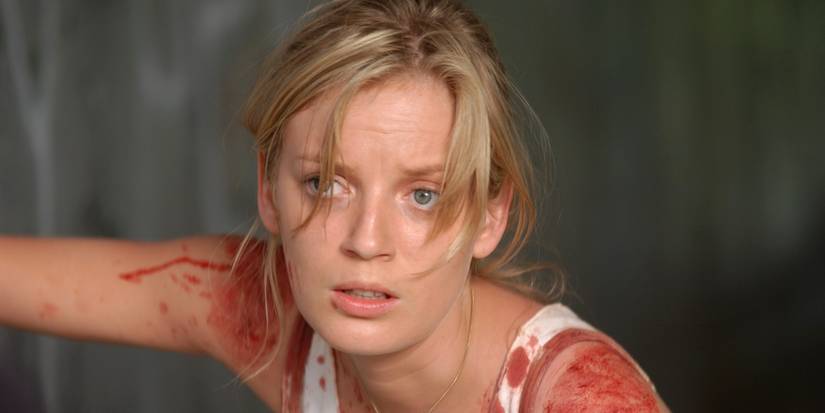 Image Via Universal Pictures
Dawn of the Dead wastes no time getting started, and it keeps that pace steady once everything falls apart. Ana (Sarah Polley) is pushed into survival almost immediately, and the film moves with her as she finds others trying to hold onto some kind of safety. The mall becomes the center of that effort, and the story stays there long enough for it to feel like a temporary escape.
That space changes as more people settle in, and the film keeps returning to how fragile that sense of safety really is. Kenneth (Ving Rhames) keeps things controlled on the surface, though small cracks begin to show as time passes. The outside threat never feels distant, and the film doesn’t let the group get too comfortable, which keeps the pressure steady throughout.
4 ‘REC’ (2007)
 Image via Filmax
REC keeps everything close and immediate, which is what makes it hard to look away. Ángela Vidal (Manuela Velasco) is filming a routine night with a group of firefighters when the situation inside an apartment building starts to break down. The camera never leaves her side for long, and that choice makes every moment feel like it’s happening in real time.
The building becomes the entire world once the exits are sealed, and the film keeps returning to that limited space as things get worse. Ángela continues recording even when it’s clear she doesn’t fully understand what she’s capturing, and that adds to the tension instead of easing it. The story doesn’t pause to explain much, which makes each new discovery feel more unsettling.
3 ‘28 Days Later’ (2002)
 Image via Searchlight Pictures
28 Days Later begins in a way that feels quiet, almost too quiet for what the film becomes. Jim (Cillian Murphy) wakes up to an empty city, and the absence of people says more than any explanation could. The film spends time with that silence before introducing the danger, which makes the shift feel more sudden once it arrives.
That early stillness stays in the background even as the story moves forward. Selena (Naomie Harris) and Frank (Brendan Gleeson) bring different responses to the same situation, and the film keeps returning to how each of them deals with it. The focus stays on survival, though it never feels like a simple task, especially as new threats begin to take shape.
2 ‘Night of the Living Dead’ (1968)
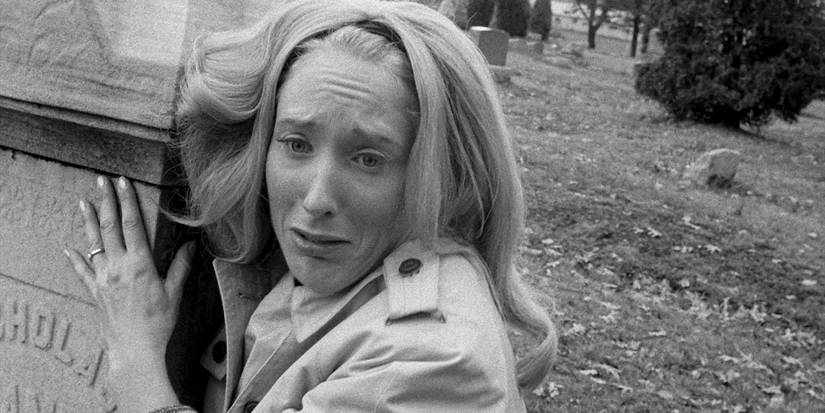 Image via Continental Distributing
Night of the Living Dead starts off with a visit that turns tense without much warning, and it doesn’t take long for Barbara (Judith O’Dea) to realize something is off. Once she reaches the farmhouse and meets Ben (Duane Jones), the film settles into that space and lets the situation build from there. People come together inside, though they never fully agree on what to do next.
The house stays central as the threat gathers outside, and the film keeps returning to how the group handles that pressure. Ben tries to keep things controlled, while others push back in different ways, which creates tension even before anything breaks in. The story doesn’t rely on constant movement, and it lets those disagreements sit long enough to matter.
1 ‘The Return of the Living Dead’ (1985)
 Image via Orion Pictures
The Return of the Living Dead takes a more direct approach to zombie storytelling and sets its tone early. Freddy (Thom Mathews) and Frank (James Karen) accidentally release a gas that brings the dead back, and the film doesn’t hold back once that happens. It moves quickly from that mistake into a situation that keeps getting worse as more people get involved.
The story stays with the group as they try to deal with what they’ve caused, though nothing seems to work the way they expect. Burt (Clu Gulager) tries to keep things under control, but each attempt leads to another problem. The film keeps circling that same idea, where every solution creates a new issue, and it lets that pattern carry through without slowing down.
Collider Exclusive · Horror Survival Quiz Which Horror Villain Do You Have the Best Chance of Surviving? Jason Voorhees · Michael Myers · Freddy Krueger · Pennywise · Chucky
Five killers. Five completely different ways to die — if you're not smart enough, fast enough, or self-aware enough to avoid it. Only one of them is the villain your particular set of instincts gives you a fighting chance against. Eight questions will figure out which one.
🏕️Jason
🔪Michael
💤Freddy
🎈Pennywise
🪆Chucky
TEST YOUR SURVIVAL →
01
Something feels wrong. You can't explain it — you just know. What do you do? First instincts are the difference between the survivor and the first act casualty.
ALeave immediately. I don't need to understand a threat to respect it. BStay quiet and observe. If I can see it, I can understand it. If I can understand it, I can avoid it. CStay awake. Whatever this is, I am not going to sleep until I feel safe again. DConfront it directly. Fear grows in the dark — I'd rather know what I'm dealing with. ECheck everything, trust nothing. The threat might be closer than I think — and smaller.
NEXT QUESTION →
02
Where are you most likely to find yourself when things go wrong? Setting is everything in horror. Where you are determines which rules apply.
ASomewhere remote — a cabin, a campsite, off the grid and away from people. BA quiet suburban neighbourhood where nothing ever happens. Except tonight. CIn my own head — the most dangerous place of all, depending on what's already in there. DWherever children are — because something about this place attracts the worst things. ESomewhere ordinary — a house, a toy store, a place where the last thing you'd expect is a threat.
NEXT QUESTION →
03
What is your most reliable survival asset? Every survivor has a quality the villain didn't account for. What's yours?
APhysical fitness — I can run, I can swim, I can outlast something that relies on brute persistence. BSpatial awareness — I always know the exits, the hiding spots, the fastest route out. CPsychological resilience — I've faced my worst fears before. They don't have the same power over me. DEmotional steadiness — I don't panic. Panic is what gets you caught. EScepticism — I don't underestimate threats because of how they look. Size is irrelevant.
NEXT QUESTION →
04
What kind of fear is hardest for you to fight through? Knowing your weakness is the first step to not dying because of it.
AThe unstoppable — something that will not stop, cannot be reasoned with, and is always getting closer. BThe invisible — a threat I can feel but can't locate, watching from somewhere I can't see. CThe psychological — something that uses my own mind and memories against me. DThe unknowable — something ancient, shapeless, that feeds on the fear itself. EThe mundane — a threat so ordinary-looking that no one will believe me until it's too late.
NEXT QUESTION →
05
You're with a group when things start going wrong. What's your role? Horror movies are brutally clear about who survives group situations and who doesn't.
AThe one who says "we need to leave" first — and means it, even when no one listens. BThe one who stays quiet, watches the others, and figures out the pattern before anyone else does. CThe one who holds the group together when panic sets in — because someone has to. DThe one who asks the questions nobody wants to ask — because ignoring them gets people killed. EThe one who takes the threat seriously when everyone else is laughing it off.
NEXT QUESTION →
06
What's the horror movie mistake you're most likely to make? Honest self-assessment is a survival skill. Denial is not.
AGoing back for someone — I know I shouldn't, but I can't leave them behind. BAssuming I'm safe once I've found a hiding spot. That's when it finds me. CFalling asleep when I absolutely cannot afford to. Exhaustion is its own enemy. DLetting my curiosity override my instincts — I always need to understand what I'm dealing with. EDismissing the threat because of how it looks. That's exactly what it wants.
NEXT QUESTION →
07
What's your best weapon against something that can't be stopped by conventional means? Every horror villain has a weakness. The survivors are always the ones who find it.
AThe environment itself — I use the terrain, the water, the geography against it. BPatience — I wait, I watch, and I strike at the one moment it doesn't expect. CLucidity — if I can stay in control of my own mind, it loses its primary weapon. DCourage — facing it directly, refusing to run, taking away the fear it feeds on. EImprovisation — I use whatever's at hand, however unconventional. Creativity over brute force.
NEXT QUESTION →
08
It's the final scene. You're the last one standing. How did you make it? The final survivor always has a reason. What's yours?
AI kept moving. I never stopped, never hid for too long, never let it corner me. BI figured out the pattern before anyone else did — and I used it against the thing following it. CI stayed awake, stayed lucid, and refused to give it the one thing it needed most. DI stopped being afraid of it. And the moment I did, everything changed. EI took it seriously from the start — and I never once made the mistake of underestimating it.
REVEAL MY VILLAIN →
Your Survival Odds Have Been Calculated Your Best Chance Is Against…
Your instincts, your strengths, and your particular way of thinking under pressure point to one villain you actually have a fighting chance against. Everyone else — good luck.
Jason Voorhees
Jason is relentless, but he is also predictable — and that is the gap you would exploit.
- He moves in straight lines toward his target. He doesn't strategise, doesn't adapt, doesn't outsmart. He simply pursues.
- Your ability to keep moving, use the environment, and resist the panic that freezes most victims gives you a genuine edge.
- The Crystal Lake survivors were always the ones who stopped running in circles and started thinking about terrain, water, and distance.
- You think like that. Which means Jason, for all his indestructibility, would face someone who simply refused to be where he expected.
Michael Myers
Michael watches before he moves. He is patient, methodical, and almost impossible to detect — until it's too late for anyone who isn't paying close enough attention.
- But you are paying attention. You notice the shape in the window, the car parked slightly wrong, the silence where there should be sound.
- Michael's power lies in the invisibility of ordinary suburbia — the fact that nothing ever looks wrong until it already is.
- Your spatial awareness and instinct to map every room, every exit, and every shadow before you need them is precisely the quality Laurie Strode had.
- You are not a victim waiting to happen. You are someone who already suspects something is wrong — and acts on it.
Freddy Krueger
Freddy wins by getting inside your head — using your own fears, your own memories, your own subconscious as weapons against you. That strategy requires a target who can be destabilised.
- You are harder to destabilise than most. You've faced uncomfortable truths about yourself and you haven't looked away.
- The survivors on Elm Street were always the ones who understood what was happening and chose to face it rather than flee from it.
- Freddy's greatest weakness is that his power evaporates in the presence of someone who refuses to give him the fear he feeds on.
- Your psychological resilience — the ability to stay grounded when reality itself becomes unreliable — is exactly the quality that keeps you alive here.
Pennywise
Pennywise is ancient, shapeshifting, and feeds on terror — but it has one critical vulnerability: it cannot function against someone who genuinely stops being afraid of it.
- The Losers Club didn't survive because they were braver than everyone else. They survived because they faced their fears together, and faced them honestly.
- You ask the questions others avoid. You look directly at what frightens you rather than turning away.
- That directness — the refusal to let fear fester in the dark — is Pennywise's worst nightmare.
- It chose the wrong target when it chose you. You are exactly the kind of person whose fear tastes like nothing at all.
Chucky
Chucky's greatest advantage is that nobody takes him seriously until it's already too late. He exploits the gap between how something looks and what it actually is.
- You don't have that gap. You take threats seriously regardless of how they present — and you never make the mistake of underestimating something because of its size or appearance.
- Chucky relies on surprise, on the delay between recognition and response. You close that delay faster than almost anyone.
- Your instinct to treat every unfamiliar thing with appropriate scepticism — rather than dismissing it because it seems absurd — is the exact quality that keeps you breathing.
- Against Chucky, not laughing is already winning. You are very good at not laughing.
↻ RETAKE THE QUIZ

The Return of the Living Dead
Release Date August 16, 1985
Runtime 91 minutes
Director Dan O'Bannon
Writers John A. Russo, Russell Streiner, Rudy Ricci




 English (US) ·