
 Image via Marvel Studios

Published May 15, 2026, 5:59 PM EDT
Michael Block is a 14 time GLAM Award nominated writer, producer, and host of the podcast Block Talk. Throughout his time in the entertainment industry, he has worked on and off Broadway as a stage manager, written several produced plays, critiqued hundreds of theatrical performances, drag and cabaret shows, and has produced events randing from drag competitoons to variety concerts!
On Block Talk, he interviews nightlife personalities, covers the wide world of entertainment through features, ranking episodes, and recaps ALL of Drag Race, as well as Dragula and Survivor. He has interviewed hundreds of RuGirls that span the globe at DragCon NYC, DragCon LA, and DragCon UK.
In his free time, he makes one-of-a-kind jewelry and gift baskets with his mom. He is a proud member of the LGBTQ+ community.
Sign in to your Collider account
Cinephiles love movies for the little idiosyncrasies and technical merits that go beyond the surface. Moviegoers love movies for exactly what they are. Sometimes, certain genres seem made for one audience, like superhero films. The big blockbusters often open, and all eyes are on the box office. But the reward of box office returns likely would have never been had there not been superhero films that unite the cinephiles and casual moviegoers. It's those superhero movies that define the genre and have brought fans together, reshaping the genre and the movie experience forever.
At this point in time, it seems impossible to imagine a calendar year without multiple superhero films being released. Our fascination with epic booms and pows stems from the superhero movies that made the genre what it is. Some films introduced characters in profound ways that have made them a staple of popcorn films. Others proved that after the origin story, the sequel could be better. And then there are those that serve as a reminder that the greatest team-ups can be the ultimate recipe for success. From an animated classic to a genre-bending masterpiece, the movies on this list define superhero films, laying the blueprint that future films and franchises continue to follow.
'Batman' (1989)
 Image via Warner Bros.
When it came to Batman, the only live-action version of the Caped Crusader audiences knew was Adam West in the 1966 TV series. There was a movie attached to the series, but that was it. It wouldn't be three decades before a visionary would explore the darker themes within DC Comics and abandon the bright color palette audiences once knew. Directed by Tim Burton, Batman tells the story of billionaire Bruce Wayne (Michael Keaton) as he acts as a caped vigilante protecting Gotham City from criminals and his disfigured arch nemesis, The Joker (Jack Nicholson), who terrorizes the city with "Smyex" after falling into toxic chemicals during a confrontation with Batman. Driven by the childhood trauma of his parents' murder and his desire to protect photojournalist Vicki Vale (Kim Basinger), Batman takes on the villain in an ultimate battle.
The Bat-Signal has been shining constantly since the 1989 film, as audiences were enamored with the newly introduced version of the hero and with the rise of epic superhero films. With a new look, fresh tone, and just enough familiarity and nostalgia, Batman united the elements of the past allure and present desire for grit to prove that dark, serious superhero stories can be blockbuster successes. There will forever be reverence for the camp style of the original Caped Crusader, but the adult-oriented interpretation became the template for future superhero films. The aesthetic shift was a major risk, but it gave Burton a chance to root the fantasy into reality. To make audiences feel as if comic books could be real was the winning formula.
'Blade' (1998)
 Image via New Line Cinema
The '90s redefined blockbusters for many genres. Audiences seemed to love horror and superhero films more than ever. Likely because the bigger budgets made them look cooler than before. So, to capitalize on the trend came the movie based on the Marvel Comics character, Blade. Directed by Stephen Norrington, Blade tells the story of Eric Brooks (Wesley Snipes), a "day-walker" who is half human-half vampire, as he hunts vampires to protect humanity while managing his own bloodlust with a serum. Alongside mentor Abraham Whistler (Kris Kristofferson) and hematologist Karen Jenson (N'Bushe Wright), Blade battles the villainous Deacon Frost (Stephen Dorff), who seeks to summon the blood god La Magra in order to empower himself and transform humanity. Bringing vampires into the superhero realm, Blade revolutionized comic book movies with its grim backdrop and stylish blend of action and horror, and gave a platform to a Black superhero lead—a baton that would only be passed off decades later.
Many superhero movies tend to cater to a certain demographic, allowing kids to enjoy them alongside the kids at heart. Blade was not that. It was a dark, comic-accurate, R-rated success. The action-horror direction shifted away from the campy nature that other superhero IPs fell back into during the decade. Further, a non-traditional anti-hero archetype led the story, paving the way for similar ambitious projects and characters. Blade did launch a trilogy. Unfortunately, it didn't reach the peak that many modern superhero franchises do today. Or even directly after, as we'll discuss soon. And yet, Blade remains a significant entry in the genre because it pushed the boundaries of the genre. The phrase "not all heroes wear capes" was recontextualized because the titular character was a different type of hero. One that did not wear spandex. There was a darkness inherent in the vampire side that audiences associated with villainy. Though MCU fans would love to see Blade officially back in action, the first film will forever serve as the reason why it would work.
'Deadpool' (2016)
 Image via 20th Century Studios
The reason Deadpool defines the genre is not its R-rating. We've seen it before. It's not because of its campy nature. Been there, done that. It's because, with Tim Miller at the helm and Ryan Reynolds in the suit, an R-rated, fourth-wall-breaking, campy comic book film became one of the most refreshing superhero blockbusters, changing the path for the types of movies audiences consumed. Having been spun off from the X-Men film series, Deadpool formed its own identity while bringing franchises together. In the first film, Wade Wilson (Reynolds) tells his origin story as a mercenary who undergoes a rogue experiment to cure his terminal cancer. The procedure leaves him with accelerated healing powers but severe scarring, prompting him to hunt down the man responsible. All while employing intense violence, dark humor, and endless fourth-wall breaking. A departure from superhero flicks of the time, Deadpool was an irreverent masterpiece that used a vulgar, violent tone to prove the genre still had room to evolve.
Aside from the fact that Reynolds' perfect portrayal helped to give other humorous actors the chance to play superheroes, his take on the character was unlike anything audiences had seen before. Deadpool, both character and film, was refreshing. As much as there was reverence for superhero movies, there was also immense commentary and scrutiny from audiences and critics alike. Deadpool heard the critics and used the platform to be self-aware. The meta-humor leads into the high-octane fight sequences, giving them a reason to exist. Deadpool was an unapologetically mature film. It was raunchy while still being emotional. Even though Wade was on a mission to right a wrong, he still had a love for Vanessa Carlysle (Morena Baccarin), which grounded him, upping the stakes. A sarcastic and far-from-safe superhero flick, Deadpool set a precedent that humor is needed for levity. And yes, Deadpool's official integration into the MCU thus far is seamless.
'Iron Man' (2008)
 Image via Marvel Studios
There is no question that if Iron Man bombed, the MCU would not exist. Fortunately, with as many timelines and multiverses the MCU currently has, that's not the one we live on. The movie that launched the world's biggest film franchise to date, Iron Man, follows billionaire weapons manufacturer Tony Stark (Robert Downey Jr.) after he is kidnapped in Afghanistan and forced to build a missile, only to instead create a powered suit to escape. Upon returning home and declaring his company would stop manufacturing weapons, he refines his high-tech suit to destroy his company's weapons in the hands of terrorists. Facing off against his corrupt business partner Obadiah Stane (Jeff Bridges), who dons his own supersized suit, Stark eventually reveals his new identity as Iron Man. Iron Man brought a new sense of invigoration to the superhero genre through a grounded, character-driven story about redemption, performed by an actor doing the same.
Much of the film's mammoth success came from the strong direction by Jon Favreau, the witty dialogue in the grounded story, and, of course, Downey Jr.'s lovable, reckless, egocentric Stark. It's almost unimaginable that anyone else could have taken on the role. Because Stark was flawed and eager to go down a path of self-redemption, having a character who was not squeaky-clean was alluring. Add in sensational action sequences, and Iron Man launched a new kind of hero into the mainstream. With humor and heart, every cog that comprised Iron Man was pivotal to its ultimate success. Iron Man was always a prominent Marvel hero, but this movie catapulted him to the tippy-top when it came to live-action blockbusters.
Collider Exclusive · Star Wars Quiz
Which Force User
Are You?
Light Side · Dark Side · Or Somewhere Between
The Force is not a binary. It is a spectrum — from the serene halls of the Jedi Temple to the shadowed corridors of Sith space. Ten questions will reveal where you truly fall. The Force has always known. Now you will too.
🔵Jedi Master
🟡Padawan
🔴Sith Lord
⚫Inquisitor
⚪Grey Jedi
IGNITE YOUR SABER →
01
What is the Force to you? Your relationship with the Force defines everything else.
AA living energy I must be worthy of — it is not mine to control. BSomething vast and mysterious I'm only beginning to understand. CNeither light nor dark — just a current I choose to ride. DPower. Pure and simple. The strong take it; the weak don't.
NEXT QUESTION →
02
When you feel strong emotions — anger, grief, love — what do you do? The Jedi suppress. The Sith feed. Others choose differently.
AAcknowledge them, then release them. Attachment leads to suffering. BFeel them fully, then decide what to do — they're not the enemy. CBury them. Emotion is a liability I can't afford to indulge. DUse them. Passion is the engine of the dark side for good reason.
NEXT QUESTION →
03
The Jedi Council gives you an order you disagree with. You: How you handle authority reveals your alignment.
AFollow it. The Council's wisdom surpasses my own perspective. BVoice my objection clearly, then defer to the decision. CComply outwardly while doing what I think is right. DIgnore it. The strong don't answer to committees.
NEXT QUESTION →
04
You are offered forbidden knowledge that could give you enormous power. The cost is crossing a moral line. You: The dark side's pull is never more than a choice away.
ARefuse without hesitation. There is no cost worth that price. BWeigh it carefully — sometimes darkness holds real answers. CFeel the pull but walk away — for now. DAccept it. Power justifies the method used to obtain it.
NEXT QUESTION →
05
Your approach to training and learning is: A student's habits become a master's character.
ADedicated but humble. There is always more to learn from my masters. BRigorous and patient. Mastery is earned through years of discipline. CEclectic — I draw from every tradition, not just one. DRelentless and brutal. Pain accelerates growth. Rest is weakness.
NEXT QUESTION →
06
In a duel, your lightsaber fighting style reflects: Combat is the purest expression of a Force user's philosophy.
ADefense and composure — I wait for my opponent to overcommit. BFast and instinctive — I trust the Force to guide my movements. CUnpredictable — I blend styles to keep enemies off-balance. DOverwhelming aggression — I end fights before they begin.
NEXT QUESTION →
07
A defeated enemy lies at your feet, powerless. You: Mercy — or its absence — is the truest test of alignment.
AStrike them down — compassion toward enemies is naïve and costly. BNeutralize them permanently. I can't afford loose ends. CSpare them if I can — but stay clear-eyed about the risks. DOffer them a chance to surrender. Every being deserves that.
NEXT QUESTION →
08
The Jedi Code forbids attachment. Your honest view on love and bonds: The source of the greatest falls in the galaxy.
AThe Code is right. Attachment clouds judgment and invites suffering. BLove is not a weakness — the Jedi Code got this one wrong. CI have no attachment — only loyalty to my master's mission. DI feel it deeply but struggle to reconcile it with my training.
NEXT QUESTION →
09
Why do you use the Force at all? What's the point? Purpose is the difference between a knight and a weapon.
ATo learn. I'm still figuring out what I'm capable of. BTo protect and serve. The Force is a responsibility, not a gift. CTo survive — and maybe carve out something worth having. DTo dominate. Strength demands to be expressed, not contained.
NEXT QUESTION →
10
At the final moment — light side or dark side pulling at you — what wins? In the end, every Force user faces this moment. What does yours look like?
AThe light. I choose peace, even when darkness would be easier. BNeither fully — I carve my own path through the middle. CWhoever I serve — my loyalty defines me more than my morality. DThe dark. Power is the only thing that's ever actually been real.
REVEAL MY ALIGNMENT →
Your Alignment Has Been Determined Your Place in the Force
The scores below reveal how the Force sees you. Your highest number is your true alignment. Read on to understand what that means — and what it will cost you.
🔵 Jedi Master
🟡 Padawan
🔴 Sith Lord
⚫ Inquisitor
⚪ Grey Jedi
Disciplined, compassionate, and deeply attuned to the living Force, you have walked the path long enough to understand its demands — and accept them. You lead not through authority alone, but through example. You have felt the pull of the dark side and chosen otherwise, every time. That is not certainty. That is courage.
You are earnest, powerful, and brimming with potential — and you know it, which is both your greatest asset and your most dangerous flaw. You act before you think, trust your gut over your training, and sometimes confuse impatience for bravery. The Masters see something in you, though. The question isn't whether you have what it takes — it's whether you'll be patient enough to find out.
You are not simply dangerous — you are certain, and that is worse. You have decided what the galaxy needs, and you have decided you are the one to deliver it. Your power is genuine and formidable, earned through sacrifice that would have broken lesser beings. But examine your victories carefully. Every Sith believed their cause was righteous. The dark side's cruelest trick is that it agrees with you.
You were forged in fire and reshaped by those who found you at your lowest. You serve, because service gave you structure when you had none. Your allegiance is not to an ideology — it is to survival and to the master who gave you purpose. But there is something buried beneath the conditioning. The Jedi you hunt? You recognize them. Because you remember what it felt like before the choice was taken from you.
You have looked at the Jedi Code and the Sith Code and found both of them incomplete. You walk the line not out of indecision but out of conviction — you genuinely believe both extremes miss something essential. The Jedi don't fully trust you. The Sith think you're wasting your potential. They're both partially right. But so are you.
↻ RETAKE THE QUIZ
'Spider-Man 2' (2004)
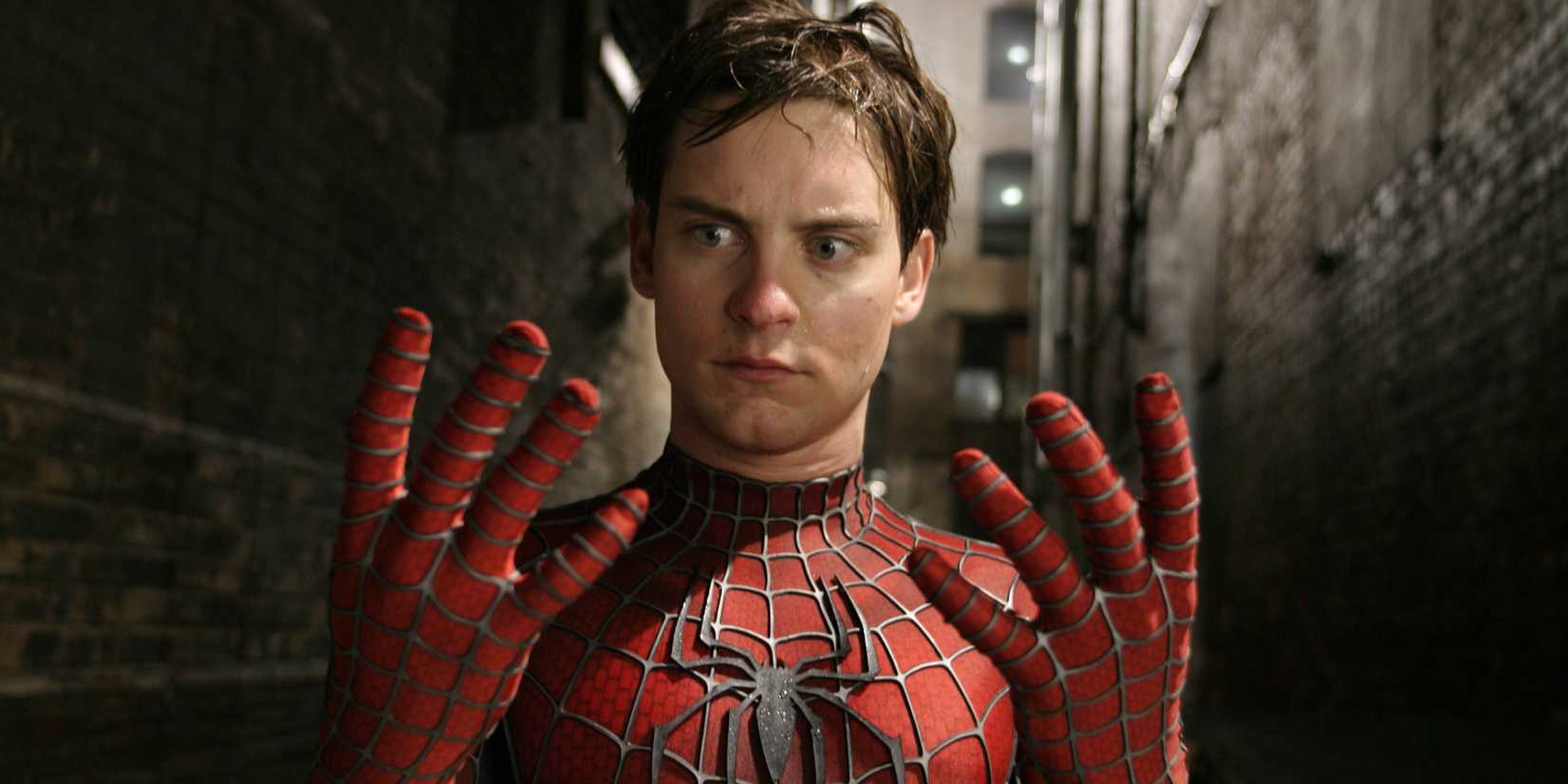 Image via Sony Pictures Releasing
Easily one of the most beloved Marvel characters has been none other than Spider-Man. Whether you read the comics or watched the animated series, you knew about the neighborhood-friendly webslinger. And you most certainly were familiar with the theme song. In 2002, Peter Parker was finally given the live-action, big-screen treatment with Sam Raimi directing and Tobey Maguire in the Spidey suit. It was a good origin story, but two years later, Spider-Man 2 arrived and redefined the power and impact of a franchise sequel. In Spider-Man 2, Peter struggles to balance his life, losing his powers due to stress, and gives up on being the infamous webslinger. Meanwhile, Dr. Otto Octavius (Alfred Molina) becomes the villainous Doc Ock, threatening the city, as Harry Osborn (James Franco) seeks revenge on Spider-Man for his father's death. Spider-Man 2 builds on the story of the first film while elevating the character's humanity through a more mature, emotionally resonant narrative.
Spider-Man will forever be an iconic character, but the sequel made him anything but invincible. By thriving in a more relatable human drama, Peter Parker became more accessible. Further, it broke the norms of a sequel by straying away from the obvious. Yes, it had everything you loved about the first film—action, romance, a central bad guy—but Raimi did everything but try to replicate the first. By avoiding the copy-and-paste formula, Spider-Man 2 gave future superhero sequels room to explore. And it's quite evident in another entry soon to come. The film has no shortage of iconic moments, memorably the train fight sequence, but Spider-Man 2's ability to move beyond the obvious provided for a story about the necessary burden of heroism.
'Superman: The Movie' (1978)
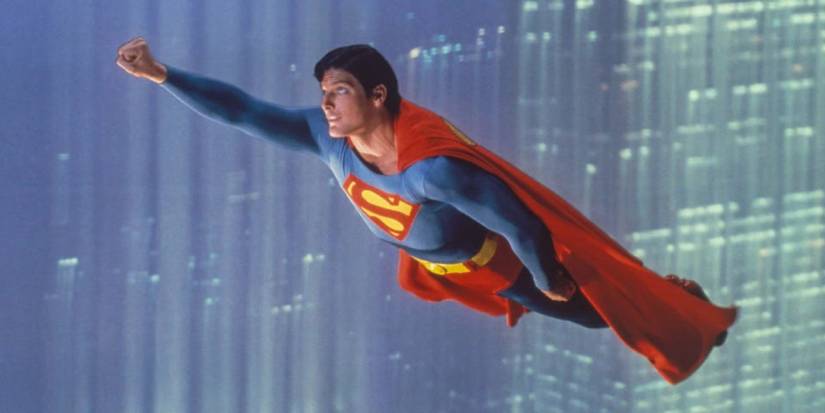 Image via Warner Bros.
There might be an endless debate over whom the greatest DC Comics hero is, but however the conversation goes, Superman's impact on pop culture is boundless. In 1978, the character was given a chance to fly to extraordinary heights in Richard Donner's Superman: The Movie. The origin story tells the tale of Kal El's (Christopher Reeve) journey from his escape from the doomed planet Krypton to his upbringing in Smallvillle as Clark Kent. As an adult, he moves to Metropolis to work at the Daily Planet, woo Lois Lane (Margot Kidder), and fight for justice as the Man of Steel. On his hero's journey, he must thwart Lex Luther's (Gene Hackman) plot to create a new California coastline by destroying the western US with nuclear missiles. Superman: The Movie serves as a foundational superhero film, establishing a style and tone the genre would replicate for decades to come.
Visually crisp with heart and sincerity, Superman: The Movie gave the world a real-life hero to adore. Led by Reeve's standout performance, having a realistic approach rather than the oft-cartoonish world allowed for Superman to transcend from page to screen. With John Williams' triumphant score contributing to some of cinema's most iconic moments, Donner's commitment to "verisimilitude" made something extraordinary possible. It was out of the ordinary that a man could fly, but Superman made you believe it true. A sincere origin story with an A-list team of stars, Superman: The Movie set the stage for the future of the genre.
'The Avengers' (2012)
 Image via Marvel Studios
Let's face it. The Avengers were what we were building up toward. Once the MCU found its footing, each introduction of a main character became a piece in completing the puzzle that was the Avengers. The Marvel Comics super team had remained an iconic part of the company, so it was inevitable that, in their shared universe, they'd come together. But with a cavalcade of stars, was it even achievable? The answer was a resounding yes. Written and directed by Joss Whedon, The Avengers followed S.H.I.E.L.D. director Nick Fury (Samuel L. Jackson) as he recruited Iron Man (Downey Jr.), Captain America (Chris Evans), The Hulk (Mark Ruffalo), Thor (Chris Hemsworth), Black Widow (Scarlett Johansson), and Hawkeye (Jeremy Renner) to form the ultimate team. They must learn to work together to stop Loki and his alien army from conquering Earth. A story of teamwork, loyalty, and responsibility, The Avengers transformed superhero movies from standalone features into a high-stakes, mega-narrative in which the entire roster could unite for a cohesive story.
Validating geek culture as a mainstream cinematic event while pioneering the power of a crossover, The Avengers changed how franchises were built. The film balanced character-driven arcs with massive spectacles without being too kitschy. There was an inherent joy in seeing your favorite characters interact. It's one thing to know they do it in a comic, but seeing the cast of A-listers in costume do it was sensational. The Avengers' success led the DCEU to avoid doing the same with the Justice League. Why? Because that's what audiences wanted. In the MCU, not only did it open up the door for characters to weave in and out of other characters' films, it ensured that there was no ceiling on just how big The Avengers could get. Avengers: Age of Ultron, Avengers: Infinity War, and Avengers: Endgame were monumental; we have no idea just how massive Avengers: Doomsday will be. Had the first film not done the impossible, we might not even be discussing what will be the movie event of 2026.
'The Dark Knight' (2008)
After the Burton film, Batman had an interesting journey on screen. Following Keaton, two others, Val Kilmer and George Clooney, took on the Batsuit. Another director, Joel Schumacher, played in the sandbox that was Gotham, adapting the tone to suit the story and the actors. By the time Batman & Robin was released, there was fatigue and whiplash in the character. So, when a new trilogy was proposed, with Christopher Nolan at the helm, the dark roots were back in play. But it wasn't the first film in the trilogy that defines the genre; it's the second: The Dark Knight. The film follows vigilante Batman (Christian Bale), police lieutenant James Gordon (Gary Oldman), and district attorney Harvey Dent (Aaron Eckhart) as they form an unlikely alliance to dismantle organized crime in Gotham City. Their plans are dismantled by the Joker (Heath Ledger), an anarchist mastermind who seeks to test Batman's limits by pushing him to the brink of what he'll do to save Gotham City from chaos. In the process of changing cinema, the groundbreaking film utilized the iconic DC characters to craft a near-perfect crime thriller and a standalone sequel within the larger story.
The Dark Knight transcended the genre by functioning beyond the superhero realm. As a dynamic crime drama, it unearthed new facets of the characters. Yes, by name, the characters were familiar, but strip them away, and Nolan still proposed a palpable story that made the crime-ridden Gotham a stand-in for any seedy underground crime threat in a real city. Through the exploration of fear, terrorism, and societal decay, the grey areas of morality and justice are tapped in ways that other superhero films rarely do. The film looked and felt authentic and loving, as Nolan picked practical depth over CGI spectacle. Plus, Ledger's award-winning performance made his Joker the pinnacle of the character. The Dark Knight continues to be the top superhero film of all time while remaining at the top of conversation as a premier 21st-century action thriller.
'The Incredibles' (2004)
 Image via Pixar Animation Studios
And now for something completely different. Animated films tend to fall into a trap of lacking substance because they are meant for a family-friendly audience. But an extraordinary animated film transcends that, bringing profound themes to the forefront. Pixar has been a cinematic game-changer for years, but after The Incredibles, they redefined movies again, specifically superhero films. Directed by Brad Bird, The Incredibles tells the story of Bob and Helen Parr—formerly superheroes Mr. Incredible and Elastigirl (Craig T. Nelson and Holly Hunter)—who are forced into suburban retirement after public lawsuits ban superhero activity. Bored with the mundane life, Bob secretly returns to hero work, uncovering a plot by Syndrome (Jason Lee), a spurned fan-turned-villain, which leads to a family effort to save the city. The Incredibles was more than just a heartwarming family drama; it was grounded in mature themes that tackled the struggles of superheroes beyond their supersuits.
The animation achievements the film found can be saved for an entirely different conversation. It's a remarkably animated project that utilizes set pieces to its advantage for its action sequences. Beyond the obvious, The Incredibles tells a story about heroes facing a midlife crisis, lacking purpose, and trying to balance domestic life with superpowers. With top-tier action and extensive, meticulously designed world-building, The Incredibles' high-stakes story reinterpreted key tropes. Other superhero films spoke about how to navigate life as a hero and how government regulations on heroes can create a disconnect, but by doing so in an animated forum, it allowed it to be deconstructed through an exceptional lens. With a tinge of satire, The Incredibles is an animated movie about family, but also a chance for adults to be seen as the heroes in their own lives.
'X-Men' (2000)
 Image via 20th Century Studios
As a millennial who collected cards and comics, watched the animated series, and played the arcade game, there was no film more important ever created than X-Men. The start of the 21st century marked Marvel's initial crusade as the dominant force in superhero movies with Bryan Singer's superhero team film. In the first film, mutants face prejudice worldwide, so Magneto (Ian McKellen) plans to mutate world leaders to force equality, while Professor Charles Xavier's (Patrick Stewart) X-Men work for peaceful coexistence. As Wolverine (Hugh Jackman) and Rogue (Anna Paquin) go on the run, they're taken in by Professor X to help his team, including Cyclops (James Marsden), Storm (Halle Berry), and Jean Grey (Famke Janssen), battle Magneto's Brotherhood of Mutants. A striking blockbuster that captures the heart of the iconic Marvel heroes, X-Men effectively introduced an ensemble cast through a poignant story that served as more than just a simple metaphor.
Still held in high regard with immense reverence, X-Men reversed the campy, cartoonish direction the latter half of the '90s superhero films took, playing in a serious, realistically grounded story rooted in maturity. X-Men had its devoted fans, but it also helped to put Marvel on the map for casual moviegoers. X-Men featured plenty of spectacles, but it was a character-first film. And it came through its brilliant ensemble. X-Men may be the most perfectly cast superhero film of all time. Though the action is what audiences came for, it was the thematic depth that they walked away with. A story that used mutants to tell the still-timeless tale of fighting for civil rights amid prejudice and discrimination, X-Men's ability to work on multiple levels allowed future superhero films to be more than just fight scenes and big explosions. As some of the original characters and their actors get a chance to be resurrected in the MCU, 26 years later, X-Men's lingering impact continues to dominate the genre.

X-Men
Release Date July 13, 2000
Runtime 104 minutes
Director Bryan Singer


 English (US) ·